
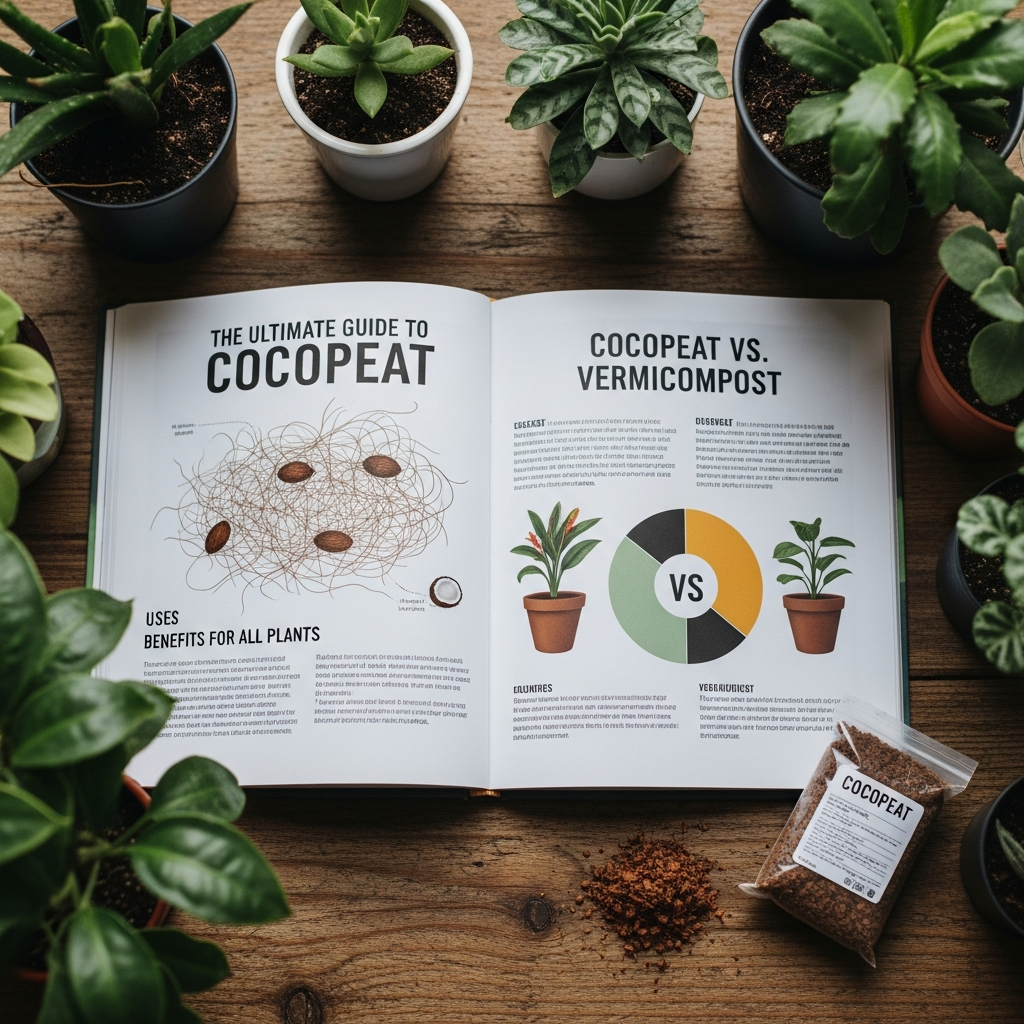
Cocopeat: 7 Ultimate Uses & Incredible Benefits (2026)
Cocopeat has revolutionized modern gardening, but many growers still struggle with poor soil drainage, stunted root growth, and frequent overwatering. Finding the perfect growing medium can feel overwhelming when your high-value plants fail to thrive despite your best efforts.
This comprehensive 2026 guide provides the ultimate solution for optimizing your soil health. We will explore how this remarkable agricultural byproduct can drastically maximize your commercial crop yields and dramatically improve household plant vitality.
Recent agricultural studies reveal that using coconut coir as a soil amendment can increase moisture retention by up to 30% compared to traditional peat moss. This organic, highly sustainable medium is rapidly becoming the undisputed gold standard for professional horticulturists worldwide.
Whether you are managing a commercial hydroponic farm or cultivating an urban indoor garden, mastering this versatile substrate is essential. Read on to discover exactly how to transform your gardening success and completely eliminate root rot today.
What Exactly Is Cocopeat?
Understanding the fundamental composition of this growing medium is critical before introducing it to your delicate plant roots. Derived directly from the fibrous outer husks of coconuts, this spongy agricultural material is thoroughly washed, heat-treated, and compressed.
Cocopeat is a 100% natural and organic growing medium extracted from coconut husks. It acts as an excellent soil conditioner and hydroponic substrate, renowned for its exceptional water-holding capacity, neutral pH of 5.5 to 6.8, and innate anti-fungal properties.
Furthermore, this sustainable alternative completely eliminates the environmental destruction associated with historical peat bog mining. It provides a highly aerated microscopic structure that effectively prevents soil compaction over long periods.
By keeping the soil loose and highly oxygenated, your plant roots can easily spread and absorb vital nutrients. This guarantees robust structural development from the delicate seedling stage all the way to full maturity.
[Image: A close-up of premium washed coconut coir blocks stacked neatly in a bright greenhouse]
Alt text: Premium organic cocopeat blocks ready for agricultural use | Title: High-Quality Coir Blocks for Gardening
7 Ultimate Uses of Cocopeat for Thriving Gardens
Integrating this incredibly versatile medium into your daily horticultural practices offers limitless possibilities for yield improvement. Here are the top seven professional applications dominating the agricultural sector in 2026:
- Seed Germination: Its fine, fluffy texture and superior moisture retention create the perfect sterile environment. This allows delicate seedlings to sprout rapidly without suffering from damping-off disease.
- Hydroponic Farming: As a biologically inert substrate, it provides robust structural root support. This grants commercial farmers complete control over their liquid nutrient delivery systems.
- Potting Mix Base: Blending it intimately with coarse perlite and rich compost creates a lightweight, nutrient-dense soil. This precise mixture is absolutely perfect for demanding indoor houseplants.
- Soil Amendment: Tilling it deep into sandy dirt or heavy clay soils drastically improves both micro-aeration and long-term moisture management. It permanently upgrades poor native topsoil.
- Mushroom Cultivation: The inherently sterile, high-humidity characteristics make it an absolutely ideal casing layer. Commercial exotic mushroom growers rely on it for consistent, heavy fruiting.
- Worm Bedding: Vermiculture enthusiasts utilize it exclusively as a carbon-rich, pH-balanced bedding. It offers a highly absorbent and safe home for composting earthworms to thrive.
- Reptile Terrariums: Exotic pet owners rely on its unmatched moisture-absorbing qualities. It naturally maintains optimal ambient humidity in elaborate tropical reptile enclosures without molding.
These proven methods are universally backed by leading agricultural experts across the globe. By actively implementing these professional strategies, growers can significantly reduce watering frequency.
Unlocking the Incredible Benefits of Cocopeat
Why are modern commercial greenhouses entirely abandoning traditional topsoil? The documented scientific advantages of this organic substrate are simply impossible to ignore when calculating overall crop profitability.
When discussing the top benefits, its incredible water retention capacity is always mentioned first. It can remarkably hold up to ten times its dry weight in water, ensuring roots never completely dry out.
Disease Resistance and Root Health
The natural presence of beneficial hormones and microbes, specifically Trichoderma, actively protects delicate root systems. This prevents destructive soil-borne pathogens from decimating your hard-earned crops.
This innate, natural resistance to mold and devastating root rot guarantees healthier, much stronger plants. Your garden will naturally defend itself without requiring harsh chemical fungicides.
[Image: A healthy plant root system thriving in a dark, loose soil mix]
Alt text: Explosive plant root growth in a cocopeat soil blend | Title: Healthy Roots with Superior Aeration
Exceptional Nutrient Management
Moreover, its remarkably high cation exchange capacity (CEC) allows it to seamlessly store and release essential minerals efficiently. When appropriately combined with organic liquid fertilizers, it acts exactly like a biological sponge.
For more technical insights into sustainable agricultural materials and advanced CEC metrics, the USDA Agricultural Research Service offers extensive, peer-reviewed documentation on modern soil amendments.
Cocopeat vs Vermicompost: Which is Better?
Growers frequently request a definitive comparison before building their raised beds. Understanding their distinctly different roles is absolutely vital for building a highly productive, regenerative garden ecosystem.
While one acts primarily as an inert structural foundation, the other serves as a vibrant biological powerhouse. Expertly combining them often yields the most impressive horticultural results.
| Feature | Cocopeat | Vermicompost (Worm Castings) |
|---|---|---|
| Primary Function | Moisture retention and profound soil aeration | Direct nutrient delivery and microbial life generation |
| Nutrient Content | Very low (acts as an inert base) | Extremely high (Abundant in N-P-K) |
| pH Level | Neutral to slightly acidic (5.5 – 6.8) | Neutral to slightly alkaline (7.0 – 8.0) |
| Water Retention | Exceptional (holds 10x its dry weight) | Moderate to Good |
| Ideal Usage Ratio | Potting mix foundation (up to 40-50%) | Top dressing or organic fertilizer (10-20%) |
In stark contrast to rich vermicompost, pure coir requires deliberate external fertilization to sustain vigorous, long-term growth. However, a recent comprehensive study published in the Agronomy Journal demonstrates that a precise 70:30 ratio of coir to compost maximizes tomato crop yields beautifully.
How to Prepare and Use Cocopeat Effectively
Purchasing tightly compressed bricks is incredibly cost-effective, but improper preparation can disastrously impact your garden’s future. Unwashed coir naturally contains highly elevated levels of coastal sodium and potassium salts.
If you are wondering exactly how to use this substrate safely, simply hydrating the brick with plain tap water is only the first step. Proper buffering is mandatory.
Washing and Buffering Cocopeat
To ensure a completely safe environment for your fragile roots, you must chemically buffer the medium to remove all excess salts. Soak the fully expanded coir in a strong calcium-magnesium (Cal-Mag) liquid solution for at least 24 hours.
The heavy calcium ions actively displace the naturally occurring sodium molecules. This chemical exchange completely prevents catastrophic nutrient lockout when you begin feeding your plants.
After buffering, aggressively flush the material thoroughly with clean water until the runoff runs crystal clear. Professional agronomists suggest testing the final runoff liquid with an electronic EC meter to verify it is below 0.5 mS/cm.
Creating the Ultimate Potting Mix
Never use this raw substrate entirely on its own for traditional potted houseplants. It unfortunately lacks the rapid drainage required for heavy-feeding species and can quickly become overly waterlogged.
Instead, blend 40% buffered coir, 30% chunky horticultural perlite, 20% high-quality organic compost, and 10% premium worm castings. This exact 2026 formula guarantees superior oxygen flow directly to the root zone.
For comprehensive, peer-reviewed guidelines on industrial commercial potting mixes, consult the authoritative Wikipedia resource on Coir, which explicitly details extensive agricultural processing standards.
The Environmental Impact: Why Peat Moss is Obsolete
For several decades, global horticulturists relied heavily on peat moss mercilessly harvested from natural, ancient bogs. However, this highly destructive practice releases thousands of tons of sequestered carbon dioxide into the atmosphere annually.
The urgent global shift toward sustainable, regenerative farming has made eco-friendly alternatives absolutely non-negotiable for modern growers. Utilizing repurposed coconut husks brilliantly prevents massive agricultural waste from sitting in landfills.
This massive reduction in baseline carbon footprint makes it the most environmentally responsible choice for commercial greenhouses today. By actively adopting this sustainable substrate, your garden becomes a proud testament to ecological responsibility.
Sourcing High-Quality Agricultural Byproducts
Choosing a highly reputable, trusted supplier ultimately determines the success or catastrophic failure of your commercial agricultural venture. Low-grade, unwashed materials often contain dangerous salt levels and devastating harmful pathogens.
Professional farming operations absolutely require consistency, lightning-fast delivery, and strict, uncompromising quality control. Investing initially in premium substrates significantly reduces heartbreaking crop loss and daily operational headaches.
If you are actively sourcing bulk materials for a larger operation, you must ensure your cocopeat is rigorously double-washed, properly aged, and pre-buffered. Makmur Amanah Sejahtera guarantees top-tier agricultural standards for maximum commercial yield.
Furthermore, many forward-thinking, sustainable plantations also routinely utilize Palm Kernel Shell for clean biomass energy, seamlessly creating a fully circular agricultural economy. Others rely heavily on high-grade Palm Kernel Expeller to perfectly optimize their advanced livestock feed nutrition.
Livestock managers often incorporate highly nutritious Copra Meal and specialized Calcium Salts of Palm Oil Fatty Acids into their premium animal feed formulations. Additionally, top-tier RBD CP8 plays a vital role in sustainable food and industrial supply chains, showcasing the diverse power of responsibly sourced derivatives.
Implementing these deeply integrated agricultural solutions will undoubtedly elevate your farming efficiency to unprecedented levels in 2026. Be sure to carefully explore the advanced hydroponic techniques outlined extensively by Maximum Yield Magazine to maximize your harvest potential.
[Image: Infographic showing the step-by-step process of coconut husk being transformed into horticultural coir]
Alt text: Infographic detailing the manufacturing process of agricultural coir | Title: From Coconut Husk to Premium Growing Medium
Frequently Asked Questions
Is cocopeat good for all types of plants?
Yes, it is an excellent foundational base for almost all indoor and outdoor plants. Because it lacks innate essential nutrients, it must be thoroughly mixed with compost or paired with a reliable liquid fertilizer schedule for plants to thrive optimally.
Can I mix cocopeat directly with native garden soil?
Absolutely. Mixing it directly into native garden soil significantly improves aeration for dense, heavy clay and drastically enhances water retention for loose, sandy soils. We highly recommend a 30% volume incorporation rate for the best long-term results.
How long does cocopeat last before breaking down in pots?
Unlike traditional peat moss which rapidly breaks down within a single year, coconut coir contains remarkably high levels of tough lignin. This makes it highly resistant to aggressive bacterial breakdown, allowing it to maintain its fluffy structure in pots for up to four years.
Does it naturally attract common garden pests or insects?
No, high-quality properly processed coir is completely sterile. It naturally lacks the decaying organic matter that aggressively attracts pests like fungus gnats. It effectively provides a clean, hygienic environment that actually deters many common soil-borne insects from nesting.
Can cocopeat replace vermicompost entirely in my garden?
No, they serve completely different biological purposes. Coir provides essential structural support, crucial moisture control, and superior aeration, whereas vermicompost strictly delivers vital biological nutrients. They work brilliantly when blended together rather than used as direct replacements.
[Embedded Video Topic: YouTube-style tutorial demonstrating how to properly wash and buffer compressed coir bricks]
Alt text: Video guide on washing and buffering cocopeat bricks | Title: Expert Video Guide to Substrate Preparation
Conclusion
Mastering the precise use of modern, science-backed soil amendments is the ultimate secret to unlocking truly explosive plant growth. By entirely replacing outdated, environmentally destructive materials with clean, sustainable alternatives, you actively protect the environment while dramatically improving deep root health.
Whether you are delicately germinating rare seeds, formulating the absolutely perfect custom potting mix, or aggressively scaling a massive commercial hydroponic farm, cocopeat remains the undisputed champion of growing media in 2026. Its unrivaled moisture retention capabilities, perfect pH balance, and profoundly eco-friendly nature make it mandatory.
Stop letting poor soil drainage and rampant root disease ruin your hard-earned harvest. Powerfully upgrade your primary substrate today, carefully mix it with high-quality organic compost, and watch your struggling garden immediately transform into a lush, highly profitable, thriving oasis!
 English
  Indonesian
  Chinese
  Arabic