
Palm Kernel Expeller: 7 Ultimate GACC Rules to Avoid (2026)
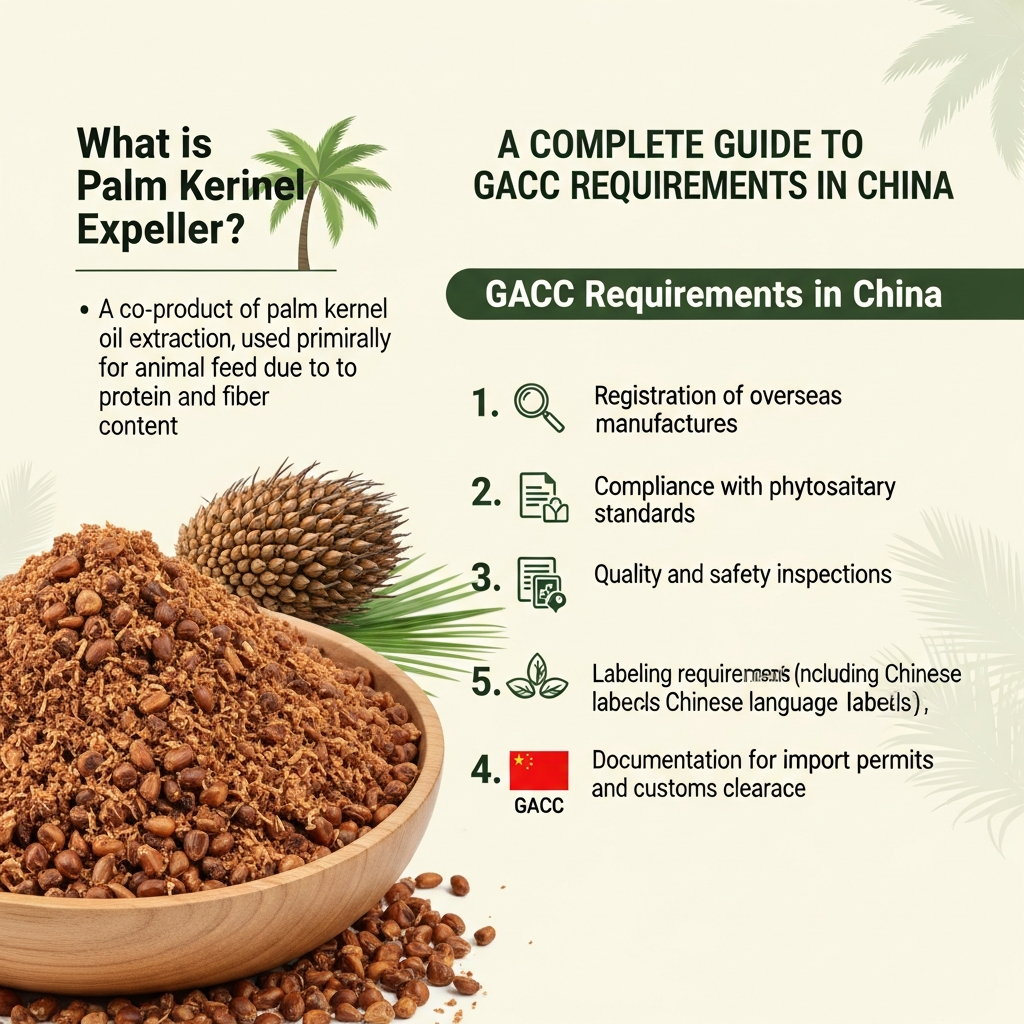
What is Palm Kernel Expeller? Palm Kernel Expeller is a highly nutritious, fibrous byproduct of the palm oil extraction process, widely utilized as a premium animal feed ingredient for ruminants. It offers an exceptional balance of protein, energy, and crude fiber, making it highly desirable for industrial dairy operations worldwide.
Why do Palm Kernel Expeller shipments often fail Chinese customs? Navigating the strict import regulations of the Chinese market can be incredibly challenging for global feed suppliers. Every year, millions of dollars are lost due to incorrect documentation, phytosanitary violations, or contamination issues at the destination port.
However, exporting this valuable agricultural commodity doesn’t have to be a bureaucratic nightmare. By mastering the updated 2026 General Administration of Customs of China (GACC) protocols, you can confidently secure your supply chain and maximize profit margins. Let’s explore exactly how to guarantee compliance and absolutely dominate this lucrative market.
[Image Suggestion: A busy Chinese port facility handling agricultural imports. Alt text: Ships unloading Palm Kernel Expeller at a Chinese port facility. Title attribute: Palm Kernel Expeller Port Delivery]
Understanding Palm Kernel Expeller and Its Global Demand
The global agriculture sector relies heavily on sustainable and cost-effective feed ingredients to maintain profitability. Consequently, dairy and beef farmers worldwide have enthusiastically embraced this remarkable agricultural resource. Rich in digestible protein, crude fiber, and essential fats, it offers an excellent nutritional profile for ruminant diets.
According to comprehensive research from the Food and Agriculture Organization (FAO), utilizing agricultural byproducts significantly reduces the environmental impact of modern livestock farming. Furthermore, China’s rapidly expanding dairy industry has directly created an unprecedented demand for high-quality feed raw materials.
If you are looking for top-tier supply, ensuring you source premium Palm Kernel Expeller is the absolute first step toward export success. Consistency in product quality directly correlates with easier customs clearance and higher buyer satisfaction. Interestingly, farms focused on complete sustainability also integrate soil amendments like Cocopeat to optimize their broader agricultural operations.
The Manufacturing Process of Palm Kernel Expeller
Quality control firmly begins long before the physical product ever reaches a shipping container. The complex manufacturing process involves mechanically crushing the harvested palm nut to extract the valuable kernel oil. Modern processing plants utilize heavy-duty mechanical screw presses to extract this oil while meticulously preserving the nutritional integrity of the remaining solid mass.
For a deeper understanding of the botanical and mechanical aspects, you can explore the Wikipedia overview of palm kernels. This advanced extraction method essentially leaves behind a dry, fibrous cake that remains incredibly stable for long-term warehouse storage and international ocean shipping.
Mechanical Extraction Techniques
Understanding the exact extraction methodology is vital for nutritional consistency. Mechanical screw pressing avoids the use of harsh chemical solvents, thereby keeping the final feed ingredient completely natural and non-toxic.
Screw Pressing vs. Solvent Extraction
While solvent extraction can sometimes yield higher oil recovery rates, mechanical screw pressing is overwhelmingly preferred for producing high-quality animal feed. It ensures the residual fat content remains beneficial for livestock digestion. Advanced facilities often diversify their product lines to maximize operational efficiency. Alongside the main expeller, they frequently produce complementary items like Palm Kernel Shell for renewable biomass energy needs.
[Video Embed Suggestion: “How Palm Kernel Feed is Processed” – Alt: Video showing the extraction process of palm kernel products]
The Role of GACC in Agricultural Imports
Before shipping any agricultural product to China, exporters must intimately understand the supreme authority governing these lucrative international transactions. The General Administration of Customs of China is the absolute gatekeeper for all food and feed imports entering the mainland.
In 2026, the GACC aggressively implemented updated traceability mandates designed to rigorously protect domestic biosecurity. Consequently, any international facility producing animal feed must undergo comprehensive auditing, facility inspections, and constant technological monitoring.
Failure to comply with these stringent protocols results in immediate shipment rejection, crippling port fines, and potential blacklisting. Therefore, proactive, aggressive compliance is not just recommended; it is an absolute necessity for long-term survival in this highly competitive global market.
7 Crucial GACC Registration Rules for Palm Kernel Expeller in 2026
To comprehensively ensure a smooth customs clearance process, exporters must strictly adhere to the following seven requirements. Ignoring these foundational rules is the absolute fastest way to face devastating port fees and completely spoiled cargo.
[Infographic Suggestion: Flowchart of the 2026 GACC clearance process. Alt text: Step-by-step infographic for clearing Chinese customs with agricultural feed. Title attribute: GACC 2026 Clearance Checklist]
1. Mandatory Overseas Facility Registration
Every single manufacturing plant must be officially registered via the CIFER (China Import Food Enterprise Registration) system. This non-negotiable rule applies directly to all global facilities currently processing Palm Kernel Expeller for the Chinese agricultural market.
2. Comprehensive Phytosanitary Certification
Your local agricultural ministry must issue a verified phytosanitary certificate confirming the complete absence of any quarantine pests. This strictly enforced document must explicitly state the origin, handling, and chemical fumigation treatment of the exported cargo.
3. Rigorous Quality Testing for Palm Kernel Expeller Shipments
Customs officials definitively require detailed, independent laboratory analysis for heavy metals, aflatoxins, and toxic pesticide residues. Recent landmark studies published in the Journal of Animal Science strongly highlight the critical need for absolute toxin-free ruminant diets.
4. Accurate Labeling and Packaging Standards
Bulk shipments and individually bagged cargo must feature standardized, easily readable bilingual labels in both English and Mandarin Chinese. These essential labels must prominently display the manufacturer’s GACC registration number, specific batch codes, and precise daily production dates.
5. Approved Exporter and Importer Records
Both the foreign exporter and the local Chinese importer must be securely recorded in the official IRE (Importer and Exporter Registration) database. Without this seamless digital linkage, the commercial shipment simply cannot legally clear the port of entry.
6. Advanced Traceability and Origin Tracking
The Chinese government now fiercely demands full farm-to-port traceability for all bulk agricultural commodities. You must conclusively prove exactly where the raw materials for your Palm Kernel Expeller were harvested, safely processed, securely stored, and logically transported.
7. Strict Moisture Control Protocols
High internal moisture levels inevitably lead to dangerous, widespread mold growth during extended, humid ocean transit times. Port authorities severely mandate that the cargo’s moisture content must strictly remain below predefined thresholds upon final destination arrival.
Comparing Feed Alternatives: Why Buyers Prefer This Ingredient
Understanding exactly how this remarkable product stacks up against global alternatives deeply helps exporters actively justify their premium pricing strategies. Chinese agricultural buyers constantly evaluate the strict cost-to-benefit ratio of various imported feedstuffs for their expensive livestock herds.
Below is a highly comprehensive comparison between the most standard feed ingredients currently imported into the Chinese mainland.
| Feed Ingredient | Average Protein Content | Crude Fiber Level | Overall Cost Efficiency |
|---|---|---|---|
| Palm Kernel Expeller | 14% – 18% | 15% – 18% | Excellent |
| Copra Meal | 20% – 22% | 10% – 14% | High |
| Standard Soybean Meal | 44% – 48% | 5% – 7% | Moderate |
As clearly demonstrated above, Palm Kernel Expeller consistently provides an unbeatable, highly profitable balance of digestive fiber and economic efficiency. Dairy operations specifically blend it with other highly specialized nutritional supplements to rapidly boost animal health and reproductive metrics.
For example, deliberately adding specialized high-energy products like Calcium Salts of Palm Oil Fatty Acids can significantly boost milk production yields and overall herd vitality. Additionally, while primarily known for industrial applications, highly refined liquid fats such as RBD CP8 are sometimes utilized to hit precise caloric density benchmarks in advanced poultry diets.
Case Study: Overcoming a GACC Port Rejection
To truly grasp the severe implications of GACC rules, consider a recent incident involving a major Southeast Asian supplier. In late 2025, a multi-million dollar shipment was abruptly halted at the Port of Shanghai due to mismatched bilingual labels. The English documentation stated a moisture content of 9%, while the translated Mandarin label accidentally stated 11%.
This single typo triggered an immediate quarantine. The supplier was forced to pay astronomical demurrage fees while waiting for an independent, third-party laboratory to re-verify the cargo. By proactively employing triple-check documentation protocols, modern exporters can entirely avoid these devastating financial pitfalls.
5 Common Mistakes Exporters Make with Palm Kernel Expeller
Even highly experienced suppliers frequently stumble when dealing with the constantly evolving nuances of strict Chinese trade law. Completely avoiding these five critical, expensive errors will save your export business immense frustration and devastating financial loss.
- Ignoring Moisture Limits: Shipping any bulk cargo with moisture content slightly over 10% is a guaranteed, costly recipe for fungal contamination.
- Using Unregistered Facilities: Attempting to illegally bypass the mandatory CIFER system will rapidly result in immediate, irreversible cargo confiscation.
- Poor Container Hygiene: Failing to comprehensively clean and chemically fumigate shipping containers invariably leads to cross-contamination from previous, unrelated shipments.
- Mismatched Documentation: Even a single, minor typo between your official Bill of Lading and phytosanitary certificate heavily causes severe, expensive port delays.
- Lack of Local Partnerships: Attempting to operate blindly without a highly trusted, officially registered Chinese importer makes legal clearance nearly impossible.
Quality Control Checklist for Palm Kernel Expeller Export
Maintaining pristine product integrity is non-negotiable. Before any vessel leaves the origin port, ensure your shipment explicitly passes this rigorous quality control checklist:
- Aflatoxin Screening: Must be independently tested and certified below 20 ppb. Authoritative research from the National Institutes of Health (NIH) confirms that strict aflatoxin control is essential for preventing livestock toxicity.
- Heavy Metal Analysis: Zero presence of dangerous lead, arsenic, or cadmium.
- Moisture Verification: Scientifically confirmed below the strict 10% threshold.
- Physical Appearance: Uniform color, completely free from visible mold or foreign debris.
- Odor Assessment: Must possess a fresh, naturally nutty aroma without any rancid or sour notes.
How to Avoid Palm Kernel Expeller Rejections at Chinese Ports
Even with proper, active CIFER registration, shipments can still unfortunately face unexpected hurdles upon physical inspection at the busy port. The absolute key to maintaining a flawless, highly profitable export record lies in uncompromising operational consistency and aggressive oversight.
First, always meticulously conduct rigorous pre-shipment inspections using internationally accredited, totally independent third-party surveying agencies. They will independently, scientifically verify that your Palm Kernel Expeller comprehensively meets all physical, chemical, and sanitary specifications demanded by Chinese authorities.
Second, practically ensure your shipping containers are thoroughly cleaned, hermetically sealed, and professionally fumigated prior to bulk loading. Minor cross-contamination from previous cargo or undetected agricultural pests is a highly frequent cause of disastrous, expensive rejections.
Lastly, systematically maintain constant, completely transparent communication with your Chinese buyer and their dedicated, experienced customs broker. They instantly receive real-time regulatory updates directly from the official China Customs portal regarding any sudden, unpredictable shifts in import policy.
The Future of Agricultural Trade with China
The complex regulatory landscape will heavily continue to evolve rapidly as China heavily prioritizes absolute food security and transparent supply chain operations. Exporters who proactively, heavily invest in advanced compliance infrastructure today will undoubtedly dominate the lucrative market tomorrow.
We realistically anticipate that mandatory digital integration, such as comprehensive blockchain traceability, will very soon become the universal industry standard. Aggressively staying ahead of these massive technological curves effectively guarantees that your Palm Kernel Expeller globally remains highly competitive and easily tradable.
Ultimately, systematically building long-term trust with powerful GACC officials through highly consistent, exceptionally high-quality, and fully documented deliveries is your greatest competitive asset in the global agricultural sphere.
Makmur Amanah Sejahtera provides high-quality palm products such as Palm Kernel Expeller, Palm Kernel Shell, Crude Palm Oil, Palm Kernel Oil, etc. Kindly contact us at WhatsApp +6282140002198 or email us at admin@makmuramanah.co.id.
[Image Suggestion: A shipping container loaded with bulk agricultural commodities. Alt text: Container packed with Palm Kernel Expeller ready for export to China. Title attribute: Exporting PKE to China]
Frequently Asked Questions
What is the maximum moisture content allowed for Palm Kernel Expeller in China?
GACC regulations strictly mandate that the absolute moisture content must never exceed 10%. Higher moisture levels dramatically increase the dangerous risk of rapid aflatoxin development during long ocean transit, which inevitably leads to immediate, irreversible shipment rejection at the destination port.
How long does the GACC facility registration process take?
The official CIFER registration process typically takes between 3 to 6 months to complete entirely. This timeline depends heavily on your local agricultural authority’s operational efficiency and the absolute completeness of your submitted corporate documentation and audit reports.
Can I export without a local Chinese agent?
No, you absolutely must have a legally registered Chinese importer actively acting as your official destination agent. They are strictly legally responsible for precisely processing the import declaration and swiftly handling all complex customs clearance procedures upon cargo arrival.
Does Palm Kernel Expeller require fumigation before export?
Yes, comprehensive chemical fumigation of both the bulk cargo and the physical shipping containers is a strict mandatory phytosanitary requirement. This vital process totally eliminates any potential quarantine pests before the commercial vessel ever departs for mainland China.
What happens if a shipment fails GACC inspection?
If a shipment unfortunately fails inspection, it will be heavily quarantined at the port facility. Depending entirely on the specific severity of the biological or paperwork violation, it may be destroyed, returned to the country of origin, or chemically treated strictly at the exporter’s expense.
Is CIFER registration required for all animal feed imports?
Yes, under the updated 2026 regulations, absolutely every overseas manufacturing enterprise producing plant-based or animal-based feed ingredients for Chinese consumption must be fully registered within the digital CIFER system before any commercial trade can legally commence.
Conclusion
Successfully penetrating the highly lucrative Chinese animal feed market effectively requires meticulous preparation, unwavering dedication to quality, and deep regulatory knowledge. As global trade policies aggressively tighten in 2026, ignorance of the strict law is strictly no longer an acceptable excuse for ambitious, serious global exporters.
By effectively securing proper CIFER facility registration, heavily maintaining pristine quality control over your agricultural supply chain, and safely partnering with verified local importers, you can systematically, smoothly navigate these daunting bureaucratic hurdles. The national demand for sustainable ruminant feed is demonstrably higher than ever, effectively presenting massive, highly scalable opportunities for rigorously compliant global suppliers.
If you are truly, confidently ready to aggressively expand your international footprint and strongly safeguard your shipping investments, mastering the exact GACC import requirements for Palm Kernel Expeller is your ultimate, proven blueprint for immense, long-term profitability and sustained success in China.
 English
  Indonesian
  Chinese
  Arabic