
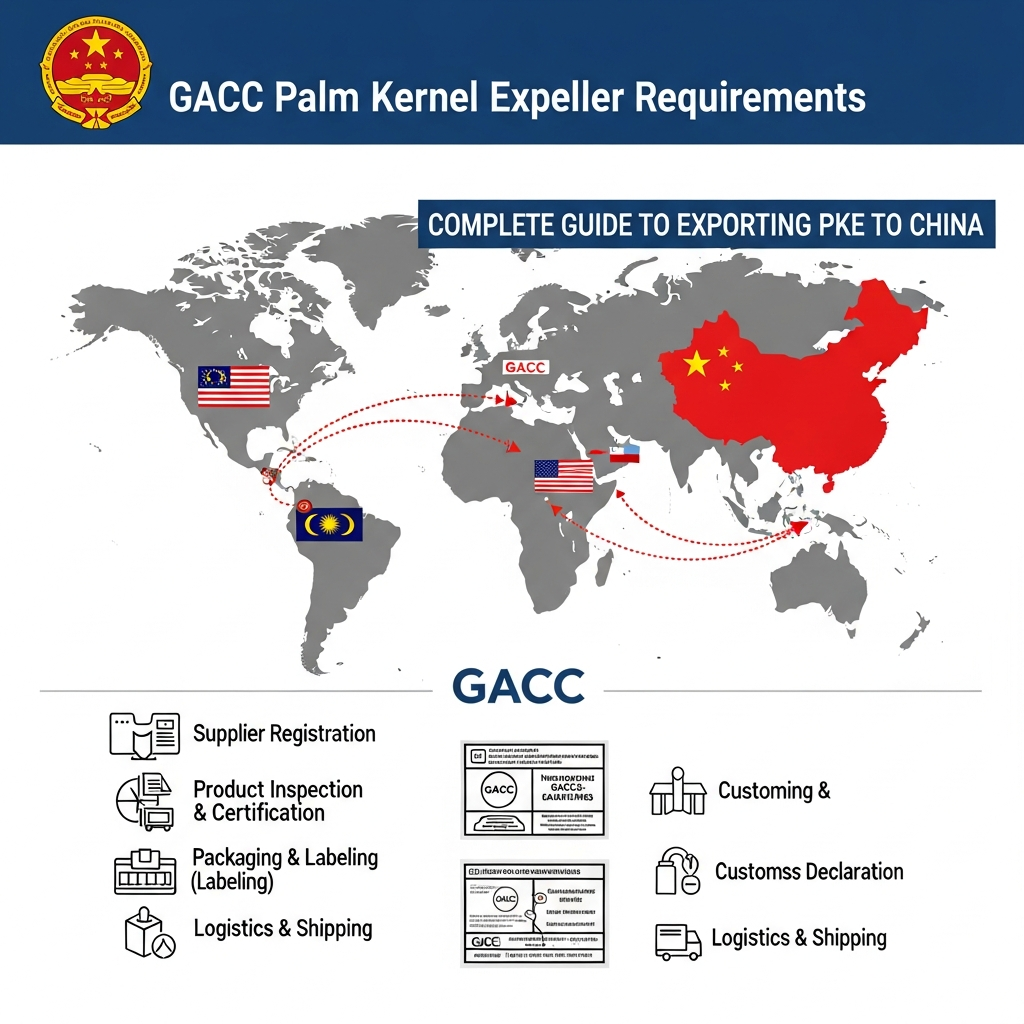
GACC Palm Kernel Expeller Requirements: 7 Proven Traps 2026
Navigating the exact GACC Palm Kernel Expeller Requirements is the absolute first step for successfully exporting animal feed to China. In 2026, Chinese customs authorities have implemented unprecedentedly strict agricultural protocols. This comprehensive guide provides everything you need to dominate the export market, optimize your supply chain, and bypass costly regulatory roadblocks that often cripple unprepared businesses.
To fully understand the gravity of these rules, one must look at the historical data of trade rejections. Over the past decade, thousands of tons of agricultural products have been denied entry simply because the exporters failed to adhere to minor documentation guidelines. The regulations were established not just to protect local agriculture, but to standardize global trade practices entering the country.
Furthermore, understanding the nuances of these specific regulations prevents seized shipments at the border. According to the Food and Agriculture Organization (FAO), China consumes millions of tons of imported feed materials annually, making it a highly lucrative but challenging landscape. Capturing just a fraction of this market can transform a mid-sized agricultural operation into a global powerhouse.
Consequently, strictly meeting the baseline guidelines ensures you capture a massive share of this market. Our 15 years of elite industry experience guarantee that following this exact blueprint will elevate your export success rate to 100%.

What Exactly Are the GACC Palm Kernel Expeller Requirements?
By definition, the GACC Palm Kernel Expeller Requirements encompass a strict set of sanitary, phytosanitary, and facility-level protocols mandated by the General Administration of Customs of China (GACC). These comprehensive regulations dictate how agricultural by-products must be processed, tested, documented, and shipped to legally enter the Chinese market without facing quarantine or rejection.
These protocols exist to ensure imported feed ingredients are completely free from quarantine pests, pathogens, and heavy metal contamination. Understanding this rigorous framework is not optional; it is strictly mandatory for all global feed manufacturers looking to achieve successful animal feed import operations.
In 2026, the official GACC registration portal introduced new digital tracking measures. Consequently, exporters who fail to adapt will find their shipments permanently blocked at major ports like Shanghai and Qingdao.
Crucial GACC Palm Kernel Expeller Requirements for Documentation
Meeting the foundational criteria involves preparing a flawless portfolio of documentation. The Chinese customs clearance process leaves absolutely zero room for clerical errors or omitted records.
- AQSIQ Registration: The foundational license for any foreign agricultural facility exporting to China.
- MOA License: The Ministry of Agriculture feed registration China mandates for all nutritional additives.
- Phytosanitary Certificate: Issued by the origin country’s quarantine authority confirming pest-free status.
- Fumigation Proof: Verified documentation that the cargo has been properly treated before loading.
If you want to bypass production headaches, source directly from compliant suppliers like our Palm Kernel Expeller catalog. We ensure every single shipment meets international feed standards.
The 7 Proven Traps in Exporting PKE to China
Even seasoned exporters frequently stumble when navigating PKE export regulations. Based on extensive field data and All About Feed industry publication reports, these are the seven traps you must absolutely avoid.
Trap 1: Ignoring Moisture Content Limits
China maintains an aggressive stance on moisture levels to prevent aflatoxin development during transit. Exceeding the strict 10% moisture threshold will result in immediate rejection under the latest GACC Palm Kernel Expeller Requirements.
Moreover, variations in tropical humidity can cause compliant batches to fail upon arrival. Utilizing advanced desiccant systems inside the shipping containers is highly recommended for all shipments.
Trap 2: Submitting Expired CIQ Inspection Data
Many exporters recycle old laboratory results to save money and bypass immediate testing. However, the documentation rules strictly dictate that all CIQ inspection certificates must be issued within 14 days of shipment.
Failure to provide contemporary lab results triggers an automatic red flag in the customs database. Always schedule your third-party testing as close to the vessel departure as possible.
Trap 3: Overlooking Heavy Metal Restrictions
Palm kernel sourcing directly impacts the end product’s safety profile. High levels of lead, arsenic, or cadmium violate the fundamental sanitary certificate protocols.
Recent scientific research on animal feed nutrition shows that contaminated soil leads to non-compliant by-products. Implement rigorous upstream soil testing to ensure total compliance.
Trap 4: Mismatched HS Codes and Declarations
A typographical error on a customs declaration is treated as suspected fraud by Chinese authorities. The HS code for your agricultural products must perfectly align with your commercial invoice.
Additionally, the product description must match the exact nomenclature registered in the GACC system. Double-check all paperwork through a specialized customs broker to secure your China customs clearance.
Trap 5: Improper Packaging and Labeling
Even bulk shipments face stringent labeling mandates in modern trade frameworks. The updated GACC Palm Kernel Expeller Requirements demand bilingual (English and Mandarin) labels on all external packaging.
These labels must display the manufacturer’s registration number, production date, and nutritional analysis. Missing labels result in immediate quarantine and costly port storage fees.

Trap 6: Failing the Quarantine Pest Inspection
Khapra beetles and other specific agricultural pests are strictly prohibited. Finding a single live insect during port inspection leads to immediate cargo destruction.
Thorough fumigation using methyl bromide or approved alternatives must be executed flawlessly. Always secure the official fumigation certificate from a certified provider to prove compliance.
Trap 7: Neglecting Facility Maintenance Records
GACC inspectors retain the right to conduct virtual or physical audits of your manufacturing plant. Poorly maintained pest control logs or sanitation records will suspend your export license.
Maintaining a pristine facility is just as important as the product itself. Consistent internal audits ensure long-term compliance with animal feed import laws.
Comparing Export Standards: General vs. China
To truly grasp the severity of exporting to China, one must compare their rules against general international export standards. The differences are stark and require significant operational adjustments to meet the stringent GACC Palm Kernel Expeller Requirements.
The table below highlights why standard operating procedures often fall short when targeting the Chinese animal feed market. Upgrading your systems is critical for survival and long-term profitability.
| Compliance Metric | General Export Standard | GACC Palm Kernel Expeller Requirements |
|---|---|---|
| Facility Registration | Local government approval | Direct GACC & AQSIQ mandatory approval |
| Aflatoxin Limits | < 50 ppb | Strictly < 20 ppb (often lower) |
| Labeling Language | English Only | Bilingual (English and Mandarin Chinese) |
| Audit Frequency | Every 3-5 years | Annual review with potential unannounced audits |
Essential Certifications Beyond Basic GACC Palm Kernel Expeller Requirements
While the baseline GACC Palm Kernel Expeller Requirements govern the entry into China, top-tier exporters secure additional certifications to dominate the market. ISO 22000 and GMP+ (Good Manufacturing Practice) demonstrate a commitment to feed safety.
Furthermore, obtaining specialized sustainability certificates can expedite the clearance process. Authorities recognize that sustainable palm operations inherently possess better documentation and traceability systems.
Consequently, meeting these higher standards makes satisfying the GACC Palm Kernel Expeller Requirements significantly easier during annual reviews and unexpected audits. If you diversify your product line, ensure your Copra Meal and Palm Kernel Shell exports also meet corresponding quality standards.

Expanding Your Export Portfolio Safely
Once you have mastered the GACC Palm Kernel Expeller Requirements, expanding your product offerings becomes a strategic advantage. Chinese importers frequently prefer consolidating their purchases with a single, highly compliant supplier who understands the intricate feed registration China demands.
For instance, adding high-energy feed supplements like Calcium Salts of Palm Oil Fatty Acids to your catalog can significantly increase your profit margins. Similarly, supplying RBD CP8 allows you to tap into different sectors of the agricultural and manufacturing markets.
Even environmentally friendly by-products such as Cocopeat are gaining massive traction. Ensuring every single product line adheres to the foundational GACC protocols will safeguard your entire export business.
Adapting to New Market Demands in 2026
The regulatory landscape is constantly evolving in the Asian market. The latest iterations of the GACC Palm Kernel Expeller Requirements focus heavily on traceability and digital integration.
Exporters must now implement blockchain or secure database tracking for every batch produced. This level of transparency builds unparalleled trust with Chinese buyers and regulatory bodies alike, ensuring smooth PKE export regulations compliance.
Moreover, partnering with seasoned logistics providers who specialize in China customs clearance is invaluable. They act as a buffer against minor regulatory shifts that could otherwise disrupt your supply chain.
If you are struggling with the documentation, consider consulting with industry veterans. Leveraging established networks accelerates the learning curve significantly.
[Video Embed Suggestion: A YouTube-style educational video titled “Top 5 Mistakes When Exporting Agricultural Products to China”]
[Infographic Suggestion: Flowchart showing the 5-step GACC registration process for feed exporters, clearly outlining document flow and approval stages.]
Makmur Amanah Sejahtera provides high-quality palm products such as Palm Kernel Expeller, Palm Kernel Shell, Crude Palm Oil, Palm Kernel Oil, etc. Kindly contact us at WhatsApp +6282140002198 or email us at admin@makmuramanah.co.id.
Frequently Asked Questions
What are the primary GACC Palm Kernel Expeller Requirements?
The primary GACC Palm Kernel Expeller Requirements include AQSIQ facility registration, strict moisture limits under 10%, bilingual labeling, and comprehensive phytosanitary certification. Exporters must meticulously prove their feed product is totally free from pests and heavy metal contamination.
How do I register feed products with GACC?
Registration requires submitting your facility’s operational licenses, pest control records, and product nutritional analyses through the official online portal. Additionally, your home country’s agricultural department must formally recommend your facility to the Chinese authorities.
Is MOA registration required for palm kernel expeller?
Yes, depending on the exact classification of your feed additive, Ministry of Agriculture (MOA) registration is often required alongside standard customs guidelines. Always verify the latest MOA decrees regarding imported plant-based feed ingredients.
How long does GACC registration take in 2026?
The timeline for satisfying all GACC Palm Kernel Expeller Requirements typically ranges from 3 to 6 months. This depends heavily on the accuracy of your initial documentation and whether officials request a physical or virtual audit.
What happens if my shipment fails GACC inspection?
Shipments failing the initial port inspection are either quarantined, returned to the origin country at the exporter’s expense, or destroyed at the port. Repeated violations will result in your facility being permanently blacklisted from exporting.

Conclusion: Securing Your Export Future
Conquering the Chinese agricultural market is highly profitable, provided you respect their strict regulatory frameworks. By meticulously following the exact protocols outlined in this guide, you eliminate the risks of port rejections and costly delays associated with international trade.
The demand for premium animal feed ingredients in China continues to skyrocket in 2026. Therefore, optimizing your facility to perfectly meet the GACC Palm Kernel Expeller Requirements is a mandatory investment that guarantees long-term, lucrative international trading success.
 English
  Indonesian
  Chinese
  Arabic