
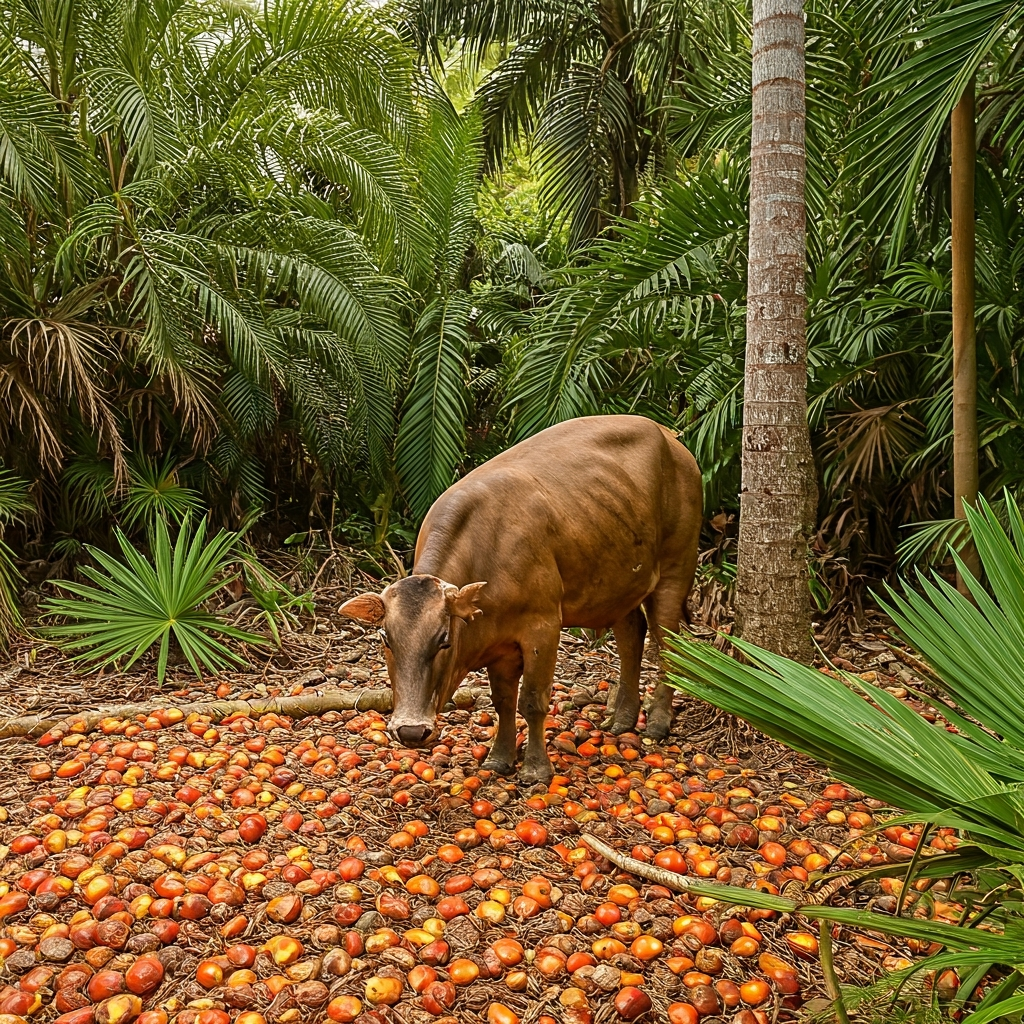
Palm Kernel Expeller: The #1 Guide for 2026 (Benefits & Uses)
The Palm Kernel Expeller (PKE) is a critical component in the global animal feed industry, yet many producers are not using it to its full potential. Understanding this ingredient is the key to unlocking significant cost savings and performance gains in your livestock operations.
With feed costs representing up to 70% of total production expenses, leveraging alternative ingredients like PKE is no longer optional—it’s essential for survival. This guide provides a comprehensive overview of everything you need to know to make informed decisions for your farm or feed mill in 2026.
What Exactly is Palm Kernel Expeller (PKE)?
Palm Kernel Expeller is a high-fiber, medium-protein feed ingredient. It’s derived from the mechanical extraction of oil from the kernel of the oil palm fruit.
As a vital by-product of the palm oil industry, primarily in Southeast Asia, it serves as an affordable and nutritious feed resource for various livestock species.
The process ensures that a residual amount of fat (around 5-12%) remains, making PKE a valuable source of energy. Its fibrous nature also aids in promoting good digestive health, particularly in ruminant animals.
The Production Process for Palm Kernel Expeller
Understanding the production journey highlights the quality of the final product. The process is a multi-step operation rooted in precision and efficiency.
- Sterilization & Stripping: Fresh palm fruit bunches are sterilized with steam to halt enzymatic activity and loosen the fruits. The fruits are then stripped from the bunch.
- Digestion & Pressing: The fruit is digested to separate the pulp (mesocarp) from the nut. The pulp is pressed to extract Crude Palm Oil (CPO). The remaining nut is a crucial component.
- Nut Cracking & Kernel Separation: The nut is cracked, and the kernel is separated from the shell. This shell itself is a valuable biofuel, often sold as Palm Kernel Shell.
- Kernel Crushing & Oil Extraction: The separated kernels are dried and then crushed. The oil is extracted via a mechanical press (expeller), which produces Palm Kernel Oil (PKO) and the solid residue, our valuable Palm Kernel Expeller.
[Image: A diagram showing the PKE production process from palm fruit to the final expeller product. Alt Text: Infographic detailing the production of Palm Kernel Expeller for animal feed. Title: Palm Kernel Expeller Production Flowchart.]
[Video: A short documentary showing the mechanical pressing of palm kernels and the resulting PKE being prepared for shipment. Title: From Kernel to Expeller: The PKE Production Journey.]
PKE vs. PKC: Understanding the Critical Difference
A common point of confusion is the difference between Palm Kernel Expeller (PKE) and Palm Kernel Cake (PKC). While often used interchangeably, a technical distinction exists based on the oil extraction method.
- Palm Kernel Expeller (PKE): Produced via mechanical pressing. It retains a higher residual oil content (5-12%), providing more energy.
- Palm Kernel Cake (PKC): Produced via solvent extraction (e.g., using hexane). This method is more efficient at oil removal, resulting in a lower residual oil content (1-3%) but often a slightly higher protein percentage.
For most feed applications, the higher energy content of PKE makes it a more sought-after ingredient, especially for energy-demanding livestock.
Nutritional Specifications of Palm Kernel Expeller
The nutritional profile of Palm Kernel Expeller makes it a unique and versatile ingredient. As an experienced strategist in animal nutrition, I’ve seen first-hand how balancing a ration with PKE can optimize feed costs without sacrificing performance. Its value lies in the synergy between its protein, fiber, and energy content.
According to research published in the Journal of Animals, PKE is a cornerstone for sustainable livestock farming. The key is understanding its composition to use it effectively.
Macronutrient Profile: Protein, Fiber, and Fat
The primary components of PKE offer a balanced nutritional source. The exact values can vary based on the origin and processing method, but they generally fall within a specific range.
| Nutrient | Typical Range (%) | Key Role in Animal Nutrition |
|---|---|---|
| Crude Protein | 14 – 18% | Essential for muscle growth, milk production, and overall development. |
| Crude Fiber | 16 – 22% | Promotes gut health and proper rumen function in ruminants. |
| Crude Fat / Oil | 5 – 12% | A concentrated source of energy and essential fatty acids. |
| Ash | 3 – 6% | Represents the mineral content of the feed. |
[Image: A close-up shot of high-quality, granular Palm Kernel Expeller. Alt Text: A pile of nutrient-rich Palm Kernel Expeller. Title: High-Quality Palm Kernel Expeller.]
Micronutrient Content: Minerals and Vitamins
Beyond the macronutrients, PKE is a notable source of essential minerals. It is particularly rich in phosphorus, crucial for bone development and energy metabolism. However, it’s important to note that the calcium-to-phosphorus ratio requires balancing in a final feed formulation.
Key minerals found include:
- Phosphorus: 0.5 – 0.7%
- Potassium: 0.7 – 0.9%
- Magnesium: 0.2 – 0.3%
- Copper: High levels (15-30 ppm), which can be a concern for sheep.
Furthermore, supplementing the diet with specific additives like Calcium Salts of Palm Oil Fatty Acids can help create a perfectly balanced and high-energy ration for dairy cattle.
The Complete Benefits of Using Palm Kernel Expeller in Animal Feed
The primary driver for using Palm Kernel Expeller is its economic advantage. It consistently provides a lower-cost alternative to traditional ingredients like soybean meal or corn, allowing for significant reductions in overall feed expenses.
Moreover, its unique nutritional properties offer specific benefits across different livestock categories. When managed correctly, PKE is more than just filler; it’s a performance-enhancing tool.
For Ruminants (Cattle, Goats, Sheep)
Ruminants are particularly well-suited to digest the high-fiber content in PKE. The “scratch factor” of the fiber stimulates rumination and saliva production. This helps maintain a stable and healthy rumen pH, reducing the risk of acidosis.
- Dairy Cattle: The residual fat in PKE is a fantastic energy source for milk production. Studies also show it increases the butterfat content in milk.
- Beef Cattle: It serves as an excellent protein and energy source in backgrounding and finishing rations, promoting steady weight gain.
- Sheep & Goats: PKE can be used effectively, but with a major warning: its high copper content can be toxic to sheep. Rations must be carefully formulated by a nutritionist to ensure safety.
For Monogastrics (Poultry and Swine)
Using Palm Kernel Expeller in monogastric diets is more challenging due to its high fiber content, which these animals cannot easily digest. However, with modern feed technology, its application is growing.
- Poultry: In layer hens, inclusion at low levels (3-5%) can be beneficial. For broilers, it’s generally limited to 5-7% of the diet to avoid impacting growth rates.
- Swine: For pigs, PKE is most suitable for gestating sows and finishing pigs, where its high fiber can promote satiety. Inclusion rates are typically kept below 10%.
[Image: A healthy herd of dairy cows feeding at a trough containing a mixed ration. Alt Text: Dairy cattle consuming feed containing Palm Kernel Expeller. Title: Dairy Cattle Benefiting from Palm Kernel Expeller Feed.]
PKE vs. Other Common Feed Ingredients: A 2026 Comparison
To fully appreciate the role of PKE, it’s useful to compare it against other common ingredients. While it may not be the “best” in any single category, its balanced profile and low cost make it a uniquely valuable component in feed formulation.
In contrast to an ingredient like Copra Meal, which is derived from coconuts, PKE offers a different fatty acid profile and is often more readily available in palm-producing regions.
| Attribute | Palm Kernel Expeller | Soybean Meal | Corn |
|---|---|---|---|
| Primary Function | Balanced Protein/Fiber/Energy | High Protein Source | High Energy Source |
| Crude Protein | 14-18% | 44-48% | 8-10% |
| Crude Fiber | 16-22% (High) | 3-4% (Low) | 2-3% (Low) |
| Typical Cost | Low | High | Medium-High |
| Best Fit | Ruminants, Sows | Poultry, Swine, Young Animals | All species (as energy source) |
Makmur Amanah Sejahtera provides high-quality palm products such as Palm Kernel Expeller, Palm Kernel Shell, Crude Palm Oil, Palm Kernel Oil, etc. Kindly contact us at WhatsApp +6282140002198 or email us at admin@makmuramanah.co.id.
Frequently Asked Questions (FAQs)
Is Palm Kernel Expeller good for dairy cattle?
Yes, Palm Kernel Expeller is an excellent feed ingredient for dairy cattle. Its combination of medium protein, high fiber, and residual fat provides a sustained energy source that can increase milk yield and butterfat content while promoting good rumen health.
What is the recommended inclusion rate of PKE in animal feed?
The rate varies by species. For dairy and beef cattle, it can be included at 20-30% of the total ration, sometimes up to 50% in specific formulations. For poultry and swine, the inclusion rate should be much lower, typically kept under 10% to avoid issues with fiber digestibility.
Can PKE replace soybean meal in a ration?
PKE can partially replace soybean meal to reduce costs, but it cannot be a total replacement. Soybean meal has a much higher and more digestible protein content. A successful strategy involves using PKE to replace a portion of both the energy source (like corn) and the protein source (like soy).
Are there any anti-nutritional factors in Palm Kernel Expeller?
The primary concern is the high copper content, which makes it unsuitable for high-inclusion rates in sheep feed. Additionally, its gritty texture can sometimes lead to lower palatability, though this can be managed by mixing it well in a Total Mixed Ration (TMR).
Conclusion: The Future of Feed in 2026
As we move through 2026, the strategic use of Palm Kernel Expeller will become a defining factor for profitable livestock operations. It’s not just a by-product but a co-product; a valuable, sustainable, and cost-effective feed resource that, when understood and used correctly, delivers a powerful competitive advantage.
By balancing rations, respecting inclusion limits, and sourcing quality material, you can leverage this ingredient to its full potential. The key is to see Palm Kernel Expeller not as a cheap filler, but as a smart tool for optimizing animal nutrition and your bottom line.
[Image: A satisfied farmer looking over a field with a modern barn in the background, symbolizing success. Alt Text: A farmer standing proud after using Palm Kernel Expeller. Title: Success with Palm Kernel Expeller.]

 English
  Indonesian
  Chinese
  Arabic