
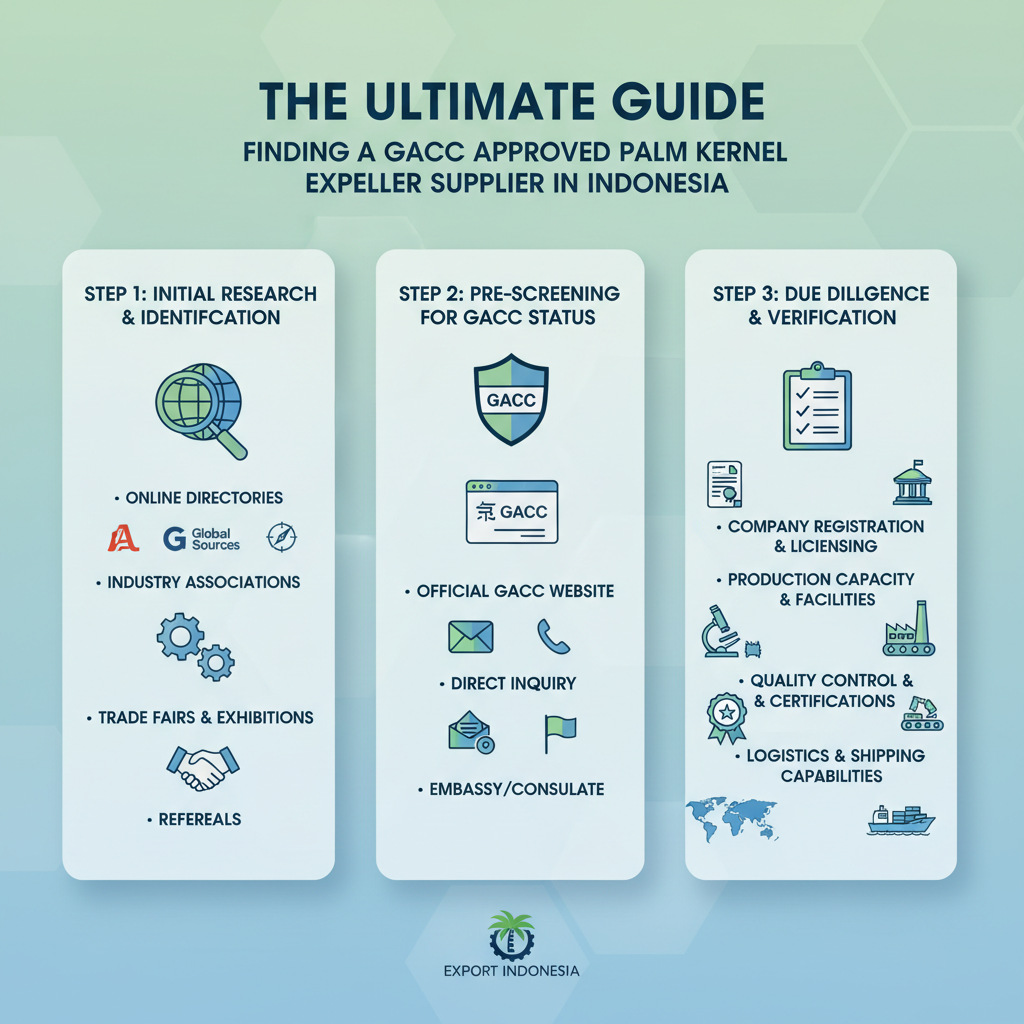
How to Vet and Secure a GACC Approved Palm Kernel Expeller Supplier in Indonesia
Finding a reliable GACC Approved Palm Kernel Expeller Supplier in Indonesia is the most critical challenge for importers targeting the massive Chinese market. The process is riddled with compliance hurdles and risks that can lead to costly delays, shipment rejections, and significant financial loss. This comprehensive guide provides a proven, step-by-step framework to navigate the complexities of the Indonesian market and secure a trustworthy, high-quality PKE supplier for 2026.
The demand for high-protein animal feed ingredients like Palm Kernel Expeller (PKE) continues to surge, with China being a primary consumer. However, market access is strictly controlled by the General Administration of Customs of China (GACC). As of 2026, any shipment of PKE from Indonesia entering China requires the supplier to be officially registered and approved by GACC. This isn’t just a piece of paper; it’s a rigorous validation of the supplier’s production facilities, quality control processes, and traceability systems.
According to recent FAO reports, a significant percentage of shipment detentions at Chinese ports are related to non-compliance with import regulations, highlighting the critical importance of due diligence. This guide is engineered to help you perform that due diligence flawlessly.
Understanding GACC and Its Critical Role in PKE Imports
Before diving into the vetting process, it’s essential to grasp what GACC is and why its approval is non-negotiable. Misunderstanding its importance is the first step toward a failed import strategy.
What is GACC and Why is it Critical for a Palm Kernel Expeller Supplier in Indonesia?
The General Administration of Customs of the People’s Republic of China (GACC) is the Chinese government agency responsible for customs administration. Under Decree 248 and Decree 249, all overseas food manufacturers, processors, and storage facilities that export to China must be registered with GACC. This includes producers of Palm Kernel Expeller, a key ingredient in animal feed. You can find more information directly from the GACC official website.
Why GACC Approval is Non-Negotiable
GACC registration serves as China’s primary tool for ensuring the safety and quality of imported food and agricultural products. For PKE importers, partnering with a GACC-approved supplier provides several guarantees:
- Market Access: Without GACC approval, your shipment will be rejected at the port of entry. There are no exceptions.
- Quality Assurance: The approval process audits a supplier’s production hygiene, traceability, and quality control systems.
- Risk Mitigation: It significantly reduces the risk of importing contaminated or substandard PKE, protecting your investment and reputation.
The Risks of Partnering with a Non-Approved Supplier
The consequences of attempting to import from a non-GACC registered supplier are severe. They range from immediate financial loss to long-term business damage. Risks include total loss of cargo, blacklisting by Chinese authorities, and legal liabilities. It’s a gamble that established businesses should never take.
[Image Suggestion: A high-quality shot of golden-brown Palm Kernel Expeller in a large, clean pile at a processing facility. Alt Text: Close-up of high-quality PKE from a GACC Approved Palm Kernel Expeller Supplier in Indonesia. Title: GACC Certified Palm Kernel Expeller.]
Vetting a GACC Approved Palm Kernel Expeller Supplier in Indonesia: A 5-Step Checklist
Use these five steps as a non-negotiable checklist to thoroughly vet any potential PKE supplier in Indonesia. This process, honed over 15 years of industry experience, separates the legitimate, high-quality producers from the unreliable ones.
Step 1: Verify GACC Registration Number Independently
Do not take a supplier’s word or a photoshopped certificate as proof. You must verify their GACC registration number through the official GACC database. A legitimate supplier will provide their registration number upfront. If a supplier is hesitant or refuses to provide this, consider it a major red flag and cease discussions immediately.
Step 2: Assess Product Quality and Specifications
Once GACC approval is confirmed, the next focus is product quality. Indonesian PKE can vary, so you must request a Certificate of Analysis (COA) for recent batches. Pay close attention to these key parameters:
- Profat (Protein + Fat): Minimum 21% is a common standard.
- Crude Protein: Typically 14-16%.
- Crude Fiber: Maximum 18-20%.
- Moisture: Maximum 10-12% to prevent mold growth.
- Aflatoxin Levels: Must be well below the maximum permissible limits. Research from institutions like the National Center for Biotechnology Information highlights the severe dangers of aflatoxins in animal feed.
Step 3: Evaluating Production Capacity and Supply Chain Reliability
A supplier must be able to meet your volume requirements consistently. Ask pointed questions about their monthly production capacity, their sourcing of raw palm kernels, and their current client commitments. A reliable supplier has a robust and often vertically integrated supply chain, ensuring they are not just a “spot” trader who may default on a contract if market prices shift.
Step 4: Auditing Sustainability and Sourcing Practices
In 2026, sustainability is not just a buzzword; it’s a core business requirement. Inquire about their sustainability certifications, such as from the Roundtable on Sustainable Palm Oil (RSPO). Responsible sourcing ensures the long-term viability of the industry and reflects positively on your brand. Many top-tier suppliers also process by-products like Palm Kernel Shell for bioenergy, showcasing a commitment to a circular economy.
Step 5: Scrutinizing Logistics and Shipping Documentation
A world-class supplier has mastered international trade logistics. Errors in documentation are a primary cause of costly port delays. Confirm their expertise in providing accurate and timely Bills of Lading (B/L), Certificates of Origin, and other required export documents. According to the World Trade Organization, streamlined customs and documentation processes are vital for global trade efficiency.
[Image Suggestion: Infographic titled ‘5 Steps to Verify a GACC PKE Supplier’. Icons for each step: 1. Magnifying glass over a certificate, 2. Microscope over PKE, 3. Factory icon with a checkmark, 4. Green leaf/sustainability icon, 5. Cargo ship with documents. Alt text: Infographic showing 5 steps to vet a GACC approved palm kernel expeller supplier. Title: 5-Step PKE Supplier Verification Process.]
Direct Manufacturer vs. Sourcing Agent: Which is Right for You?
Choosing between working directly with a manufacturer or using a sourcing agent is a critical decision. Both have pros and cons, and the right choice depends on your experience and resources.
| Factor | Direct Manufacturer | Sourcing Agent / Trader |
|---|---|---|
| Pricing | Generally lower, no middleman markup. | Higher due to commission, but may have negotiation leverage. |
| Transparency | High. Direct communication and visibility into production. | Variable. The actual source may be obscured. |
| Due Diligence | Your responsibility to vet one factory. | Agent should vet multiple sources, but you must vet the agent. |
| Logistics | Handled by manufacturer’s export dept. Experience can vary. | Often a core competency, providing smoother shipping. |
Beyond GACC: Other Hallmarks of a Top-Tier Indonesian PKE Supplier
Finding a GACC-approved supplier is the first step. To find a truly world-class partner, look for these additional signs of quality and professionalism that define the best in the industry.
Additional Quality and Safety Certifications
Beyond GACC, mature suppliers often hold other internationally recognized certifications. These demonstrate a deep commitment to quality that transcends a single market’s requirements. Look for credentials such as:
- GMP+ (Good Manufacturing Practices): A leading global standard for feed safety.
- ISCC (International Sustainability and Carbon Certification): Verifies sustainable sourcing and traceability.
- ISO 9001: Certifies the company’s quality management systems.
Expertise in International Trade
A top-tier supplier is fluent in the language of international trade. They understand Incoterms (FOB, CIF, etc.) and provide all necessary export documentation without errors or delays, as this is a key part of being a reliable GACC Approved Palm Kernel Expeller Supplier in Indonesia.
[Image Suggestion: A modern, well-lit laboratory with a technician in a lab coat testing PKE samples with scientific equipment. Alt Text: Laboratory testing at a facility of a GACC approved palm kernel expeller supplier in Indonesia. Title: PKE Quality Control Testing.]
Frequently Asked Questions (FAQ)
How do I officially check a supplier’s GACC registration?
Use the official GACC query system online with the supplier’s registration number. A trustworthy supplier will provide this number readily. Some may even guide you through the verification process to ensure transparency.
What is the typical protein content of high-quality PKE from Indonesia?
High-quality Indonesian Palm Kernel Expeller typically has a crude protein content between 14% and 16%. Always refer to the specific supplier’s Certificate of Analysis (COA) for guaranteed specifications for each batch.
Is Palm Kernel Expeller the same as Palm Kernel Cake?
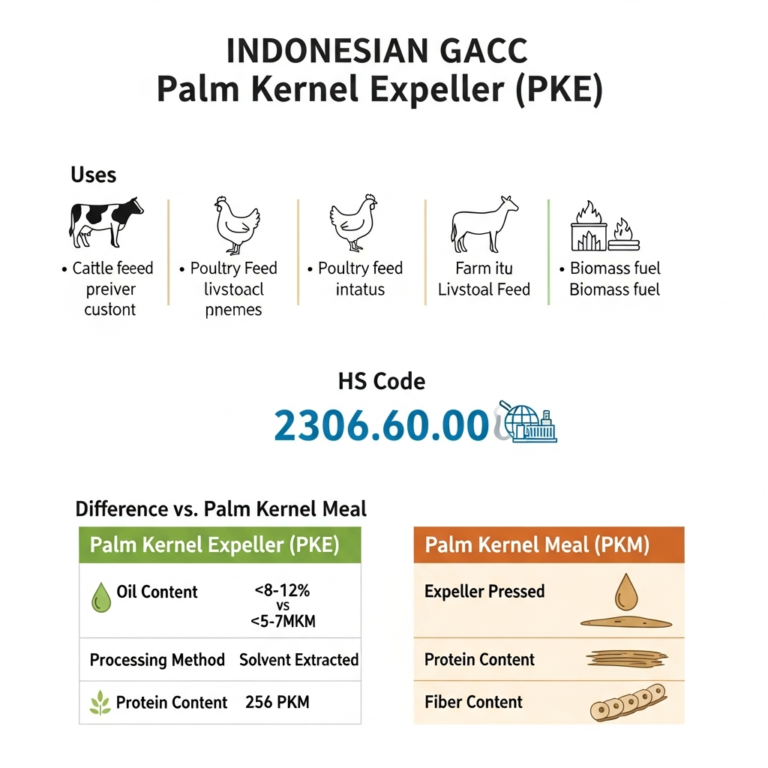
Yes, the terms Palm Kernel Expeller (PKE) and Palm Kernel Cake (PKC) are used interchangeably. Both refer to the protein-rich byproduct of crushing palm kernels to extract oil via the screw-press “expeller” method.
Can I import PKE from Indonesia to China without GACC approval?
Absolutely not. As of 2026, it is impossible to clear customs in China with PKE from a non-GACC registered supplier. Any attempt will result in the shipment being seized and likely destroyed at your expense.
What other palm-based products do GACC suppliers often export?
Many integrated suppliers also offer other palm-derived products. These often include Copra Meal (from coconuts) and industrial products like high-quality cocopeat for agricultural use.
Conclusion: Your Partner for Success in 2026
The process of sourcing PKE from Indonesia for the Chinese market is a high-stakes endeavor that demands precision and diligence. By following the 5 steps outlined in this guide—from GACC verification to logistical planning—you can de-risk your procurement process and build a resilient supply chain. The ultimate goal is to build a long-term partnership with a supplier who acts as an extension of your business.
Remember, the foundation of this entire process is confirming compliance from the very start. Taking the time to find the right GACC Approved Palm Kernel Expeller Supplier in Indonesia is not just a preliminary step; it is the most important investment you will make in your import strategy for 2026 and beyond.
[Video Suggestion: A short, 2-minute video titled ‘From Plantation to Port: The Journey of GACC-Certified Indonesian PKE’. It would show the process from harvesting to processing, lab testing, bagging, and loading for export, emphasizing quality control at each stage. Alt Text: Video showing the supply chain of a GACC approved palm kernel expeller supplier in Indonesia.]
 English
  Indonesian
  Chinese
  Arabic