
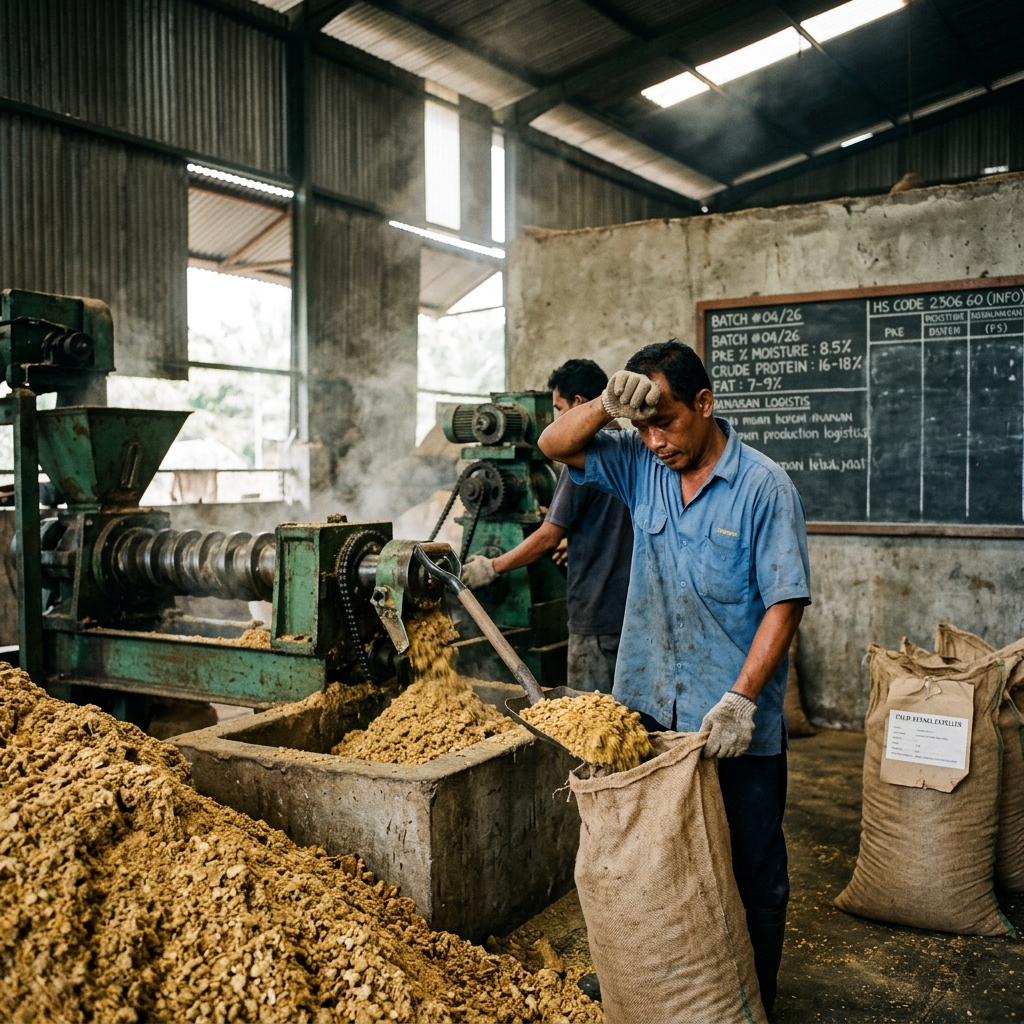
Palm Kernel Expeller serves as a vital energy and protein feed ingredient for global livestock production. As international feed costs fluctuate in 2026, feed millers and livestock producers increasingly turn to sustainable palm-based co-products to maintain high animal performance while containing operational costs.
Global demand for high-fiber feed commodities has surged by over 12% across Asia, the Middle East, and Europe. Navigating commercial specifications, international customs classifications, and global supply chains can be challenging for procurement managers.
This comprehensive guide details standard specifications, international tariff structures, market price drivers, and animal nutrition profiles to optimize your bulk commercial purchasing strategy.
What Is Palm Kernel Expeller?
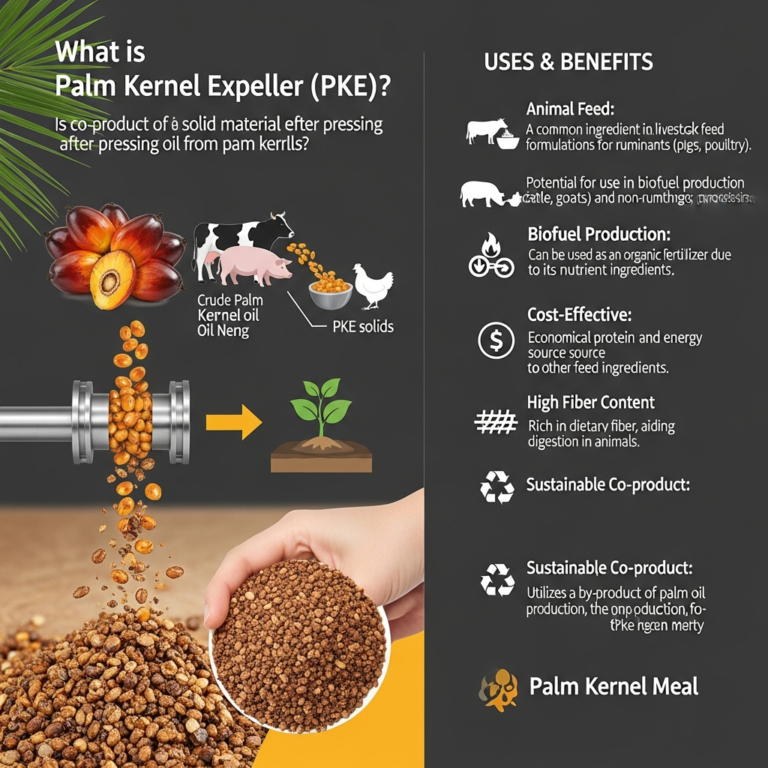
Palm Kernel Expeller (PKE)—frequently referred to as palm kernel cake—is a co-product generated during the mechanical extraction of oil from the nut of the oil palm fruit (Elaeis guineensis). Following the removal of the outer mesocarp pulp for crude palm oil production, the remaining palm nuts are cracked to yield palm kernels.
These kernels undergo screw pressing to extract crude palm kernel oil, leaving behind a dense, fibrous cake that is typically converted into meal or crushed pellets. Modern feed formulators rely heavily on Palm Kernel Expeller due to its balanced combination of moderate protein, structural fiber, and residual fat.
According to research cataloged by the Food and Agriculture Organization (FAO), co-products like PKE offer essential dietary energy for dairy cows, beef cattle, sheep, and goats without causing ruminal acidosis.
Mechanical Extraction vs. Chemical Solvent Extraction
The manufacturing process directly determines the final nutritional value and energy density of the feed. Mechanical screw pressing yields traditional expeller cake, retaining a notable portion of residual oil that enhances metabolizable energy.
In contrast, solvent extraction uses chemical solvents like hexane to extract maximum oil, resulting in solvent-extracted palm kernel meal with lower fat and energy levels. Purchasing managers must differentiate between these processing formats when evaluating contract specifications.
Physical Characteristics and Pelleting Advantages
Raw expeller meal presents as a coarse, brownish powder with a sweet, nutty aroma. However, bulk ocean transport often favors pelleted PKE to streamline logistics and reduce mechanical handling losses.
Pelleted formats significantly increase bulk density, minimize dust generation during port discharge, and maintain uniform particle distribution inside storage silos.

Detailed Palm Kernel Expeller Specifications and Nutritional Profile
Understanding the standard chemical composition of Palm Kernel Expeller is vital when evaluating cargo quality and formulating balanced feed rations. Quality parameters fluctuate slightly based on processing technology and origin.
Mechanical expeller processes retain a higher residual oil content than solvent extraction, delivering increased digestible energy to cattle and other livestock.
Crude Protein and Amino Acid Profile
The average crude protein content of Palm Kernel Expeller ranges between 14.0% and 18.0% on a dry matter basis. Although its protein concentration is lower than soybean meal, its amino acid balance makes it an excellent complementary nitrogen source for adult ruminants.
PKE contains a moderate amount of bypass protein (rumen-undegradable protein), allowing valuable amino acids to reach the lower digestive tract for efficient absorption.
Fiber Fraction and Rumen Stability (NDF & ADF)
Characterized by a high crude fiber content (12.0% to 18.0%) and high Neutral Detergent Fiber (NDF) levels (up to 70%), PKE acts as a digestible fiber provider. This structural fiber promotes healthy ruminal fermentation and stable pH levels.
Unlike starch-heavy grains, the carbohydrate matrix in PKE ferments gradually, drastically reducing the risk of subacute ruminal acidosis (SARA) in high-producing dairy herds.
Energy Density and Residual Crude Fat
Residual oil levels typically range between 6.0% and 10.0% in mechanical expeller meals. This residual fat delivers elevated metabolizable energy without requiring liquid oil additives during feed mixing.
The lipid profile is rich in medium-chain saturated fatty acids, particularly lauric acid, which supports efficient lipid metabolism in ruminants.

| Nutritional Parameter | Typical Range (Mechanical Expeller) | Solvent Extracted Meal Range |
|---|---|---|
| Crude Protein | 14.0% – 18.0% | 16.0% – 19.0% |
| Crude Fat / Residual Oil | 6.0% – 10.0% | 1.0% – 3.0% |
| Crude Fiber | 12.0% – 18.0% | 15.0% – 20.0% |
| Neutral Detergent Fiber (NDF) | 55.0% – 70.0% | 60.0% – 72.0% |
| Acid Detergent Fiber (ADF) | 33.0% – 42.0% | 36.0% – 45.0% |
| Moisture Content | < 12.0% | < 12.0% |
| Total Ash | 3.0% – 6.0% | 4.0% – 7.0% |
| Metabolizable Energy (Ruminants) | 10.5 – 11.5 MJ/kg DM | 9.5 – 10.5 MJ/kg DM |
For specialized dairy operations requiring elevated fat concentrations without altering fiber digestion, blending PKE with Calcium Salts of Palm Oil Fatty Acids delivers targeted bypass fat performance.
Harmonized System (HS Code 2306.60) for Global Trade Compliance
International shipments require precise customs documentation to prevent border clearance delays and inaccurate tariff assessments. The official palm kernel expeller hs code is classified under Chapter 23 of the International Harmonized System maintained by the United Nations Comtrade Database.
The universal tariff structure for this commodity includes:
- HS Code 2306.60: Oil-cake and other solid residues, whether or not ground or in the form of pellets, resulting from the extraction of palm nuts or kernels.
- HS Code 2306.60.10: Specific national sub-heading for pelleted palm kernel expeller cargo.
- HS Code 2306.60.90: National sub-heading designating non-pelleted meal or unground cake residues.
Using the proper HS Code 2306.60 ensures smooth border compliance across major importing countries, including New Zealand, Australia, China, South Korea, and the European Union.
Palm Kernel Expeller Price per Ton 2026 Trends & Cost Factors
Tracking the palm kernel expeller price per ton 2026 requires monitoring global vegetable oil benchmarks, ocean freight rates, and competing protein meals. Global FOB (Free on Board) pricing in major exporting nations like Indonesia and Malaysia generally reflects seasonal oil palm harvesting cycles.
Broader commodity trends cataloged by the USDA Foreign Agricultural Service show that alternative feed ingredients remain highly responsive to primary grain supply shocks.
Primary Market Drivers for 2026 Pricing
Key market forces shaping current price movements include:
- Global Supply of Alternative Protein Meals: When soybean meal or corn prices spike, demand for alternative feeds like PKE and Copra Meal rises, driving up market prices.
- Energy and Biofuel Mandates: Increased industrial use of refined palm products, such as RBD CP8 olein for food and energy, directly influences milling throughput and co-product availability.
- Freight and Maritime Logistics: Bulk dry cargo shipping rates heavily influence CIF (Cost, Insurance, and Freight) pricing delivered to destination ports worldwide.
- Processing Format: Pelleted PKE commands a premium over raw meal due to reduced dust, improved bulk density, and easier handling during transport.
Historically, bulk pricing fluctuates between $160 and $240 per metric ton FOB, depending on seasonal harvest volumes and export tax structures implemented by primary producing nations.
Ruminant and Monogastric Livestock Nutrition Strategies
Due to its physical composition, Palm Kernel Expeller functions primarily as a medium-protein, medium-energy feed ingredient ideal for herbivorous livestock.
Studies indexed in ScienceDirect show that including PKE in livestock rations maintains rumen health, increases milk fat percentages, and supports stable daily liveweight gains.
High-Performance Dairy Rations
Incorporated at 20% to 50% of total daily concentrates, PKE supports butterfat yield and sustains energy balance during peak lactation. Its digestible NDF fraction acts as a buffer against starch-heavy grain diets.
Beef Feedlot Finishing Formulations
PKE can be used up to 80% in feedlot rations as a cost-effective bulk growth promoter when combined with appropriate vitamin and mineral premixes. It offers reliable metabolizable energy for steady liveweight gain.
Small Ruminants, Swine, and Aquaculture
In sheep and goat rations, PKE serves as an affordable energy supplement, provided copper levels are carefully monitored to avoid toxicity in sensitive breeds. In swine and poultry diets, it is used in conservative amounts (5% to 10%) due to monogastric sensitivity to high crude fiber.
For agricultural operations seeking complementary bio-commodities, combining animal nutrition programs with sustainable biomass sourcing like Palm Kernel Shell for industrial energy creates an efficient operational ecosystem.
Furthermore, horticultural and bedding operations often integrate palm and coconut co-products like Cocopeat to enhance farm sustainability and waste management.
Global Quality Control, Moisture Limits, and Logistics Standards
To ensure high quality, major international buyers enforce strict quality assurance protocols before loading bulk shipments of Palm Kernel Expeller.
Commercial suppliers must strictly control moisture levels below 12% to prevent mold growth, self-heating, and aflatoxin development during long ocean voyages. Independent inspection companies conduct pre-shipment sampling to verify crude protein, moisture, ash, and sand contents against contract terms.
Furthermore, leading international feed safety certifications—such as GMP+ and FAMI-QS—are increasingly required by global import authorities to safeguard food chain integrity.

Makmur Amanah Sejahtera provides high-quality palm products such as Palm Kernel Expeller, Palm Kernel Shell, Crude Palm Oil, Palm Kernel Oil, etc. Kindly contact us at WhatsApp +6282140002198 or email us at admin@makmuramanah.co.id.
Frequently Asked Questions
What is the standard HS code for Palm Kernel Expeller?
The international Harmonized System (HS) code for Palm Kernel Expeller is 2306.60. This tariff code covers oil-cake and solid residues resulting from the extraction of palm nuts or kernels, available as pellets or meal.
What is the typical protein content of Palm Kernel Expeller?
The crude protein content generally ranges between 14.0% and 18.0% on a dry matter basis, making it a reliable medium-protein feed ingredient for ruminant rations.
How does Palm Kernel Expeller compare to Copra Meal?
While both are coconut and palm co-products, copra meal generally features slightly higher protein (20%–22%), whereas PKE offers higher digestible fiber (NDF), making it an ideal rumen-stabilizing ingredient for cattle.
Why is pelleted Palm Kernel Expeller preferred for bulk shipping?
Pelleting increases bulk density, reduces dust generation during handling, improves flowability in silos, and prevents segregation during ocean transport.
Where can I procure high-grade Palm Kernel Expeller in bulk?
Reputable manufacturers and exporters like Makmur Amanah Sejahtera supply premium-grade, certified PKE directly from major production hubs in Southeast Asia.
Strategic Conclusions on Sourcing Palm Kernel Expeller
Securing high-grade Palm Kernel Expeller at competitive rates requires reliable supplier partnerships, strict quality control verification, and a clear understanding of international market dynamics. As global livestock producers continue prioritizing cost efficiency and nutritional balance in 2026, PKE remains a reliable core component of modern ruminant feeding strategies.
Partnering with certified producers guarantees consistent product specifications, compliant logistics, and transparent pricing tailored to your bulk commercial requirements.
 English
  Indonesian
  Chinese
  Arabic