
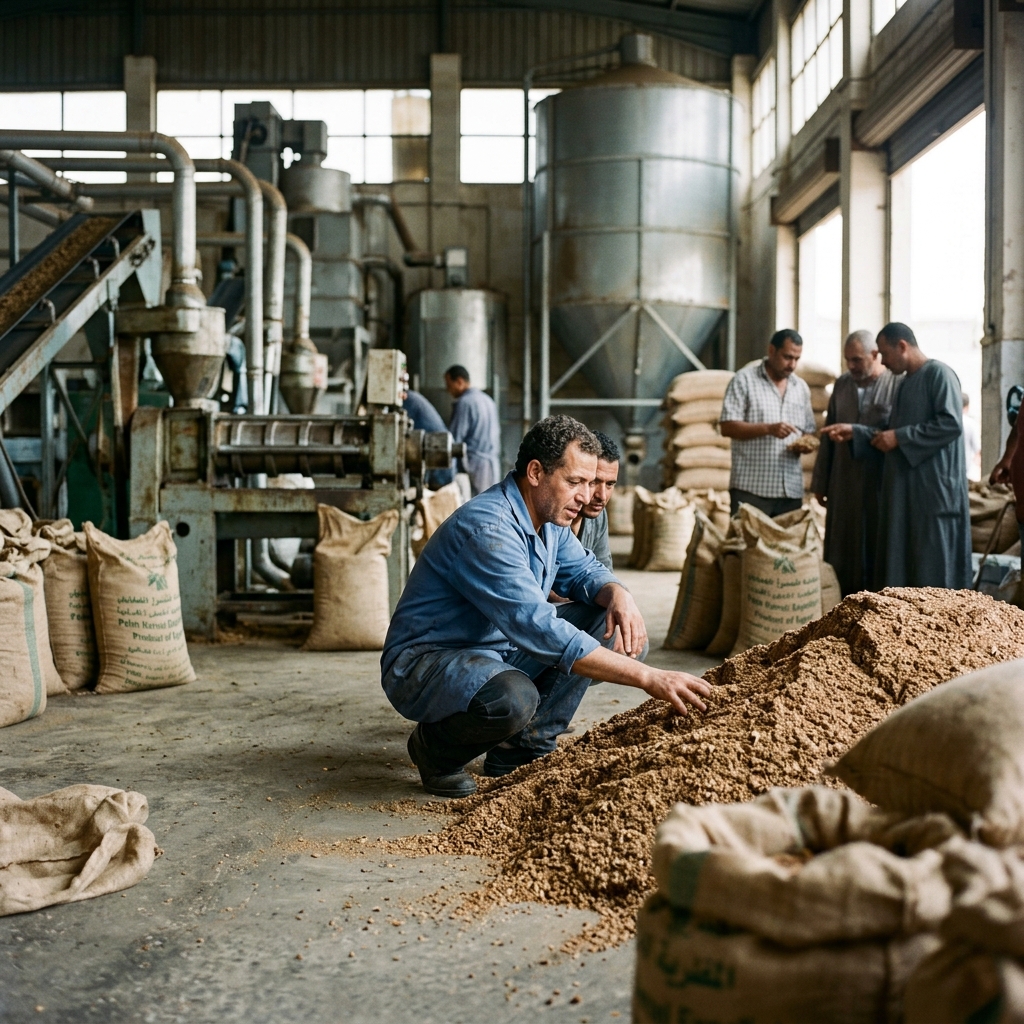
Palm Kernel Expeller Egypt: Ultimate Guide to Uses, Specifications & Price Per Ton (2026)
Palm Kernel Expeller Egypt supply chains have become vital for dairy and beef cattle operations across North Africa. Egyptian feed manufacturers face skyrocketing costs for traditional grains such as yellow corn and soybean meal. Consequently, commercial livestock managers actively seek energy-rich, high-protein alternatives to sustain farm profitability.
Palm Kernel Expeller (PKE) offers an ideal balance of crude protein, metabolizable energy, and digestible neutral detergent fiber. By incorporating this natural byproduct into daily total mixed rations (TMR), Egyptian feed compounders significantly lower feed expenditures while protecting herd health. In this definitive 2026 guide, you will master procurement strategies, ration formulation, and pricing dynamics for the Egyptian feed market.
What is Palm Kernel Expeller Egypt and How Is It Produced?
Palm Kernel Expeller (PKE), also known as palm kernel meal, is a plant-based agricultural byproduct obtained from mechanical extraction of oil from oil palm seed endosperms. Recognized across North Africa as an effective ruminant feed additive, PKE provides 14% to 18% crude protein alongside highly digestible dietary fiber ideal for Egyptian livestock.
The manufacturing process relies primarily on mechanical screw pressing rather than chemical solvent extraction. This mechanical expeller technique leaves a residual fat content of 6% to 10%, which increases dietary energy density without requiring expensive added fats. Processing mills crush the seed coat, extract crude palm kernel oil, and form the remaining nutrient-dense meal into solid, easy-to-ship pellets.

Egyptian buyers prefer mechanical expeller meal over solvent-extracted meal because natural residual oils enhance palatability and animal energy intake. According to official market assessments published by the Food and Agriculture Organization (FAO), tropical agricultural residues represent one of the fastest-growing commodity categories entering North Africa.
When you import Palm Kernel Expeller into Egypt, partnering with established Asian processors guarantees uniform pellet density, low moisture percentages, and freedom from aflatoxins during transit.
Understanding Palm Kernel Expeller Egypt Market Demand in 2026
Egypt maintains one of the largest ruminant populations in the MENA region, counting millions of dairy cows, native water buffaloes (Gamoosa), and sheep. Feeding these herds requires a steady stream of imported raw feed materials. Rising global supply chain bottlenecks prompt Egyptian feed mills to diversify away from pure corn-soybean diets.
The national demand for Palm Kernel Expeller Egypt imports has expanded by over 18% entering 2026. Reports from the USDA Foreign Agricultural Service demonstrate that Egyptian compounders utilize tropical protein meals to hedge against international grain price fluctuations.
Furthermore, commercial dairy nutritionists value PKE for its low-risk carbohydrate profile. Unlike high-starch corn rations that trigger ruminal acidosis during hot Mediterranean summers, PKE supplies slow-digesting fibers that stabilize rumen pH while preserving daily milk production.
Nutritional Specifications of Palm Kernel Expeller Egypt for Dairy Cows and Livestock
Formulating high-efficiency rations requires precise nutritional laboratory data. Every animal feed importer Egypt enterprise must evaluate quality assurance certificates prior to accepting port deliveries.
PKE functions as a dual-purpose component, bridging the gap between high-cost soybean meal and high-starch grains. Importers evaluating options frequently compare PKE with alternative tropical feeds like Copra Meal when balancing total dietary fat and protein targets for high-yielding herds.
| Nutritional Parameter | Standard Specification (%) | Impact on Cattle Feed Egypt Formulations |
|---|---|---|
| Crude Protein (CP) | 14.0% – 18.0% | Promotes tissue growth and optimizes dairy milk protein yields. |
| Crude Fat / Residual Oil | 6.0% – 10.0% | Delivers dense metabolizable energy without destabilizing rumen flora. |
| Crude Fiber (CF) | 12.0% – 18.0% | Stimulates rumination and supports healthy chewing behavior. |
| Neutral Detergent Fiber (NDF) | 55.0% – 65.0% | Provides sustained-release energy for optimal digestible fiber intake. |
| Moisture Content | Max 12.0% | Inhibits mold growth and mycotoxins during maritime transit. |
| Shell & Foreign Dirt | Max 10.0% | Low sand/silica ensures high digestibility and minimal equipment wear. |

How Palm Kernel Expeller Egypt Supports Dairy Feed Efficiency
Dairy cattle in Egypt face severe environmental heat stress throughout extended summer months. Digesting high-starch corn generates high internal fermentation heat, causing heat stress and sudden drops in milk output. Conversely, Palm Kernel Expeller Egypt formulations create less heat increment during fiber breakdown.
Leading dairy nutritionists pair PKE with energy-dense bypass fats such as Calcium Salts of Palm Oil Fatty Acids. This combination maintains overall butterfat percentages while protecting heat-stressed cows against energy deficits.
Chemical Composition and Crude Protein Content PKE vs Commercial Feeds
Evaluating the true chemical value of the crude protein content PKE reveals significant bypass protein benefits. Approximately 30% to 40% of PKE crude protein escapes degradation in the rumen, moving directly into the abomasum and small intestine for absorption.
This high ruminal escape rate provides essential amino acids directly to lactating cows and growing beef cattle. Furthermore, using soil-enhancing agricultural amendments like Cocopeat in regional feed-crop production reinforces the broader sustainability of integrated palm biomass solutions.
7 Key Benefits of Using Palm Kernel Expeller Egypt in Ruminant Feeds
Integrating bulk Palm Kernel Expeller Egypt stock into everyday feed rations provides substantial performance and financial rewards:
- Acidosis Risk Reduction: PKE supplies non-acidogenic carbohydrates, making it a safe replacement for rapid-fermenting yellow corn.
- Significant Cost Savings: PKE typically trades at a 30% to 45% discount compared to imported soybean meal, dramatically lowering total ration costs.
- Elevated Bypass Protein: The high proportion of rumen-undegradable protein directly supports tissue repair and milk production.
- Enhanced Fat & Solids Yield: Digestible medium-chain fatty acids support higher butterfat percentages in cows and water buffaloes.
- Exceptional Storage Stability: Low moisture levels prevent mold development in humid port warehouses in Damietta and Port Said.
- Superior Pelleting Properties: PKE functions as a durable natural binder, minimizing fines during commercial feed manufacturing.
- Sustainable Eco-Friendly Feed: Repurposing palm fruit co-products reduces the carbon footprint of intensive animal farming.
Scientific studies indexed on ScienceDirect confirm that replacing up to 30% of concentrate grains with high-grade palm kernel expeller maintains average daily gain (ADG) in fattening calves while decreasing total feed costs per kilogram of gain.
Palm Kernel Expeller Egypt Price Per Ton Trends and Import Economics
Understanding market price movements for palm kernel expeller price per ton Egypt allows commercial procurement managers to optimize order timing. Global market prices generally range between $180 USD and $270 USD per metric ton FOB (Free on Board) depending on harvest volumes and global ocean freight rates.

Key economic factors driving landed costs in Alexandria include:
- Indonesian & Malaysian Production Yields: Monsoons and harvest seasonality in Southeast Asia directly dictate global FOB benchmark pricing.
- Maritime Logistics & Freight Rates: Bunker fuel prices and vessel availability across key trade routes affect CIF prices.
- Customs Duties & Port Inspection Fees: Terminal handling charges, quarantine inspections, and import tariffs at Egyptian clearance ports.
- Foreign Exchange Volatility: Exchange rate fluctuations between the US Dollar and Egyptian Pound (EGP) impact local purchasing power.
Commodity purchasing agents track international benchmarks using financial tracking tools like IndexMundi Commodity Indexes to execute contracts during favorable market dips.
How to Buy Palm Kernel Expeller in Egypt: Step-by-Step Importer Guide
If you are exploring how to buy palm kernel expeller in Egypt, following a structured procurement strategy ensures smooth regulatory clearance and consistent feed quality.
1. Define Specifications and Order Volumes
Determine exact feed requirements based on herd type. Request full specifications of palm kernel expeller for dairy cows from suppliers, focusing on crude protein (min 14%), fat (min 6%), and moisture (max 12%).
2. Choose Shipping Containers vs. Bulk Vessels
Small to medium mills benefit from importing standard 20-foot GP containers (holding 18–20 MT in bulk or jumbo bags). Large feed aggregators opt for breakbulk vessels (5,000–10,000 MT) to achieve maximum freight discount per ton.
3. Verify Egyptian Import Compliance
Ensure your supplier supplies all documentation required by the Egyptian General Organization for Export and Import Control (GOEIC), including Phytosanitary Certificates, Certificates of Origin, and non-GMO statements.
Logistical Logistics: Shipping to Alexandria Port, Port Said, and Damietta
Major Egyptian seaports handle bulk agricultural imports efficiently. Alexandria Port and El-Dekheila handle the largest volume of feed materials, offering extensive silo storage and direct rail connections to agricultural regions in the Nile Delta.
Port Said and Damietta provide excellent container discharge terminals. Transporting containerized shipments directly from port to inland feed mills minimizes transit delay and protects cargo from humid coastal air.
Comparing Palm Kernel Expeller Egypt with Other Feed Ingredients
To maximize total feed profitability, formulators must compare the performance profile of Palm Kernel Expeller Egypt against alternative ingredients used across North Africa.
Soybean meal provides high protein (44%–48%) but carries a premium cost. Yellow corn supplies high energy via rapid starch, but excessive amounts increase ruminal acidosis risk. PKE delivers a balanced midway option, offering non-acidogenic energy alongside valuable bypass protein.
In addition to livestock feed ingredients, tropical palm supply chains produce industrial biomass options such as Palm Kernel Shell for industrial energy generation and refined food-grade oils like RBD CP8 olein, demonstrating the versatility of the palm industry.
Cross-referencing trade statistics from the World Bank Commodity Markets underscores how alternative feedstuffs like PKE buffer national livestock industries against price shocks in primary grains.
Formulating Rations for Cattle Feed Egypt and Water Buffaloes
When mixing commercial cattle feed Egypt rations, nutritionists recommend introducing PKE gradually over 10 to 14 days. This adjustment window lets ruminal microbes adapt to digestible fiber and residual fat contents.
For lactating dairy cattle, optimal inclusion rates range from 15% to 25% of total dry matter intake (DMI). Fattening beef calves and native water buffaloes can efficiently utilize up to 30% PKE in complete concentrate feeds.
Makmur Amanah Sejahtera provides high-quality palm products such as Palm Kernel Expeller, Palm Kernel Shell, Crude Palm Oil, Palm Kernel Oil, etc. Kindly contact us at WhatsApp +6282140002198 or email us at admin@makmuramanah.co.id.
Frequently Asked Questions
What is the current price per ton of Palm Kernel Expeller in Egypt?
The price per ton of Palm Kernel Expeller Egypt ranges between $210 USD and $280 USD CIF Alexandria or Damietta in 2026. Landed costs depend on global palm oil output, ocean shipping rates, order volume, and specific crude protein quality parameters.
Why do Egyptian feed mills import palm oil byproducts for ruminants?
Egyptian compounders import palm oil byproducts because PKE supplies digestible fiber and protein at a lower cost than corn or soy. It stabilizes rumen health, lowers acidosis risk during summer heat, and enhances butterfat production in dairy cows.
What are the key specifications of palm kernel expeller for dairy cows?
Standard specifications of palm kernel expeller for dairy cows include 14–18% crude protein, 6–10% residual fat, 12–18% crude fiber, maximum 12% moisture, and under 10% shell/dirt content. High bypass protein makes it suitable for lactating herd diets.
Can Palm Kernel Expeller fully replace soybean meal in Egyptian cattle rations?
PKE cannot completely replace soybean meal due to crude protein differences (16% vs 46%). However, replacing 20% to 30% of high-cost grains with PKE significantly reduces overall ration costs while maintaining daily weight gains and milk yields.
How to buy palm kernel expeller in Egypt with guaranteed quality?
To learn how to buy palm kernel expeller in Egypt securely, contract with verified exporters providing independent lab Certificates of Analysis (COA), Phytosanitary clearances, and non-GMO documentation meeting Egyptian GOEIC import regulations.
Conclusion
Optimizing feed costs requires sourcing nutritious, dependable ingredients that keep livestock productive and profitable. Incorporating premium Palm Kernel Expeller Egypt imports into daily rations enables dairy and beef producers to offset expensive corn and soybean meal while supporting animal digestive health year-round.

By reviewing exact laboratory specifications, monitoring market pricing trends, and partnering with experienced global exporters, Egyptian feed manufacturers can secure a reliable supply of top-tier feed materials. Upgrade your herd efficiency today by choosing trusted international partners for all your Palm Kernel Expeller Egypt import requirements.

 English
  Indonesian
  Chinese
  Arabic