
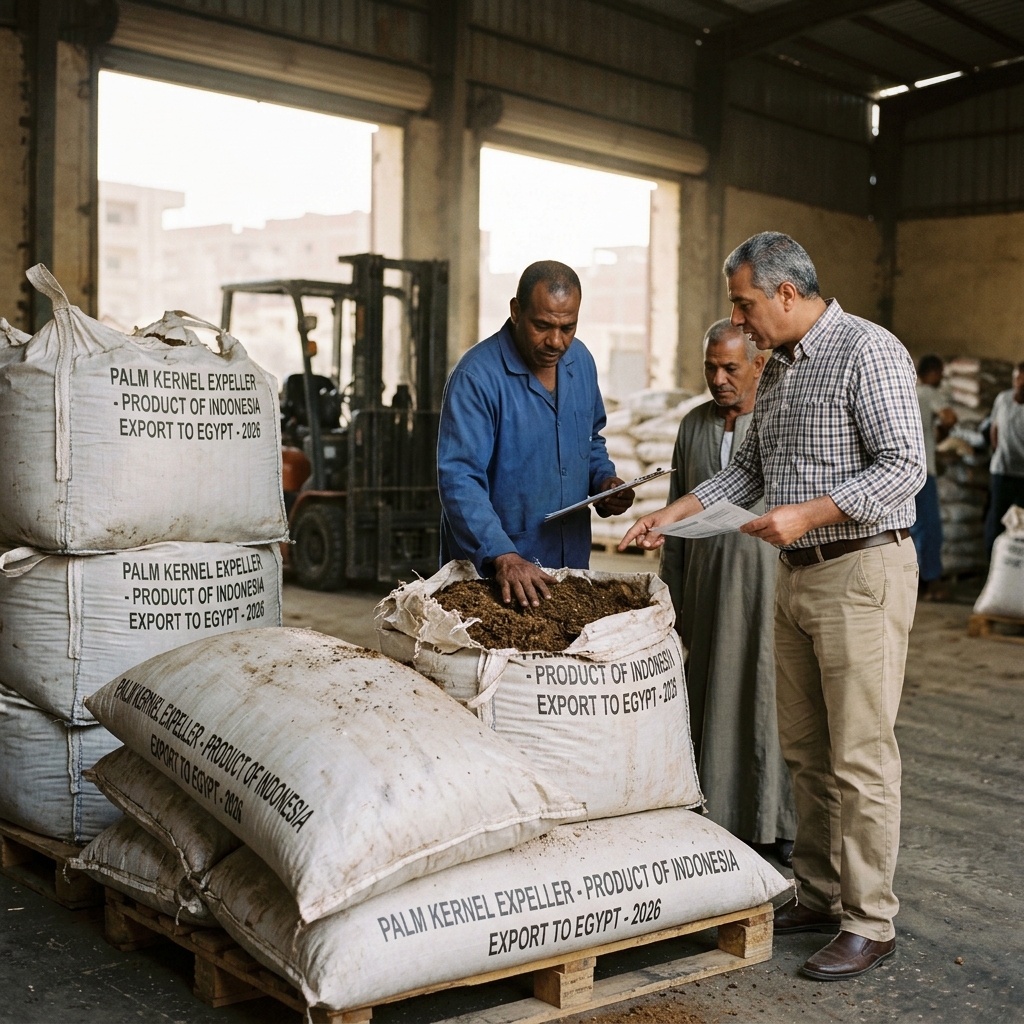
Securing high-grade Palm Kernel Expeller for Egypt provides animal nutritionists and feed millers with a proven hedge against volatile grain markets in 2026. Egyptian livestock operations face rising costs for imported yellow corn and soybean meal, squeezing margins across commercial beef fattening and dairy production. By incorporating top-tier mechanical-pressed palm kernel cake into daily rations, feed manufacturers maintain dietary energy and bypass protein levels while substantially lowering feed formulation expenses.
According to economic reports by the USDA Foreign Agricultural Service, Egypt imports over 60% of its coarse feed grains annually, making the domestic livestock industry sensitive to currency devaluation and international shipping tariffs. As commercial dairy enterprises across the Nile Delta and Upper Egypt scale up milk yields, demand for consistent, high-fiber energy feeds has surged. Sourcing certified palm by-products directly from dedicated processing mills in Indonesia provides a stable, year-round raw material supply chain.
Understanding Palm Kernel Expeller for Egypt: Technical Profile and Rumen Dynamics
Palm Kernel Expeller (PKE) is a nutrient-dense, fiber-rich feed co-product obtained through the mechanical screw-pressing of crushed palm kernels after primary oil extraction. Containing 14% to 18% crude protein, 6% to 10% residual oil, and balanced neutral detergent fiber (NDF), PKE serves as an outstanding medium-energy feed ingredient designed to optimize rumen health and prevent subacute ruminal acidosis (SARA) in dairy and beef herds.
Livestock producers in Egypt frequently struggle with rumen digestive disorders caused by over-reliance on starchy concentrates. In contrast, mechanical PKE releases digestible energy gradually through hemicellulose fermentation rather than rapid starch degradation. Research published by the Food and Agriculture Organization (FAO) confirms that fibrous by-products like palm kernel meal improve rumen cellulolytic bacterial populations, stabilizing pH levels even during peak summer heat stress.
Furthermore, peer-reviewed findings in the Journal of Animal Science highlight that the physical texture of PKE stimulates mastication and natural saliva flow in cattle. This buffering mechanism protects high-producing lactating cows from metabolic swings, supporting steady butterfat percentages and sustaining total daily milk output without excessive concentrate feeding costs.
Key Quality Indicators of Palm Kernel Expeller for Egypt
Not every shipment of palm kernel residue meets commercial feed standards. Discerning feed producers must inspect three critical physical attributes when ordering Palm Kernel Expeller for Egypt: moisture balance, color, and aroma. Fresh, premium expeller presents an appealing golden-to-medium brown color with a pleasant, toasted nutty aroma.
Conversely, dark black cakes signify extreme thermal scorching during expeller screw processing, which severely denatures amino acids and renders crude protein indigestible. An acrid or sour odor suggests elevated free fatty acid (FFA) hydrolysis or mold development resulting from premature vessel loading or water ingress during maritime transit.
Combating Rumen Acidosis During Egyptian Summer Heat
Summer ambient temperatures in the Nile Valley regularly exceed 40°C, causing severe heat stress in Holsteins and crossbred cattle. When heat-stressed cows reduce rumination, salivary bicarbonate buffering decreases, accelerating the onset of subacute ruminal acidosis when fed high-starch corn rations.
Integrating Palm Kernel Expeller for Egypt replaces starch with digestible neutral detergent fiber (NDF). This dietary shift produces a steady, cooler fermentation profile inside the rumen, minimizing internal metabolic heat loads while safeguarding milk components and digestive tract integrity.
Why Sourcing Palm Kernel Expeller for Egypt is Crucial in 2026
Feed compounders throughout Giza, Alexandria, and Sharqia are actively restructuring their baseline recipes to navigate currency fluctuations and regional grain supply disruptions. Sourcing Palm Kernel Expeller for Egypt directly from primary origins offers commercial advantages that standard domestic grain alternatives simply cannot match.
- Cost Arbitrage: PKE typically trades at a 30% to 45% discount compared to benchmark grain ingredients like imported yellow corn and barley, making it the best feed alternative to yellow corn in Egypt.
- Rumen-Bypass Fat Content: Residual ether extract (oil) in expeller-grade PKE provides safe, non-fermentable fatty acids that enhance energy density without disturbing microbial digestion.
- Aflatoxin Resistance: Mechanically extracted palm kernels exhibit exceptionally low susceptibility to dangerous mycotoxins compared to poorly stored local grain stocks.
- Supply Reliability: Indonesian palm processing operates continuously throughout all twelve months, eliminating seasonal harvest gaps.
In addition to dairy cattle, Egyptian sheep and camel feeding systems derive immense value from palm kernel cake. These desert-adapted species process fibrous feeds efficiently, turning cost-effective PKE rations into lean carcass growth and superior wool yield.
Mitigating Foreign Currency Exposure for Feed Integrators
Egyptian feed mills face substantial foreign exchange exposure when procuring dollar-denominated grain cargoes. Because mechanical palm kernel expeller features high nutrient density per dollar, importing bulk PKE reduces total foreign exchange expenditure per ton of manufactured compound feed.
Securing long-term supply contracts with an established Indonesian PKE bulk supplier allows Egyptian procurement teams to hedge against commodity inflation. This structured purchasing strategy stabilizes operational cash flows across volatile fiscal quarters.
Nutritional Composition: PKE Compared to Traditional Egyptian Feed Ingredients
Formulating balanced feed rations requires precise dry matter (DM) nutritional data. Feed mills benchmark palm kernel expeller against common baseline Egyptian livestock feed ingredients such as wheat bran and corn grain. A comprehensive analysis featured in ScienceDirect illustrates how expeller-extracted palm cake bridges the gap between protein meals and pure energy sources.
| Nutritional Parameter | Mechanical PKE | Wheat Bran (Choker) | Yellow Corn #2 |
|---|---|---|---|
| Dry Matter (DM %) | 90.0% – 92.5% | 88.0% – 89.5% | 86.0% – 88.0% |
| Crude Protein (CP %) | 15.0% – 17.5% | 14.5% – 16.0% | 8.0% – 9.0% |
| Crude Fat / Oil (%) | 7.0% – 10.0% | 3.5% – 4.2% | 3.8% – 4.5% |
| Neutral Detergent Fiber (NDF %) | 54.0% – 62.0% | 38.0% – 44.0% | 9.0% – 11.0% |
| Metabolizable Energy (ME MJ/kg Ruminant) | 10.5 – 11.8 | 9.8 – 10.5 | 13.0 – 13.5 |
| Phosphorus (P %) | 0.55% – 0.70% | 0.90% – 1.15% | 0.25% – 0.30% |
This nutritional synergy allows nutritionists to lower their inclusion of expensive soybean meal without risking crude protein deficits. When combined with fiber sources like Copra Meal, PKE delivers a balanced blend of digestible fibers and bypass amino acids tailored for tropical and arid climate feeding conditions.
Synergistic Feeding with Rumen Bypass Fats
While crude protein animal feed ingredients supply essential nitrogen, high-producing ruminants require concentrated energy during early lactation. Balancing palm kernel meal with bypass fats maximizes total milk fat production while sustaining positive energy balance.
Nutritionists frequently blend palm expeller with Calcium Salts of Palm Oil Fatty Acids. This targeted ration design provides rumen-inert lipids directly to the abomasum, allowing dairy herds in Beheira and Menofia to sustain peak lactation curves under challenging climatic conditions.
Strategic Inclusion Rates for Egyptian Livestock Rations
Maximizing returns requires thoughtful dietary integration. While palm kernel expeller features excellent safety margins, its high fiber and moderate copper levels make calibrated inclusion rates essential across different animal categories.
- Commercial Dairy Cattle: Include 15% to 30% of total dry matter intake (DMI) in the dairy cattle feed ration. This level supports milk fat synthesis, maintains rumen buffering, and keeps feed costs optimal during lactation peaks.
- Feedlot Beef Fattening (Baladi & Crossbred Bulls): Incorporate 20% to 40% of total concentrate mix. PKE produces firm, white fat marbling and steady average daily gains (ADG) between 1.2 kg and 1.5 kg per day as a cost-effective livestock meal.
- Sheep and Goats: Limit inclusion to 10% to 20% of concentrate diets. Sheep exhibit natural sensitivity to prolonged copper accumulation, so mineral balancing with zinc and molybdenum is recommended for ruminant nutrition supplements.
- Camel Rations: Feed up to 35% of total concentrate allowance. Camels digest fibrous structural carbohydrates with high efficiency, turning PKE into sustained stamina and body weight retention.
For large agricultural complexes integrating animal husbandry with commercial greenhouse farming, soil conditioning remains equally vital. Commercial operations often import horticultural co-products like Cocopeat in joint container shipments to optimize water-holding capacity in Egyptian desert sandy soils alongside bulk feed consignments.
Import Regulations, Documentation, and Alexandria Port Clearance
Navigating Egyptian maritime import protocols demands rigorous procedural discipline. The Egyptian Customs Authority and the General Organization for Veterinary Services (GOVS) enforce strict phytosanitary and veterinary quarantine controls on bulk agricultural imports arriving at Mediterranean and Red Sea ports.
Every imported consignment of Palm Kernel Expeller for Egypt must comply with national standard specifications established by the Egyptian Organization for Standardization and Quality (EOS). Key regulatory checkpoints include:
- Aflatoxin Tolerances: Total aflatoxins must strictly fall below Egyptian regulatory ceilings (maximum 20 ppb total B1, B2, G1, G2).
- Moisture Thresholds: Moisture must not exceed 10.0% to 12.0% at port of discharge to prevent spontaneous combustion and fungal proliferation inside holds.
- Foreign Matter: Total sand and silica must measure below 2.5%, verified via independent laboratory sampling.
- Quarantine Release Documentation: Shipments require authenticated Certificates of Origin, Phytosanitary Certificates, Non-GMO declarations, and Fumigation Certificates issued at the load port.
Discharging dry bulk animal feed typically occurs at Alexandria, Dekheila, or Damietta ports, where specialized pneumatic grain discharge systems and hopper conveyors unload cargo into bonded warehouse facilities. When handling an Alexandria port feed cargo, working with a reliable palm kernel expeller exporter to Alexandria guarantees timely processing under the Egyptian National Single Window for Foreign Trade platform (Nafeza) and the Advanced Cargo Information (ACI) system.
Supply Chain Logistics: Securing Bulk PKE Shipments from Indonesia
Indonesia remains the global epicenter of oil palm cultivation, processing over 50% of the world’s commercial crop. Direct supply channels connect Indonesian processing hubs in Sumatra and Kalimantan to maritime transit corridors feeding the Suez Canal and Egyptian ports.
Buyers searching for high quality palm kernel expeller for egypt buyers can evaluate two main freight delivery methods depending on their storage footprint, financial liquidity, and local distribution requirements:
- Breakbulk Handysize Vessels: Ideal for major feed syndicates and large integrators procuring between 10,000 and 25,000 metric tons per charter. Bulk shipping offers the lowest per-ton freight rates across maritime routes traversing the Indian Ocean and Red Sea.
- Dry Container Shipments (FCL): Suitable for mid-sized feed plants requiring 100 to 500 metric tons per month. Cargo travels in 20-foot or 40-foot containers loaded with 50 kg woven polypropylene bags or bulk container liners, providing flexibility and minimal port handling loss.
Additionally, agricultural processing plants often procure solid biofuels alongside animal feeds. Industrial operations operating biomass boilers frequently import Palm Kernel Shell in mixed charters to satisfy thermal energy requirements alongside their livestock feed supplies.
Optimizing the Bulk PKE Animal Feed Price Egypt 2026
To capture the most competitive bulk pke animal feed price egypt 2026, importers must optimize vessel turn-around times and negotiate favorable demurrage terms. Synchronizing cargo arrival with off-dock storage capacity prevents costly congestion surcharges at Mediterranean ports.
Furthermore, locking in index-linked FOB contracts directly with Indonesian crushers minimizes intermediate trader markups. This transparent procurement model gives Egyptian feed compounders a long-term commercial edge in domestic retail markets.
Secure Reliable Palm Product Shipments Direct to Egypt
Makmur Amanah Sejahtera provides high-quality palm products such as Palm Kernel Expeller, Palm Kernel Shell, Crude Palm Oil, Palm Kernel Oil, etc. Kindly contact us at WhatsApp +6282140002198 or email us at admin@makmuramanah.co.id.Looking for High-Quality Palm Products?
Frequently Asked Questions About Palm Kernel Expeller for Egypt
What is the crude protein content of Palm Kernel Expeller for Egypt feed mills?
High-quality Palm Kernel Expeller for Egypt delivers between 14.5% and 17.5% crude protein on a dry matter basis. Its balanced bypass protein and rich fermentable fiber allow Egyptian feed compounders to reduce expensive soybean meal and wheat bran inclusions without sacrificing animal performance or total dietary balance.
How does PKE compare to yellow corn for ruminant feeding in Egypt?
Unlike yellow corn, which rapidly degrades via ruminal starch, Palm Kernel Expeller provides sustained energy through digestible hemicellulose and 7% to 10% residual lipids. This distinct metabolic pathway stabilizes rumen pH, prevents subacute acidosis, and lowers batch formulation expenses by 30% to 45%.
What are the mandatory customs documents for importing PKE into Alexandria?
Clearing cargo requires an authenticated Phytosanitary Certificate, Certificate of Origin, Bill of Lading, Non-GMO declaration, Fumigation Certificate, and Certificate of Analysis. All consignments must be preregistered via Egypt’s single-window Nafeza platform to obtain a mandatory ACID number prior to loading at origin.
Can Egyptian feed manufacturers safely feed PKE to poultry and aquaculture?
Palm kernel cake contains significant levels of beta-mannans and insoluble fiber, restricting monogastric digestion. Poultry and aquaculture feeds should cap unfermented PKE inclusion at 3% to 5%. In contrast, ruminants utilize fiber efficiently, thriving on inclusion rates reaching up to 40% of the total diet.
How can importers preserve PKE quality during Egyptian summer warehouse storage?
Importers must ensure warehouse ventilation, stack bagged cargo on wooden pallets away from concrete walls, and verify moisture remains under 10%. Continuous ambient airflow stops damp-induced thermal heating, prevents fungal growth, and inhibits the oxidative rancidity of residual palm kernel oils during hot summer weather.
Building a Resilient 2026 Livestock Feed Supply Chain
Navigating structural shifts in agricultural commodity pricing requires Egyptian agribusinesses to identify dependable, high-performing feed alternatives. Integrating top-grade Palm Kernel Expeller for Egypt secures a consistent hedge against market volatility, delivering essential digestible fiber, valuable bypass protein, and protective residual fats. By partnering with experienced Indonesian exporters dedicated to strict quality criteria, Egyptian livestock operators safeguard herd productivity, optimize ration costs, and solidify long-term commercial profitability throughout 2026 and beyond.
 English
 Indonesian
 Chinese
 Arabic
