
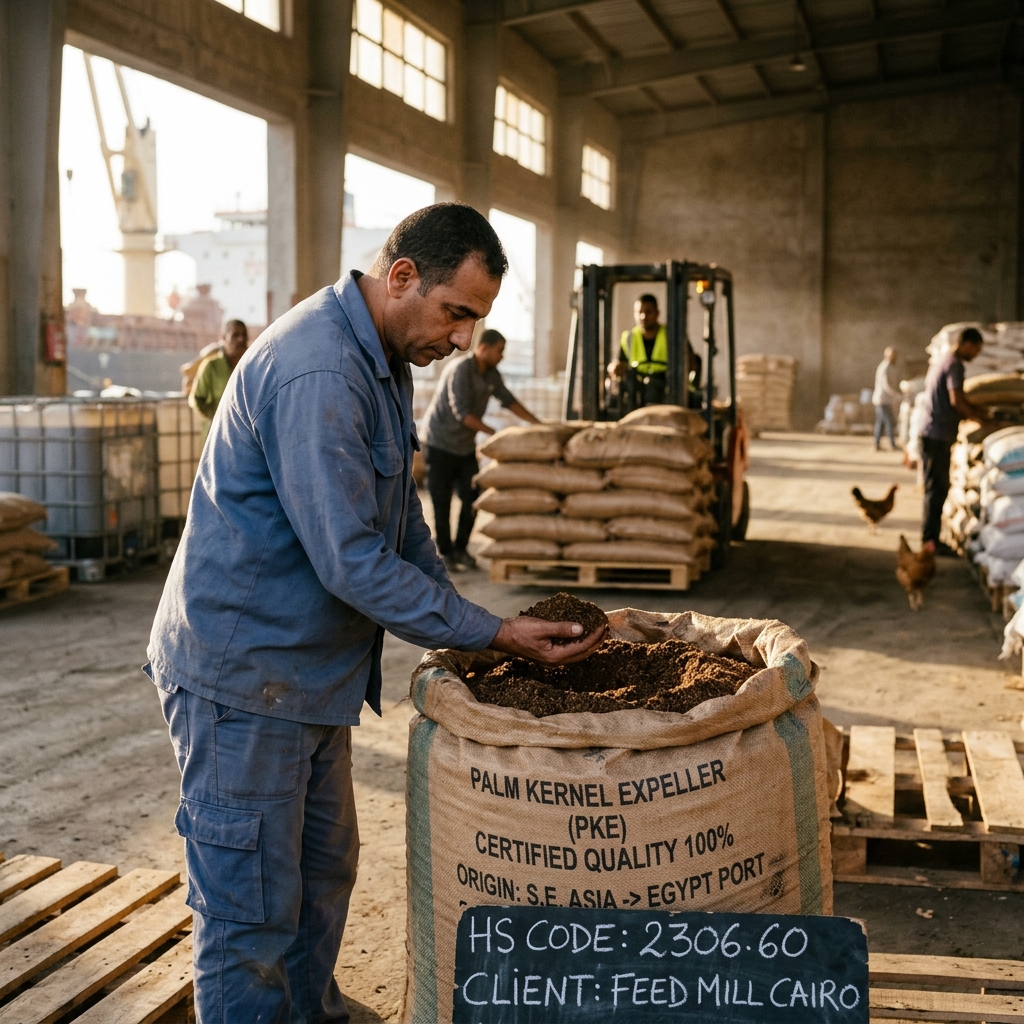
Securing premium Palm Kernel Expeller for Egypt has become a vital commercial strategy for livestock feed millers across the Nile Delta. As global grain markets fluctuate and traditional feedstuffs tighten profit margins, agribusinesses in Cairo, Alexandria, and Giza require resilient, energy-dense feed solutions. This comprehensive operational guide outlines the technical specifications, global customs protocols, and bulk sourcing methods essential for maximizing livestock productivity in 2026.
Egypt’s livestock sector supports over 7.5 million head of cattle, buffalo, and small ruminants. However, domestic feed production satisfies less than 40% of national demand according to the Food and Agriculture Organization (FAO). Feed mills face escalating import bills for yellow corn and soybean meal, prompting commercial nutritionists to seek sustainable Egyptian livestock feed ingredients that maintain rumen health without sacrificing daily milk yield or live-weight gain.
Commercial livestock operations across the Nile Valley increasingly rely on mechanical agro-industrial coproducts to stabilize daily feed rations. By turning to proven tropical oilseed expellers, corporate feed mills can mitigate macroeconomic grain volatility while supporting balanced animal performance.
Understanding Palm Kernel Expeller for Egypt: Nutritional Profile and Feeding Value
Palm Kernel Expeller (PKE) is an agro-industrial co-product generated during the mechanical extraction of oil from the crushed kernel of the oil palm (Elaeis guineensis). It serves as a medium-protein, high-fiber energy source tailored specifically for ruminant rations, providing balanced ruminal fermentation and safe digestion.
When procurement managers purchase Palm Kernel Expeller for Egypt, they acquire a raw material that effectively shields dairy and beef herds from subacute ruminal acidosis (SARA). Because PKE contains high concentrations of neutral detergent fiber (NDF) and residual medium-chain fatty acids, it produces sustained digestive energy without the metabolic risks associated with rapidly fermentable starches.
Nutritionists formulating dairy cattle feed formulation Egypt models prioritize palm kernel meal animal feed to maintain an optimal rumen environment. Because the carbohydrate fraction is predominantly non-starch polysaccharides, expeller cake supports steady cellulolytic bacterial activity, elevating butterfat synthesis even during hot Mediterranean summers.
[Image: High-grade palm kernel expeller pellets ready for export to Egyptian livestock operations | alt: Bulk shipment of Palm Kernel Expeller for Egypt feed mills | title: Premium Palm Kernel Expeller for Egypt Storage and Transport]
Nutritional Breakdown and Crude Protein Expeller Specifications
Integrating Palm Kernel Expeller for Egypt into balanced rations requires an exact understanding of its chemical composition. Procuring materials that meet guaranteed crude protein expeller specifications protects compounders against nutrient variability between inbound ocean shipments.
The meal delivers exceptional consistency when procured from dedicated mechanical crushing mills located throughout Sumatra and Kalimantan. Below are the guaranteed baseline standards and representative lab testing averages for export-grade expeller cake:
| Nutrient Parameter | Guaranteed Standard | Typical Analysis Range | Formulation Benefit |
|---|---|---|---|
| Crude Protein (CP) | Min 14.5% | 15.0% – 17.5% | Cost-effective amino acid foundation |
| Crude Fat / Ether Extract | Min 7.0% | 7.5% – 9.5% | High bypass energy density |
| Crude Fiber (CF) | Max 18.0% | 15.0% – 17.0% | Optimizes rumen mat formation |
| Moisture Content | Max 10.0% | 7.0% – 9.0% | Prevents mold in Egyptian warehouses |
| Total Ash | Max 5.5% | 3.5% – 4.8% | Low inorganic sand/soil contamination |
| Metabolizable Energy (Ruminants) | Min 10.5 MJ/kg | 10.8 – 11.5 MJ/kg | Maintains lactation persistence |
A benchmark study published by ScienceDirect on Ruminant Feed Science confirmed that the residual oil in expeller-grade PKE significantly elevates energy intake while avoiding milk fat depression in commercial dairy herds. This biochemical property makes it an indispensable component for herd health under warm climatic conditions.
Optimizing Palm Kernel Expeller for Egypt in Dairy and Beef Diets
Egyptian dairy producers typically blend mechanical expeller meal at inclusion rates between 15% and 30% of total dry matter intake (DMI). In Holstein-Friesian herds located along the Cairo-Alexandria Desert Road, feed managers combine Palm Kernel Expeller for Egypt with Egyptian clover (Berseem) and corn silage to lower production costs per liter of raw milk.
In fattening beef operations, importing palm kernel expeller for egypt dairy farms and feedlots accelerates daily live-weight gain while minimizing the occurrence of frothy bloat. Beef finishers often incorporate high-fiber expeller cake alongside energy supplements to sustain average daily gains exceeding 1.35 kilograms per head.
Feed managers frequently complement PKE rations with high-protein copra meal or specialized rumen-bypass calcium salts of palm oil fatty acids to achieve an optimized dietary balance for transition cows. In intensive commercial feed compounds, processors also incorporate technical energy supplements like refined RBD CP8 olein to elevate caloric density during peak production cycles.
Furthermore, major agribusinesses cultivating reclaimed desert acreage integrate natural soil amendments like horticultural cocopeat for moisture retention, demonstrating the comprehensive value of tropical agro-industrial coproducts across Egyptian agricultural supply chains.
Egyptian Customs Regulations: HS Code and Import Documentation
Navigating Egyptian trade customs demands strict adherence to regulatory standards established by the Ministry of Agriculture and Land Reclamation (MALR) and the General Organization for Export and Import Control (GOEIC).
The internationally standardized tariff classification for this agro-commodity is classified under the World Customs Organization Harmonized System:
- Harmonized System (HS) Code: HS Code 2306.60 Egypt designates oilcake and other solid residues of palm nuts or kernels, whether or not ground or in the form of pellets.
- Tariff Treatments and Duties: Inquiries regarding customs duties on palm kernel expeller in egypt show that animal feed raw materials enjoy duty-free or preferential duty status, coupled with statutory VAT exemptions for primary agricultural production inputs.
- ACI (Advanced Cargo Information) System: Importers must generate a mandatory 19-digit ACID number via the Egyptian Nafeza trade portal prior to cargo loading at origin terminals.
Understanding regional import protocols allows feed processors to avoid demurrages and inspection hold-ups. The Advanced Cargo Information framework mandates strict digital pre-registration of bills of lading, supplier invoices, and chemical safety documents before departure from Southeast Asia.
Mandatory Document Package for Alexandria and Port Said Entry
Clearance officers enforce strict phytosanitary rules on every ocean bill of lading. Egyptian feed buyers must guarantee that their bulk feed supplier Indonesia delivers the following verified paperwork for Alexandria port customs clearance feed processes:
- Clean Commercial Invoice and Packing List: Authenticated with exact gross and net metric tonnage, lot numbers, and contract references.
- Certificate of Origin (Form ICO / Ordinary COO): Validated by the Indonesian Chamber of Commerce and Industry (KADIN) confirming Indonesian harvest and extraction origin.
- Government Phytosanitary Certificate: Issued by the Indonesian Agricultural Quarantine Agency confirming that the consignment is free from Khapra beetle (Trogoderma granarium), weed seeds, and live insect infestation.
- Independent Inspection Certificate (SGS, Intertek, or Sucofindo): Confirming that the shipment meets contractual protein, moisture, ash, sand, and aflatoxin thresholds.
- Fumigation and Radiation Clearance Certificates: Demonstrating vessel cargo hold treatment with aluminum phosphide (PH3) prior to maritime transit.
[Image: Step-by-step Egyptian cargo clearance workflow infographic showing ACID generation, port arrival, and quality testing | alt: Flowchart of customs protocols for importing Palm Kernel Expeller for Egypt | title: Egyptian Port Clearance Guide for Palm Kernel Expeller]
Key Specifications of Palm Kernel Expeller for Egypt Feed Mills
Climatic considerations in Upper and Lower Egypt dictate explicit physical specifications. Because summer temperatures in Egyptian storehouses frequently surpass 40°C, any excess moisture within cargo holds introduces destructive fungal proliferation and dry matter shrinkage.
Strict palm kernel expeller specifications for egyptian livestock mandate moisture caps at 10.0%. Maintaining total aflatoxin levels well below 20 parts per billion (ppb) protects the metabolic performance of dairy herds and shields milk supplies from toxic residues.
Bulk purchasers of Palm Kernel Expeller for Egypt must distinguish between solvent-extracted meal (known as Palm Kernel Meal or PKM) and mechanically pressed cake (PKE). Solvent-extracted variants feature minimal residual lipids (1.0% to 2.5%), whereas mechanical expeller pressing leaves 7.0% to 9.5% residual palm kernel oil. This oil fraction provides an essential burst of bypass fat that nourishes high-producing cattle in intensive feedlots.
Pellet stability is equally vital for Egyptian bulk receivers. Expeller pellets must possess adequate hardness to prevent excessive fines and dust generation during high-speed crane grab discharge at marine terminals, ensuring smooth conveyer transshipment into silos.
[Image: Laboratory technician testing moisture and protein levels of palm kernel expeller samples | alt: Quality control analysis of Palm Kernel Expeller for Egypt livestock rations | title: Palm Kernel Expeller Quality Assurance Protocol]
Logistics and Ocean Freight: From Indonesian Terminals to Egyptian Ports
Indonesia remains the world’s preeminent producer of palm products, processing tens of millions of metric tons annually. Securing dependable maritime transport from regional supply hubs to Egypt requires proven logistics expertise and deep maritime relationships.
Typical bulk ocean freight routes commence from strategic loading ports in Sumatra or Kalimantan, such as Belawan, Dumai, or Panjang. Bulk carrier vessels navigate through the Malacca Strait, across the northern Indian Ocean, and enter the Red Sea toward the Suez Canal, or sail directly to Mediterranean discharge docks.
- Destination Port Alexandria / El Dekheila: Egypt’s premier dry-bulk terminal, featuring deep-water discharge berths and high-speed vacuum discharge facilities for Supramax and Panamax bulk carriers.
- Destination Port Damietta: Strategically situated along the eastern branch of the Nile to supply industrial feed compounders based in Dakahlia, Gharbia, and Kafr El Sheikh.
- Destination Port Said: Serves processing facilities, integrated poultry companies, and private dairy cooperatives throughout the eastern canal region.
- Containerized Shipments: Dispatched in 20-foot dry containers outfitted with food-grade polyethylene liners, providing 22 to 24 metric tons per container for mid-sized compounding plants.
Aside from animal feed supplies, many Egyptian industrial cement and energy operations import clean biomass fuel like palm kernel shell for industrial boilers, capitalizing on combined dry-bulk logistics routes from the same maritime supply terminals.
Macroeconomic market analyses compiled by the World Bank Agricultural Trade Data indicate that streamlining dry-bulk supply routes between Southeast Asia and Mediterranean hubs directly insulates developing livestock industries from geopolitical logistics disruptions.
[Video Topic Suggestion: Live discharge of bulk Palm Kernel Expeller at Port of Alexandria, detailing quality sampling, grain conveyor handling, and bulk truck transshipment.]
Economic Analysis: Comparing PKE with Conventional Feedstuffs
Cost management remains the single largest variable determining the financial solvency of livestock producers in Egypt. The Egyptian Pound’s adjustment against foreign currencies has elevated the landed price of imported grains, forcing nutritionists to reconstruct traditional feed matrixes.
Substituting a portion of expensive corn and wheat bran with Palm Kernel Expeller for Egypt delivers substantial cost savings without degrading feed conversion efficiency. Below is an economic comparison of standard commercial feed ingredients accessible on the Egyptian wholesale market:
| Raw Material | Crude Protein (%) | Fat Content (%) | Primary Dietary Role | Relative Cost Index per MT |
|---|---|---|---|---|
| Palm Kernel Expeller | 15.0% – 17.0% | 7.5% – 9.0% | Medium protein & rumen-safe energy | Benchmark Base (100) |
| Imported Yellow Corn (USA/ARG) | 8.0% – 9.0% | 3.5% – 4.0% | High starch energy source | 145 – 165 |
| Domestic Wheat Bran (Redda) | 14.0% – 15.5% | 3.0% – 4.0% | Fiber & moderate protein | 115 – 130 |
| Soybean Meal (44% CP) | 44.0% – 46.0% | 1.0% – 2.0% | Primary concentrated protein | 240 – 280 |
By replacing up to 25% of yellow corn and 15% of wheat bran in a finished dairy total mixed ration (TMR), commercial operators routinely reduce overall feed expenditure by 12% to 18%. This fiscal margin protects herd operators during periods of localized market volatility.
When livestock producers seek the best bulk supplier palm kernel expeller for egypt operations, they secure contracts that lock in predictable raw material expenses across multiple milking cycles, ensuring sustained commercial viability.
[Image: Modern dairy herd eating a total mixed ration containing palm kernel expeller on an Egyptian farm | alt: Dairy cows eating total mixed ration with Palm Kernel Expeller for Egypt | title: Dairy Cattle Rations Using Palm Kernel Expeller]
Makmur Amanah Sejahtera provides high-quality palm products such as Palm Kernel Expeller, Palm Kernel Shell, Crude Palm Oil, Palm Kernel Oil, etc. Kindly contact us at WhatsApp +6282140002198 or email us at admin@makmuramanah.co.id.
Frequently Asked Questions About Palm Kernel Expeller for Egypt
What is the exact HS code for Palm Kernel Expeller in Egypt?
The standard international HS code for Palm Kernel Expeller imported into Egypt is 2306.60.00. This commodity code designates residues from palm nut or oil kernel processing. Importers must declare this classification accurately within the Egyptian Nafeza platform to ensure streamlined clearance.
How much PKE can be included in Egyptian cattle rations?
Commercial livestock nutritionists recommend including between 15% and 30% of dry matter intake for dairy and beef cattle. PKE supplies safe digestive energy, bypass fat, and digestible fiber, shielding animals against ruminal acidosis during elevated seasonal heat.
What documents are required by Egyptian customs for PKE clearance?
Clearance protocols require a valid ACID registration, an authenticated Commercial Invoice, a Packing List, a Certificate of Origin (Form ICO), an Official Indonesian Phytosanitary Certificate, an Independent Inspection Certificate (SGS/Sucofindo), and an in-transit Fumigation Certificate.
How does PKE compare to traditional corn-soy feeds in Egypt?
PKE offers 14.5% to 17% crude protein and approximately 8% residual fat at a lower cost per ton than imported corn or soy. It stabilizes the rumen environment and delivers an economical foundation of energy and protein for ruminant herds.
What is the typical shelf life of PKE in Egyptian storage conditions?
When kept below 10% moisture content in well-ventilated dry warehouses, expeller pellets remain stable for 6 to 9 months. Maintaining proper aeration prevents moisture accumulation and protects the cargo against mold growth during peak summer heat.
Strategic Sourcing: Partnering with a Dependable Bulk Supplier
Maximizing feed mill profitability across Egyptian governorates requires a dependable supply chain partner capable of guaranteeing product consistency, competitive ocean freight rates, and regulatory compliance. Indonesian origins remain the most cost-effective and chemically consistent source of mechanical expeller meal globally.
By establishing long-term supply agreements with verified Indonesian processors, Egyptian agribusinesses protect their supply pipelines against sudden market disruptions. Direct sourcing eliminates unnecessary intermediary commissions and ensures that every delivered parcel satisfies regional moisture and aflatoxin limits.
Agribusinesses sourcing Palm Kernel Expeller for Egypt benefit from integrated quality inspections at the point of origin. Verifying moisture, protein, and free fatty acid levels prior to loading ensures cargo arrives in pristine condition at Mediterranean ports.
To conclude, integrating certified Palm Kernel Expeller for Egypt into domestic livestock diets delivers superior feed conversion ratios, improves milk butterfat levels, and shields agricultural companies against volatile grain markets. Begin optimizing your feed production costs today by procuring certified, factory-direct shipments designed to propel your operations forward in 2026.
 English
 Indonesian
 Chinese
 Arabic
