 by admin
Coconut Shell Charcoal: 5 Incredible Benefits & The Ultimate Guide
Table of Contents
- What Is Coconut Shell Charcoal?
- How Is Coconut Shell Charcoal Made?
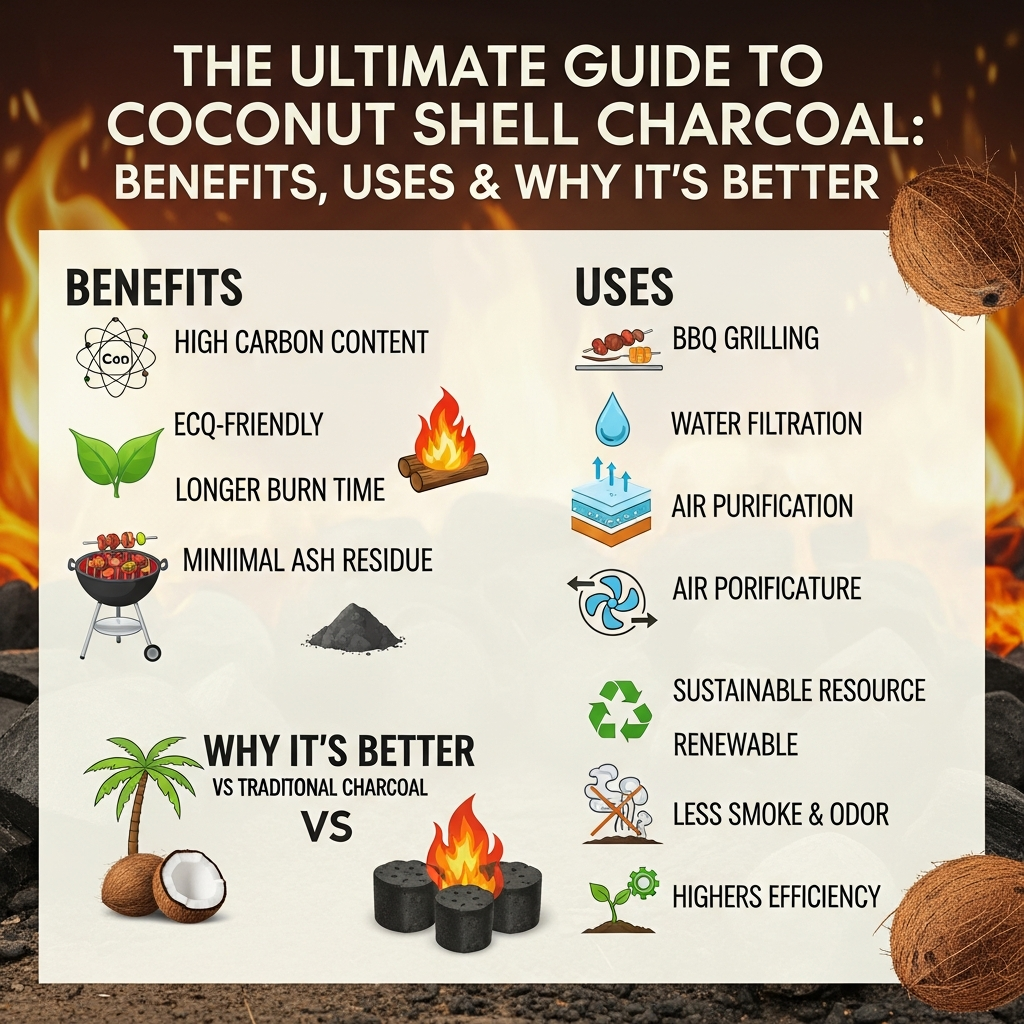
- The 5 Incredible Benefits of Coconut Shell Charcoal
- Beyond the Grill: Common Uses for Coconut Shell Charcoal
- Coconut Shell Charcoal vs. Traditional Wood Charcoal
- Making an Eco-Friendly Choice
- Exploring Other Sustainable Agricultural Byproducts
- Frequently Asked Questions
If you’re looking to elevate your grilling game while making a more sustainable choice, it’s time to learn about coconut shell charcoal. This remarkable, eco-friendly fuel is rapidly gaining popularity for its efficiency, clean burn, and minimal environmental impact. It’s more than just charcoal; it’s a smarter way to cook, purify, and even garden.
This guide will walk you through everything you need to know about this fantastic alternative to traditional charcoal. We’ll explore its benefits, how it’s made, and why it stands out as the superior choice for a variety of applications.

What Is Coconut Shell Charcoal?
Coconut shell charcoal is a type of charcoal produced from the hard, discarded shells of coconuts. Unlike traditional wood charcoal, which requires cutting down trees, this product is made from a waste byproduct of the coconut industry. This inherent sustainability is a major part of its appeal.
The shells are carbonized at extremely high temperatures in a controlled environment with limited oxygen. This process removes moisture and volatile compounds, resulting in a product that is almost pure carbon. The final result is a dense, highly efficient fuel that burns hotter and longer than its wood-based counterparts.
How Is Coconut Shell Charcoal Made?
The production of coconut shell charcoal is a fascinating blend of tradition and science, a process known as pyrolysis. It involves heating the coconut shells to temperatures above 400°C in a low-oxygen kiln or container. This prevents the shells from combusting and turning to ash.
During pyrolysis, all the natural moisture and volatile gases are burned off, leaving behind a porous, carbon-rich material. For specialized uses like water filters, this material can be further “activated” with steam to create an even more porous structure, vastly increasing its surface area for adsorption. For more detail on this process, you can explore the science behind it on platforms like ScienceDirect.
The 5 Incredible Benefits of Coconut Shell Charcoal
Why should you make the switch? The advantages are clear and compelling, ranging from environmental responsibility to superior performance.
1. Eco-Friendly and Sustainable
This is perhaps the most significant benefit. Coconut shell charcoal is made from a renewable resource that would otherwise be discarded. Its production helps reduce waste and, crucially, prevents deforestation. By choosing it, you are supporting a more sustainable and circular economy, a core principle promoted by organizations like the Rainforest Alliance.
2. Burns Hotter and Longer
Thanks to its high carbon density, coconut charcoal burns significantly hotter and more consistently than traditional lump charcoal or briquettes. A single batch can last for hours, providing a stable heat source that is perfect for both fast searing and low-and-slow cooking. This efficiency means you use less fuel over time.
3. Low Smoke and Odorless
Tired of thick, acrid smoke ruining your barbecue experience? High-quality coconut shell charcoal is virtually smokeless and odorless. Because it contains no additives or binders, it doesn’t release unpleasant chemical fumes. This allows the natural, delicious flavor of your food to shine through without any unwanted aftertaste.
4. Minimal Ash Production
Another practical advantage is the incredibly low ash content, often as little as 2-4% of its original weight. Traditional briquettes can produce up to 20% ash. Less ash means less mess to clean up after your cookout and better airflow within your grill, leading to a more consistent burn.
5. All-Natural and Chemical-Free
Premium coconut shell charcoal is 100% natural. It doesn’t rely on the chemical binders, fillers, or accelerants often found in conventional charcoal briquettes. This purity makes it a healthier choice for you, your family, and your guests.
Beyond the Grill: Common Uses for Coconut Shell Charcoal
While perfect for grilling, the applications of coconut shell charcoal extend far beyond the backyard barbecue.
- Hookah (Shisha): It’s the preferred choice for hookah enthusiasts due to its long-lasting, consistent heat and its clean, odorless burn that doesn’t interfere with the shisha flavor.
- Water & Air Purification: When activated, it becomes a powerful adsorbent used in filters to remove impurities, chemicals, and odors from water and air. The U.S. EPA provides great resources on the effectiveness of activated carbon filters.
- Gardening (Biochar): Crushed coconut charcoal, known as biochar, can be added to soil to improve drainage, aeration, and water retention, creating a healthier environment for plant roots to thrive. Learn more from university resources like the Penn State Extension.
Coconut Shell Charcoal vs. Traditional Wood Charcoal
To put it all in perspective, here’s a direct comparison that highlights the advantages of coconut shell charcoal:
| Feature | Coconut Shell Charcoal | Traditional Wood Charcoal |
|---|---|---|
| Source Material | Renewable waste byproduct (coconut shells) | Hardwood trees (contributes to deforestation) |
| Burn Time | Very long (2-3+ hours) | Shorter (varies) |
| Ash Content | Very Low (2-4%) | High (up to 20%) |
| Smoke & Odor | Minimal to none | Can be smoky with a distinct odor |
| Additives | None in high-quality products | Often contains binders and fillers |
Making an Eco-Friendly Choice
Choosing coconut shell charcoal is a direct vote for a healthier planet. By utilizing a waste product, you reduce landfill burden. By avoiding wood-based charcoal, you help protect our vital forests from being cut down for fuel. It’s a small change in your routine that contributes to a larger positive impact.

Exploring Other Sustainable Agricultural Byproducts
The principle of using waste to create value is not unique to the coconut industry. Many agricultural sectors are adopting similar sustainable practices. For instance, the palm oil industry generates several valuable byproducts that serve as eco-friendly resources. Similar to how coconut shells are used for coconut shell charcoal, the hard shell of the palm fruit, known as Palm Kernel Shell, is a popular biofuel. The fleshy part of the fruit yields Crude Palm Oil, while the inner seed, the Palm Kernel, is processed to produce Palm Kernel Oil. Even the leftover meal after oil extraction, called Palm Kernel Expeller, is a high-demand ingredient for animal feed. Finally, the empty Oil Palm Fruit Bunch itself can be converted into energy or used as fertilizer, completing a zero-waste cycle.
Frequently Asked Questions
Does coconut shell charcoal make my food taste like coconut?
No, this is a common myth. The carbonization process removes all the compounds that create the coconut flavor and aroma. The resulting charcoal is a neutral fuel source that allows the true taste of your food to stand out.
Is it harder to light than regular charcoal?
It can take slightly longer to light because it is denser and contains no chemical accelerants. However, using a charcoal chimney starter is highly effective and will have the briquettes hot and ready in about 15-20 minutes, with no need for lighter fluid.
Is coconut shell charcoal more expensive?
While the initial purchase price may be slightly higher per bag, its long burn time and efficiency often make it more economical in the long run. You’ll find yourself using less charcoal per cooking session, which saves you money.
Conclusion: The Clear Winner for Your Grill and the Planet
From its sustainable origins to its superior performance, coconut shell charcoal is an outstanding fuel source. It provides a hotter, longer, and cleaner burn, enhancing your cooking experience while minimizing your environmental footprint. Whether you’re a seasoned grill master or a casual cook, making the switch is a decision you can feel good about.
Ready to experience the difference? Make your next barbecue a sustainable and delicious success with high-quality coconut shell charcoal.
Makmur Amanah Sejahtera provides high-quality palm products such as Palm Kernel Expeller, Palm Kernel Shell, Crude Palm Oil, Palm Kernel Oil, etc. Kindly contact us at WhatsApp +6282140002198 or email us at admin@makmuramanah.co.id.
 English
  Indonesian
  Chinese
  Dutch
Dutch  Arabic
  Thai
Thai  Vietnamese
  Turkish