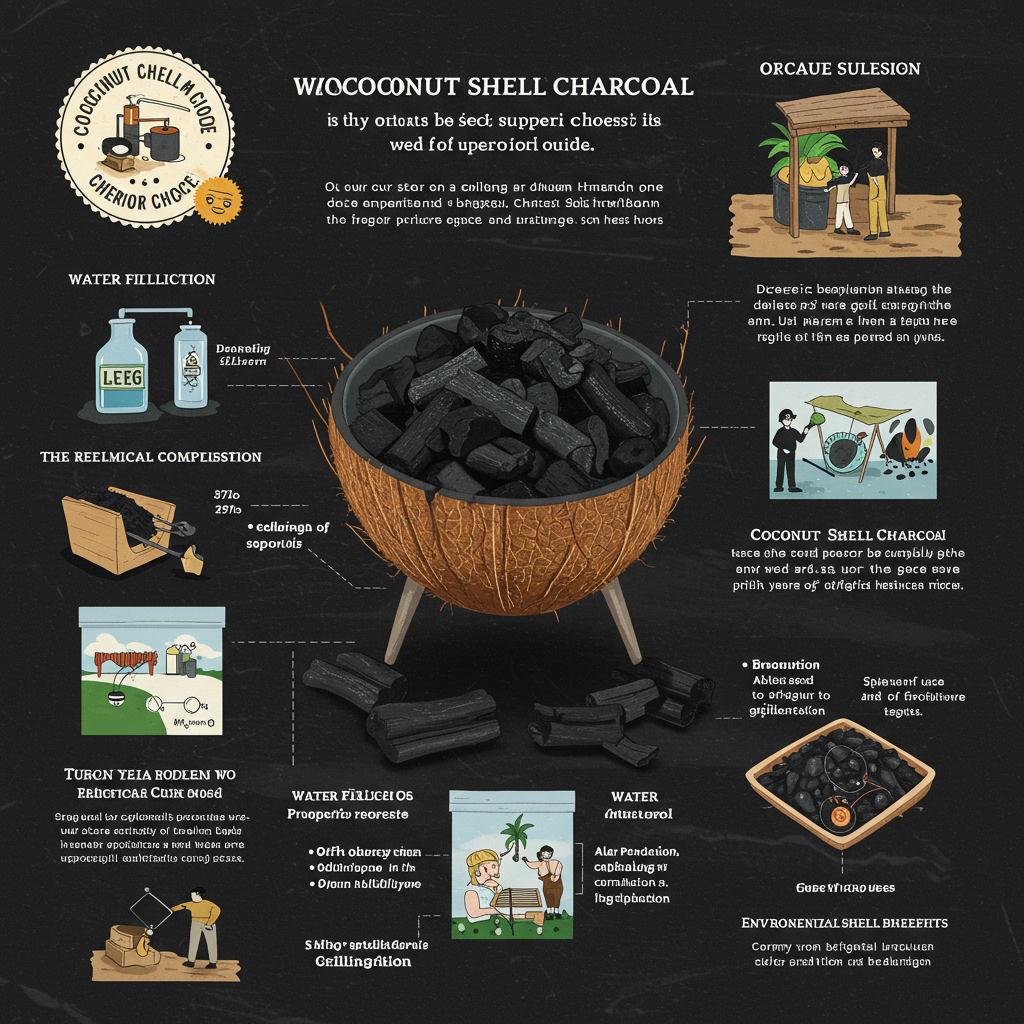
When it comes to fuel for grilling or industrial purposes, coconut shell charcoal often emerges as the top choice. But what actually makes it superior to regular wood charcoal? Its popularity is well-deserved; this charcoal offers a range of significant advantages, from thermal efficiency to a lower environmental impact.
In this comprehensive guide, we will thoroughly explore everything about coconut shell charcoal, from its manufacturing process and key benefits to its diverse applications that you might not know about yet. Let's dive deeper into why switching to this type of charcoal is a smarter and more responsible choice.
Table of Contents
1. What Is Coconut Shell Charcoal?
Simply put, coconut shell charcoal is charcoal made from coconut shells that have undergone an incomplete combustion (carbonization) process. This process removes water content and other volatile compounds, leaving behind dense, high-calorie pure carbon. Unlike wood charcoal, which requires felling trees, the raw material for this charcoal is waste from the coconut industry, similar to the utilization of Palm Kernel Shell and Oil Palm Empty Fruit Bunches (Oil Palm Fruit Bunch) which also possesses high economic value.
Its manufacturing process, which utilizes industrial residues, makes coconut shell charcoal a more sustainable product. Its premium quality, particularly in briquette form, makes it highly sought after in both domestic and international markets for various purposes.
[Image: A pile of dry coconut shells, the main raw material for quality coconut shell charcoal.]
Alt text: A pile of dried coconut shells as the main raw material for making coconut shell charcoal.
2. Why is Coconut Shell Charcoal Far Superior? (7 Key Reasons)
The main question is, why should you choose coconut shell charcoal? The answer lies in a series of advantages not possessed by other types of charcoal.
2.1. Higher Heat and Longer Burning Time
One of the greatest advantages of coconut shell charcoal is its very high calorific value, which can reach over 7,000 kcal/kg. This means it generates higher heat and can stay burning 2-3 times longer than ordinary wood charcoal. This efficiency makes it more economical for long-term use.
2.2. Far More Environmentally Friendly
Conventional wood charcoal often contributes to deforestation. In contrast, coconut shell charcoal is made from abundant coconut shell waste. By utilizing waste, this product helps reduce tree cutting and supports the circular economy. According to a study, the utilization of biomass such as coconut shells is an important step toward clean energy. Read more about biomass potential in the ScienceDirect journal.
2.3. Produces Less Smoke
Ever been annoyed by thick smoke while grilling? Coconut shell charcoal is the solution. Due to its high carbon content and minimal impurities, this charcoal produces far less smoke. This not only makes the cooking process more comfortable but also healthier by reducing exposure to pollutants.
2.4. Preserves Natural Food Flavor
This charcoal leaves no strange odor or flavor on food. Its minimal, clean smoke ensures that the authentic aroma and taste of your grilled meat, fish, or vegetables are preserved. This is why many professional chefs and premium barbecue restaurants choose coconut shell charcoal.
[Image: Coconut shell charcoal briquettes glowing for grilling purposes.]
Alt text: Premium coconut shell charcoal briquettes glowing with steady embers for grilling.
2.5. Sourced from Renewable Resources
Coconut trees bear fruit continuously throughout the year, making their shells a sustainable and renewable resource. This demonstrates the immense potential of the palm oil and coconut industries and their derivatives, ranging from primary products like Crude Palm Oil and Palm Kernel Oil, to by-products such as Palm Kernel Expeller (PKE) for animal feed and, of course, Palm Kernel itself.
2.6. Lower Ash Residue
After combustion is complete, coconut shell charcoal leaves behind very little ash, typically less than 5% of its total weight. This makes cleanup after use much easier and more practical compared to wood charcoal, which produces a large amount of ash.
2.7. Versatile for Various Needs
The applications of coconut shell charcoal is not limited to grilling alone. This product serves as a key raw material for various other industries, which we will discuss next.
3. Wide Range of Uses for Coconut Shell Charcoal
Its versatility makes coconut shell charcoal a highly valuable commodity with a wide range of applications.
3.1. Premium Fuel (BBQ & Shisha)
In briquette form, this charcoal is a favorite fuel for BBQ and shisha/hookah worldwide. Its uniform shape, stable heat, and long burning duration make it the ideal choice.
3.2. Activated Carbon Production (Water & Air Filters)
One of the most important industrial uses of coconut shell charcoal is as a raw material for activated carbon production. Its ultra-fine pore structure and large surface area make it highly effective at absorbing impurities, chemicals, and odors. This activated carbon is widely used in water purification filters, air purifiers, and other industrial processes.
3.3. Health and Beauty Industry
Activated carbon from coconut shell charcoal is also popular in the cosmetics and health industries. You can find it in facial mask products for skin detoxification, soaps, and whitening toothpastes. Its adsorption properties are believed to lift impurities and toxins from the surface of the skin and teeth.
[Video: Modern manufacturing process of coconut shell charcoal and briquettes in a factory]
4. Tips for Choosing Quality Coconut Shell Charcoal
Not all coconut shell charcoal are created equal. To get the maximum benefits, consider the following points when purchasing:
- Completely Dry: Choose charcoal that is completely dry. Moist charcoal is difficult to ignite and generates a lot of smoke.
- Even Black Color: Quality charcoal features a jet-black, uniform color, with no remaining brownish parts.
- Dense and Not Easily Crumbled: Good charcoal or briquettes feel dense and do not crumble easily when handled.
- No Sour Odor: Avoid charcoal that has an acidic or pungent smell, as this indicates incomplete carbonization.
5. Need a Supply of Quality Palm Products?
Makmur Amanah Sejahtera provides high-quality palm products such as Palm Kernel Expeller (PKE), Palm Kernel Shell (PKS), Crude Palm Oil (CPO), Palm Kernel Oil, and more. For your industrial or personal needs, do not hesitate to contact us.
Our team is ready to provide the best offers and further information. Please contact us via WhatsApp at +6282140002198 or email to admin@makmuramanah.co.id.
6. Conclusion
In the end, coconut shell charcoal proves itself to be a superior choice from multiple perspectives. Ranging from higher heat efficiency and longer burning duration to its positive environmental impact by utilizing waste and reducing deforestation.
Whether for home grilling needs, culinary businesses, or industrial applications, switching to coconut shell charcoal is a smart investment for better quality and a greener future. With all its advantages, it is no surprise that this product is increasingly dominating the global market as the best alternative fuel.