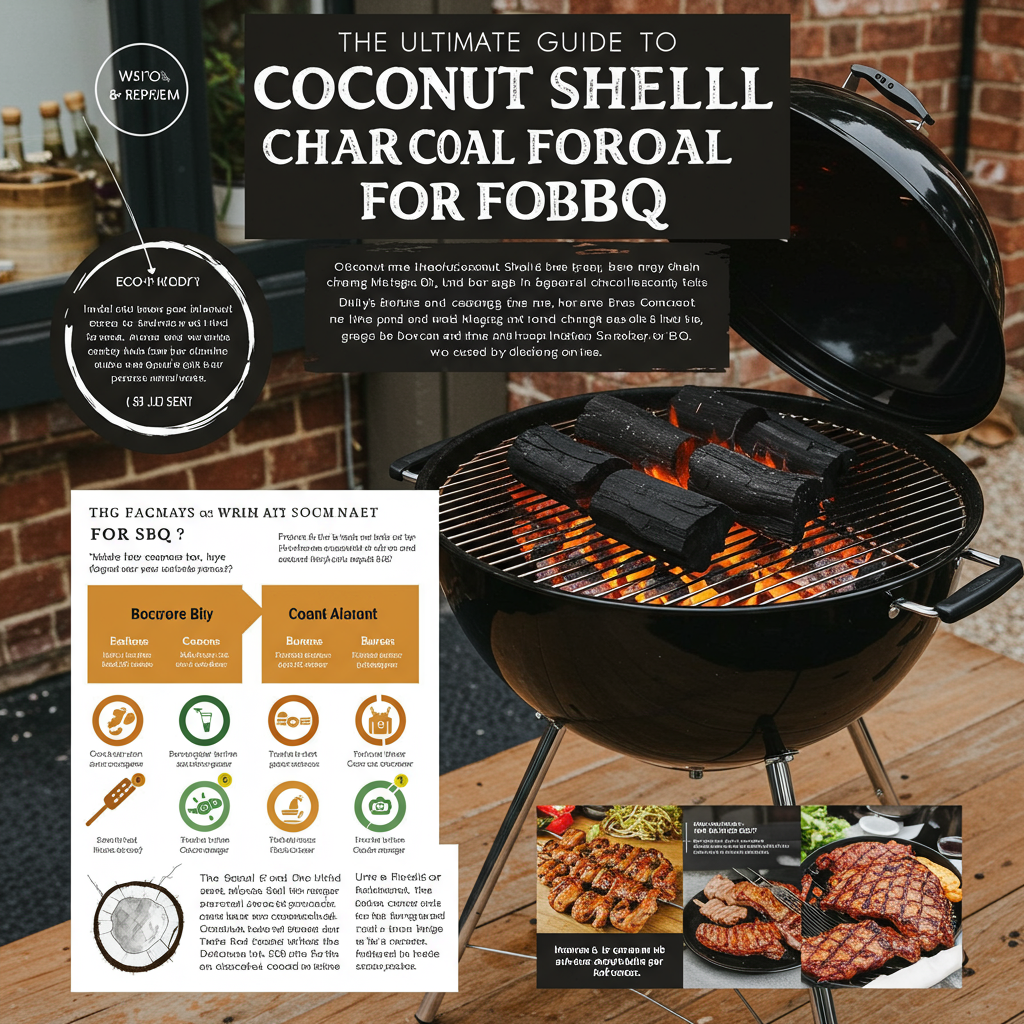
When the aroma of grilling fills the air, everyone agrees that the key to a successful BBQ is the choice of charcoal. For BBQ enthusiasts, choosing the right fuel is just as crucial as selecting quality meat. Among many options, coconut shell charcoal has now taken center stage. But what exactly makes coconut shell charcoal so special for grilling? This article is your comprehensive guide.
The use of coconut shell charcoal is not just about trends; it's about quality, efficiency, and flavor. From more stable heat to minimal environmental impact, this charcoal offers a range of advantages hard to match by other types of charcoal. Let's dive deeper into the world of this coconut waste-derived charcoal.
Table of Contents
What Is Coconut Shell Charcoal?
As the name suggests, coconut shell charcoal is charcoal made from mature coconut shells. The production process involves burning coconut shells in an oxygen-limited environment, a process known as pyrolysis or carbonization. This process removes moisture and other volatile compounds, leaving behind pure, energy-dense carbon.
The result is a charcoal product that is denser, harder, and has higher calories compared to regular wood charcoal. This forms the foundation for all the advantages we will discuss next, making it the ideal choice for grilling needs.
7 Key Advantages of Coconut Shell Charcoal for BBQ
Why should you switch to coconut shell charcoal for your next BBQ session? The answer lies in the 7 significant advantages it offers.
1. Higher and Consistent Heat
One of the greatest advantages of this charcoal is its ability to produce much higher heat than wood charcoal. Its temperature can reach 500-700°C. In addition, the heat generated is very stable and even, allowing you to cook meat perfectly without worrying about burnt or undercooked parts.
2. Longer Burning Duration (Durable)
Due to its high density, coconut shell charcoal burns slower and longer. Its burning duration can last 2-3 times longer than regular charcoal. This means you do not need to constantly add charcoal in the middle of grilling, making it more economical and efficient, especially for long BBQ events.

3. Less Smoke and Ash
Are you often bothered by thick smoke while grilling? With coconut shell charcoal, this issue can be minimized. This type of charcoal produces significantly less smoke due to its low residue and impurity content. The ash produced is also very minimal (less than 5% of its initial weight), making the post-BBQ clean-up process much easier.
4. Delicious Distinctive Aroma
Despite the low smoke, this charcoal imparts a distinctive and natural grilled aroma to food. This aroma is not overpowering like some types of wood charcoal, so it will not overpower the original flavor of your seasonings and meat. Instead, it adds a pleasant and appetizing fragrant touch.
5. Eco-Friendly
This is an important point. Coconut shell charcoal is made from coconut industry waste that was previously discarded. By utilizing it, we help reduce waste and eliminate the need for cutting down trees. This makes it a sustainable, renewable energy source. Its use supports a circular economy and helps preserve forests. For more information about renewable energy, you can read resources from the United Nations (UN).
6. Healthier for Food
Due to its clean production process and natural ingredients, coconut shell charcoal does not contain harmful chemicals such as tar or sulfur. This reduces the risk of carcinogenic contamination in grilled food. Food safety studies, such as those published in NCBI scientific journals, often highlight the importance of using clean fuel for cooking.

7. Easy to Find and Affordable
As a tropical agricultural country, Indonesia is one of the world's largest coconut producers. This makes coconut shell raw materials very abundant. As a result, coconut shell charcoal it is easy to find on the market, from traditional markets to modern supermarkets, at relatively affordable prices.
How to Choose the Best Coconut Shell Charcoal?
To achieve maximum results, consider a few factors when buying coconut shell charcoal:
- Briquette Quality: If you choose briquettes, look for ones that are dense, do not crumble easily, and have a uniform shape.
- Completely Dry: Ensure the charcoal is completely dry. Damp charcoal will be difficult to ignite and produces a lot of smoke.
- Color and Sound: Good quality charcoal is usually jet black and will emit a crisp, metallic clinking sound when tapped against each other.
- Minimize Powder: Avoid packages containing too much charcoal dust or powder at the bottom.
Practical Tips for Using Coconut Shell Charcoal
Leveraging the power of coconut shell charcoal requires the right technique. Use charcoal chimney starter to light the charcoal faster and more evenly without needing lighter fluid. Once the charcoal turns into glowing embers, spread it across the grill as needed—banking it on one side for high heat (searing) and spreading it thin on the other for low heat (slow cooking). This technique is explained in more detail on various prominent culinary websites such as Serious Eats.
Don't forget to adjust the air vents on your grill. Open the vents for higher temperatures, and partially close them to lower the heat. With proper control, you can become a true BBQ master.
Frequently Asked Questions (FAQ)
1. Is coconut shell charcoal better than wood charcoal?
For BBQ, the answer is generally yes. Coconut shell charcoal offers higher heat, longer burning duration, and less smoke. However, some types of wood charcoal can impart a more specific smoky aroma if that is what you are looking for.
2. How long does coconut shell charcoal burn?
Depending on the quality and size, good quality coconut shell charcoal can remain as glowing embers for 2 to 4 hours, and even longer for premium briquettes.
3. Is coconut shell charcoal safe to use indoors?
NO. Like all types of charcoal, coconut shell charcoal produces carbon monoxide (CO) gas, which is odorless and deadly. Charcoal should only be used outdoors or in very well-ventilated areas. Safety is a priority, as consistently emphasized by agencies like World Health Organization (WHO) regarding indoor air pollution.
Conclusion
So, what are the uses of coconut shell charcoal? The answer is clear: it is a superior choice for all kinds of grilling. With higher heat, longer burn time, minimal smoke, and eco-friendly properties, this charcoal is a smart investment for anyone serious about elevating their BBQ quality. It is time to make the switch and experience the difference on your grill!
Utilizing coconut shells into high-value products is a prime example of a circular economy. A similar concept is also applied in the palm oil industry, where every part is processed to maximize its value. For instance, palm kernel shells or Palm Kernel Shell are used as boiler fuel, while Oil Palm Empty Fruit Bunches is processed into compost. Even the kernel, Palm Kernel, produces Palm Kernel Oil and animal feed in the form of Palm Kernel Expeller. This complements the main product, Crude Palm Oil, showing how the agricultural industry can move toward sustainable practices.
Need a Supply of Quality Palm Products?
Makmur Amanah Sejahtera provides high-quality palm derivative products such as Palm Kernel Expeller, Palm Kernel Shell, Crude Palm Oil, and Palm Kernel Oil for your industrial and energy needs.
Contact us now:
WhatsApp: +6282140002198
Email: admin@makmuramanah.co.id