 by admin
Palm Kernel Expeller (PKE): Your #1 Ultimate Guide for 2025
Table of Contents
- What is Palm Kernel Expeller (PKE)?
- How is Palm Kernel Expeller (PKE) Produced?
- Key Specifications of High-Quality Palm Kernel Expeller (PKE)
- Primary Uses and Applications of PKE
- Understanding Palm Kernel Expeller (PKE) Price Factors in 2025
- How to Choose a Reliable PKE Supplier
- Benefits and Limitations of Using Palm Kernel Expeller (PKE)
- Source High-Quality Palm Kernel Expeller (PKE)
- Conclusion: The Future of PKE in Global Feed
In the quest for sustainable and cost-effective animal feed, one product stands out for its unique balance of nutrients and affordability: Palm Kernel Expeller (PKE). This powerful by-product of the palm oil industry, alongside others like Palm Kernel Shell, is a cornerstone of livestock nutrition worldwide, offering a valuable source of protein and fiber. This guide provides a comprehensive look into what makes PKE an essential commodity.
Whether you’re a farmer, feed formulator, or an agricultural trader, understanding the ins and outs of Palm Kernel Expeller (PKE) is crucial for making informed decisions. From its production process to its market price, we cover everything you need to know in 2025.

What is Palm Kernel Expeller (PKE)?
Palm Kernel Expeller (PKE), sometimes called Palm Kernel Cake (PKC), is a by-product from the mechanical extraction of oil from the kernel of the palm fruit. After the palm kernel is crushed to extract palm kernel oil, the leftover fibrous material is dried and sold as PKE. It is renowned as a high-quality feed ingredient, particularly for ruminant animals.
Due to its high fiber and moderate protein content, Palm Kernel Expeller (PKE) serves as an excellent feed component that supports healthy digestion and growth in livestock. It is one of the most traded feed ingredients globally, with major producers being Indonesia and Malaysia.
How is Palm Kernel Expeller (PKE) Produced?
The production of PKE is a straightforward mechanical process that begins with the Oil Palm Fruit Bunch. After its flesh has been removed to produce Crude Palm Oil, the remaining nut is cracked. This reveals the valuable Palm Kernel, which is the primary source of Palm Kernel Oil and, subsequently, PKE.
The kernels are crushed in a mechanical press (an expeller) to squeeze out the valuable oil. The solid residue left behind is the Palm Kernel Expeller (PKE). This process avoids the use of solvents, making it a natural and clean feed ingredient. The quality of PKE can be influenced by the efficiency of the oil extraction process, as residual oil content is a key specification. For more detailed information, scientific journals offer in-depth analysis of the process.
Key Specifications of High-Quality Palm Kernel Expeller (PKE)
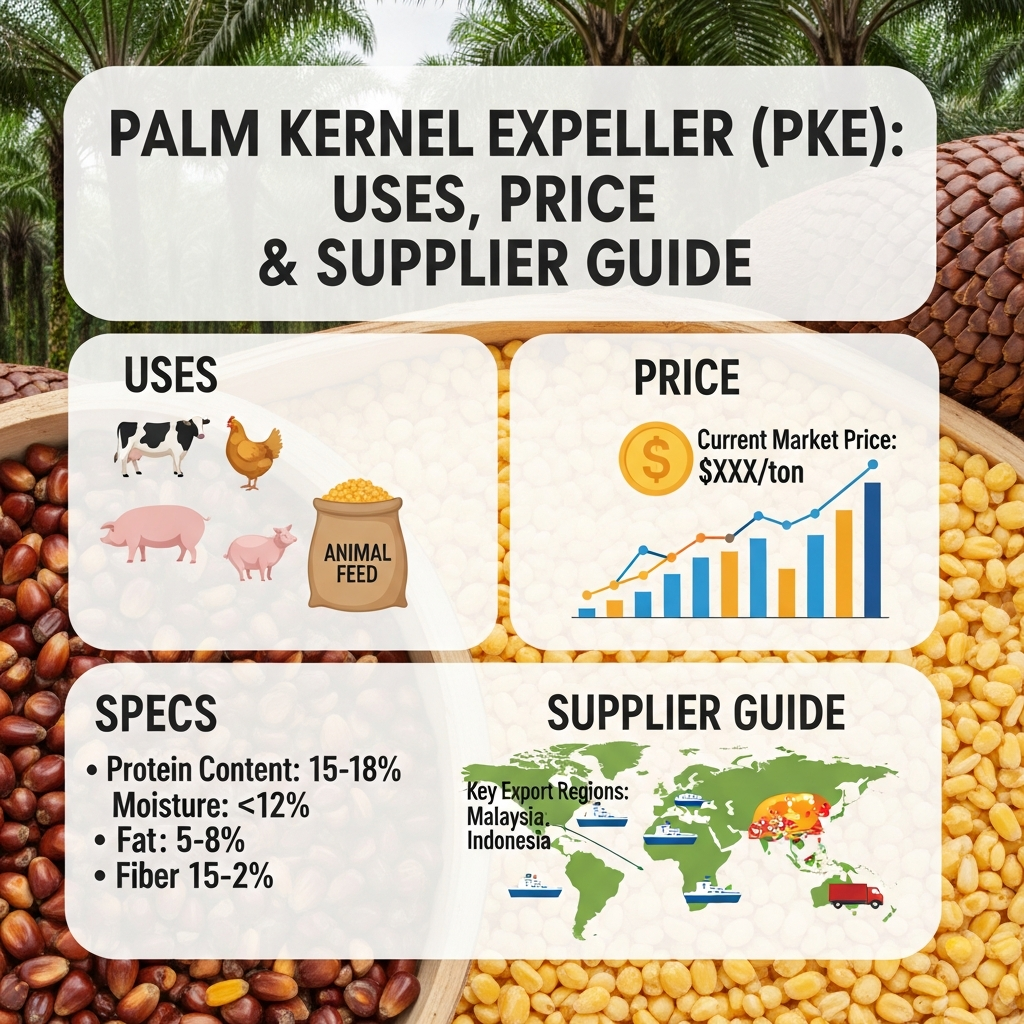
When sourcing PKE, buyers look at several key specifications to ensure its quality and suitability for their needs. While these can vary slightly by supplier and origin, a typical analysis of high-grade Palm Kernel Expeller (PKE) includes:
- Crude Protein (CP): 14-18%
- Crude Fat (Oil): 8-12%
- Crude Fibre (CF): 16-20%
- Moisture: < 10%
- Ash: 4-6%
- Metabolizable Energy (ME): Typically around 10-12 MJ/kg for ruminants.
A low moisture content is crucial for preventing mold and ensuring a longer shelf life, making it a critical quality parameter for any PKE supply.
[Video Suggestion: A short animated video explaining the process of how palm kernels are turned into Palm Kernel Expeller (PKE).]
Primary Uses and Applications of PKE
The versatility of Palm Kernel Expeller (PKE) makes it a staple in various sectors, primarily in animal nutrition. Its balanced profile of energy, protein, and fiber makes it a sought-after commodity.
PKE in Ruminant Feed (Cattle, Goats, Sheep)
PKE is most widely used in feed for ruminant animals like dairy cows, beef cattle, and goats. Its high fiber content is beneficial for rumen function, and its moderate protein levels support milk production and muscle growth. The residual oil in Palm Kernel Expeller (PKE) is also a good source of energy. Global bodies like the Food and Agriculture Organization (FAO) have documented its effectiveness in livestock diets.
PKE in Monogastric Feed (Poultry, Swine)
While its high fiber can be a limitation for monogastric animals (like chickens and pigs), PKE is still used in their diets, albeit in smaller quantities. Advanced feed formulation techniques and enzyme supplementation can improve its digestibility, making Palm Kernel Expeller (PKE) a viable, cost-effective component in poultry and swine rations.
Other Industrial Uses
Beyond animal feed, PKE is also explored as a potential biofuel and biomass resource. Its organic composition makes it suitable for burning to generate energy, contributing to the renewable energy sector.

Understanding Palm Kernel Expeller (PKE) Price Factors in 2025
The price of Palm Kernel Expeller (PKE) is dynamic and influenced by several global factors. As of 2025, the key drivers include:
- Palm Oil Market: PKE is a by-product, so its supply is directly linked to palm oil production and prices. Market trends can be tracked on commodity websites like IndexMundi.
- Global Feed Demand: Demand from major importing countries like New Zealand, China, and the EU significantly impacts prices.
- Shipping and Logistics Costs: Freight rates are a major component of the final landed cost for importers.
- Seasonal Variations: Palm fruit harvesting seasons can affect the immediate supply of PKE on the market.
How to Choose a Reliable PKE Supplier
Finding a trustworthy supplier is key to sourcing high-quality Palm Kernel Expeller (PKE). Look for suppliers who can provide:
- Consistent Specifications: A reliable supplier offers a Certificate of Analysis (COA) with each shipment, guaranteeing the product meets agreed-upon specs.
- Proof of Quality Control: Ask about their processes for ensuring low moisture and preventing contamination.
- Transparent Pricing: Clear and honest communication about pricing, including shipping costs and terms.
- Certifications: Look for certifications related to sustainability and quality management.
Benefits and Limitations of Using Palm Kernel Expeller (PKE)
Like any feed ingredient, PKE has both advantages and disadvantages. A balanced understanding is essential for its effective use.
Benefits
- Cost-Effective: It is generally cheaper than other protein sources like soybean meal.
- High Fiber: Excellent for ruminant digestive health.
- Good Energy Source: The residual oil provides a significant energy boost.
Limitations
- Lower Protein Quality: The amino acid profile is not as balanced as soybean meal, particularly in lysine.
- Palatability: Some animals may find it less palatable, though this can be managed in a mixed ration.
- Variability: Quality can vary between suppliers if not sourced carefully. Feedipedia offers extensive data on its nutritional variability.
Source High-Quality Palm Kernel Expeller (PKE)
Makmur Amanah Sejahtera provides high-quality palm products such as Palm Kernel Expeller, Palm Kernel Shell, Crude Palm Oil, Palm Kernel Oil, etc. Kindly contact us at WhatsApp +6282140002198 or email us at admin@makmuramanah.co.id.
Conclusion: The Future of PKE in Global Feed
Palm Kernel Expeller (PKE) remains an undeniably important commodity in the global animal feed industry. Its cost-effectiveness and nutritional benefits, especially for ruminants, secure its place in feed formulations for the foreseeable future. By understanding its specifications, market drivers, and how to source it reliably, you can effectively leverage this valuable resource.
As the world moves towards more sustainable agriculture in 2025 and beyond, the role of by-products like Palm Kernel Expeller (PKE) will only grow, turning what was once waste into a vital link in the global food chain.
 English
  Indonesian
  Chinese
  Dutch
Dutch  Arabic
  Thai
Thai  Vietnamese
  Turkish