
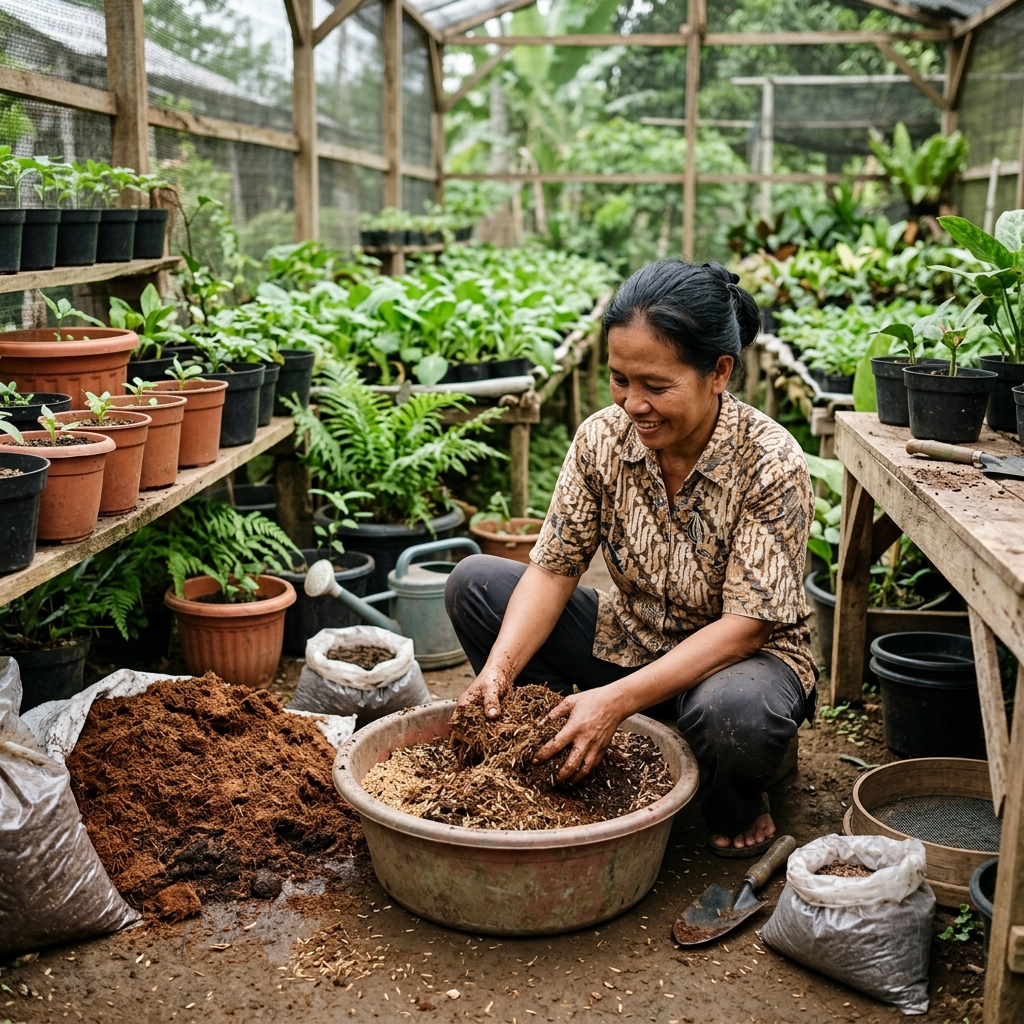
Looking for a complete cocopeat guide to optimize your plant growth efficiently and in an environmentally friendly way? Many farmers and ornamental plant enthusiasts face issues with standard soil growing media that compacts quickly, dries out too fast, and lacks porosity.
As a result, root systems become stunted, rot, or fail to absorb nutrients optimally. According to research from Food and Agriculture Organization (FAO), the use of properly processed organic waste-based growing media can increase water retention efficiency by up to 80% compared to standard topsoil.
This article presents a complete cocopeat guide in-depth, ranging from technical characteristics, tannin neutralization processes, growing media mix formulations, to the latest market price details to support the success of your agricultural cultivation.
What Is Cocopeat? Complete Cocopeat Guide for Beginners
Cocopeat is an organic growing medium made from fine coconut coir dust, a byproduct of the coconut processing industry. In the modern agricultural industry, this material is widely known as coco coir dust or pith which has high water absorption capacity and can support holistic plant root development.
Based on literature data from Wikipedia Coir, coconut coir consists of loose fibers and fine dust rich in lignin and cellulose. The natural properties of lignin make this coconut coir growing medium very durable and not easily degraded despite frequent exposure to high moisture.
[Image: Alt: Complete Cocopeat Guide – Fine texture of quality coconut coir dust | Title: Characteristics of Ready-to-Use Fine Cocopeat Dust]
Physically, this growing medium functions similarly to a natural sponge. Coconut dust can hold water up to 8–10 times its dry weight, making it the top choice for hydroponic plant systems, seed germination, and household potted plants.
7 Key Benefits of Cocopeat for Plant Growth
In its application, understanding the complete cocopeat guide is inseparable from knowing its physical and chemical advantages. Here are 7 main benefits that make this coconut coir growing medium highly superior in the market:
- High Water Retention Capacity: Maintains growing media moisture longer, thereby saving water and significantly reducing daily watering frequency.
- Optimal Soil Aeration and Porosity: Features natural air pockets that prevent media compaction, ensuring smooth oxygen circulation to the root system.
- Stable Acidity Level (Cocopeat pH): The pH range spans from 5.5 to 6.5, highly ideal for supporting nutrient absorption in horticultural and ornamental plants.
- Eco-Friendly and Renewable: Produced from abundant natural by-products and capable of supporting long-term sustainability in the plantation sector.
- Resistance to Pathogenic Fungi: Contains natural compounds that help suppress the growth of parasites and soil-borne fungi harmful to young seedlings.
- High Cation Exchange Capacity (CEC): Capable of binding and delivering fertilizers with high efficiency without being easily leached by watering.
- Long Lifespan: A strong lignin structure allows this medium to decompose very slowly, enabling repeated use for 3 to 5 years.
In addition to cocopeat, the coconut and palm oil processing industries also generate high-value derivative products for the commercial animal feed sector, such as Copra Meal and other supporting materials for the agricultural industry.
Growing Media Comparison: Cocopeat vs Roasted Rice Husk vs Humus Soil
To help you determine the best cocopeat growing media mix, it is essential to understand the differences between cocopeat, roasted rice husk, and humus soil from both physical and chemical perspectives.
Below is a technical parameter comparison table among these three popular types of growing media:
| Comparison Parameters | Cocopeat | Carbonized Rice Husk | Humus Soil |
|---|---|---|---|
| Water Retention Capacity | Very High (800%) | Medium (200%) | Medium-Low (150%) |
| Porosity & Aeration | Excellent | Very High | Tends to Compact |
| pH Range | 5.5 – 6.5 (Neutral) | 8.5 – 9.0 (Alkaline) | 6.0 – 7.0 (Neutral) |
| Plant Nutrient Content | Low (Inert) | Moderate (Rich in Silica) | Very High Organic |
| Decomposition Resistance | 3–5 Years | 1–2 Years | Compacts Quickly |
Based on the comparison above, combining cocopeat with charred rice husk provides a very balanced blend structure. Soil porosity is well-maintained without sacrificing moisture retention capacity.
How to Process Cocopeat Before Use (Tannin-Free)
The most vital point in complete cocopeat guide is mastering how to remove tannin substances from cocopeat. Raw media (unwashed) contains sodium salts and concentrated tannin compounds capable of locking up nutrients and stunting plant roots.
[Infographic: Alt: Complete Cocopeat Guide – Infographic on Tannin and Salt EC Washing Flow | Title: Infographic on Tannin-Free Cocopeat Processing Stages]
Research from the ScienceDirect Journal of Agronomy proves that the raw Electrical Conductivity (cocopeat EC) concentration exceeding 1.0 mS/cm can trigger severe leaf chlorosis. The proper washing steps include:
- First Soaking: Soak the raw coir dust in a container of clean water for 24 hours to dissolve the dark brownish tannin content.
- Rinsing & Squeezing: Discard the dark brown soaking water, then rinse the cocopeat powder using running water until the rinse water runs clear.
- Cocopeat EC Value Testing: Measure the water concentration using an EC meter. The standard for ready-to-use growing media must have an EC value below 0.5 mS/cm.
- Drying & Sterilization: Sun-dry until the remaining moisture reaches 15–20%, or perform hot steam sterilization for sterile nursery needs.
Complete Cocopeat Guide: How to Use and Best Mixes
The characteristics of cocopeat growing media are highly flexible. You can use it unmixed in pure hydroponic systems or combine it with other organic materials according to plant needs.
Complete Cocopeat Guide for Ornamental Plants & Potted Fruit Trees Mixes
For ornamental plants such as Monstera, Aglaonema, as well as potted fruit trees (Tabulampot), use the following best cocopeat growing media mix:
- 30% Clean cocopeat (tannin-free and low EC)
- 30% Roasted rice husks / fermented raw rice husks
- 30% Mature compost or fine manure
- 10% Malang volcanic sand / perlite for extra drainage
Cocopeat Formulation for Modern Hydroponic Systems
In hydroponic cultivation (such as drip irrigation systems or Dutch Bucket substrates), this media functions as a highly efficient root support when blended with perlite at a 70:30 ratio.
The use of high-quality media supply from trusted industries like quality cocopeat products ensures stable plant nutrient absorption remains maintained at a commercial scale.
In addition, the sustainable plantation sector also utilizes supporting feed products such as Calcium Salts of Palm Oil Fatty Acids as well as other processed palm products to boost efficiency in the livestock and agribusiness industries.
Update Harga Cocopeat Terbaru Tahun 2026 (Eceran & Grosir)
Memahami kisaran harga cocopeat per kg 2026 sangat penting bagi para pengusaha pembibitan maupun pehobi tanaman. Berikut adalah estimasi harga pasar terkini di tingkat produsen dan distributor resmi:
| Jenis & Kemasan Cocopeat | Spesifikasi Teknis | Harga Cocopeat Per Kg / Pack 2026 (IDR) |
|---|---|---|
| Cocopeat Halus Curah (1 Kg) | Washed, EC < 0.8 mS/cm, Moisture 20% | Rp 7.000 – Rp 12.000 / kg |
| Cocopeat Karungan (50 Liter) | Low EC, Washed Standard, Ready to Use | Rp 28.000 – Rp 45.000 / karung |
| Cocopeat Blok Press (5 Kg) | Washed, EC < 0.5 mS/cm, Expansion 1:5 | Rp 35.000 – Rp 58.000 / blok |
| Cocopeat Skala Industri (Bulk Ton) | FOB Container, Moisture < 15%, Export Quality | Rp 2.300.000 – Rp 3.600.000 / ton |
Di samping pemanfaatan media tanam sabut kelapa, industri energi biomassa dan pengolahan limbah perkebunan juga mengandalkan produk turunan seperti Palm Kernel Shell serta pasokan Palm Kernel Expeller untuk kebutuhan ekspor global.
Kesalahan Umum Pemakaian Cocopeat yang Wajib Dihindari
Banyak pemula mengalami kegagalan akibat kurang cermat saat mengolah media ini. Berdasarkan petunjuk teknis dari pakar hortikultura Kementerian Pertanian (Pertanian Go Id), berikut kesalahan mendasar yang harus Anda hindari:
- Langsung Pakai Tanpa Dicuci: Penggunaan bahan mentah memicu akumulasi garam berlebih yang menghentikan pertumbuhan akar.
- Penyiraman Berlebihan (Overwatering): Tingginya retensi air membuat media sangat basah jika disiram terus-menerus, memicu timbulnya kondisi anaerob dan kebusukan akar.
- Mengabaikan Pemupukan Rutin: Karena bersifat inert (tidak mengandung nutrisi tanaman alami seperti N, P, dan K), pemberian pupuk cair atau komposting berkala hukumnya wajib.
- Mengabaikan Pengukuran pH dan EC: Tidak pernah memeriksa nilai EC cocopeat dapat membuat media terlalu pekat oleh garam sisa penyiraman sebelumnya.
[Image: Alt: Panduan Lengkap Cocopeat – Kesalahan Umum Penyiraman Berlebihan | Title: Dampak Overwatering Pada Media Cocopeat]
[Video Embed: Alt: Video Panduan Lengkap Cocopeat dan Teknik Pencucian Tanin | Title: Tutorial Cara Menghilangkan Tanin dan Mengukur EC Cocopeat]
Strategi Pemupukan dan Perawatan Media Tanam Cocopeat
Agar keunggulannya bertahan hingga bertahun-tahun, penerapan teknik perawatan media secara konsisten sangat diperlukan. Karena cocopeat tidak menyuplai unsur hara alami, terapkan strategi pemupukan berikut:
Gunakan pupuk yang mengandung unsur hara makro dan mikro lengkap, seperti racikan AB Mix pada sistem hidroponik atau pupuk organik cair (POC) pada sistem pot. Pastikan penyiraman pupuk dilakukan dengan konsentrasi bertahap.
Selain itu, lakukan pembilasan berkala (flushing) dengan air bersih setidaknya sekali dalam sembulan. Langkah ini bertujuan melarutkan penumpukan sisa garam pupuk agar kepekatan EC cocopeat tetap berada pada ambang batas aman bagi tanaman.
Bagi pelaku industri minyak nabati dan pangan, produk olahan turunan seperti RBD CP8 juga menjadi komoditas vital yang diproses dengan standar mutu ketat sejalan dengan prinsip keberlanjutan pertanian.
Butuh Pasokan Bahan Baku Perkebunan & Perindustrian Berkualitas?
Makmur Amanah Sejahtera provides high-quality processed palm products such as Palm Kernel Expeller, Palm Kernel Shell, Crude Palm Oil, Palm Kernel Oil, and others. Please contact us via WhatsApp +6282140002198 or email admin@makmuramanah.co.id.
Frequently Asked Questions (FAQ)
Can cocopeat be used immediately without washing?
Tidak disarankan. Bahan mentah mengandung zat tanin dan kadar garam natrium tinggi yang dapat merusak sistem akar. Sebaiknya rendam dan bilas serbuk hingga airnya jernih serta memiliki nilai EC di bawah 0,5 mS/cm sebelum digunakan.
Is cocopeat suitable for all types of plants?
Sangat cocok untuk tanaman yang menyukai kelembapan tinggi seperti hidroponik, sayuran daun, dan tanaman hias tropis. Namun untuk kaktus atau sukulen, media ini wajib dicampur pasir malang berporositas tinggi agar tidak menyimpan air berlebih.
How long is the lifespan of cocopeat as a growing medium?
Media tanam ini memiliki daya tahan fisik sangat kuat karena tinggi kandungan lignin. Serbuk sabut kelapa dapat digunakan berulang kali selama 3 hingga 5 tahun, asalkan dibersihkan dan disterilkan secara berkala sebelum penanaman baru.
Apa perbedaan utama antara cocopeat biasa dan cocopeat blok?
Perbedaan utama terletak pada bentuk pengemasan dan kadar air. Versi biasa dijual dalam bentuk curah setengah basah, sedangkan versi blok dipres dengan tekanan tinggi untuk menghemat volume pengiriman dan perlu direndam air sebelum dipakai.
Mengapa tanaman yang ditanam di cocopeat murni membutuhkan pupuk tambahan?
Media ini bersifat inert atau miskin kandungan nutrisi tanaman alami (N, P, K). Tanpa pemupukan rutin atau pencampuran kompos, tanaman tidak mendapatkan suplai hara yang cukup untuk proses fotosintesis dan pertumbuhan vegetative.
Conclusion
Application of complete cocopeat guide secara benar adalah kunci sukses untuk meningkatkan retensi air, porositas tanah, serta kesehatan sistem perakaran tanaman Anda. Dengan menguasai teknik pencucian tanin, kombinasi racikan media, dan pengelolaan nutrisi yang tepat, produktivitas budidaya pertanian maupun keindahan tanaman hias dapat dimaksimalkan secara berkelanjutan.
Semoga rincian teknis, panduan racikan, dan analisis update harga dalam complete cocopeat guide ini menjadi rujukan berharga bagi kegiatan bercocok tanam Anda di tahun 2026. Mulailah mengoptimalkan racikan media tanam Anda sekarang juga!



