
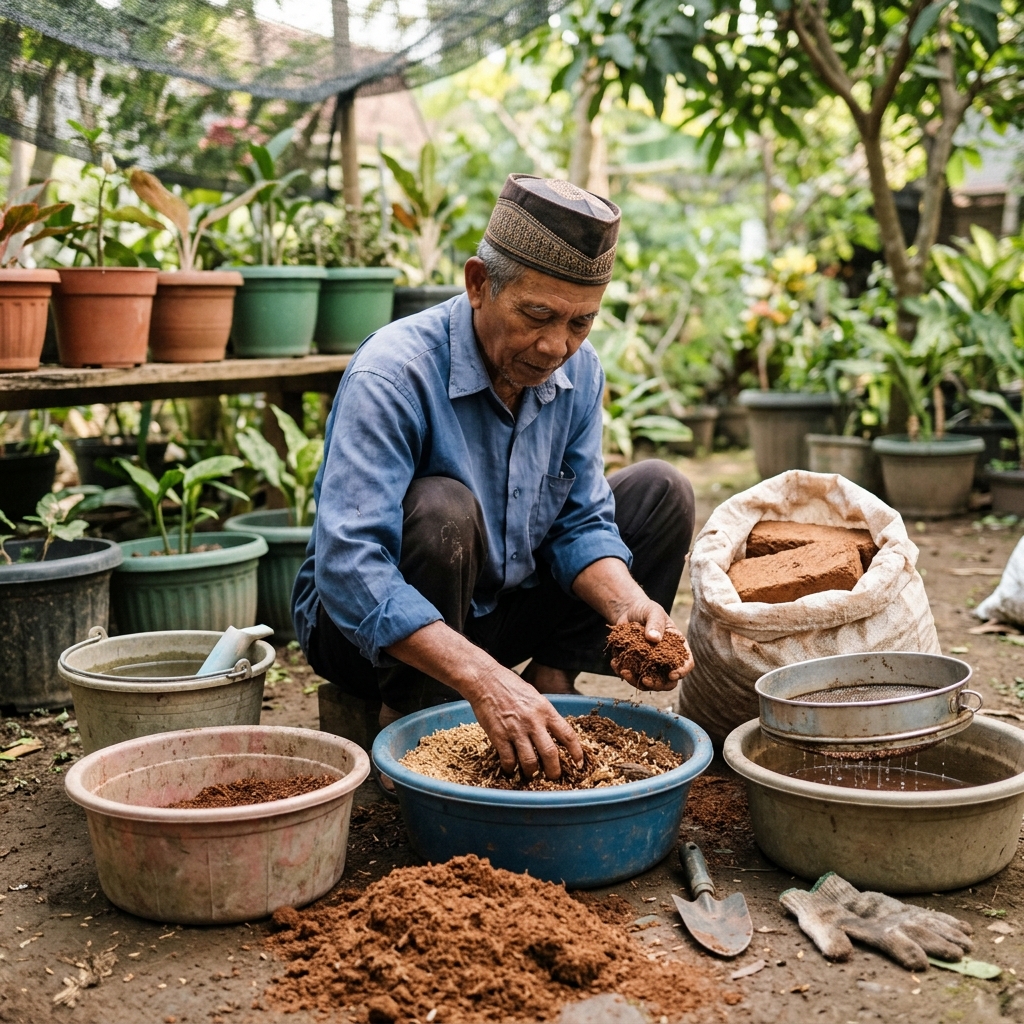
Cocopeat growing medium has become the top choice for modern farmers and home gardening enthusiasts seeking optimal harvest yields. If you frequently encounter issues with stunted plants or root rot due to compacted soil, this coconut coir dust serves as a revolutionary gardening solution. Through proper processing, you can transform this organic waste into a super-fertile growing medium.
The use of coconut fiber-based growing media has surged by up to 25% globally over the last three years. This popularity is driven by its superiority in maintaining a balance between moisture retention and root aeration. Based on an official study from Food and Agriculture Organization (FAO), the use of eco-friendly organic media such as coconut is key to sustainable agricultural efficiency in the future.
What Is Cocopeat Growing Medium and Why Is It So Popular?
Cocopeat is the fine cork-like dust produced from the extraction of coconut coir fiber. This natural material is obtained from the processing of Coconut (Cocos nucifera) fruit when separated from its primary fibers (coir fiber).
In modern agriculture, cocopeat growing medium functions as a superior alternative to garden soil (topsoil) as well as commercial hydroponic growing media. Its abundant microporous structure is capable of binding water up to 8–10 times its dry weight. This capillary action creates a root microenvironment that remains consistently moist without becoming waterlogged.
Advantages of Cocopeat Growing Medium Compared to Regular Soil Media
Selecting the right growing medium strongly dictates the productivity level of horticultural crops. Many cultivators have switched to utilizing cocopeat growing medium due to its physical properties that greatly support active root development.
Scientific studies featured in the publication ScienceDirect indicate that coconut fiber media exhibit an air-filled porosity of 10-12% even at water saturation point. This figure far exceeds standard clay or loam soils, which are prone to compaction and obstruct oxygen supply.
| Parametric Characteristics | Raw Cocopeat | Processed Cocopeat (Tannin-Free) | Standard Garden Soil |
|---|---|---|---|
| Water Retention Capacity | Very High (800%) | Very High (800-1000%) | Moderate (20-40%) |
| Tannin / Growth Inhibitor Levels | High (Inhibits Roots) | Free / Very Low | None |
| EC (Electrical Conductivity) Value | High (> 1.5 mS/cm) | Low (< 0.5 mS/cm) | Variable |
| Root Aeration Level | High | Very High | Low – Moderate |
| Resistance to Pathogenic Fungi | Susceptible (If Wet & Humid) | High (Sterile) | Low |
Here are some of the main advantages of using cocopeat for plant cultivation:
- High Water Retention Capacity: Stores water supply and nutrient solutions longer, saving on daily watering frequency.
- Maximum Air Porosity: Prevents the hardening of the growing medium so plant roots can freely absorb oxygen.
- Eco-Friendly and Renewable: A natural biomass raw material that is recyclable and naturally biodegradable.
- Neutral and Stable pH Level: Has a natural pH range of 5.8 – 6.5, which is ideal for plant nutrient absorption.
- Weed and Wild Seed Free: Free from wild weed seeds that often disrupt the growth of new seedlings.
The Dangers of Tannin & Sodium in Raw Cocopeat
Despite its extraordinary potential, freshly milled raw cocopeat contains high levels of tannins and sodium salts (NaCl). Tannins are complex polyphenol compounds that serve as a natural defense mechanism for coconut trees against pest attacks.
If you insist on using raw cocopeat directly, the tannin content will bind essential nutrients such as Calcium (Ca), Magnesium (Mg), and Nitrogen (N). This toxic effect triggers leaf chlorosis, rots young roots, and comprehensively inhibits plant nutrient absorption. Therefore, removing this inhibitory substance is an absolute necessity.
7 Steps on How to Remove Tannins from Cocopeat Growing Medium
Tannin compound removal can be done independently at home with simple equipment. The use of materials cocopeat growing medium that are free from nutrient-binding substances will boost nursery success rates up to 95%.
Apply these 7 easy steps on how to remove tannins from cocopeat carefully:
- Initial Screening: Sift the coarse dust to separate long coconut fibers (coir fiber) from the fine pith dust.
- First Washing: Place the dust into a porous container or a rice sack, then rinse thoroughly with running clean water until impurities are flushed out.
- Clean Water Soaking (24 Hours): Soak the dust in a large container for a full 24 hours until the soaking water turns dark brown.
- Tannin Water Drainage: Squeeze and discard all of the dark brown soaking water thoroughly.
- Calcium Nitrate / Dolomite Solution Soaking: Soak again for 12 hours with the addition of calcium nitrate or dolomite lime to exchange sodium ions with calcium.
- Final Rinsing: Rinse the dust again with clean water until the runoff is clear and the EC value drops below 0.5 mS/cm.
- Sun Drying: Dry the dust under the sun on a clean tarp until the moisture content drops to 15-20% before storage.
How to Process Cocopeat Growing Medium at Home
For home gardening enthusiasts, applying how to process your own cocopeat for a growing medium does not require complex facilities. Simply use repurposed buckets and a fabric filter sack. Ensure soaking is carried out for at least one full night so that anti-nutritional compounds dissolve completely.
How to Test Tannin Levels and EC (Electrical Conductivity) Values
To ensure the safety of the growing medium, take a handful of wet coir dust and squeeze out the water. If the runoff water appears clear with a faint yellowish tint, has a neutral pH (6.0 – 6.8), and an EC value < 0.5 mS/cm, then cocopeat growing medium it is 100% ready for use with sensitive seedlings.
Step-by-Step Guide to Fermenting Cocopeat Growing Medium
The process of cocopeat fermentation complements the tannin washing process. Fermentation breaks down raw organic matter into nutrient forms that are readily absorbed by beneficial root microbes.
Here are the concise steps to ferment coir dust at home:
- Preparing the Decomposer: Dissolve 2 tablespoons of Agricultural EM4 liquid and 2 tablespoons of molasses into 5 liters of clean water, then let it sit for 15 minutes.
- Mixing the Medium: Sprinkle the decomposer solution over the washed cocopeat until the moisture level reaches approximately 50% (when squeezed in a fist, it does not drip water yet does not crumble).
- Airtight Curing: Place the mixture into a sealed container or tightly closed black plastic bag for 7–14 days.
- Aeration and Application: Open the container after two weeks. Fermented coir dust that is ready to use will have a fresh, characteristic fermented/humus aroma without any foul rot odors.
Best Combination Blends for Cocopeat Growing Media
Using pure coir dust without amendments is not recommended for long-term cultivation, as this material inherently lacks built-in nutrients. You need a combination of other organic materials to create a well-balanced growing medium structure.
Based on technical guidance from Ministry of Agriculture of the Republic of Indonesia, an ideal growing medium formula must balance aeration, water retention capacity, and the supply of macro- and micronutrients.
1. Seedling Nursery Formula (1:1 Ratio)
Campurkan 1 bagian cocopeat bebas tanin dengan 1 bagian perlit atau sekam bakar. Formula gembur ini sangat cocok untuk menyemai benih holtikultura sensitif.
2. Formula Racikan Subur Pot & Tabulampot (Proporsi 2:1:1)
Gabungkan 2 bagian cocopeat olahan, 1 bagian kompos/pupuk kandang matang, dan 1 bagian sekam bakar. Kombinasi ini memberikan pasokan hara berkesinambungan serta drainase lancar.
Dalam ranah industri agrikultur dan pemanfaatan produk turunan perkebunan, bahan pakan nabati unggulan seperti quality copra meal juga memanfaatkan potensi buah kelapa secara optimal sebagai sumber nutrisi protein nabati tinggi.
Manfaat Cocopeat untuk Tanaman Hidroponik dan Hortikultura
Penerapan serbuk kelapa dalam sistem bercocok tanam modern terbukti mendatangkan banyak keuntungan produktivitas:
1. Berbudidaya Hidroponik Substrat (Drip System & Wick System)
Temukan manfaat cocopeat untuk tanaman hidroponik sebagai substitusi rockwool yang ekonomis. Daya kapilaritasnya mengalirkan larutan nutrisi secara merata ke seluruh zona akar tanpa menyisakan area kering.
2. Pembibitan dan Persemaian Skala Komersial
Teksturnya yang sangat halus mempermudah penetrasi akar muda bibit cabai, tomat, dan melon tanpa hambatan mekanis media.
3. Media Tanam Tanaman Hias Indoor & Sukulen
Campuran serbuk kelapa menjaga stabilitas kelembapan di dalam ruangan ber-AC sekaligus mencegah bahaya kebusukan akar.
Perkembangan teknologi pengolahan komoditas perkebunan kini semakin meluas. Selain pemanfaatan limbah kelapa, hasil sampingan industri sawit seperti palm kernel expeller bermutu dan biofuel biomassa palm kernel shell terpercaya terus memperkuat efisiensi pasokan industri global.
Sektor pengolahan turunan minyak nabati juga menghasilkan produk bernilai tinggi seperti suplemen pakan calcium salts of palm oil fatty acids yang mendukung efisiensi nutrisi peternakan secara modern.
Cara Merawat dan Menjaga Performa Cocopeat Media Tanam
Agar media tanam berbasis serbuk kelapa tetap awet dan subur hingga bertahun-tahun, terapkan perawatan berikut:
- Pengocoran Nutrisi Berkala: Karena sifatnya yang inert, siramkan pupuk hayati atau nutrisi NPK cair secara teratur.
- Pencegahan Lumut dan Jamur: Pastikan sirkulasi udara di sekitar pot lancar dan cegah genangan air berlebih.
- Sterilisasi Ulang Media Bekas: Bilas dan jemur media bekas sebelum dipakai ulang untuk memusnahkan potensi patogen bawaan.
Frequently Asked Questions (FAQ)
Apa manfaat utama cocopeat untuk media tanam?
Manfaat utamanya adalah meningkatkan kapasitas penyimpanan air hingga 800%, menjaga aerasi perakaran, menstabilkan pH tanah (5.8–6.5), serta mencegah media tumbuh menjadi cepat memadat.
Can cocopeat be used immediately without washing?
Tidak disarankan. Cocopeat mentah mengandung zat tanin dan kadar garam tinggi yang dapat mengikat nutrisi kalsium dan magnesium, sehingga membuat pertumbuhan tanaman kerdil dan daun menguning.
Bagaimana cara menghilangkan tanin pada cocopeat dengan mudah?
Lakukan perendaman serbuk dalam air bersih selama 24 jam, buang air cokelat pekatnya, lalu rendam kembali dengan larutan kalsium nitrat atau kapur dolomit selama 12 jam sebelum dibilas hingga jernih.
Berapa lama proses fermentasi cocopeat yang ideal?
Proses fermentasi ideal berlangsung selama 7 hingga 14 hari menggunakan larutan decomposer seperti EM4 dan molase dalam wadah tertutup kedap udara hingga tercium aroma humus segar.
Apakah cocopeat media tanam mengandung nutrisi alami?
Cocopeat murni tergolong inert dan sangat miskin nutrisi makro (N, P, K). Oleh sebab itu, penggunaannya wajib dikombinasikan dengan pupuk organik matang, kompos, atau pupuk cair hidroponik.
Conclusion
Memahami pengolahan dan penggunaan yang tepat adalah kunci sukses bercocok tanam secara modern. Dengan membebaskan serbuk sabut kelapa dari zat tanin melalui pencucian dan pencampuran nutrisi yang seimbang, Anda dapat menciptakan lingkungan perakaran yang sangat ideal dan produktif.
Mulai manfaatkan cocopeat growing medium berkualitas untuk meningkatkan hasil panen perkebunan maupun tanaman hias kesayangan Anda hari ini!



