
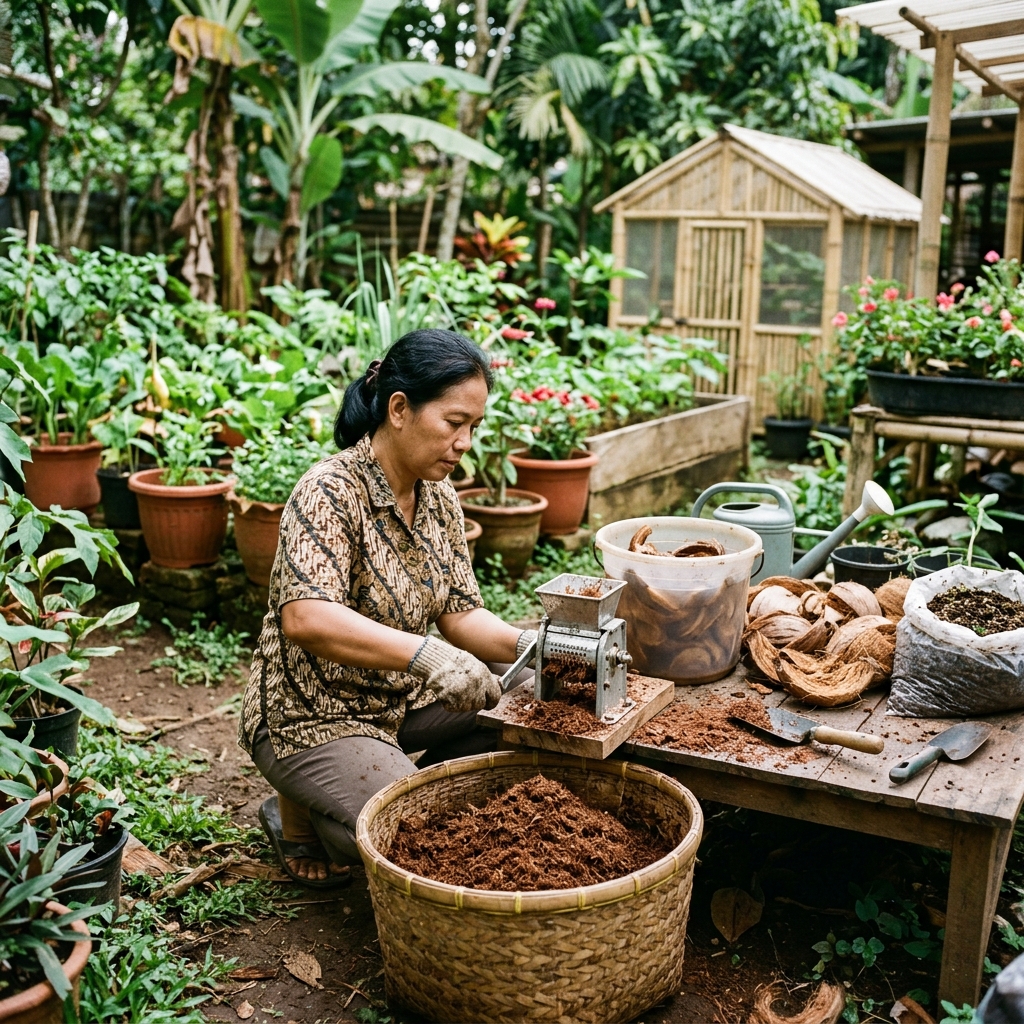
How to Make and Use Cocopeat for Plant-Safe Growing Media
How to Make and Use Cocopeat that is safe and sterile has now become the key to modern gardening success in 2026. Many novice growers often use raw coconut coir directly without processing, which actually proves fatal to plant root growth due to high levels of toxic tannins. Therefore, this comprehensive article will thoroughly explore the best methods for processing coconut waste into premium growing media.
As additional information, the coconut and oil palm derivative processing industry continues to expand rapidly in supporting global agricultural sustainability. In addition to relying on organic media, many agricultural practitioners also combine it with balanced nutrition, including utilizing by-products such as Palm Kernel Expeller as high-nutrient organic fertilizer supplements to significantly boost crop yields.
[Image: Illustration of the cocopeat production process from high-quality coconut coir in a modern processing plant | alt: How to Make and Use Cocopeat | title: Modern Cocopeat Processing 2026]
Understanding What Cocopeat Is and Its Characteristics
Cocopeat is an organic growing medium made from coconut coir dust or fiber pulp (mesocarp). This dust has an exceptional ability to absorb and retain water, making it ideal for use in dry climates or hydroponic systems. Based on data from Food and Agriculture Organization (FAO), the use of agro-industrial waste-based organic growing media can improve soil moisture retention by up to 73% compared to conventional media.
However, natural coconut coir contains chemical compounds called tannins and lignin. The tannin content of cocopeat is acidic and can inhibit the absorption of essential nutrients such as calcium and magnesium by young plant roots. Therefore, understanding the neutralization procedure for these substances is a crucial step before you start applying it to your favorite plants.
Tools and Materials in How to Make and Use Cocopeat
Before starting the production process at home, you need to prepare several simple yet essential tools. Thorough preparation will ensure that your final cocopeat product is completely sterile and free from harmful pathogens.
- Dry coconut coir (free from mold and moss)
- Coconut coir grater or shredder machine (crusher)
- Sieve or sand screening wire mesh
- Sufficient clean water for the washing process
- Sufficient agricultural lime (Dolomite) to neutralize pH
In addition to mechanical tools, ensure you also provide a large container or tarpaulin for the soaking process. According to guidelines from ScienceDirect Agricultural Research Journal, repeated washing of coconut fiber can reduce electrical conductivity (EC) levels to below 1.0 mS/cm, an ideal figure for vegetative plant growth.
[Image: Infographic diagram of coconut coir washing and fermentation stages to remove tannins | alt: Infographic on How to Make and Use Cocopeat | title: Cocopeat Sterilization Stages]
Step-by-Step Guide to Making Sterile and Safe Cocopeat
The process of making cocopeat requires diligence so that plant-inhibiting substances can be completely removed. Here is a step-by-step guide tested by professional agronomists to achieve maximum results:
- Coconut Coir Shredding: Separate the coconut husk from its hard shell, then shred or grind using a shredder machine to produce fine dust resembling coarse sawdust.
- Dust Sifting: Sift the shredded material to separate the coarse long fibers from the fine dust (pith). Use only the fine dust as the main cocopeat material.
- Soaking and Tannin Washing: Soak the cocopeat dust in clean water for 24 to 48 hours. The soaking water will turn dark brown due to the release of tannins. Replace the water periodically until the rinse water is completely clear.
- Dolomite Application (pH Neutralization): After washing thoroughly, sprinkle an adequate amount of dolomite lime and mix evenly. Let it rest for several days so the acidity level (pH) of the cocopeat reaches the optimal range of 5.5 to 6.5.
- Complete Drying: Sun-dry the cocopeat under direct sunlight until its moisture content drops below 15% to prevent the growth of pathogenic fungi prior to storage.
Proper Techniques for Using Cocopeat on Various Plants
Once the manufacturing process is complete, you need to understand how to apply it correctly. Pure cocopeat has the drawback of lacking sufficient natural nutrients for long-term plant growth, making media blending essential.
Ideal Growing Media Combination
To achieve optimal results, an ideal growing media composition typically uses a specific ratio of cocopeat, compost, and burnt rice husks. A 1:1:1 ratio has proven highly effective in maintaining a balance between air aeration and moisture retention.
| Media Component | Blend Percentage | Main Function in Growing Media |
|---|---|---|
| Cocopeat | 40% | Maintains moisture and retains water reserves |
| Compost / Humus | 30% | Provides macro nutrients and essential elements |
| Burnt Rice Husk / Sand | 30% | Improves air circulation and root drainage |
The use of this mixed media is highly recommended for indoor ornamental plants, hydroponic vegetable nurseries, and potted fruit plants (tabulampot). Furthermore, to enhance overall feed nutrition efficiency and organic media performance, you can also explore various references for high-quality agricultural support products through a trusted Copra Meal catalog.
[Image: Close-up photo of thriving plant roots in a pot with a cocopeat and rice husk growing media mix | alt: Thriving Plant Using Cocopeat | title: Results of Using Quality Cocopeat]
Advantages and Challenges of Using Cocopeat
Despite offering numerous benefits, every growing medium possesses unique characteristics that growers must manage wisely. Understanding its strengths and weaknesses will prevent fatal mistakes in routine plant care.
Main Advantages of Cocopeat
High water retention means watering does not need to be done too frequently. In addition, its loose texture is very supportive of young root system development. This medium is also free from soil weeds and seedborne pests when subjected to proper sterilization.
Challenges to Watch Out For
The biggest challenge lies in its minimal natural nutrient content. You must routinely provide supplemental fertilizer on a regular basis. In addition, if the container's drainage is poor, cocopeat will become overly wet, leading to root rot.
Frequently Asked Questions
Can cocopeat be used immediately without washing?
Not recommended. Raw coconut coir contains tannins that are toxic to young plant roots. Repeated washing is essential to eliminate these acidic substances so it is safe to use.
How long is the shelf life of dry cocopeat?
Dry cocopeat stored in a cool place protected from excessive moisture can last for years without significant structural quality degradation.
Is cocopeat suitable for all types of plants?
Cocopeat is very suitable for almost all types of plants, especially leafy vegetables, ornamental plants, and seedlings. However, for plants that do not tolerate overly wet growing media, it must be mixed with rice husk charcoal or sand.
How do you check the pH of cocopeat before use?
You can test the acidity of cocopeat using a soil pH meter or a digital liquid pH meter after soaking a small sample of cocopeat in clean distilled water for one hour.
In conclusion, mastering proper processing techniques will turn ordinary coconut coir waste into a high-value growing medium. By applying the guide How to Make and Use Cocopeat above consistently, your plants are guaranteed to grow more vigorously, healthier, and with stronger roots throughout 2026. Start putting these sterilization steps into practice today and enjoy rewarding harvest results!
[Image: Wide view of a lush green garden with a modern irrigation system using organic media | alt: Conclusion on How to Make and Use Cocopeat | title: Modern Lush Garden 2026]



