
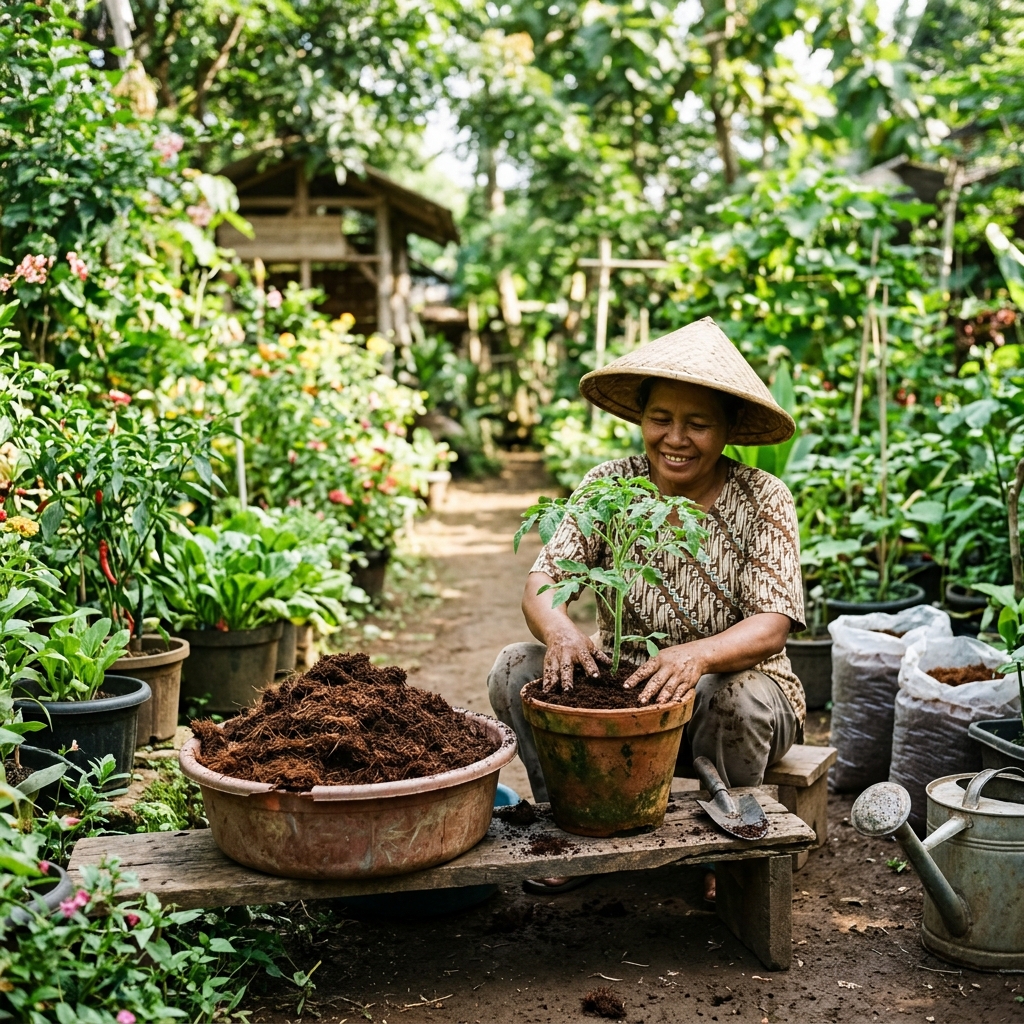
Cocopeat: 7 Complete Guides & Extraordinary Benefits (2026)
Cocopeat has now become the primary eco-friendly organic growing medium of choice for modern agricultural practitioners across the globe. Issues of soil degradation and the scarcity of fertile land are prompting growers to shift toward renewable alternative substrates. Through this article, you will gain comprehensive insights ranging from fundamental characteristics and tannin treatment to the best formulation ratios for thriving plant growth.
According to international agricultural data from Food and Agriculture Organization (FAO), the utilization of natural fiber waste such as coconut coir dust can reduce the carbon footprint of the horticulture sector by up to 40%. The transformation of coconut coir waste into a high-value growing medium is not merely a passing trend, but a strategic solution to safeguarding global food security in 2026 and beyond.
For organic farmers and commercial hydroponic growers alike, understanding the physical and chemical properties of a growing medium is the key to successful harvests. Improper handling of coir dust frequently causes chlorosis or stunted growth due to nutrient imbalances. Therefore, this guide thoroughly covers all the technical aspects you need in detail.
What Is Cocopeat and Its Physical Characteristics?
By definition, cocopeat is fine coconut coir dust produced from the separation of coconut fibers (coir fiber) that possesses high moisture retention capacity as well as an exceptionally light specific gravity. This organic growing medium is composed of micro-cellulose particles featuring superior capillarity to distribute water and nutrients evenly to plant roots.
In addition to being environmentally friendly, this material serves as a natural alternative substrate replacing peat moss (mined peat moss), which is increasingly depleted in global wetland ecosystems. Comprehensive information regarding the history and morphology of coconut coir dust material is also documented in the botanical database Wikipedia Coir Pith.
These spongy dust particles contain micro air cavities that remain stable even when soaked in large volumes of water. Its natural hydrophilic properties allow the rehydration process to occur rapidly, even after the medium has dried out completely due to intense sunlight exposure.
Texture and Porosity Characteristics of Cocopeat
The primary physical characteristic of cocopeat lies in its total porosity level, which ranges between 90% and 95%. This high porosity rate ensures that oxygen circulation around the plant rhizosphere remains abundant even when the medium is saturated with liquid.
Apparent density (bulk density) that is low helps young roots penetrate pore spaces without mechanical resistance, accelerating seedling development significantly. This medium does not easily compact or experience soil compaction (soil compaction), ensuring root aeration is maintained throughout the growing season.
pH Value, Cation Capacity, and Tannin Content of Cocopeat
Naturally, this processed coconut coir has a neutral to slightly acidic pH, ranging between 5.5 and 6.8. This pH range is the most ideal for most horticultural crops to maximally absorb essential macronutrients and micronutrients.
However, the tannin content of raw cocopeat and its natural sodium and potassium levels are relatively concentrated. A Cation Exchange Capacity (CEC) ranging from 60 to 100 meq/100g requires this medium to undergo a washing and calcium buffering process before direct application to sensitive plant root systems.
Fundamental Differences Between Cocopeat and Cocofiber
Many beginners often confuse coir pith and coarse coir fiber. Cocopeat consists of a fine granular dust primarily functioning to retain moisture and nutrient solutions within the plant's rhizosphere zone.
On the other hand, cocofiber consists of long, rigid filament fibers commonly used as pot mulching, erosion control mats, or raw material in rope manufacturing industries. Both complement each other when combined proportionally in ornamental plant cultivation.
7 Benefits of Cocopeat as a Hydroponic and Traditional Growing Medium
Utilizing this coconut coir-based medium delivers high operational efficiency in commercial cultivation systems as well as urban farming hobbies. The key advantages that make it a superior choice include:
- Remarkable Water Retention: Capable of holding up to 8–10 times its dry weight in water, reducing daily watering frequency by up to half.
- Optimal Aeration and Drainage: Micro-porous sponge structure prevents root rot caused by excess water pooling at the bottom of pots or polybags.
- Naturally Pathogen-Free: Generally sterile from soil-borne fungal spores, fruit fly pest eggs, and disruptive weed seeds when processed according to standard procedures.
- High Resistance to Decomposition: Contains high lignin content, making its fibers resistant to biological degradation for up to 3 to 5 years of use.
- High Cation Exchange Capacity (CEC): CEC ranges between 60–100 meq/100g, enabling more efficient binding of fertilizer nutrient cations such as calcium and magnesium.
- Eco-Friendly and Renewable: Produced from coconut agro-industrial waste without damaging natural peatland ecosystems.
- Growing Medium Formulation Flexibility: Extremely easy to blend with perlite, vermiculite, carbonized rice husk, or solid compost to achieve crop-specific formulations.
Scientific research from ScienceDirect Horticultural Substrates Study confirms that substituting conventional soil media with coconut coir-based substrates increases the canopy biomass and root system of chili plants by up to 28%. Nitrogen and phosphorus nutrient uptake was recorded to be significantly more stable due to the constantly maintained root zone moisture.
In addition to the water retention advantages of the growing medium, this organic substrate also minimizes transplant shock (transplant shock) when seedlings are moved to larger growing containers. The fine powder particles gently clinging to the roots protect delicate root caps from mechanical friction.
Comparison Table: Cocopeat vs Regular Soil vs Carbonized Rice Husk
To understand the technical performance of each growing medium, review the following summary of agronomic parameter comparisons:
| Performance Parameter | Cocopeat | Regular Fertile Soil | Carbonized Rice Husk |
|---|---|---|---|
| Water Retention Capacity | Very High (800–1000%) | Moderate (40–60%) | Low-Moderate (150–200%) |
| Aeration Porosity Level | Excellent (Uniform pores) | Tends to Compact | Very Loose / Porous |
| Nutrient Content | Low (Buffer media) | High and Varied | Rich in Silica & Potassium |
| Weed & Pest Risk | Very Low (Almost Sterile) | High | Very Low (Burn process) |
| Dry Weight | Very Light | Heavy and Dense | Very Light |
Through the comparison between cocopeat and roasted rice husk above, it is clear that combining the two creates a growing medium with perfectly complementary aeration and water retention structures.
Besides coir pith materials, coconut agricultural by-products such as copra meal are also widely sought after by the agribusiness market as a high-protein animal feed ingredient. Meanwhile, the modern ruminant feed industry often combines it with palm kernel expeller to meet the daily caloric standards of livestock sustainably.
How to Properly Process Tannin-Free Cocopeat for Plants
Applying raw coconut coir dust directly into plant pots without preliminary processing has the potential to inhibit growth. This is due to the presence of natural tannins and sodium chloride salt levels that are still tightly bound within the cellulose fibers.
Tannin substances are allelopathic, capable of inhibiting seed germination and binding nitrogen and iron elements, making them unavailable to plants. Therefore, applying the technique of processing tannin-free cocopeat for plants is mandatory before planting begins.
Guide on How to Properly Wash Cocopeat Blocks
If you purchase the medium in dense pressed block form, here are the practical steps on how to properly wash cocopeat blocks so they become sterile and ready to use:
- Briquette Rehydration: Place the solid block into a large container, then pour clean water with a 1:5 volume ratio until the fibers fully expand.
- Washing and Squeezing: Stir and squeeze the dust particles thoroughly. Discard the reddish-brown soak water containing a concentrated tannin solution.
- Rinse Repetition: Repeat the soaking and rinsing process with clean water 2 to 3 times until the runoff water appears clear yellowish.
- Electrical Conductivity (EC) Test: Measure the runoff water using a digital EC meter. Ensure the salinity value is below 0.5 mS/cm for sensitive seedlings.
- Optimal Draining: Drain the coir dust on a clean tarp until the substrate moisture level is reduced to the 40–50% range.
To understand the principles of soil chemistry and organic substrates in greater depth, you can consult scientific literature from University of Florida IFAS Extension regarding commercial coconut coir substrate management.
Calcium Nitrate Buffering Technique to Stabilize Cations
After the washing stage is complete, the next crucial step is the process of buffering. The negatively charged surface of raw coconut coir dust is generally dominated by readily released potassium (K+) and sodium (Na+) cations.
Soak the wet fiber in a Calcium Nitrate (Ca(NO3)2) fertilizer solution with a concentration of 5–10 grams per liter of water for 24 hours. Calcium will displace the sodium and potassium on the cation exchange sites, protecting your plants from the risk of future calcium deficiency.
Cocopeat-Based Growing Medium Blend Formulations
Although the benefits of cocopeat as a hydroponic growing medium are abundant, using 100% pure fiber in open areas with high rainfall can lead to excessive moisture. Combining it with other porous materials is the best strategy for potted plant cultivation.
Here are several proven growing medium recipes tailored to the physiological needs of each plant group:
- Seedlings and Leafy Vegetables: 60% buffered coconut coir dust + 30% screened mature compost + 10% roasted rice husks or perlite.
- Aroid Ornamental Plants (Monstera, Philodendron, Anthurium): 30% coconut coir dust + 30% chopped pine bark + 20% roasted rice husks + 20% coarse perlite.
- Potted Fruit Plants (Tabulampot): 40% loose topsoil + 30% processed coco peat + 30% fully fermented mature manure.
- Cacti and Succulents: 20% coco peat + 50% coarse Malang sand + 30% pumice for instant drainage.
Nutrient Management and Plant Care with Cocopeat Substrate
Irrigation management in coco peat-based growing media requires grower discipline. The best rule of thumb is a tactile check: do not water again if the top 2–3 cm surface layer still feels moist and cool to the touch.
Fertilization should rely on water-soluble fertilizers (water-soluble) with a balanced macro and micro nutrient profile. Add Cal-Mag (Calcium and Magnesium) supplements on a regular schedule to counterbalance the dynamic cation exchange capacity of the coir media.
In addition to coir waste, the sustainable agribusiness industry also optimizes high-quality palm kernel shells such as palm kernel shell as an eco-friendly biomass fuel for large-scale agricultural commodity drying.
To achieve consistent crop yields, ensure that you use cocopeat materials with export-quality standards that have undergone controlled washing and drying processes.
Makmur Amanah Sejahtera provides high-quality processed palm products such as Palm Kernel Expeller, Palm Kernel Shell, Crude Palm Oil, Palm Kernel Oil, and others. Please contact us via WhatsApp +6282140002198 or email admin@makmuramanah.co.id.
Frequently Asked Questions (FAQ) About Cocopeat
Can cocopeat be used directly without washing?
Using raw coco peat directly is strongly discouraged. Its concentrated tannin content and high salinity risk poisoning young root tissues and triggering severe calcium deficiency, which inhibits the uptake of essential plant nutrients.
How long is the lifespan of cocopeat in pots?
The lifespan of this organic medium lasts between 3 to 5 years because its lignin structure breaks down slowly. Simply steam-sterilize or sun-dry it again and replenish with fresh nutrients before reuse.
What is the main difference between cocopeat and cocofiber?
Cocopeat is a fine, spongy, moisture-holding dust byproduct of coconut coir processing. In contrast, cocofiber consists of long filament fibers used as pot mulching, rope material, industrial mattresses, or open-soil erosion control.
Why do hydroponic plants often suffer from calcium deficiency when grown in cocopeat?
The cation sites of raw coir dust naturally bind potassium and sodium. Without a prior calcium nitrate buffering process, the growing medium fibers will absorb calcium from the nutrient solution and release excess potassium ions to the plants.
Is cocopeat suitable for cacti and succulents?
It can be used as long as its concentration is limited to a maximum of 15–20% of the total mix. Succulents require very rapid drainage, so the formulation must remain dominated by porous materials such as volcanic sand, pumice, or perlite.
Conclusion: Why Cocopeat is the Best Choice for the Future
The utilization of eco-friendly growing media has become an essential pillar in achieving sustainable precision agriculture systems. Thanks to its phenomenal water retention capacity, excellent aeration porosity, and long-lasting decomposition resistance, this coconut coir dust has proven to provide a robust rhizosphere foundation for various commercial crop commodities.
By applying tannin washing processes, proven buffering techniques, and precise medium mix formulations, you can optimize harvest productivity while saving on daily irrigation water budgets. Choose cocopeat high-quality pure cocopeat to support the success of your plantation projects, and consult your agro-industrial commodity needs with a trusted partner today!



