
Palm Kernel Expeller: 7 Ultimate GACC Export Secrets (2026)
Mesin Pengekstrak Inti Sawit is rapidly transforming the global livestock feed industry as a highly nutritious, cost-effective ingredient. As international grain prices surge aggressively in 2026, farm operators face the incredible challenge of maintaining animal health without destroying their profit margins. Fortunately, integrating this sustainable agricultural by-product into your feed formulations solves this exact dilemma while massively reducing overhead costs.
Recent studies indicate that precision-feeding ruminants with optimal palm by-product ratios drastically improves milk yield, butterfat synthesis, and overall herd immunity. However, sourcing premium quality materials internationally requires navigating complex customs regulations, volatile commodity pricing, and strict global biosecurity protocols.
This comprehensive 2026 masterclass reveals everything you need to know about this powerhouse ingredient. From understanding exact nutritional profiles to mastering customs classifications and verifying international suppliers, you will discover the ultimate strategies to elevate your agribusiness operations and secure an uninterrupted supply today.
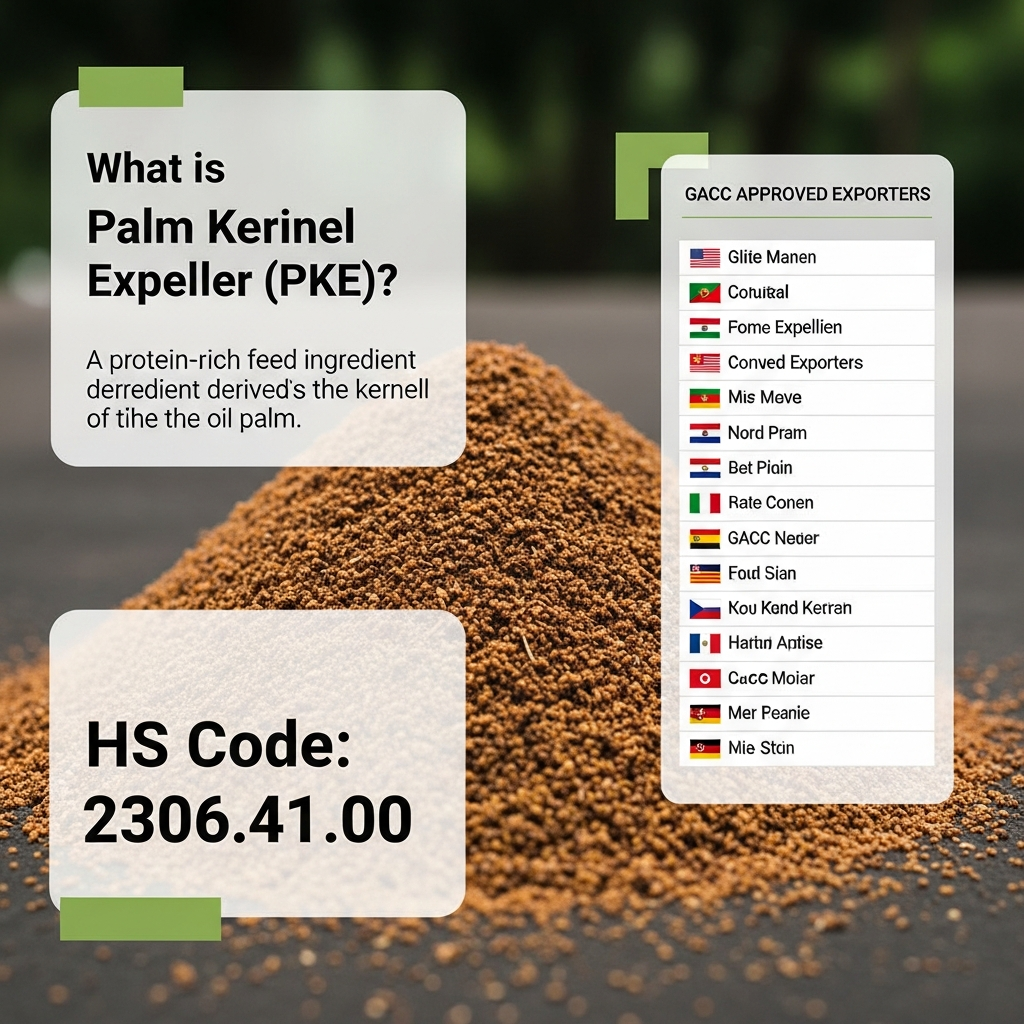
1. Apa itu Palm Kernel Expeller (PKE)?
Palm Kernel Expeller is a premium, nutrient-dense agricultural by-product generated after mechanically extracting palm kernel oil from the tropical palm nut. This high-fiber, medium-protein ingredient is globally recognized for enhancing dairy cattle milk production and providing sustained metabolic energy in commercial ruminant diets across various climates.
Furthermore, the manufacturing process relies exclusively on heavy-duty mechanical screw presses rather than harsh chemical solvents like hexane. Consequently, this natural expeller method retains essential residual oils and valuable nutrients, making it vastly superior to chemically solvent-extracted alternatives on the commodity market.
As sustainability becomes mandatory in 2026, utilizing agricultural co-products reduces environmental waste while simultaneously lowering feed overhead for major producers. Savvy feed mills heavily depend on this material to balance energy-dense rations efficiently without compromising animal welfare or farm profitability.

The Palm Kernel Expeller Mechanical Extraction Process Explained
The journey begins when raw palm nuts are carefully separated from the fresh fruit bunches and systematically dried in massive industrial silos. Next, powerful industrial crushers crack the protective outer shells to isolate the nutrient-rich kernels hidden safely inside.
These kernels subsequently undergo rigorous mechanical pressing, which violently squeezes out the valuable kernel oil under extreme physical friction. The solid, protein-rich cake-like residue remaining after this intense friction and pressure is the raw, unrefined expeller.
Finally, the hot pressed cake is cooled rapidly, dried to prevent fungal growth, and ground into a uniform, manageable meal. This standardized grinding ensures seamless integration into automated feed mixing silos at commercial feed mills worldwide, guaranteeing consistent flowability.
Sustainable Production and Circular Agriculture
In modern palm oil processing, absolutely nothing goes to waste, epitomizing the concept of a circular agricultural economy. While the kernel provides our nutrient-dense feed ingredient, the discarded outer shells are frequently repurposed by advanced facilities.
For example, many eco-conscious crushing plants utilize Cangkang Inti Sawit as a highly efficient, sustainable biomass fuel to power their massive industrial steam boilers. This closed-loop energy system drastically reduces the carbon footprint associated with manufacturing livestock feed.
By purchasing these by-products, international feed manufacturers are directly supporting sustainable, zero-waste tropical agriculture. This environmental narrative is becoming a major selling point for dairy brands targeting eco-conscious consumers in European and North American retail markets.
2026 Global Market Demand and Supply Trends
According to comprehensive data published by the Organisasi Pangan dan Pertanian (FAO), international demand for sustainable palm co-products is currently experiencing unprecedented double-digit growth. Asian and European markets are aggressively expanding their import volumes to combat local crop failures.
Additionally, specialized dairy operations in New Zealand, Australia, and the European Union constitute the largest consumer base for these bulk imports. They specifically target this ingredient to combat seasonal pasture shortages and maintain consistent, high-volume winter milk production.
Therefore, securing reliable, year-round supply chains has become paramount for large-scale feed manufacturers globally. Proactive buyers are bypassing volatile spot markets and establishing direct, long-term relationships with verified Southeast Asian crushing plants to lock in favorable pricing.
2. Nutritional Profile and Animal Feed Benefits
Understanding the exact macronutrient breakdown is absolutely critical for professional feed formulators to maximize livestock performance and minimize feed waste. The ingredient boasts a highly favorable calcium-to-phosphorus ratio, making it incredibly synergistic with standard forage and silage programs.
Moreover, it typically contains between 14% to 16% crude protein, alongside an impressive 50% to 60% neutral detergent fiber (NDF). This unique, highly structural fiber digests slowly in the rumen, practically eliminating the risk of dangerous sub-acute ruminal acidosis (SARA).
In contrast to heavy, rapid-fermenting starch diets like pure corn or wheat, this expeller stabilizes delicate rumen fermentation pH levels over a 24-hour period. Consequently, cows experience better digestion, improved gut health, and significantly more consistent butterfat synthesis.
Optimizing Dairy Cattle and Ruminant Rations
Dairy nutritionists universally praise this ingredient for its potent galactopoietic properties, which directly stimulate increased milk production volume. The residual palm oil—usually hovering around 8% to 10%—provides safe, rumen-protected energy that won’t disrupt microbial populations.
A landmark peer-reviewed study indexed in the National Institutes of Health (NIH) database demonstrates that ruminants fed with optimal expeller ratios produce significantly higher milk fat yields. This translates directly to larger premium payouts from commercial dairy processors.
To further amplify milk fat percentages during early lactation, elite nutritionists frequently pair this basal feed with highly concentrated energy supplements. For example, blending it with premium Garam Kalsium dari Asam Lemak Minyak Sawit creates an unstoppable, high-performance dairy ration that maximizes genetic potential.
Formulating High-Yield Beef Cattle Rations
Beyond dairy, beef cattle feedlots are increasingly integrating this fibrous meal into their intense finishing diets to improve marbling and daily weight gain. The slow-release energy profile perfectly complements high-grain diets, buffering the rumen against acidic spikes.
Feedlot managers typically replace up to 20% of their standard corn or barley mix with this cost-effective alternative. This substitution significantly lowers the overall cost per kilogram of gain without sacrificing carcass quality or meat grading standards.
When combined with a comfortable, stress-free environment—such as barns utilizing highly absorbent Cocopeat for premium animal bedding—beef cattle exhibit exceptional feed conversion ratios and overall superior health markers.
Applications in Swine and Poultry Nutrition
While predominantly utilized in ruminant diets, modern enzyme technology now allows strategic inclusion in monogastric feeds. Swine and poultry possess entirely different digestive systems, historically limiting high-fiber ingredient usage in commercial flocks.
However, by introducing specific exogenous enzymes like mannanase, feed manufacturers can successfully break down the complex cell walls. This unlocks trapped intracellular proteins and energy, making the meal viable for finishing pigs and older, robust broiler flocks.
Implementing this strategy requires precise formulation software to avoid diluting essential, limiting amino acids like lysine and methionine. When executed correctly, integrating alternative fiber sources significantly reduces dangerous reliance on volatile global soybean markets.
3. Palm Kernel Expeller vs. Alternative Feed Ingredients
Profitable feed formulation requires constant comparative analysis between available commodities on the global market. Farm managers must ruthlessly balance cost, availability, and nutritional density to formulate the ultimate least-cost ration for their specific herds.
Below is a detailed comparison of popular plant-based protein sources used globally by top-tier feed mills. This data empowers purchasing managers to make rapid, mathematically sound procurement decisions during aggressive market fluctuations.
| Nutritional Metric | Mesin Pengekstrak Inti Sawit | Soybean Meal (Solvent) | Tepung Kopra |
|---|---|---|---|
| Protein Kasar | 14% – 16% | 44% – 48% | 20% – 22% |
| Lemak/Minyak Kasar | 8% – 10% | 1% – 2% | 6% – 8% |
| Serat Kasar | 15% – 18% | 3% – 5% | 10% – 14% |
| Rumen Degradability | Slow / Safe | Rapid | Sedang |
As illustrated mathematically, while soy undoubtedly dominates the raw protein category, it utterly lacks safe structural fiber and protective fats. Therefore, blending these ingredients produces a vastly superior, biologically balanced feed profile that maximizes animal health.
For specialized formulations requiring slightly higher protein with similar structural fiber characteristics, it serves as an excellent companion to Tepung Kopra. Together, these tropical co-products dominate least-cost ruminant matrices worldwide.
If nutritionists need to push energy density even higher without adding more bulk fiber, they can seamlessly incorporate liquid fat sources like RBD CP8 into the mixer. This creates an incredibly dense, palatable ration ideal for high-yielding, stressed animals.

4. Palm Kernel Expeller HS Code & Customs Classification
Navigating international agricultural trade requires absolutely flawless documentation and strict adherence to global coding systems. Minor clerical errors on a commercial invoice can trigger massive port delays, invasive inspections, and crippling demurrage fees.
The standardized international Mesin Pengekstrak Inti Sawit HS Code utilized for seamless cross-border customs clearance is exactly 2306.60.00.00. This specific numerical identifier dictates everything from import tariffs to mandatory sanitary inspections upon arrival.
Logistics coordinators must guarantee this exact code appears perfectly across all Bills of Lading, Phytosanitary Certificates, and Certificates of Origin. Total consistency across shipping documents ensures rapid, frictionless port entry and minimal downtime.
Official Harmonized System Breakdown
Itu Organisasi Bea Cukai Dunia (WCO) officially classifies this agricultural commodity under Chapter 23. This specific chapter universally encompasses residues and waste from the food industries, alongside prepared animal fodder.
Specifically, Heading 2306 covers oil-cake and other solid residues resulting from the mechanical extraction of vegetable fats or oils. The subheading 60 distinctly isolates residues derived strictly from palm nuts or kernels, completely separating it from soybean, canola, or sunflower meal.
Mastering these exact classifications is strictly non-negotiable for importers aiming to leverage lucrative preferential trade agreements. Proper coding often qualifies massive shipments for significantly reduced or zero-tariff entry under ASEAN or bilateral free trade frameworks.
5. Navigating GACC Approved Exporters for China
The Chinese agricultural market represents the most lucrative, yet strictly regulated, export destination globally for feed commodities. The General Administration of Customs of China (GACC) enforces uncompromising biosecurity and strict quality control standards on all imported feed materials.
Under strict Decree 248 and 249 regulations, overseas processing facilities must pass rigorous physical and documentary audits before receiving an official GACC registration number. Attempting to export agricultural products without this specific clearance results in immediate shipment rejection and potential destruction at Chinese ports.
Official GACC protocols demand extensive documentation proving the absolute absence of heavy metals, aflatoxins, and unapproved genetically modified elements. Exporters must maintain flawless, independently verified laboratory testing records for every individual batch produced.
The Verification Process for Importers
Smart, institutional buyers never wire advance funds without thoroughly authenticating an exporter’s legal GACC status. Fraudulent suppliers frequently claim false compliance online, leaving unsuspecting buyers with seized cargo, massive financial losses, and zero legal recourse.
Always utilize these three crucial verification steps before signing contracts:
- Cross-reference the Registration Database: Manually input the supplier’s provided 18-digit code into the official Chinese customs portal to confirm active, unexpired status.
- Request ISO and GMP+ Certificates: Legitimate approved facilities easily provide verifiable international quality management certifications upon request within hours.
- Verify Phytosanitary Capabilities: Ensure the exporter works directly with accredited government agricultural departments fully capable of issuing legitimate phytosanitary documentation.
Partnering with a fully transparent, heavily vetted, GACC-compliant manufacturer drastically reduces supply chain anxiety and operational financial risk. Trustworthy suppliers proactively guide international clients through the intricate, ever-changing Chinese import bureaucracy.

6. How to Source Premium Quality Safely
Not all agricultural co-products are created equal, and physical characteristics vary wildly depending on the specific crushing facility’s technological sophistication. Recognizing premium visual and olfactory indicators is a mandatory, highly valued skill for seasoned purchasing managers.
High-quality material presents a uniform, rich dark brown appearance, emitting a highly pleasant, sweet biscuit-like aroma. Any visual signs of mold, rancid chemical smells, or excessive jagged shell fragments immediately indicate substandard processing, poor screening, or improper warehouse storage.
Additionally, moisture content remains the ultimate critical control point during complex international sea freight. Premium suppliers strictly maintain moisture levels below 10%, aggressively preventing lethal mycotoxin blooms and spontaneous combustion during long, humid ocean transits.
Essential Testing and Quality Control Assurances
Before committing to a lucrative, multi-million dollar annual supply contract, insist on reviewing a comprehensive Certificate of Analysis (COA) from an independent, third-party laboratory like SGS, Intertek, or Sucofindo. This legally binding document objectively validates crude protein percentages, residual fat, and safe ash content.
Furthermore, stringent laboratory testing for dangerous Aflatoxin B1 limits and foreign matter contamination is completely non-negotiable. Top-tier modern manufacturers utilize heavy-duty magnetic separators and advanced vibration screening technology to successfully eliminate all metallic debris and rogue shell fragments.
Partnering with reputable, fully certified facilities guarantees you consistently receive top-tier Mesin Pengekstrak Inti Sawit perfectly optimized for maximum herd performance. Never compromise on biosecurity when formulating commercial livestock rations for high-value animals.
Mycotoxin Management During Ocean Transit
Shipping bulk agricultural commodities across the equator introduces immense condensation risks, commonly referred to as “container sweat”. When warm, humid air hits cold steel container walls during nightfall, moisture rains down aggressively onto the unprotected cargo.
To combat this severe threat, elite exporters line shipping containers with thick corrugated kraft paper and strategically install high-capacity desiccant poles. This proactive moisture absorption strategy guarantees the cargo arrives in pristine, mold-free condition, fully preserving the nutritional integrity.
Receiving compromised, moldy feed is a catastrophic event for any commercial dairy. By enforcing strict pre-shipment moisture parameters (strictly < 10%) and demanding professional container preparation, importers totally neutralize this massive logistical vulnerability.
🎥 Video Recommendation: Embed a YouTube video here titled “How to Formulate Dairy Diets Using Palm Kernel Expeller” featuring a professional livestock nutritionist explaining optimal daily feed mixing ratios and transition strategies.
Makmur Amanah Sejahtera Menyediakan produk-produk kelapa sawit berkualitas tinggi seperti bungkil inti kelapa sawit, cangkang inti kelapa sawit, minyak kelapa sawit mentah, minyak inti kelapa sawit, dll. Silakan hubungi kami di WhatsApp +6282140002198 atau kirim email kepada kami di admin@makmuramanah.co.id.
7. Pertanyaan yang Sering Diajukan
What is the exact HS Code for Palm Kernel Expeller?
The internationally recognized HS Code is 2306.60.00.00. This specific classification is used globally for customs clearance, accurate import tariff calculation, and defining solid residues resulting from mechanical palm kernel oil extraction processes.
Can poultry and swine safely consume this ingredient?
Yes, while historically limited by high structural fiber content, modern feed formulations use powerful exogenous enzymes like mannanase. These specialized enzymes actively break down complex structural fiber, allowing poultry and swine to safely digest trapped intracellular nutrients.
What exactly does GACC approved mean for importers?
GACC stands for the General Administration of Customs of China. A GACC approved exporter has successfully passed highly stringent Chinese biosecurity and quality control audits, legally permitting them to export agricultural feed commodities directly to mainland Chinese ports.
How does it mathematically compare to Copra Meal?
Both are phenomenal tropical by-products. However, Copra Meal generally features slightly higher crude protein (20-22%) compared to PKE (14-16%). Expert nutritionists frequently blend both ingredients together in the mixer to create a perfectly balanced, highly palatable ruminant ration.
What is the absolute ideal moisture content for safe bulk shipping?
The absolute maximum safe moisture level for international shipping is strictly 10%. Maintaining rigorous moisture control proactively prevents lethal fungal growth, dangerous aflatoxin development, and catastrophic cargo spontaneous combustion during lengthy ocean transits.

Conclusion: Dominating Feed Strategy in 2026
In summary, adapting successfully to the highly volatile 2026 global agricultural economy requires incredibly smart, mathematically sound procurement strategies. By completely understanding the immense nutritional prowess, official HS classifications, and stringent GACC biosecurity protocols, importers can confidently secure superior commodities at competitive prices.
Whether you are intensely managing a commercial dairy farm, formulating advanced swine matrices, or coordinating massive international freight logistics, this remarkable co-product undeniably offers unmatched economic and physiological advantages. It effortlessly bridges the difficult gap between drastically lowering operational overhead and maximizing true herd genetic potential.
Do not let chaotic commodity markets and supply chain disruptions erode your hard-earned profit margins. Take highly decisive action today by completely upgrading your commercial feed strategy and securing a reliable, year-round supply of premium Mesin Pengekstrak Inti Sawit from certified, industry-leading export professionals.
 Indonesian
  English
  Chinese
  Arabic