
Palm Kernel Shell: 7 Amazing Uses & Complete Guide (2026)
The global energy landscape is shifting rapidly as we approach 2026. Industries worldwide are actively seeking sustainable energy solutions to replace conventional fossil fuels. In this massive transition, the Cangkang Inti Sawit has emerged as an undisputed frontrunner. As global carbon emission regulations tighten exponentially, finding a reliable, high-energy biomass fuel is no longer an optional upgrade—it is an absolute operational necessity.
Many facility managers struggle daily with the escalating costs and severe environmental impact of traditional fossil fuels. Fortunately, this renewable agricultural byproduct provides a cost-effective, high-calorific alternative. It seamlessly powers massive industrial operations while strictly maintaining corporate profitability and maximizing output efficiency.
Furthermore, transitioning to this highly eco-friendly resource dramatically reduces your corporate carbon footprint. It expertly optimizes operational costs and proactively future-proofs your facility against looming carbon taxes. In this comprehensive guide, we will explore its precise uses, calorific value, and global pricing trends to help you make informed energy procurement decisions.
What is a Palm Kernel Shell (PKS)?
What is a Palm Kernel Shell? A Palm Kernel Shell is the extremely hard, woody endocarp leftover after extracting palm oil from the core palm fruit. Once the inner kernel is safely removed for valuable oil production, the remaining fragmented shell becomes a premium-grade, high-density biomass fuel renowned worldwide for its exceptional combustion efficiency.
For several decades, this vital agricultural waste was simply discarded or left to decompose in massive rural fields. Today, however, advanced mechanical processing techniques transform these fragmented shells into a highly sought-after, valuable commodity in the fast-paced global renewable energy market.
Additionally, vast palm oil mills generate this organic byproduct naturally during their daily operations, meaning it requires zero additional land clearing to produce. This inherent, built-in sustainability makes it a fundamental cornerstone of modern global biomass energy generation.
Placement: After the first H2 section
Teks Alternatif: Cangkang Inti Sawit
Title Attribute: Premium Grade Palm Kernel Shell Biomass
The Palm Kernel Shell Extraction Process at Mills
During standard palm oil processing, massive high-pressure sterilizers carefully treat the fresh fruit bunches. Following this crucial sterilization phase, industrial machines separate the soft flesh from the inner nut. Next, powerful mechanical crushers carefully crack the nut to extract the precious inner kernel without damaging the valuable oil.
Subsequently, the crushed outer woody layers are systematically collected, rigorously screened to remove tiny impurities, and thoroughly sun-dried. This highly systematic extraction process ensures the final commercial product maintains an incredibly low moisture content, which is crucial for maximizing its heating capabilities.
Global Production and Resource Availability
Southeast Asia currently dominates the international production of this vital renewable resource. Countries like Indonesia and Malaysia operate thousands of massive plantations, thereby generating millions of metric tons of highly combustible shells every single year. This centralized production ensures a steady, reliable supply chain for global consumers.
Because these thriving tropical nations maintain year-round harvesting schedules, international buyers rarely face severe seasonal shortages. Plant managers can confidently secure long-term procurement contracts knowing that massive export hubs will consistently deliver high-volume shipments directly to their commercial ports.
Why Palm Kernel Shell is the Ultimate Biomass Fuel
Heavy industries consistently choose this remarkable organic fuel source over conventional alternatives due to its truly unmatched operational efficiency. Moreover, it possesses a highly unique combination of intense energy density and surprisingly low environmental impact that standard bituminous coal simply cannot match.
Recent peer-reviewed scientific studies on bioenergy firmly confirm that agricultural byproducts significantly outperform traditional fossil fuels in total lifecycle emissions. Let us systematically examine the exact technical specifications that make this specific biofuel so incredibly powerful.
Exceptional Calorific Value and Low Moisture
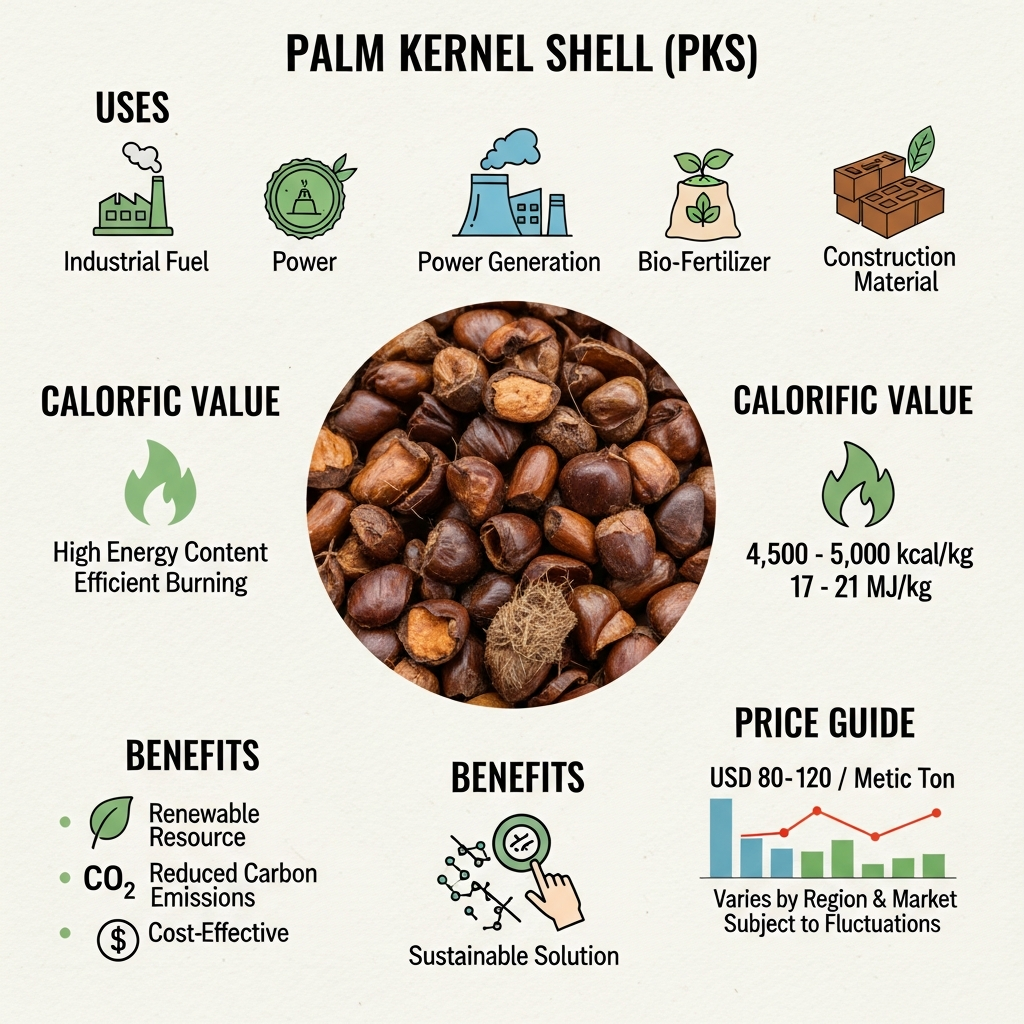
The standard gross calorific value of this premium biomass typically ranges securely between 4,000 to 4,300 kcal/kg. Consequently, it easily generates intense, sustained thermal heat that is highly comparable to medium-grade sub-bituminous commercial coal.
Furthermore, stringent standard commercial specifications demand an overall moisture content comfortably below 20%. This minimal internal water presence effectively ensures rapid facility ignition and incredibly stable combustion, thereby actively preventing massive energy loss during the initial vaporization process.
Minimal Ash Content and Extended Boiler Lifespan
Beyond its highly impressive thermal heating properties, this specific biomass creates remarkably little residual ash post-combustion. The organic material leaves behind barely 2% to 5% total ash, effectively eliminating the massive toxic slag heaps commonly associated with heavy coal burning.
Because the internal boiler chambers remain vastly cleaner during operation, plant operators spend significantly less time and money performing emergency maintenance. This massive reduction in necessary cleaning directly translates to vastly increased operational uptime, lower labor costs, and significantly higher corporate profit margins.
Placement: Middle Section
Teks Alternatif: Biomass fuel comparison showing Palm Kernel Shell energy density
Title Attribute: Palm Kernel Shell Calorific Value Comparison
7 Kegunaan Cangkang Inti Sawit yang Terbukti di Tahun 2026
As we intelligently navigate the complex renewable energy landscape in 2026, brilliant technological advancements have vastly expanded how global industries utilize this resource. Here are the seven absolute most impactful commercial applications available today:
- Bahan Bakar Boiler Industri: Massive manufacturing plants rely heavily on Palm Kernel Shell to power their gigantic steam boilers efficiently. Unlike soggy, wet wood chips, this highly dense fuel provides an immediate, incredibly consistent heat release that keeps production lines moving seamlessly.
- Power Plant Energy Generation: Modern independent power producers strategically mix it directly with traditional coal to dramatically reduce their overall greenhouse gas emissions. This brilliant co-firing technique safely satisfies stringent international environmental regulations effortlessly without requiring entirely new infrastructure.
- Cement Manufacturing: Massive commercial cement kilns require immense, sustained heat to operate, and this potent byproduct perfectly delivers the necessary extreme temperature while significantly lowering corporate carbon taxes. The intensely high combustion temperatures safely ensure absolutely perfect clinker formation.
- Produksi Karbon Aktif: The remarkably dense, highly carbon-rich physical structure makes an excellent natural precursor for producing high-grade activated carbon. Once fully processed, it safely and efficiently traps dangerous toxins, chemicals, and heavy metals in complex industrial wastewater systems.
- Brick and Tile Making: Traditional rural kilns effectively substitute highly expensive firewood with these dense shells to accurately achieve consistent, remarkably long-lasting burns. The relatively uniform organic sizing intelligently allows for excellent internal airflow within the massive commercial kiln.
- Domestic Heating Pellets: Forward-thinking manufacturers forcefully compress pulverized organic shells into highly premium heating pellets specifically designed for residential winter usage. These customized pellets burn significantly cleaner and dramatically longer than standard traditional wooden logs.
- Biochar for Agriculture: Advanced eco-farmers scientifically pyrolyze the raw shells to actively create highly nutrient-rich organic biochar. This vital biological intervention safely sequesters airborne carbon back into the earth and massively enhances essential soil water retention during severe summer droughts.
Palm Kernel Shell vs. Coal: A Complete Comparison
Plant managers frequently evaluate whether transitioning their massive operations from standard coal to organic biomass makes clear financial and operational sense. In stark contrast to dirty coal, clean biomass boldly offers long-term ecological sustainability alongside highly competitive thermal energy output.
The updated International Energy Agency (IEA) standards specifically highlight the critical global importance of rapidly phasing out heavy commercial polluters. The following detailed table firmly provides a clear, highly technical comparison to properly guide your facility’s final decision:
| Feature / Specification | Cangkang Inti Sawit | Standard Coal |
|---|---|---|
| Nilai Kalori | 4.000 – 4.300 kkal/kg | 4,500 – 6,000 kcal/kg |
| Kandungan Abu | Very Low (2% – 5%) | High (10% – 20%) |
| Kandungan Sulfur | Minimal (< 0.1%) | High (1% – 3%) |
| Carbon Footprint | 100% Netral Karbon | Extremely Heavy Emissions |
| Residue Management | Easy, eco-friendly organic ash | Highly toxic heavy metal slag |
Environmental Benefits and Carbon Emission Reductions
Massive global industries face truly unprecedented operational pressure to rapidly decarbonize their extensive operations by 2026. Fortunately, intelligently integrating this specific clean biomass into your corporate energy matrix immediately offers an incredibly measurable, rapid reduction in total net carbon emissions.
Because towering tropical palm trees successfully absorb massive amounts of atmospheric carbon dioxide during their multi-decade lifespan, safely burning the leftover shells is inherently carbon-neutral. The microscopic emissions safely released during industrial combustion simply return the originally absorbed carbon back to the atmosphere, thereby creating a perfectly balanced, harmless biological loop.
Furthermore, actively utilizing this discarded organic waste successfully prevents it from needlessly decomposing in massive rural landfills. Unmanaged organic decomposition naturally produces extremely harmful methane, a volatile greenhouse gas significantly more destructive than standard carbon dioxide. Therefore, controlled industrial combustion actively prevents this dangerous methane release entirely.
Market Insights: Palm Kernel Shell Price Guide for 2026
Accurately understanding shifting market dynamics is absolutely critical for successfully securing the very best international procurement contracts. In 2026, the massively soaring global demand for truly sustainable fuel has firmly stabilized commodity pricing, though minor regional variations still naturally occur based on shifting logistical costs.
Currently, premium-grade international exports aggressively shipping from Southeast Asia reliably range between $95 to $120 per metric ton (strict FOB basis). However, securing massive bulk purchasing agreements heavily often yields incredibly significant long-term discounts for massive industrial buyers willing to commit.
Furthermore, highly volatile geopolitical shifts and strict new carbon tax implementations have aggressively forced heavy global industries to visibly pivot toward advanced biofuels. As strict European and major Asian markets progressively tighten their complex emissions standards, the fierce global competition to immediately secure high-quality biomass contracts has undoubtedly intensified dramatically.
Factors Influencing Global Cost
- Seasonal Yield Fluctuations: Heavy tropical rainy seasons can slightly increase necessary mechanical drying costs and temporarily impact immediate local availability.
- Screening Quality Standards: Triple-screened Palm Kernel Shell entirely free from leftover external fibers strictly commands vastly higher market prices due to its visibly superior burning efficiency.
- Global Ocean Freight Rates: Wild daily ocean freight fluctuations directly and heavily influence the final securely delivered overall cost to your designated international ports.
- Government Export Policies: Occasional bureaucratic shifts in local export levies or strict customs regulations within top-producing tropical countries can easily temporarily affect final spot market pricing.
- Storage and Handling Logistics: Proper fully covered commercial warehousing actively prevents unwanted moisture reabsorption, but utilizing these highly premium secure storage facilities adds a minor marginal premium to the final delivered cost.
Navigating Export Regulations
Procurement teams must carefully navigate complex international shipping protocols when importing massive quantities of agricultural byproducts. High-quality commercial suppliers guarantee their vital shipments are fully accompanied by strict phytosanitary certificates, safely ensuring the raw organic product is entirely free from dangerous invasive pests.
Partnering securely with highly experienced, certified international exporters entirely removes these highly complex logistical burdens. Professional commercial exporters easily handle complex customs clearances, massive vessel chartering, and vital quality testing, thereby guaranteeing your facility receives uninterrupted daily fuel deliveries exactly on schedule.
Integrating Sustainable Byproducts into Your Supply Chain
Intelligently maximizing massive agricultural efficiency naturally involves expertly utilizing absolutely every single byproduct generated from the initial palm oil extraction process. Highly forward-thinking international companies very often source multiple raw materials entirely simultaneously to aggressively optimize their shipping logistics and massively reduce overhead.
For instance, while safely securing sustainable biomass fuel, massive animal feed manufacturers might also intelligently source premium Mesin Pengekstrak Inti Sawit or highly nutritious Tepung Kopra strictly for their livestock nutrition programs. Similarly, global agricultural sectors frequently import premium Cocopeat for advanced eco-soil conditioning and vastly superior commercial greenhouse moisture retention.
Many modern industrial facilities happily utilize high-grade RBD CP8 for commercial food processing while entirely simultaneously powering their massive operations with raw biomass. Furthermore, dairy and cattle farms seamlessly incorporate highly specialized Garam Kalsium dari Asam Lemak Minyak Sawit to safely bypass rumen degradation and significantly boost commercial milk yields.
This brilliant operational synergy allows savvy facility managers to efficiently consolidate their vital international procurement while actively utilizing premium Cangkang Inti Sawit to easily maintain entirely carbon-neutral heating. Major industry leaders frequently featured in leading renewable energy publications consistently strongly advocate for this incredibly comprehensive supply chain integration to easily achieve maximum corporate sustainability.
Placement: Before FAQ
Teks Alternatif: Palm Kernel Shell uses in power plants
Title Attribute: Power Plant Biomass Fuel Operation
Pertanyaan yang Sering Diajukan
What is the calorific value of PKS?
The standard gross calorific value typically ranges tightly between 4,000 to 4,300 kcal/kg. This highly impressive, sustained thermal capacity effortlessly makes it an entirely exceptional, truly sustainable substitute for dirty medium-grade commercial coal in massive industrial steam boilers.
How is Palm Kernel Shell used in power plants?
Commercial power plants systematically crush and quickly feed the dense shells directly into massive thermal combustion chambers to safely heat water and generate vital high-pressure steam. This intensely powerful steam successfully drives massive turbines to easily produce eco-friendly electricity.
Is burning this biomass environmentally friendly?
Yes, properly burning it is entirely considered completely carbon-neutral. The minimal carbon dioxide safely released exactly equals the vast amount the living tropical tree originally absorbed. Furthermore, it easily produces significantly less toxic sulfur and hazardous ash compared to dirty coal.
What is the standard moisture content requirement?
For absolutely optimal industrial combustion, the raw moisture content must strictly remain below 20%. Premium high-quality exporters easily ensure highly rigorous daily sun-drying and advanced mechanical screening processes to safely maintain these strict limits and entirely prevent thermal energy loss.
How much does it cost globally in 2026?
In 2026, the strict international FOB price stably ranges tightly from $95 to $120 per single metric ton. Final prices naturally fluctuate largely based on guaranteed screening quality, extremely strict moisture guarantees, massive bulk contract volumes, and regional harvest variations.
Placement: Conclusion Area
Teks Alternatif: Palm Kernel Shell powering an industrial boiler
Title Attribute: Sustainable Industrial Boiler Operation
Conclusion: The Future of Renewable Industrial Fuel
Successfully transitioning to truly renewable energy is utterly vital for modern commercial industrial success, and intelligently utilizing dense organic biomass is a solidly proven, highly effective long-term strategy. By fully understanding its immense calorific value and wildly diverse commercial applications, plant managers can dramatically lower daily operational costs.
Whether you currently operate a massive commercial cement kiln, manage a vast regional power plant, or actively manufacture premium activated carbon, this incredibly versatile agricultural byproduct effortlessly delivers truly unparalleled sustained thermal performance. It beautifully offers the absolutely perfect balance of vital economic viability and strict ecological responsibility.
Ultimately, safely securing a highly reliable, long-term supply of entirely premium Cangkang Inti Sawit will confidently future-proof your facility’s heavy energy needs against massive regulatory changes. Boldly embrace this truly sustainable biological powerhouse today and confidently lead your entire heavy industry toward a significantly cleaner, vastly more profitable tomorrow.
Recommended Schema Markup Suggestions for SEO:
- ArticleSchema: Use to define the main content, author, and publication date.
- FAQSchema: Apply to the Frequently Asked Questions section to win rich snippets on Google.
- ProductSchema: Apply to highlight the fuel’s technical specifications and 2026 pricing.
- BreadcrumbSchema: Use to improve site navigation visibility and SERP structure.

 Indonesian
  English
  Chinese
  Arabic