
Palm Kernel Shell: 7 Ultimate Uses & Amazing Benefits (2026)
Can Cangkang Inti Sawit revolutionize your industrial fuel consumption in 2026? As the global push for renewable energy accelerates rapidly, finding reliable, cost-effective, and eco-friendly solid biofuels has become a critical challenge.
Fortunately, this remarkable agricultural by-product offers a proven, highly efficient solution. It empowers modern heavy industries to drastically lower their corporate carbon footprints while safely maintaining massive daily energy outputs.
The strategic utilization of organic waste materials is totally transforming how modern power plants and manufacturing facilities operate. According to a comprehensive International Energy Agency (IEA) bioenergy report, solid biofuels are projected to provide a vast majority of global industrial heat in our aggressive transition to net-zero emissions.
By converting organic waste into sustainable wealth, industries are not only solving massive disposal problems but also building a robust circular economy. This definitive guide will thoroughly explore the astonishing properties, major applications, and immense environmental benefits of utilizing this incredibly powerful biomass.
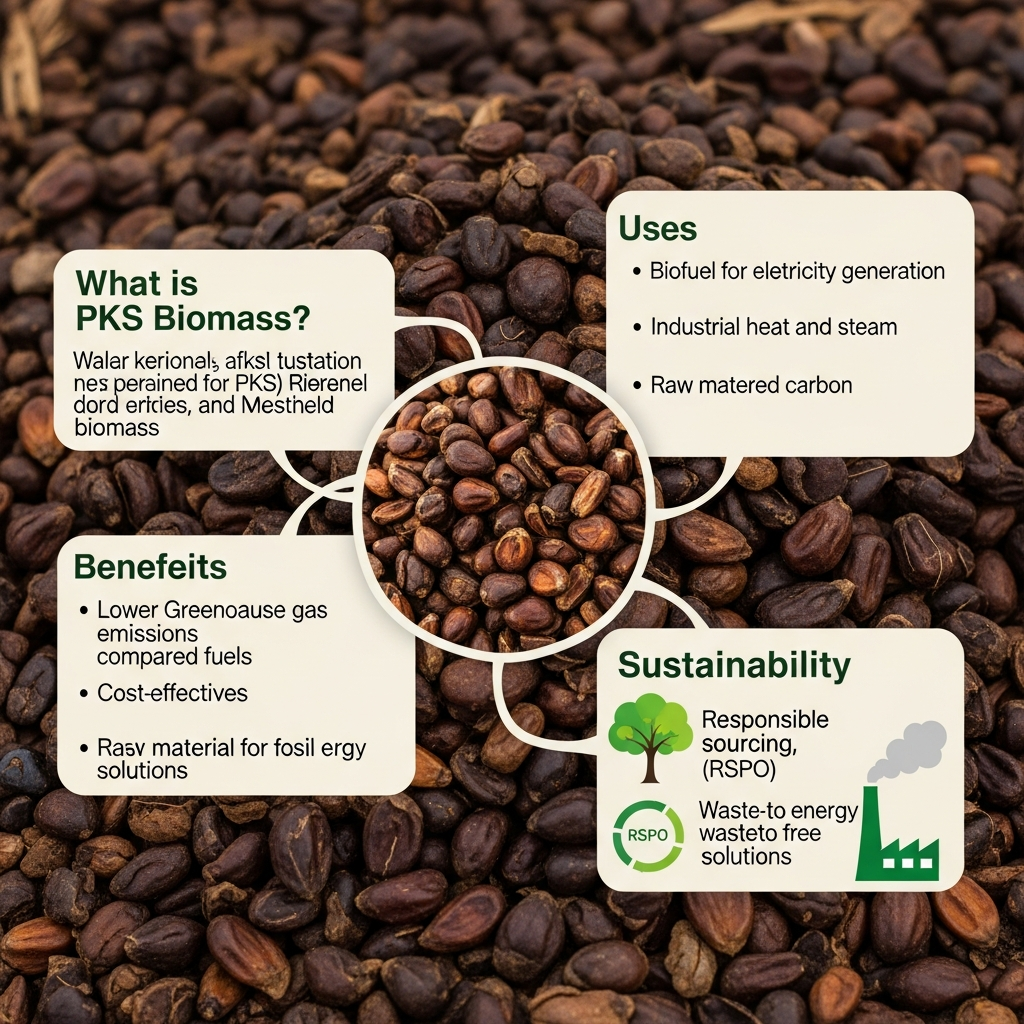
What is Palm Kernel Shell?
Cangkang Inti Sawit (PKS) is the protective, incredibly hard endocarp surrounding the palm kernel seed. It is continuously generated as a natural, highly abundant by-product during the mechanical extraction of crude palm oil.
Once considered mere agricultural waste to be discarded, this fibrous and incredibly dense material is now globally recognized. It stands today as a premium, high-grade solid renewable biofuel fiercely sought after by international energy markets.
Unlike other loose, inferior biomass residues, this renewable fuel features an incredibly low moisture content and an exceptionally high calorific value, making it perfect for direct combustion. The shells are typically fragmented, varying in shape, and possess a dark, wood-like texture that burns efficiently.
Facility managers globally prize this resource due to its specific physical characteristics that strictly guarantee superior operational performance:
- Extreme Structural Density: Allows for prolonged, steady burning without rapid degradation.
- Uniform Fragmentation: Ensures consistent airflow within massive industrial boiler systems.
- Minimal Dust Generation: Creates a significantly cleaner, safer working environment during bulk handling.
- Natural Water Resistance: The hard exterior naturally repels minor surface moisture during open storage.

The Astonishing Properties of Palm Kernel Shell
Why is this particular biomass so highly sought after by global energy markets in 2026? The primary answer lies in its unique, deeply potent physicochemical characteristics that easily rival traditional, heavily polluting fossil fuels.
Plant operators, chief environmental engineers, and corporate sustainability officers consistently praise its hyper-reliable burning efficiency and exceptionally low-maintenance profile.
High Calorific Value of Palm Kernel Shell
One of the most visually impressive attributes of this material is its tremendous heating value. Research documented extensively on ScienceDirect’s engineering portal indicates that its gross calorific value generally ranges between 3,800 to 4,200 kcal/kg.
This massive energy density means significantly less physical volume is strictly required. Facilities can easily generate the exact same amount of electricity or industrial steam compared to lower-grade alternatives like standard wood chips, rice husks, or loose agricultural straw.
Low Ash and Moisture Content
Additionally, this premium biomass entirely boasts a remarkably low moisture content (typically remaining stable between 15% to 20%) and an ash content of less than 3%.
Consequently, large industrial furnaces require much less routine maintenance, and the direct combustion process produces significantly fewer harmful particulate emissions. In sharp contrast, traditional bituminous coal endlessly generates massive amounts of toxic ash, presenting severe, costly disposal hazards.
Incredible Bulk Density for Transport
Beyond its thermal capabilities, the inherent bulk density of this raw material presents a massive logistical advantage. Because the fragments pack tightly together without crumbling, shipping containers and bulk carrier vessels can maximize their total payload capacity.
This specific density drastically reduces international freight costs per metric ton. It allows massive power generation plants in remote global locations to reliably import this energy source without facing crippling maritime transportation fees.
7 Ultimate Uses of Palm Kernel Shell in 2026
The extraordinary, highly lucrative versatility of this resource strictly extends far beyond simple, rudimentary burning. Here are seven amazing, highly profitable applications actively driving massive global demand this year:
- Power Generation and Biomass Plants: Dedicated green power plants safely co-fire or completely replace coal with these shells to generate reliable, baseline grid electricity without dangerous fossil emissions.
- Cement and Steel Manufacturing: Heavy legacy industries actively utilize the intense, sustained heat in their massive rotary kilns and blast furnaces, effortlessly reaching strict 1,400°C thresholds safely.
- Produksi Karbon Aktif: Due to its extremely dense carbon structure and superior microporosity after thermal activation, it perfectly serves as a world-class raw material for manufacturing premium filtration systems.
- Industrial Steam Boilers: Large-scale commercial food processing plants, paper mills, and textile factories burn this biofuel to rapidly produce the steady, high-pressure steam required daily for sustained operations.
- Domestic Heating and Pelletizing: When finely pulverized and mechanically compressed, the raw material forms highly efficient, ultra-dense wood pellets specifically designed for modern residential heating systems across Europe.
- Agricultural Mulch and Soil Improvement: Though primarily valued heavily as an industrial fuel, the degraded by-product can be strategically mixed with premium Cocopeat to drastically improve plantation soil aeration and vital water retention.
- Advanced Animal Feed Additives: In several highly innovative global agricultural practices, its highly purified carbonized ash is utilized as an effective digestive aid for livestock, perfectly complementing primary nutritional feeds like Mesin Pengekstrak Inti Sawit atau Tepung Kopra.

Palm Kernel Shell vs. Traditional Coal: A 2026 Comparison
To truly understand the modern, indisputable value proposition, expert facility managers must rigorously compare this biofuel directly against standard industrial coal. The following detailed comparison table powerfully highlights the incredible, undeniable advantages.
| Performance Parameter | Cangkang Inti Sawit | Traditional Bituminous Coal |
|---|---|---|
| Average Energy Content | ~4,000 kcal/kg (Highly Efficient) | ~5,500 kcal/kg (Standard) |
| Net Carbon Emissions | 100% Neutral (Closed Biogenic Cycle) | Highly Positive (Massive Fossil Carbon Release) |
| Harmful Sulfur Content | < 0.1% (Virtually zero acid rain risk) | 1.0% – 3.0% (Severe acid rain risk) |
| Kandungan Abu Sisa | 1% – 3% (Easy, cheap disposal) | 10% – 20% (Toxic, highly expensive disposal) |
| Long-term Sustainability | Fully Renewable Agricultural By-product | Rapidly Depleting, Heavily Taxed Resource |
As clearly demonstrated above, while traditional coal currently holds a very slight edge in raw, unrefined energy density, the overwhelming environmental benefits and drastically lower maintenance costs easily make the biological alternative significantly more viable.
How Palm Kernel Shell is Processed for Export
Before this highly valuable raw biomass ever safely reaches the fiery furnace of a modern international power plant, it strictly undergoes a deeply meticulous processing and advanced screening phase.
Ensuring top-tier, utterly uncompromised quality is absolutely paramount to achieving the optimal calorific value consistently required by heavy industrial clients worldwide.
Advanced Screening and Cleaning
The raw harvest extracted directly from the primary mill often contains trace residual fibers, dirt, dust, and tiny, unusable fragments. To strictly meet rigorous international export standards, the raw material is systematically passed through heavy-duty, multi-tiered vibrating screens.
This aggressive, precise cleaning process perfectly separates the premium, hard shells from all unwanted impurities, unequivocally guaranteeing a vastly superior burn rate and zero operational clogging.
Strict Moisture Control and Safe Stockpiling
Expertly managing internal moisture is arguably the single most critical step in successfully preparing the cargo for long-distance international shipping.
According to detailed technical reports found in the Wikipedia database on Biomass, maintaining ultra-low moisture is utterly essential. Any excess water actively consumes precious heat energy during combustion just to evaporate, severely reducing total power output.
Global Maritime Logistics for Palm Kernel Shell
Once thoroughly cleaned and perfectly dried, the premium biomass must navigate complex international supply chains. Massive bulk carrier ships are systematically loaded using specialized conveyor belts designed to prevent structural crushing.
To successfully pass stringent customs inspections in highly developed nations, exporters must meticulously document and verify several critical parameters before sailing:
- Fumigation Certificates: Proving the total eradication of any invasive biological pests.
- Phytosanitary Certificates: Guaranteeing the cargo meets global plant health safety standards.
- Laboratory Analysis Reports: Independently verifying the promised calorific value, exact moisture percentage, and minimal ash content.

The Environmental and Sustainability Benefits
The aggressive global transition toward net-zero greenhouse gas emissions strictly mandates universal adherence to deeply sustainable operational practices.
Utilizing clean, organic by-products is fundamentally a critical, non-negotiable pillar in successfully achieving these highly ambitious international climate targets by 2050.
Massively Reducing Greenhouse Gas Emissions
When toxic fossil fuels are mercilessly burned, they heavily release ancient carbon that has been permanently trapped deep underground for millions of years. This actively and violently increases atmospheric CO2 levels and drives global warming.
Conversely, the controlled combustion of this renewable fuel only precisely releases the exact amount of carbon that the living oil palm tree naturally absorbed during its very recent growth cycle. Organizations like the U.S. Department of Energy’s Bioenergy Technologies Office continually highlight this closed-loop cycle as essential.
Promoting a True Circular Economy
Aggressive zero-waste corporate initiatives are now the ultimate gold standard practice within all leading global agricultural sectors.
By cleverly monetizing and systematically distributing every single part of the annual harvest, the industry drastically minimizes dangerous landfill waste. This holistic approach strictly ensures that valuable energy is fully recovered, actively supporting deeply sustainable economic growth.
Global Market Trends for Palm Kernel Shell
The insatiable international demand for this hyper-reliable biofuel has absolutely skyrocketed across both Western Europe and highly developed East Asia over the last five years.
Progressive nations like Japan and South Korea, heavily incentivized by incredibly lucrative government feed-in tariffs for green energy adoption, proudly remain the world’s largest, most consistent bulk importers.
Furthermore, as global maritime logistics networks continuously optimize, the bulk export and massive shipping processes have become incredibly streamlined. Ensuring a steady, high-grade supply unequivocally requires strategically partnering with a deeply trusted, highly experienced provider.
For absolute optimal, uninterrupted industrial performance, directly sourcing a premium Palm Kernel Shell supply from established plantations is an absolute corporate necessity.
Makmur Amanah Sejahtera Menyediakan produk-produk kelapa sawit berkualitas tinggi seperti bungkil inti kelapa sawit, cangkang inti kelapa sawit, minyak kelapa sawit mentah, minyak inti kelapa sawit, dll. Silakan hubungi kami melalui WhatsApp. +6282140002198 atau kirim email kepada kami di admin@makmuramanah.co.id.
Pertanyaan yang Sering Diajukan Tentang Cangkang Inti Sawit
What exactly is Palm Kernel Shell used for?
It is primarily utilized as a highly efficient, renewable solid biofuel specifically designed for massive industrial boilers, grid-connected power plants, and high-heat cement kilns. Additionally, due to its incredibly dense carbon structure, it serves as raw material for premium activated carbon.
Is PKS considered a highly effective biomass?
Yes, it is universally considered one of the absolute most efficient, reliable solid biomass fuels currently available. It proudly features an exceptionally high gross calorific value (averaging around 4,000 kcal/kg), astonishingly low moisture content, and extremely low ash residue.
How much pure energy does this biomass produce?
When properly combusted in an industrial setting, it generates approximately 3,800 to 4,200 kilocalories per kilogram of pure thermal energy. This continuous output allows heavy industrial facilities to maintain necessary operating temperatures while reducing reliance on fossil fuels.
Is burning this fuel genuinely environmentally friendly?
Absolutely. Actively burning it as a primary energy source is completely carbon-neutral because it is an integral part of a natural, biogenic carbon cycle. The specific carbon dioxide released is perfectly offset by the natural carbon heavily absorbed by growing oil palm trees.
Does it emit dangerous, toxic gases like sulfur dioxide?
No. One of its absolute greatest industrial advantages over traditional fossil coal is its exceptionally low sulfur content (typically testing well below 0.1%). Consequently, combusting it dramatically lowers the severe risk of atmospheric acid rain and totally eliminates expensive scrubbing equipment.
Conclusion: The Future of Palm Kernel Shell
The highly urgent, deeply critical global shift toward completely sustainable, net-zero corporate operations has permanently solidified the undeniable importance of superior alternative energy sources.
Boldly transitioning from highly polluting, heavily taxed fossil fuels to advanced, renewable agricultural by-products is no longer just an idealistic environmental goal. It is a profound, inescapable economic necessity for all modern industries.
By fully embracing advanced biofuels, massive international manufacturers can seamlessly maintain incredibly high energy outputs while strictly meeting increasingly rigorous global emissions standards. The consistent availability, combined with minimal ash contents, virtually guarantees that operational maintenance costs stay beautifully low.
Moreover, intelligently incorporating related, high-value agricultural resources perfectly demonstrates the sheer versatility of this ecosystem. Specialized industrial fats like RBD CP8 or critical livestock nutrition supplements like Garam Kalsium dari Asam Lemak Minyak Sawit heavily prove the deep sustainability of the complete value chain.
Ultimately, fully adopting and integrating Cangkang Inti Sawit directly into your industrial facility represents a highly proven, immensely high-impact business strategy for firmly securing clean energy. By smartly upgrading your fuel matrix today, you powerfully invest in a beautifully robust circular economy and a vastly more prosperous, completely sustainable future for the world.

 Indonesian
  English
  Chinese
  Arabic