
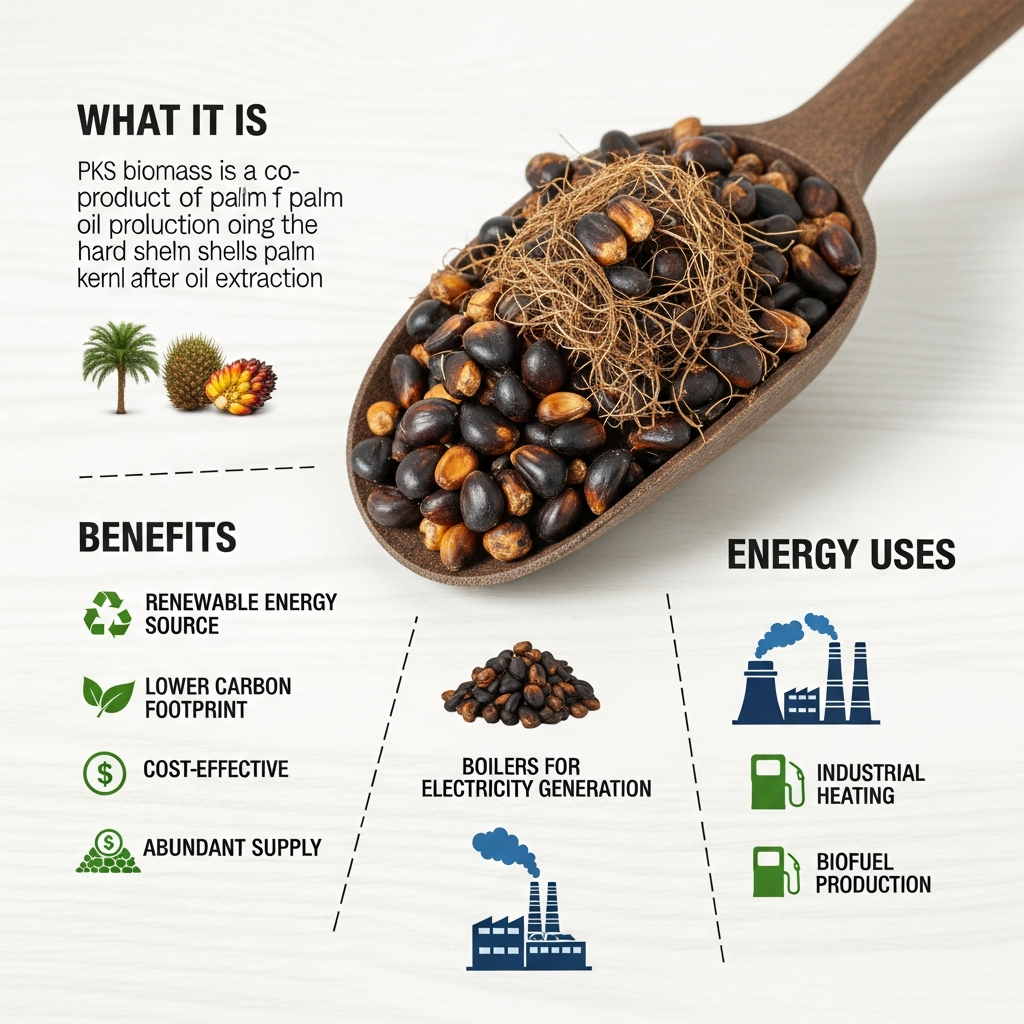
Palm Kernel Shell: 7 Proven, Amazing Energy Uses (2026)
Menggunakan Cangkang Inti Sawit for industrial renewable energy is rapidly transforming global power generation. Are you still heavily relying on expensive, highly polluting fossil fuels?
Transitioning to this exceptional solid biomass fuel offers a proven, highly sustainable, and incredibly cost-effective solution. This remarkably dense, high-energy biomass is systematically revolutionizing how large-scale manufacturing industries and commercial power grids power their sprawling facilities.
As strict global carbon emission regulations tighten aggressively in the modern era, finding a truly reliable alternative biofuel has never been more fundamentally critical for corporate survival.
Furthermore, utilizing repurposed palm oil industry byproducts minimizes environmental waste and maximizes raw energy output. According to recent Department of Energy statistical projections, global industrial biomass demand is conservatively expected to surge by an astonishing 40% before the end of 2026.
By comprehensively embracing this dynamic alternative biofuel, forward-thinking companies are effectively slashing overhead energy costs. At the exact same time, they are effortlessly meeting their aggressive corporate sustainability targets.
Sebenarnya Apa Itu Cangkang Inti Sawit?
Cangkang Inti Sawit is a premium-grade solid biomass fuel organically derived from the vast palm oil industry’s operational byproducts. It primarily consists of the highly resilient, hard, crushed endocarp casing that directly remains after extracting the valuable palm kernel and its lucrative oil.
This unique organic structure naturally boasts an exceptionally high calorific value alongside extremely low moisture content. Consequently, it is absolutely perfect for highly efficient industrial combustion processes and continuous commercial power generation.
[Image: Close-up of crushed Palm Kernel Shell fragments showing their dense, woody texture. Alt text: Premium quality Palm Kernel Shell biomass for industrial fuel. Title: Raw Palm Kernel Shell Biomass Fuel]
Sourcing Palm Kernel Shell for Sustainable Production
Sourcing palm kernel shell as biomass fuel represents a truly brilliant, real-world example of a thriving circular economy. Commercial milling facilities continuously extract raw crude palm oil and specialized kernel oil.
This massive industrial extraction naturally leaves behind vast amounts of fibrous residue and hardened shells. Rather than haphazardly discarding these protective shells into overflowing regional landfills, innovative biomass producers thoughtfully repurpose them into highly valuable solid combustible fuel.
Additionally, this highly refined process categorically requires absolutely no secondary deforestation or disruptive land clearing. Because it solely utilizes existing agricultural waste, it effectively serves as a 100% sustainable, carbon-neutral renewable energy source.
Modern agricultural facilities can easily integrate nutrient-rich Mesin Pengekstrak Inti Sawit into their complex animal feed supply chains. This brilliant integration ensures virtually zero waste across the entire agricultural production board.
For other versatile commercial applications, utilizing premium RBD CP8 cooking oil further maximizes the holistic commercial value derived directly from a single palm tree harvest.
7 Proven Benefits of Using Palm Kernel Shell
Why are major international manufacturing plants deliberately abandoning traditional bituminous coal? The undeniable benefits of using palm kernel shell far outweigh the severe operational limitations of conventional, heavily polluting fossil fuels.
Here are the top seven transformational advantages associated with this powerful PKS biomass:
- Nilai Pemanasan yang Luar Biasa: Generates intense, highly consistent thermal heat comparable to standard high-grade commercial coal.
- Kandungan Air Rendah: Ignites significantly faster and consistently burns substantially more cleanly than raw wood chips.
- Minimal Ash Residue: Reduces continuous furnace maintenance and expensive post-combustion cleaning costs drastically.
- Zero Sulfur Emissions: Eliminates the severe environmental risk of highly toxic sulfur dioxide atmospheric pollution completely.
- High Bulk Density: Considerably lowers complex logistical transportation and long-term warehouse bulk storage expenses.
- Ketersediaan Sepanjang Tahun: Ensures a deeply stable, wholly uninterrupted global commercial supply chain regardless of seasonal weather.
- Carbon Neutral Profile: Naturally recycles organic carbon already inherently present in our fragile modern atmosphere.
Unpacking the Superior High Calorific Value
Consistently generating between 4,000 to an impressive 4,300 kcal/kg, this premium solid fuel provides immense, highly reliable thermal energy. When systematically fed into massive industrial boiler systems, it routinely yields a remarkably consistently hot flame.
This intense thermal heat effortlessly sustains heavy, highly demanding manufacturing processes. Consequently, automated industries can reliably generate the exact same electrical wattage using significantly less physical fuel volume.
This specific metric becomes especially impressive when directly compared to burning loose, unrefined agricultural waste materials or standard wood chips. By officially upgrading to PKS biomass, facility managers dramatically optimize their overall fuel-to-energy conversion ratios.
Palm Kernel Shell vs. Coal vs. Wood Pellets
To truly comprehend its overwhelming market dominance moving forward into this year, we must objectively compare it against widely accepted traditional fuels.
As clearly evidenced in the comprehensive data table below, the underlying performance metrics heavily favor this particular renewable energy source.
| Fuel Type | Calorific Value (kcal/kg) | Kandungan Abu | Kandungan Sulfur | Ramah Lingkungan |
|---|---|---|---|---|
| Cangkang Inti Sawit | 4,000 – 4,300 | < 3% | Effectively Zero | Yes, Highly |
| Standard Coal | 5,000 – 6,000 | 10% – 15% | Sangat Tinggi dan Berbahaya | No, Polluting |
| Commercial Wood Pellets | 3,500 – 4,000 | 1% – 3% | Moderately Low | Yes, Moderate |
[Image: Infographic comparing the calorific value and emissions of different biomass fuels. Alt text: Calorific value comparison of Palm Kernel Shell vs coal and wood pellets. Title: PKS Biomass Fuel Comparison Chart]
Economic Advantages of Palm Kernel Shell as Biomass Fuel
Beyond the obvious environmental benefits, the sheer economic advantages of adopting this solid fuel are practically impossible to ignore. For energy-intensive manufacturing facilities, fuel procurement typically represents the single largest operational expenditure.
By strategically pivoting to Cangkang Inti Sawit, industrial managers can successfully lock in long-term supply contracts at highly predictable, fundamentally stable rates. This effectively shields massive corporations from the notoriously volatile, wildly fluctuating international fossil fuel commodity markets.
Furthermore, global governments are aggressively rolling out highly lucrative green energy tax incentives. Facilities that comprehensively demonstrate a measurable reduction in their corporate carbon footprint frequently qualify for substantial financial rebates.
When you mathematically combine these generous tax credits with the inherently lower baseline cost of the raw biomass itself, the long-term Return on Investment (ROI) becomes staggeringly positive.
Job Creation and Local Economic Growth
The rapidly expanding global demand for this specific renewable energy source directly stimulates vast economic growth across developing agricultural regions. By transforming what was once considered mere agricultural waste into a highly profitable global export commodity, local rural milling communities experience profound financial uplift.
This thriving, highly sustainable industry directly creates thousands of specialized logistical, processing, and transportation jobs. It actively supports specialized suppliers, further reinforcing the tremendous economic value of comprehensive agricultural recycling.
Primary Palm Kernel Shell Energy Uses in 2026
The remarkable industrial versatility of this specific alternative biofuel dynamically extends across multiple distinct heavy commercial industries. Massive power generation plants globally frequently co-fire it simultaneously with standard coal.
This strategic operational hybrid allows them to immediately drastically reduce their overall net carbon footprint. Impressively, they achieve this vital environmental goal without ever retrofitting their multi-million-dollar internal furnace infrastructures.
Exploring modern palm kernel shell energy uses in 2026 reveals a rapidly expanding, highly innovative technological landscape.
Industrial Cement and Steel Manufacturing
Massive commercial cement kilns inherently require extreme, wholly uninterrupted thermal heat. This solid biomass provides the deeply steady, highly intense thermal output desperately needed to successfully clinker raw, unrefined limestone.
Moreover, its inherently low ash content practically seamlessly blends directly into the final commercial cement product. This naturally occurs without negatively degrading the crucial cement’s vital structural integrity.
Dedicated Biomass Power Plants
Dedicated modern renewable energy facilities fundamentally rely on enormous bulk ocean shipments of reliable solid fuel. This continuous logistical supply is absolutely required to continuously power massive commercial steam turbines.
Sourcing premium Cangkang Inti Sawit practically guarantees optimal steam turbine mechanical efficiency and fundamentally minimal internal boiler slagging. The remarkably clean burn rate deeply protects highly sensitive internal mechanical components.
Interestingly, numerous similar tropical agricultural residues are rapidly gaining massive commercial traction. For specific instance, strategically blending this fuel with high-quality Tepung Kopra derivatives can highly optimize localized micro-energy electrical grids across rapidly developing regions.
In the specialized agricultural sector, nutritional bypass fats like Garam Kalsium dari Asam Lemak Minyak Sawit effectively boost dairy cattle energy. This beautifully mirrors exactly how PKS fundamentally boosts commercial industrial boiler efficiency.
Technical Specifications and Combustion Efficiency
To properly utilize Cangkang Inti Sawit, facility engineers must fully understand its precise technical specifications. The inherently high bulk density of this solid fuel—typically ranging around 600 kg/m³—allows for highly concentrated, incredibly space-efficient energy storage.
This exceptional physical density simply means that automated industrial augers and mechanical conveyor belt systems can physically move significantly more latent energy per cubic meter. The result is a highly streamlined, deeply efficient automated fuel feeding process.
Optimizing Boiler Settings for PKS Biomass
While co-firing with traditional coal is extremely straightforward, optimizing a dedicated biomass boiler requires precise mechanical calibration. Dedicated engineers must meticulously balance the primary under-fire air and secondary over-fire air to fundamentally guarantee complete, exceptionally clean combustion.
Because this alternative biofuel possesses extremely low internal moisture, the initial ignition sequence is incredibly rapid. This dynamic physical characteristic drastically reduces the costly startup time typically associated with slowly firing up massive, cold industrial furnaces.
The Logistics of Global Handling and Transport
Unlike highly fragile commercial wood pellets that can rapidly disintegrate into useless dust when heavily exposed to environmental moisture, this specific solid fuel is remarkably structurally robust.
Its naturally hardened, deeply woody exterior inherently repels ambient atmospheric water. This highly unique physical trait successfully allows highly cost-effective, massively scaled outdoor bulk stockpiling.
Key transportation protocols globally actively include:
- Moisture Monitoring: Daily digital hygrometer checks during extended ocean transit.
- Ventilation Management: Continuous dynamic airflow strategically pushed across vast cargo holds.
- Contamination Prevention: Utilizing dedicated bulk vessels strictly avoiding cross-contamination risks.
Furthermore, specialized international shipping logistics have fundamentally streamlined its complex global export. Massive bulk carrier cargo vessels securely transport tens of thousands of metric tons directly from major Southeast Asian hubs.
These absolutely vital renewable energy shipments navigate straight to eager international markets in Japan, South Korea, and Western Europe seamlessly.
Environmental Impact and Sustainability Advantages
Aggressively transitioning to utilizing sustainable palm oil industry byproducts actively, measurably combats accelerating global warming.
According to a highly comprehensive scientific study available on ScienceDirect, systematically replacing highly polluting coal with this organic material heavily reduces a facility’s net greenhouse gas emissions.
In fact, the net reduction can comfortably reach an astonishing 80% over its complete operational lifecycle. Unlike environmentally destructive fossil fuels, combusting organic biomass only naturally releases the specific carbon dioxide the original organic plant naturally absorbed.
This highly effective closed-loop environmental carbon cycle is absolutely vital. It is fundamentally necessary for successfully achieving strict international net-zero emission governmental mandates globally.
Major ecological benefits definitively encompass:
- Pengurangan Limbah: Actively diverting thousands of tons from regional landfills annually.
- Kesehatan Tanah: Generating organic ash safely reusable as potent agricultural fertilizer.
- Air Quality: Eliminating heavy metal and toxic sulfur atmospheric emissions completely.
For specialized agricultural applications beautifully complementing your broader operational energy initiatives, thoughtfully incorporating premium Cocopeat greatly helps successfully retain vital topsoil moisture.
This effectively showcases the incredible holistic utility of these diverse, highly versatile tropical plant byproducts.
[Image: A modern biomass power plant seamlessly integrating renewable fuels with clean exhaust stacks. Alt text: Industrial power plant utilizing Palm Kernel Shell renewable energy. Title: Clean Energy Biomass Power Plant]
Furthermore, esteemed global organizations like the comprehensive Wikipedia Biomass Foundation (general context) and the industry-leading publication Majalah Biomassa consistently highlight this highly unique fuel.
They explicitly classify it as a premier tier-one renewable energy source. This widespread, highly authoritative international endorsement solidly solidifies its unquestionable authority within the rapidly evolving global commercial energy market.
Makmur Amanah Sejahtera Menyediakan produk-produk kelapa sawit berkualitas tinggi seperti bungkil inti kelapa sawit, cangkang inti kelapa sawit, minyak kelapa sawit mentah, minyak inti kelapa sawit, dll. Silakan hubungi kami melalui WhatsApp. +6282140002198 atau kirim email kepada kami di admin@makmuramanah.co.id.
Pertanyaan yang Sering Diajukan (FAQ)
Is Palm Kernel Shell officially considered a renewable energy source?
Yes, absolutely. It is a fully verified 100% renewable biomass fuel. Because it functions as an inherent agricultural byproduct of naturally occurring palm oil extraction, it definitely does not require any additional land clearing. This ultimately makes it exceptionally highly sustainable globally.
What is the typical average moisture content of this specific biomass?
Premium quality solid fuel applications typically require a severely restricted moisture content strictly remaining between 10% and 15%. This intentionally low internal moisture level practically guarantees highly efficient, deeply clean industrial combustion and effectively prevents critical initial thermal energy loss.
Can this specific fuel realistically be co-fired directly with coal?
Yes, direct co-firing is arguably one of the most widely popular heavy industrial applications. Large commercial power generation plants routinely physically blend this organic alternative biofuel directly with traditional bituminous coal to significantly lower harmful atmospheric emissions easily and highly effectively.
How exactly does this fuel pricing objectively compare to fossil fuels?
Generally speaking, it consistently offers a highly attractive, deeply competitive financial cost per functional gigajoule. When specifically factoring in highly lucrative governmental carbon tax credits and newly introduced environmental regulatory incentives, it rapidly becomes a fundamentally more cost-effective corporate solution.
How precisely is this dense biomass organically stored safely?
Due entirely to its highly protective, remarkably hard physical exterior and inherently low internal moisture, it can typically be safely stored outdoors. Utilizing only basic protective waterproof covering, it naturally heavily resists external ambient water absorption and deep microbial biological degradation.
Conclusion: The Definitive Future of Global Energy
In ultimate conclusion, systematically shifting completely away from highly destructive, heavily polluting fossil fuels is absolutely no longer structurally optional. It is now a fundamental, completely unavoidable global industrial imperative.
The truly exceptional heating thermal value, consistently low atmospheric emissions, and remarkably reliable global supply chain matter significantly. They comprehensively make the adoption of this incredible fuel the definitive, undeniably powerful biomass energy champion for the foreseeable future.
By strategically, aggressively integrating this powerful resource deeply into your corporate energy strategic planning, you securely safeguard your future. You comprehensively protect both your highly critical operational financial budget and our shared planet’s deeply fragile ecological future simultaneously.
Are you completely ready to systematically optimize your entire facility’s complex energy production efficiency today? The time to fully embrace Cangkang Inti Sawit is right now.
Actively explore securing premium palm oil industry byproducts immediately. Proudly join the rapidly expanding global industrial transition moving aggressively toward truly sustainable, highly responsible commercial power generation.
[Image: Embedded YouTube-style video placeholder showcasing the combustion efficiency of biomass fuels. Alt text: Video demonstration of Palm Kernel Shell burning efficiently in an industrial boiler. Title: PKS Biomass Combustion Video]
 Indonesian
  English
  Chinese
  Arabic