
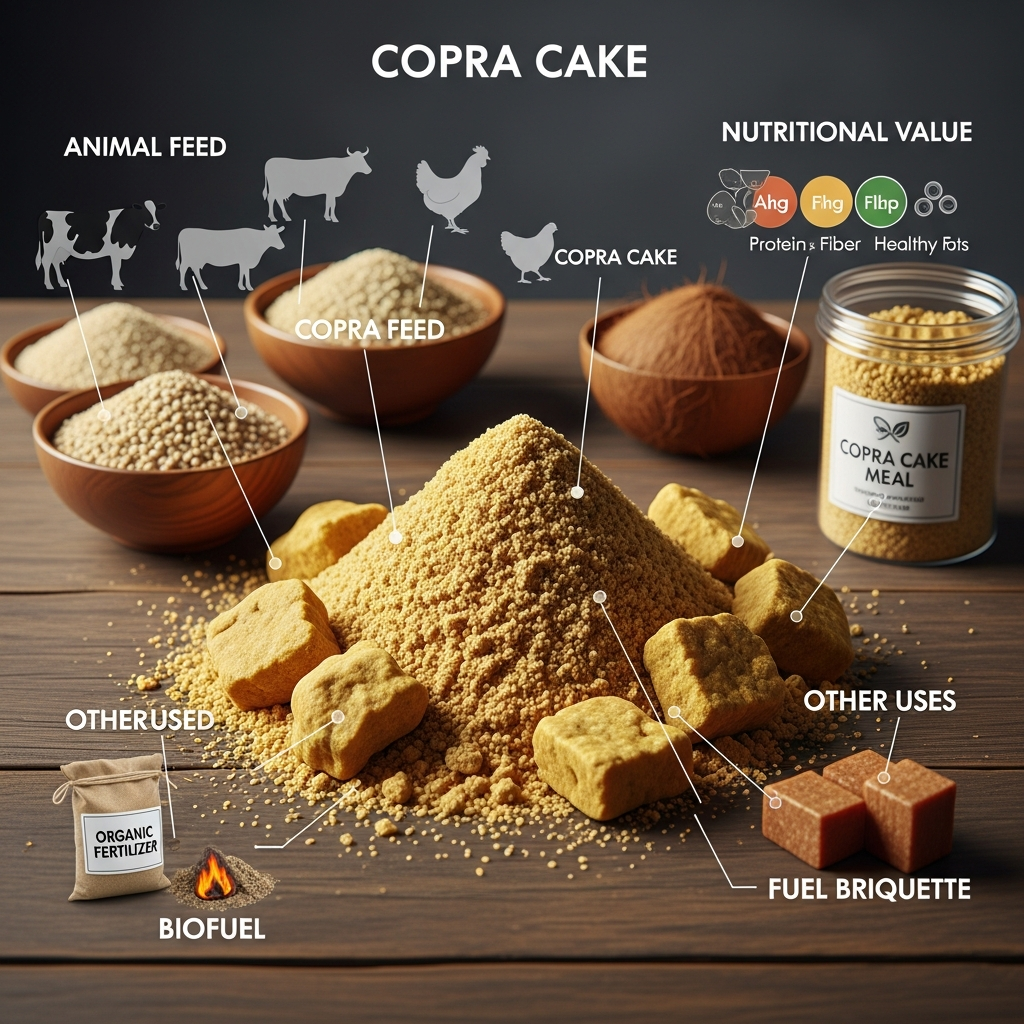
Copra Cake: 7 Ultimate Uses & Amazing Benefits (2026)
Memahami apa kue kelapa is can completely revolutionize your livestock feeding strategy. As global feed costs skyrocket in 2026, farmers and nutritionists are desperately searching for high-quality, cost-effective alternatives to traditional grains.
What is this ingredient? In simple terms, it is the highly nutritious solid residue left over after extracting oil from dried coconut meat (copra). This powerful by-product serves as an exceptional source of protein and energy, making it a highly prized ingredient in commercial animal feed formulations worldwide.
If you are struggling with low milk yields or poor livestock weight gain, incorporating this tropical ingredient might be the ultimate solution. Moreover, by leveraging coconut expeller and similar agricultural by-products, agribusinesses can drastically improve their profit margins without compromising on herd health.
[Image: A massive pile of fresh, golden-brown feed inside a modern mill warehouse. | alt=”copra cake inside feed mill warehouse” | title=”Fresh Coconut By-Product Storage”]
What is Copra Cake? The Ultimate Definition
To truly understand its nutritional value, we must first look at how this remarkable ingredient is manufactured. The journey begins in tropical regions where mature coconuts are harvested and split open by skilled farmers.
The white coconut meat is sun-dried or kiln-dried to create copra. Next, mechanical presses extract the valuable coconut oil, leaving behind a fibrous, protein-rich residue. This remaining solid mass is exactly what we call kue kelapa.
Historically, many farmers relied heavily on soybean meal. However, modern ruminant nutrition research proves that coconut oil by-products offer comparable benefits at a fraction of the cost. Additionally, this promotes a highly sustainable, zero-waste agricultural cycle.
Copra Cake vs. Copra Meal: What is the Difference?
Industry professionals often use these terms interchangeably, but there is a slight technical distinction based on the specific oil extraction method used at the facility.
When the oil is extracted using purely mechanical pressing, the resulting product is the “cake,” which typically retains 8% to 12% residual oil. In contrast, Tepung Kopra often refers to the product obtained after chemical solvent extraction, leaving less than 2% oil.
The higher fat content in the cake form provides excellent palatable energy for livestock, especially lactating dairy cows. This makes it a significantly superior choice for high-energy winter rations and feedlot finishing diets.
The Nutritional Value of Copra Cake for Livestock
The tremendous benefits of this coconut expeller for cattle stem directly from its dense nutritional profile. When formulated correctly, it provides a perfectly balanced blend of essential macronutrients that animals crave.
According to extensive research from the Organisasi Pangan dan Pertanian (FAO), coconut by-products offer a highly digestible fiber source that actively prevents rumen acidosis in cattle. Let us examine the precise chemical composition.
Standard Nutritional Profile Breakdown
Understanding the exact nutritional value is crucial for feed millers and animal nutritionists aiming to optimize daily feed intake. Below is a standard comparison table detailing its primary components.
| Komponen Nutrisi | Persentase Rata-rata (%) | Primary Benefit for Livestock |
|---|---|---|
| Protein Kasar | 20% – 22% | Supports rapid muscle growth and maximum milk production. |
| Serat Kasar | 10% – 15% | Enhances rumen function and maintains optimal digestion. |
| Lemak Kasar (Ekstrak Eter) | 8% – 10% | Provides dense, slow-release energy for active livestock. |
| Kelembapan | 10% Maximum | Prevents mold growth and ensures long-term storage safety. |
| Abu | 6% – 7% | Supplies essential dietary minerals for robust bone health. |
This unique balance of protein and fat makes it an indispensable tool for maximizing herd health. Furthermore, the high presence of medium-chain triglycerides (MCTs) provides rapid energy absorption for working animals.
[Image: A close-up shot of high-quality feed pellets in a farmer’s hand, highlighting the texture. | alt=”copra cake nutritional value comparison” | title=”Nutrient Dense Livestock Feed”]
7 Amazing Uses of Copra Cake in Animal Feed
Integrating this powerful ingredient into your daily feeding program can yield extraordinary results. Here are the 7 ultimate applications in animal feed for 2026.
- Boosting Dairy Cow Milk Yields: The residual coconut oil provides safe, non-fermentable energy that directly increases butterfat content in milk without causing metabolic disorders.
- Accelerating Beef Cattle Growth: High bypass protein levels ensure that amino acids are absorbed directly into the lower gut, maximizing daily weight gain in feedlots.
- Enhancing Horse Rations: Its low-starch, high-fat profile provides performance horses with “cool energy,” significantly reducing the risk of colic and laminitis.
- Supplementing Swine Diets: While used in moderation for growing pigs, it provides an excellent source of highly digestible fiber for gestating sows, improving gut motility.
- Improving Poultry Feed: When properly formulated with specific enzymes, it serves as a highly cost-effective protein substitute in commercial broiler and layer diets.
- Feeding Small Ruminants: Sheep and goats absolutely thrive on the high fiber content, which promotes healthy rumination, better nutrient absorption, and improved fleece quality.
- Aquaculture Formulations: Recent commercial studies show it can successfully replace up to 20% of expensive fishmeal in certain tilapia and carp diets, lowering production costs.
These diverse applications prove that this tropical feed is not just a cheap filler ingredient, but a functional nutritional powerhouse for modern agriculture worldwide.
How Copra Cake Compares to Other Feed Alternatives
Feed formulation is all about finding the absolute most cost-effective nutritional balance. How does our focus ingredient stack up against other popular tropical by-products on the market?
Many commercial farmers utilize Mesin Pengekstrak Inti Sawit (PKE) as a staple energy source. While PKE is fantastic for bulk rumen fill, the coconut expeller generally boasts a much higher protein content and a sweeter aroma that animals find highly palatable.
Additionally, a comprehensive study published in the Jurnal Ilmu Peternakan Susu demonstrated that cows fed coconut by-products exhibited significantly improved coat condition due to the specific fatty acid profile. However, both ingredients can easily be fed together for incredible synergistic effects.
For those managing animal bedding or agricultural growing mediums alongside massive feed operations, utilizing Cocopeat offers another fantastic way to harness the entire coconut.
[Image: A split-screen comparison infographic showing the nutritional differences between tropical feeds. | alt=”copra cake vs palm kernel expeller” | title=”Feed Alternative Comparison Infographic”]
The Global Market and Economics of Copra Cake in 2026
The economic landscape of global agricultural commodities is shifting rapidly. In 2026, the unprecedented demand for sustainable and cost-efficient livestock feed has propelled tropical by-products into the global spotlight.
Countries across Southeast Asia remain the undisputed global leaders in coconut production. As a direct result, the export of high-quality coconut meal to regions like Europe, Australia, and North America has surged dramatically over the last few years.
This massive global trade is supported by extensive research from organizations like the AgFunder Network, highlighting the vital shift away from water-intensive crops towards highly drought-resistant tropical alternatives.
For feed manufacturers, securing a highly reliable supply chain of these coconut oil by-products acts as a massive financial hedge against the volatile pricing of corn and soybean meal. Ultimately, modern agribusinesses that rapidly diversify their raw material sourcing are far more economically resilient.
Key Advantages Over Traditional Soybean Meal
When strictly analyzing feed economics, comparing this tropical by-product to conventional soybean meal is absolutely essential for budget-conscious farmers.
- Efektivitas Biaya: It frequently prices significantly lower per metric ton than prime soybean meal, offering a vastly better return on investment (ROI).
- Higher Fat Content: Provides substantially more residual energy, drastically reducing the need for expensive added tallow, RBD CP8, or other vegetable oils.
- Improved Rumen Health: The much slower fermentation rate actively prevents rapid pH drops, effectively safeguarding overall herd health and longevity.
- Pengadaan Berkelanjutan: Utilizes an existing, natural by-product rather than requiring dedicated, deforestation-prone agricultural crop land.
[Image: High-quality coconut expeller packaged in bulk super sacks, ready for shipping at a port. | alt=”copra cake bulk shipping bags” | title=”Global Feed Export Supply Chain”]
Detailed Feeding Rations: Maximizing Livestock Benefits
Knowing the exact nutritional value is only the very first step; applying it correctly within a perfectly balanced daily ration is where true agricultural expertise shines brightly.
Overfeeding any single dietary ingredient can rapidly lead to severe nutritional imbalances. Therefore, professional livestock nutritionists heavily rely on precise inclusion rates meticulously tailored to the specific age, weight, and strict production goals of the animal.
Optimal Dairy Cow Inclusion Rates
For high-producing lactating dairy cows, this specific feed serves as a truly phenomenal source of bypass protein. Leading industry experts generally recommend a strict inclusion rate of 1.5 to 3 kilograms per cow, per day.
At this optimal level, the medium-chain fatty acids provide a brilliant, sustained energy boost without negatively disrupting the incredibly delicate microbial balance within the rumen. This highly targeted feeding strategy directly correlates to consistently higher milk butterfat percentages.
Beef Cattle and Feedlot Strategies
When professionally finishing beef cattle in a high-density feedlot environment, rapid and highly efficient weight gain is the primary operational objective. Incorporating this dense ingredient at roughly 15% to 20% of the total dry matter intake consistently yields exceptional results.
The naturally sweet palatability actively encourages much higher total daily feed intake. To create the absolute ultimate finishing diet, many highly successful feedlot operators blend coconut meal with Garam Kalsium dari Asam Lemak Minyak Sawit to safely maximize total energy density without causing digestive upset.
Best Practices for Storage and Quality Control
Even the absolute highest quality commercial livestock feed will rapidly degrade if it is not stored correctly. Meticulously managing moisture levels is the single most critical factor in safely preserving your expensive bulk supply.
Because the feed retains a significant amount of highly valuable oil, it can become rancid or rapidly develop dangerous aflatoxins if constantly exposed to high ambient humidity and excessively warm temperatures. Therefore, you must always store the product in a perfectly dry, heavily ventilated warehouse facility.
Always elevate the heavy feed bags on sturdy wooden pallets to completely prevent damaging moisture seepage from cold concrete floors. According to strict safety guidelines from the Pusat Kedokteran Hewan FDA, routine testing and strict monitoring of mycotoxin levels is absolutely essential for long-term animal safety.
Key Signs of High-Quality Feed
When carefully inspecting a brand new delivery of bulk feed, highly experienced farm managers should always look for these specific visual and olfactory indicators.
- Aroma: It should possess a highly pleasant, distinctly sweet, and slightly roasted coconut smell without any sour, rancid, or musty odors whatsoever.
- Warna: The perfectly ideal hue consistently ranges from light golden brown to medium brown; excessively dark colors may clearly indicate severe burning during the extraction process.
- Tekstur: It should feel relatively dry and wonderfully crumbly, without massive, rock-hard clumps that strongly suggest excessive prior moisture exposure.
- Kemurnian: Ensure there are absolutely no foreign objects, excess shell fragments, or dirty sweeping contaminants mixed in the batch. Speaking of shells, some industrial plants utilize Cangkang Inti Sawit for biomass boiler fuel to power these very extraction mills sustainably!
Makmur Amanah Sejahtera Menyediakan produk-produk kelapa sawit berkualitas tinggi seperti bungkil inti kelapa sawit, cangkang inti kelapa sawit, minyak kelapa sawit mentah, minyak inti kelapa sawit, dll. Silakan hubungi kami melalui WhatsApp. +6282140002198 atau kirim email kepada kami di admin@makmuramanah.co.id.
[Video Suggestion: “How Copra Cake is Made: From Coconut Farm to Livestock Feed” – A 5-minute documentary-style YouTube embed showing the entire mechanical extraction process.]
Pertanyaan yang Sering Diajukan
Untuk apa bungkil kelapa digunakan?
Copra cake is primarily used as a high-protein, energy-dense ingredient in commercial animal feed. It is especially beneficial for lactating dairy cows, beef cattle, horses, and sheep, providing essential fats and highly digestible fiber that boost milk yields and overall livestock weight gain.
How much protein is in copra cake?
High-quality batches typically contain between 20% and 22% crude protein. This robust profile makes it a highly valuable supplement for completely replacing more expensive protein sources like traditional soybean meal in ruminant diets, safely supporting optimal muscle growth and health.
Is copra cake good for cattle?
Yes, it is exceptionally good for cattle. The completely unique combination of highly digestible fiber and valuable bypass protein helps maintain perfectly stable rumen pH levels. Furthermore, the rich residual coconut oil provides a completely safe, dense energy source.
What is the difference between copra cake and palm kernel expeller?
While both are tropical oil by-products heavily used in modern animal feed, the coconut version comes exclusively from coconuts and generally offers higher protein (20-22%). Palm kernel expeller comes directly from oil palm fruits, offering slightly lower protein (14-16%) but exceptionally high fiber.
Can poultry safely consume coconut by-products?
Yes, poultry can safely consume this feed, but daily inclusion rates must be carefully managed. Nutritionists typically limit it to roughly 10-15% of the total diet for commercial broilers and layers, often successfully adding commercial enzymes to help birds break down fiber.
Conclusion: Maximizing Livestock Nutrition in 2026
As we professionally navigate the highly complex agricultural landscape of 2026, sourcing highly reliable, nutrient-dense feed ingredients has truly never been more important. From drastically boosting daily dairy yields to safely accelerating feedlot cattle growth, the vast economic advantages of this tropical by-product are absolutely undeniable.
By fully understanding the exact chemical composition and digestible benefits, you can effortlessly formulate daily diets that drastically improve your overall bottom line while keeping your animals exceptionally healthy. Whether you are actively running a massive commercial feed mill or managing a local family dairy farm, adopting smart feeding strategies is the ultimate key to agricultural longevity.
Are you finally ready to significantly elevate your entire livestock nutrition program? Incorporating premium kue kelapa into your daily feed rations will undoubtedly provide the ultimate competitive edge your modern agribusiness needs to incredibly thrive today.
 Indonesian
  English
  Chinese
  Arabic