
Palm Kernel Shell: 7 Proven Tips for Amazing Biomass 2026
Memanfaatkan Cangkang Inti Sawit efficiently is the definitive strategy for conquering rising industrial fossil fuel costs in 2026. Global industries currently face rapidly tightening emission regulations and wildly fluctuating energy prices. Consequently, finding reliable, sustainable energy sources has never been more critical for corporate survival.
By implementing the advanced insights in this definitive guide, facility managers will unlock unprecedented operational savings. Furthermore, the worldwide transition to renewable energy accelerates dramatically every single day. According to extensive International Energy Agency reports, industrial bioenergy demand is projected to surge exponentially.
What is Palm Kernel Shell and Why Does It Matter?
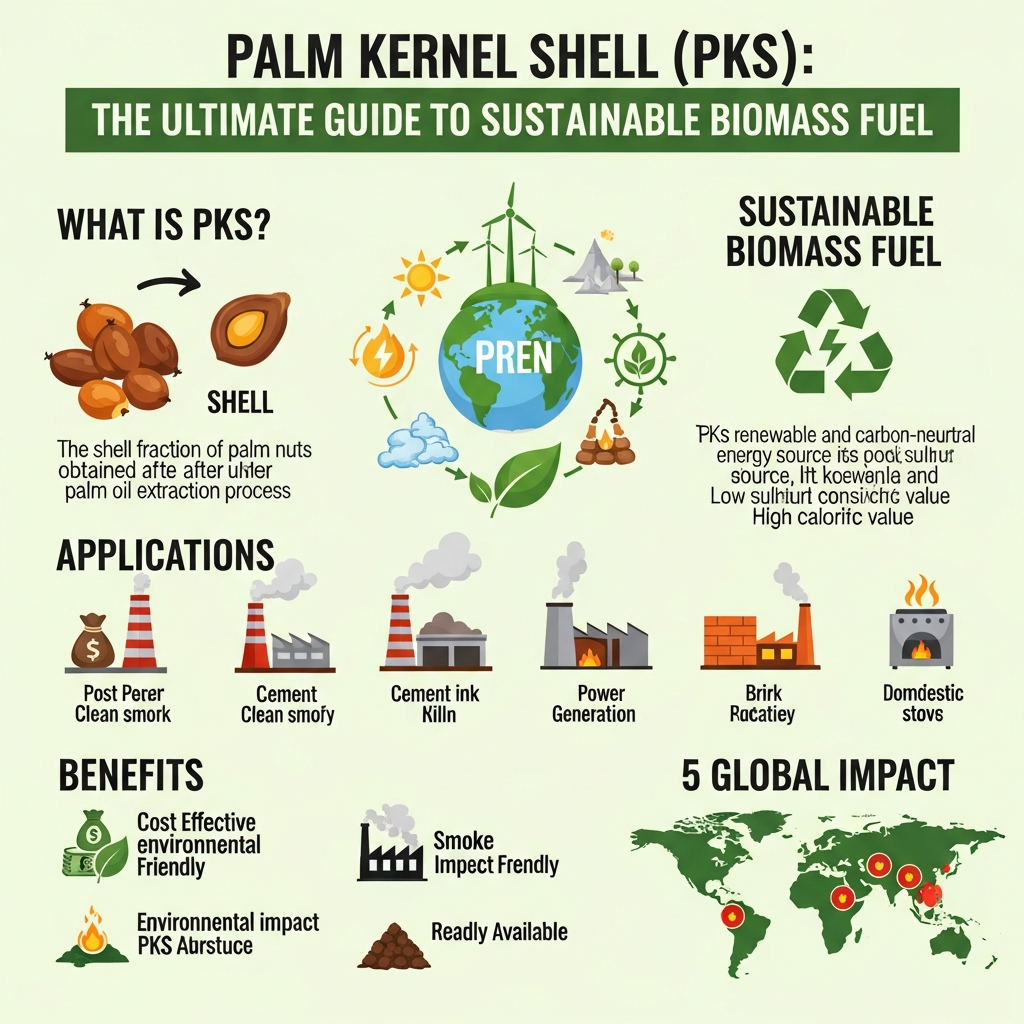
Cangkang Inti Sawit (PKS) is a highly efficient, premium biomass fuel derived from the crushed remnants of palm nuts after rigorous palm oil extraction. This exceptional agricultural byproduct provides a sustainable, high-energy alternative to polluting fossil fuels.
[Image: High-quality palm kernel shell stockpile ready for export. Alt text: Palm Kernel Shell. Title: Sustainable Palm Kernel Shell Biomass]
This remarkable byproduct boasts an incredibly high calorific value, exceptionally low ash content, and near-zero sulfur emissions. These precise chemical characteristics make it the absolute perfect direct replacement for heavily polluting industrial coal.
In sharp contrast to traditional fossil fuels, this organic material completely represents a closed-carbon loop. Every metric ton safely burned releases only the exact carbon dioxide absorbed during the original plant’s natural lifecycle. Consequently, industrial factories utilizing Cangkang Inti Sawit effortlessly meet strict international carbon reduction targets.
7 Proven Benefits of Using Palm Kernel Shell in 2026
1. Exceptionally High Calorific Value
The thermal energy output of this premium biomass consistently ranges between an impressive 3,800 to 4,200 kcal/kg. This phenomenal energy density easily rivals low-grade sub-bituminous coal, providing intense, sustained heat for large-scale operations.
Additionally, boiler operators rarely need to completely overhaul their existing combustion chambers to effectively accommodate this specific material. Authoritative scientific research on thermal efficiency definitively demonstrates that relatively minor boiler airflow tuning yields utterly phenomenal combustion rates.
2. Minimal Ash Content and Toxic Emissions
Unlike traditional coal, which inevitably produces massive volumes of highly toxic ash waste, Palm Kernel Shell generates merely 2% to 3% residual ash post-combustion. This drastic reduction practically eliminates boiler slagging, significantly extends vital equipment lifespan, and slashes routine maintenance costs.
Moreover, hazardous sulfur dioxide and nitrogen oxide emissions remain virtually non-existent during active combustion. Manufacturing facilities instantly reduce their toxic output, thereby safeguarding vulnerable local communities and successfully avoiding highly expensive governmental carbon taxation.
3. Unmatched Financial Cost-Effectiveness
Severe budget constraints frequently cripple aggressive industrial growth and expansion. Fortunately, this organic resource consistently offers a highly economical alternative to fiercely volatile natural gas and international coal markets. Securing long-term procurement contracts stabilizes your facility’s energy expenditures permanently.
Many progressive power plants intelligently blend this premium fuel with coal during their initial operational transition. This highly strategic co-firing approach provides a remarkably risk-free testing environment, allowing chief engineers to verify the profound financial benefits firsthand.
4. Superior Bulk Density for Global Shipping
Logistics and transportation costs often dictate the ultimate financial viability of any imported alternative energy source. This specific biomass possesses an extraordinary bulk density, typically ranging from 600 to 650 kg/m³. This structural compactness ensures that bulk maritime carriers maximize their cargo holds.
Because the material is exceptionally rigid and naturally weather-resistant, it rarely degrades or pulverizes into explosive dust during extensive long-distance oceanic transit. This inherent physical stability significantly lowers maritime insurance premiums and vastly simplifies port-side handling operations.
5. Enhancing Corporate ESG Ratings
Environmental, Social, and Governance (ESG) criteria severely dictate modern corporate investment flow. Transitioning your entire industrial heating grid to Palm Kernel Shell immediately elevates your company’s global sustainability rankings. Institutional investors actively reward proactive climate leadership.
Additionally, procuring this material actively supports crucial economic development within rural Southeast Asian agricultural communities. You directly contribute to ethical job creation and robust infrastructure improvements within developing regions, fundamentally strengthening the social pillar of your corporate ESG profile.
6. Consistent and Reliable Global Supply Chains
Historically, energy managers expressed valid concerns regarding the long-term availability of specific renewable fuels. Today, nations like Indonesia and Malaysia systematically produce tens of millions of metric tons of this organic material annually. This guarantees a secure, virtually inexhaustible resource.
Unlike unpredictable solar or highly variable wind power, physical biomass can be reliably stockpiled for continuous, uninterrupted baseload power generation. Your facility will never suffer unexpected downtime due to sudden, unseasonal weather fluctuations.
7. Favorable Government Subsidies and Incentives
Legislators across the European Union, Japan, and South Korea heavily subsidize the aggressive transition away from destructive fossil fuels. Facilities that formally integrate clean biomass frequently qualify for massive governmental grants and highly accelerated equipment depreciation schedules.
By taking proactive action in 2026, your organization can successfully capture these highly competitive financial incentives before they inevitably expire. Harnessing government funding dramatically accelerates your internal return on investment for necessary infrastructure upgrades.
[Image: Infographic showing the energy extraction process from raw palm nuts to final biomass fuel. Alt text: Biomass energy extraction from Palm Kernel Shell. Title: Biomass Energy Process]
How Palm Kernel Shell Compares to Alternative Biomass
Industrial procurement teams must carefully evaluate their myriad fuel options to ensure maximum efficiency. To clearly illustrate undeniable technical superiority, please review this highly detailed performance breakdown against other globally prevalent biomass forms.
| Fuel Type | Calorific Value (kcal/kg) | Kandungan Air | Kandungan Abu |
|---|---|---|---|
| Cangkang Inti Sawit | 3,800 – 4,200 | 15% – 20% | < 3% |
| Pelet Kayu | 4,200 – 4,500 | < 10% | < 2% |
| Wood Chips | 2,000 – 2,500 | 35% – 45% | < 5% |
| Sub-bituminous Coal | 4,500 – 5,000 | 10% – 15% | 10% – 15% |
As clearly demonstrated by the precise engineering data above, this organic alternative strikes the absolute ultimate balance between raw energy output and highly manageable inherent moisture levels. Furthermore, its extreme natural structural durability effortlessly prevents dangerous crumbling during transport.
Technical Specifications of High-Quality Palm Kernel Shell
Controlling Critical Moisture and Heating Values
To comprehensively maximize industrial combustion efficiency, precisely controlling innate moisture content remains absolutely paramount. Premium export-grade supplies typically maintain incredibly strict internal parameters:
- Moisture levels: Strictly maintained below 20% to ensure rapid ignition.
- Nilai Kalori Kotor (GCV): Consistently exceeding 4,000 kcal/kg for maximum thermal output.
- Kandungan abu: Rigidly limited to under 3% to prevent mechanical slagging.
Storing this valuable material properly rigorously protects your substantial corporate financial investment. Constructing massive covered stockpiles actively prevents destructive rainwater absorption, successfully guaranteeing the fuel perpetually retains its absolute maximum energy output.
Eliminating Impurities and Standardizing Handling Protocols
Modern industrial facilities must demand extraordinarily strict quality control metrics from their chosen international suppliers. Dangerous contaminants like residual sand, sharp stones, and stray metallic debris drastically reduce the overall effectiveness of the agricultural byproduct.
Therefore, always aggressively partner with elite vendors who exclusively utilize advanced magnetic separators and massive industrial rotary screens. Proper methodical mechanical screening guarantees a remarkably clean, pure end product.
Real-World Applications: Who Relies on This Biomass?
Mega Power Plants and Industrial Co-Generation Facilities
Major international utility companies worldwide increasingly integrate Palm Kernel Shell deeply into their critical daily baseload operations. Advanced co-generation plants situated in Japan, South Korea, and Western Europe currently consume millions of metric tons annually.
This phenomenal, widespread industrial adoption fundamentally underscores the absolute reliability of the established global supply chain. C-suite plant managers inherently trust this specific organic fuel because it consistently delivers uninterrupted baseload power seamlessly.
Innovative Agricultural and Animal Feed Synergies
While heavily prioritized primarily as a thermal fuel, the broader palm ecosystem beautifully supports highly diverse global agricultural needs. Nutrient-rich byproducts like premium Mesin Pengekstrak Inti Sawit provide truly exceptional ruminant nutrition for massive commercial livestock operations.
Additionally, integrating high-fiber Tepung Kopra dramatically enhances standard feeding regimens, maximizing overall cattle weight gain efficiently. Highly sophisticated commercial farming operations also intelligently utilize specialized Garam Kalsium dari Asam Lemak Minyak Sawit to safely bypass volatile rumen degradation, vastly improving dairy cow milk yields.
Beyond animal nutrition, sustainable greenhouse cultivators increasingly rely on premium Cocopeat as an elite, water-retaining soil amendment for high-yield hydroponic crop systems. Furthermore, the extensive supply chain yields versatile derivatives like RBD CP8, a highly refined oil essential for top-tier culinary and industrial applications.
Sustainable Sourcing and Global Environmental Certifications
Responsible corporate procurement is absolutely no longer strictly optional; it is now a heavily enforced global legal mandate. Sourcing bulk biomass must perfectly align with stringent international conservation standards to aggressively prevent illegal deforestation.
Always legally verify that your primary supplier rigorously complies with the highly respected Roundtable on Sustainable Palm Oil (RSPO) guidelines. These remarkably rigorous legal frameworks completely guarantee that every single shipment ethically originates from legally managed, environmentally conscious plantations.
Furthermore, the broader global biomass utilization regulatory frameworks heavily emphasize transparent, end-to-end supply chain traceability. Fully certified shipments consistently provide utterly complete, transparent legal documentation from the crushing mill to your facility.
[Image: Embedded video topic: ‘How to Optimize Industrial Boilers for Biomass Fuel’. Alt text: Palm Kernel Shell Boiler optimization video. Title: Biomass Boiler Guide]
5 Actionable Steps to Transition to Biomass
Are you finally ready to significantly upgrade your aging energy infrastructure? Diligently follow these remarkably simple, highly effective steps to seamlessly, safely integrate Palm Kernel Shell into your facility’s daily commercial operations:
- Conduct a Thorough Boiler Assessment: Immediately hire a fully certified mechanical engineer to comprehensively evaluate your current combustion chamber’s structural integrity.
- Perform a Controlled Trial Burn: Quickly order a highly specific small-scale batch of biomass to strictly test thermal output and localized ash accumulation.
- Upgrade Existing Storage Facilities: Rapidly construct adequately covered concrete storage bunkers to expertly maintain strictly optimal long-term material moisture levels.
- Systematically Train Your Technical Staff: Comprehensively educate all primary boiler operators on proper, safe airflow tuning procedures.
- Secure Ironclad Long-Term Contracts: Aggressively lock in highly favorable, predictable pricing structures with a deeply reliable, internationally certified organic supplier.
Pertanyaan yang Sering Diajukan
Is this biomass considered a fully renewable energy source?
Yes, absolutely. It is universally recognized globally as a deeply sustainable, totally renewable biomass fuel. It highly efficiently utilizes organic agricultural waste naturally generated during extraction, beautifully creating a perfect closed carbon loop.
How should I correctly store this specific biomass to actively prevent chemical degradation?
You strictly must store this specific fuel by proactively ensuring placement in a remarkably dry, comprehensively well-ventilated industrial sector. Use full structural cover to prevent direct rain exposure and proper elevation to aggressively prevent mold growth.
Can my aging traditional industrial coal boiler effectively burn this organic material?
In the vast majority of commercial industrial cases, yes. Standard industrial coal boilers can incredibly easily seamlessly co-fire or safely transition to Palm Kernel Shell with surprisingly relatively minor mechanical airflow and feed rate modifications.
What is the typical long-term global pricing structure for this specific organic fuel?
International market pricing mildly fluctuates based on seasonal harvesting volumes and maritime freight costs. However, aggressively securing a rigorous long-term procurement contract heavily guarantees significant, fundamentally consistent financial savings compared to volatile traditional fossil fuels.
[Image: Makmur Amanah Sejahtera shipping containers loaded with export-grade biomass. Alt text: Premium Palm Kernel Shell for global export. Title: Biomass Export Containers]
Conclusion: Embrace the Profitable Future of Industrial Renewable Energy
The necessary massive global shift towards highly sustainable industrial operations now requires immediate, exceptionally decisive corporate action. Significantly upgrading your aging industrial manufacturing facilities to strictly utilize this remarkably efficient biomass fuel highly provides an absolutely unparalleled strategic market competitive advantage.
You will dramatically aggressively lower your corporate carbon emissions, massively reduce routine mechanical maintenance overhead, and fundamentally stabilize your long-term industrial energy expenditures permanently.
Moreover, shifting international governmental energy markets will continually heavily penalize dangerous fossil fuel reliance through staggering, punitive carbon taxation. Aggressively securing a highly reliable, certified bulk supply of Cangkang Inti Sawit today perfectly mathematically future-proofs your entire corporate business model.
Make the singularly intelligent, mathematically sound choice for your corporate financial bottom line and our shared planet’s fragile ecological future. Immediately initiate your immensely profitable biomass energy transition today.
 Indonesian
  English
  Chinese
  Arabic