
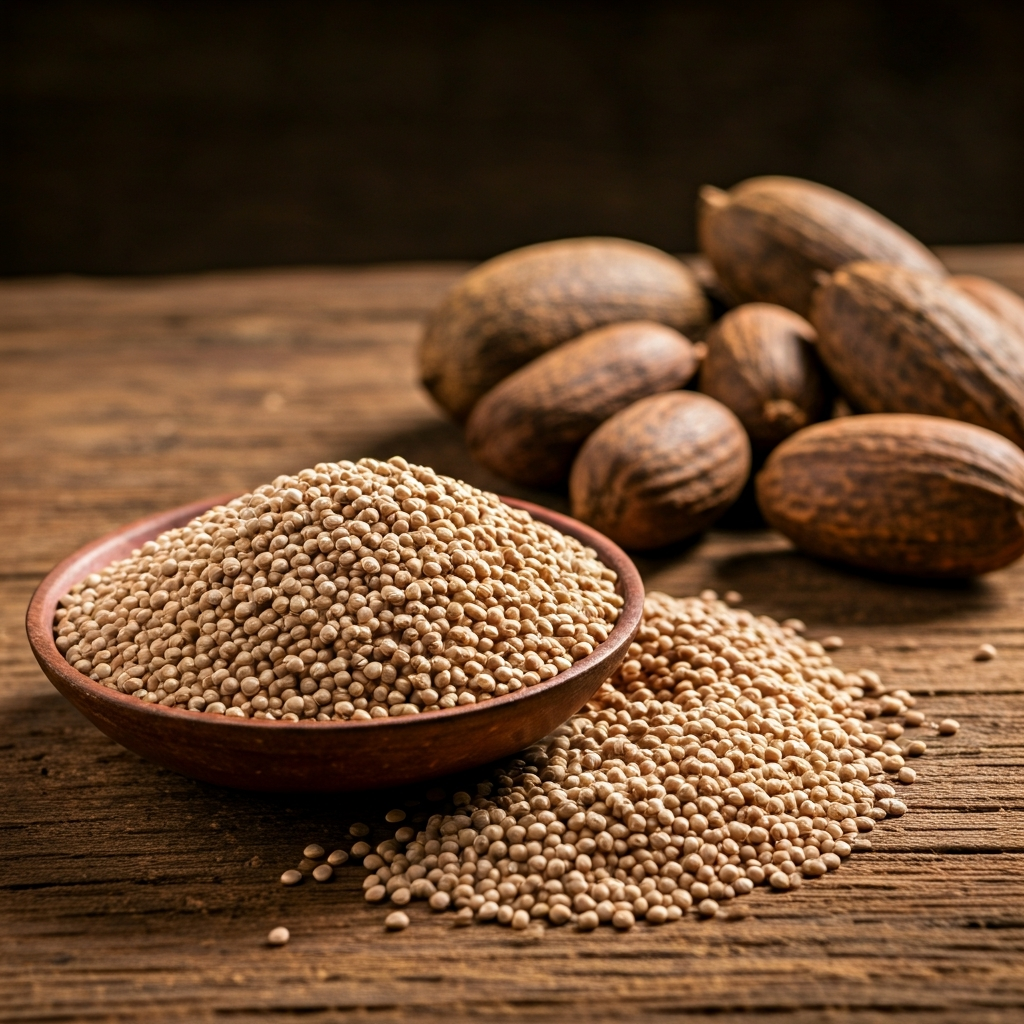
Copra Meal: 5 Benefits for a Powerful Livestock Feed Boost
Tepung kelapa is one of the most underrated yet powerful ingredients in the animal feed industry. For farm managers and nutritionists grappling with volatile grain prices and searching for sustainable protein, overlooking this coconut-derived powerhouse is a significant missed opportunity.
Feed costs can represent up to 70% of total production costs. This article is the definitive guide that unpacks how copra meal directly addresses this challenge, providing a cost-effective, high-energy, and protein-rich solution for your farm’s success.
What Exactly Is Copra Meal?
Copra meal is the valuable by-product of coconut oil extraction. After drying coconut flesh to create “copra,” the oil is expelled. The remaining fibrous cake is then ground into copra meal, a superb feed ingredient rich in protein and energy, serving as a fantastic alternative to soybean meal or corn.
[Image: A close-up shot of light brown, granular copra meal in a scoop.]
alt=”Granular copra meal, a cost-effective protein source for animal feed.” title=”Copra Meal for Livestock”
Proses Produksi
The journey to creating high-quality copra meal is a multi-step process rooted in precision, ensuring every part of the coconut is used for maximum value.
- Panen: Mature coconuts are harvested and de-husked.
- Pengeringan: The coconut kernel is removed and dried to create copra. Proper drying is critical to prevent mold and aflatoxin contamination.
- Ekstraksi Minyak: The copra is pressed to extract coconut oil, the primary value stream.
- Meal Production: The leftover solid “copra cake” is ground into a consistent, flowable meal ready for feed formulations.
Copra Meal vs. Copra Cake: Is There a Difference?
While used interchangeably, “copra cake” refers to chunks left after oil extraction. “Copra meal” is that cake ground into a finer, uniform particle size. This makes it more suitable for mixing into commercial rations. For formulation purposes, we are discussing the meal.
Key Nutritional Profile: A Deep Dive
Understanding the nutritional composition of this coconut by-product is key to unlocking its benefits. While values vary, a typical proximate analysis includes:
- Protein Kasar: 18-25%
- Crude Fat (Energy): 5-15% (This residual oil is an excellent energy source)
- Serat Kasar: 8-16%
- Energi yang Dapat Dimetabolisme: High levels beneficial for ruminants and poultry.
Furthermore, it contains a unique fatty acid profile and low unsaturated fats, making it less prone to rancidity than other oilseed meals.
The 5 Proven Benefits of Using Copra Meal
Incorporating this versatile feed ingredient delivers tangible performance and health advantages beyond just cost savings. Its unique properties make it a strategic choice for modern animal husbandry, differing from other palm-based products like Mesin Pengekstrak Inti Sawit.
1. High-Energy Source for Peak Performance
The significant residual oil in copra meal makes it incredibly energy-dense. This “bypass fat” is valuable for high-producing animals, like dairy cows or finishing beef cattle. It provides concentrated calories without overloading the rumen with carbohydrates, reducing acidosis risk.
2. Boosts Ruminant Health and Performance
For ruminants, it offers a “rumen bypass protein” advantage. A portion of its protein escapes rumen digestion and passes to the small intestine for more efficient absorption. A study in the Jurnal Ilmu dan Teknologi Pakan Hewan highlights how this improves protein supply, supporting milk production and growth.
3. A Cost-Effective Protein Alternative
In a world of fluctuating commodity prices, this coconut meal is often a more stable and affordable protein than soybean meal. Strategically substituting a portion of traditional proteins can significantly reduce ration costs without compromising performance, making financial planning more predictable.
4. Improves End-Product Quality
In poultry, the inclusion of copra meal can improve egg yolk coloration due to its natural carotenoid content. For swine, its unique fatty acid profile leads to firmer body fat, a desirable trait for meat processors.
5. Enhances Feed Palatability
Many animals, particularly swine, find the taste of copra meal highly palatable. Improved palatability encourages consistent feed intake, which is crucial for maintaining growth rates and production, especially during stressful periods like weaning or transportation.
Strategic Inclusion of Copra Meal for Different Animals
Optimal inclusion rates for this feed ingredient vary by species, age, and production goals. This adaptability is one of its greatest strengths.
[Image: An infographic illustrating the copra meal production process from coconut to feed.]
alt=”Infographic showing the journey of copra meal from coconut to animal feed.” title=”How Copra Meal is Made”
Here is a comparison of how tepung kelapa can be utilized across different livestock categories:
| Animal | Tingkat Inklusi yang Direkomendasikan | Manfaat Utama |
|---|---|---|
| Poultry (Broilers & Layers) | 5-15% | Improves yolk color, provides good energy, cost-effective protein. |
| Babi | 10-25% | Increases feed palatability, firm body fat, good fiber source for sow health. |
| Sapi Perah | 15-30% | Increases milk fat, provides bypass protein & energy from Garam Kalsium dari Asam Lemak Minyak Sawit. |
| Sapi potong | Up to 30% | Excellent energy for finishing, improves carcass quality, cost-effective weight gain. |
Quality Matters: Sourcing and Storing Copra Meal
To maximize benefits, the quality of your copra meal is non-negotiable. Sourcing from a reliable supplier and implementing proper storage are key to preserving its nutritional integrity and ensuring animal safety.
[Image: A quality control expert inspecting a sample of copra meal in a lab.]
alt=”Inspecting the quality of copra meal to ensure it is free from contaminants.” title=”Quality Control of Copra Meal”
Key Quality Indicators to Check
When evaluating a batch, look for specific quality markers. A dependable supplier should provide a Certificate of Analysis confirming these points, as outlined by agricultural bodies like the Organisasi Pangan dan Pertanian (FAO).
- Color and Odor: Good quality meal should be light tan to brown with a fresh, nutty, coconut-like smell. A dark color or musty odor can indicate overheating or mold.
- Kandungan Air: Should be below 12% to prevent mold growth and aflatoxin production.
- Kadar Aflatoksin: Must be within safe limits for livestock. This is the most critical safety parameter.
- Consistency: The meal should have a uniform particle size for easy mixing and to prevent feed sorting by animals.
Proper Storage for Preventing Spoilage
Once you’ve sourced high-quality meal, protect your investment. Store it in a cool, dry, and well-ventilated area off the floor to prevent moisture absorption and pest infestation. Use stock on a “first-in, first-out” basis to ensure freshness.
Overcoming Potential Limitations
No ingredient is perfect, but with proper formulation, the limitations of this ingredient are easily managed. An expert approach ensures you harness its full potential without compromising nutrition.
Managing Fiber with Enzymes
The primary limiting factor in monogastrics (poultry, young pigs) is the high fiber content (Non-Starch Polysaccharides). This is easily mitigated by using commercial feed enzymes like xylanases and mannanases. These enzymes break down fibers, releasing more energy and improving overall nutrient absorption, a common strategy discussed by institutions like the University of Florida’s IFAS Extension.
Balancing the Amino Acid Profile
While a good protein source, the meal is lower in lysine and methionine than soybean meal. Expert nutritionists overcome this by formulating rations with complementary proteins or by adding synthetic amino acids. This creates a perfectly balanced diet tailored to the animal’s specific needs.
[Image: A herd of healthy dairy cows feeding from a trough filled with a mixed ration.]
alt=”Dairy cows eating a feed ration fortified with copra meal to boost milk fat.” title=”Copra Meal in Dairy Cow Rations”
Makmur Amanah Sejahtera provides high-quality palm products such as Palm Kernel Expeller, Cangkang Inti Sawit, Crude Palm Oil, Palm Kernel Oil, etc. Kindly contact us at WhatsApp +6282140002198 atau kirim email kepada kami di admin@makmuramanah.co.id.
Pertanyaan yang Sering Diajukan (FAQ)
Is copra meal safe for all animals?
Yes, when used at recommended levels, it is safe and beneficial for most livestock. Sourcing from a reputable supplier is crucial to guarantee it is free from contaminants like aflatoxins, a key component in any feed composition as noted by the USDA.
What is the main difference between copra meal and palm kernel meal?
Both are tropical oilseed meals, but copra is from coconuts and is generally higher in protein and energy. Palm kernel meal is from the oil palm fruit and typically has a higher fiber content and a different nutritional profile.
Can copra meal completely replace soybean meal?
Partial replacement is the most effective strategy. A complete replacement is not recommended in most high-performance diets without careful reformulation and supplementation of amino acids to match the ideal protein profile required by the animal.
How do I source high-quality copra meal?
Partner with a reliable supplier that provides a certificate of analysis. For a dependable supply of high-quality feed ingredients, including Tepung Kopra, work with established manufacturers who adhere to strict quality control, unlike fibrous fillers such as Cocopeat.
Conclusion: The Smart Choice for Sustainable Farming
As agriculture evolves, the demand for sustainable, efficient, and cost-effective feed solutions will only intensify. This coconut by-product is a premier ingredient that meets these criteria. Its excellent nutritional value, proven benefits, and economic advantages make it essential for any forward-thinking feed strategy.
By integrating this versatile ingredient into your rations, you optimize animal health and gain a competitive edge in a challenging market. Embracing the full potential of tepung kelapa is a strategic decision that will pay dividends in productivity and your operation’s bottom line.
[Embedded Video: “How to Correctly Mix Copra Meal into Your Livestock Feed Rations”]
 Indonesian
  English
  Chinese
  Arabic