
GACC Approved PKE: Ultimate Guide to Avoid Rejection (2026)
Gaining status for GACC Approved PKE is the single most critical step for exporters targeting China’s massive animal feed market in 2026. The process is intricate, demanding meticulous attention to regulatory detail to avoid costly rejections.
This guide provides the definitive roadmap to navigate these requirements successfully, ensuring your Palm Kernel Expeller (PKE) meets every standard.
The demand for high-quality animal feed ingredients in China is insatiable, with imports growing significantly year-over-year. However, the General Administration of Customs of the People’s Republic of China (GACC) has implemented stringent regulations. These rules, primarily under Decree 248 and Decree 249, are mandatory for all overseas producers.
Failure to comply means your shipment will be turned away at the port. This results in significant financial loss and damages your business reputation. This comprehensive guide is designed to ensure you get it right the first time, transforming a potential compliance headache into a lucrative competitive advantage for your GACC Approved PKE.
What is GACC and Why Is It Crucial for PKE Exports?
GACC, the General Administration of Customs of the People’s Republic of China, is the governmental body that supervises all customs and quarantine activities for goods entering or leaving China. For feed ingredient exporters, its role is paramount.
GACC is responsible for ensuring the safety, quality, and compliance of all imported agricultural products. This includes animal feed like Palm Kernel Expeller, making their approval essential.
[Image: Infographic detailing the step-by-step process of GACC registration, from document preparation to final approval. Include key milestones and estimated timelines.]
Alt text: An infographic showing the 5 steps to achieving GACC Approved PKE status for export to China.
Title text: Step-by-Step GACC Registration Infographic for PKE Exporters.
Achieving status as a supplier of GACC Approved PKE means your facility, processes, and products have been officially registered and verified by Chinese authorities. This approval is not just a formality; it is a mandatory prerequisite for market access.
Without it, your PKE cannot legally be sold in China. Furthermore, this certification serves as a powerful signal of quality and reliability to Chinese buyers, giving you a significant edge in a competitive market.
The Core Regulations: Decree 248 and 249
The foundation of the current regulatory framework is GACC’s Decree 248 and Decree 249, implemented in 2022. These decrees overhauled the registration process for all overseas food and feed manufacturers.
They require facilities to register through the China Import Food Enterprise Registration (CIFER) system, a complex online portal. These regulations consolidated and replaced the previous system, making GACC the sole authority. Understanding these decrees is the first step toward compliance.
From AQSIQ to GACC: Understanding the Regulatory Shift
Previously, many exporters were familiar with AQSIQ. However, in a major 2018 government restructuring, AQSIQ’s responsibilities were absorbed by the newly formed State Administration for Market Regulation (SAMR) and GACC.
For import/export quarantine and safety, GACC is now the primary agency. Understanding this shift is vital; any outdated information referencing only AQSIQ is no longer relevant for 2026 compliance. Always seek current GACC guidelines for your GACC Approved PKE application.
The 5 Critical Steps to GACC Registration for PKE Exporters
Navigating GACC registration is a methodical process. Following these steps carefully is essential for success. This process is your direct pathway to becoming a source of GACC Approved PKE.
Step 1: Pre-qualification and Exhaustive Documentation
Before you even touch the online portal, you must prepare an exhaustive set of documents. This is the foundation of your application. Incomplete or inaccurate paperwork is the top reason for initial rejection.
Your document checklist must include:
- Company business license and current export permits.
- Production permits and food safety certifications (e.g., ISO 22000, GMP+).
- A detailed description of your production process for products like Mesin Pengekstrak Inti Sawit.
- Raw material sourcing records demonstrating full traceability.
- A comprehensive Hazard Analysis and Critical Control Points (HACCP) plan.
- Detailed floor plans of the entire production facility.
- A list of additives and processing aids used.
Step 2: Navigating the CIFER Online System
The China Import Food Enterprise Registration (CIFER) system is the official online portal for applications. The entire process is conducted in Mandarin. It is highly recommended to work with a local partner or a specialized consultant to avoid critical translation errors.
You will create an account, fill out the extensive application form, and upload all the documents gathered in Step 1. Precision is key at this stage.
Step 3: The GACC Audit Process (Remote or On-Site)
Once your application is submitted, GACC will review it. For a high-risk category like animal feed, this will likely trigger an audit. Audits can be conducted remotely via video or, in some cases, on-site.
The audit verifies that your submitted information is accurate and your facility complies with China’s stringent safety standards. Prepare your team to demonstrate traceability, pest control, and quality assurance processes flawlessly.
Step 4: Product Labeling and Packaging Compliance
Your product’s packaging must adhere to GACC’s strict labeling laws. All labels must be in simplified Chinese and include specific information. This includes the product name, specifications, producer’s name, country of origin, and the GACC registration number.
Incorrect labeling can cause your fully compliant GACC Approved PKE to be rejected at the port. This applies not just to PKE but also related products like Tepung Kopra if they are part of the shipment.
Step 5: Receiving Approval and Post-Registration Monitoring
After successfully passing the audit and document review, you will receive your GACC registration number. This number must be displayed on your product labeling. However, compliance doesn’t end here.
GACC conducts ongoing monitoring. You must maintain the standards demonstrated in your application and be prepared for potential renewal audits. Staying informed on regulatory updates from sources like industry news services is crucial for long-term success.
GACC Approved PKE vs. Non-Approved: A Business Impact Comparison
The difference between being approved and not approved is the difference between market access and market failure. This table highlights the critical distinctions for your business.
| Fitur | GACC Approved PKE | Non-Approved PKE |
|---|---|---|
| Market Access | Legal to import and sell in mainland China. | Illegal to import; will be rejected at customs or destroyed. |
| Buyer Confidence | High. Buyers see GACC approval as a mark of quality and safety. | Zero. No legitimate large-scale buyer will engage. |
| Shipment Risk | Low. Smooth customs clearance process. | Guaranteed rejection, leading to total financial loss for the shipment. |
| Brand Reputation | Enhanced as a trusted, compliant international supplier. | Severely damaged; may be blacklisted for future trade. |
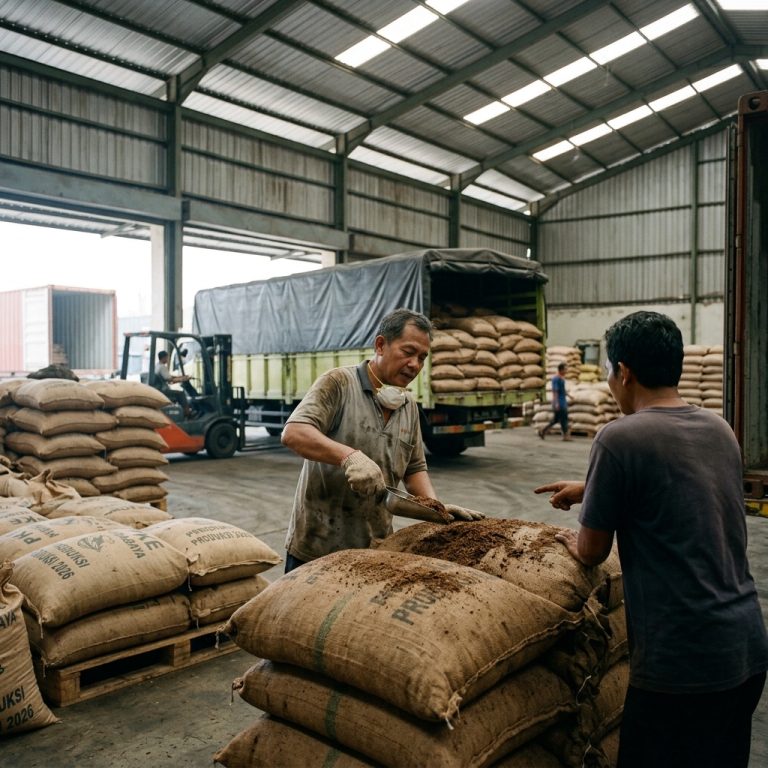
[Image: A high-quality photo of clean, processed Palm Kernel Expeller being loaded into a shipping container, ready for export. The image should look professional and sanitary.]
Alt text: Clean Palm Kernel Expeller being prepared for shipment in a container, signifying a successful export of GACC Approved PKE.
Title text: Export-Ready Palm Kernel Expeller.
Common Mistakes That Lead to GACC Rejection
Many businesses fail their first attempt at GACC registration. Learning from their mistakes can ensure a smoother process. Avoid these common pitfalls to secure your GACC Approved PKE status:
- Inaccurate Translations: Submitting documents or filling the CIFER form with poor English-to-Mandarin translations is a major red flag for reviewers.
- Incomplete Traceability: You must be able to trace your PKE from the final bag back to the raw palm fruit. Any gaps in this chain will lead to failure.
- Ignoring Minor Details: GACC is notoriously meticulous. A small error in a facility floor plan or a mislabeled ingredient on a spec sheet can derail your entire application.
- Using Outdated Information: Relying on old AQSIQ guidelines instead of the current GACC Decrees is an automatic failure. Always refer to the latest regulations from an official source like the GACC official website.
- Poor Audit Preparation: Failing to train your staff for a remote or in-person audit will make your facility appear unprofessional and non-compliant.
Beyond PKE: Expanding Your GACC-Approved Portfolio
Achieving GACC approval is a rigorous process that demonstrates a high level of quality control. Once your facility is approved, you can leverage this status to expand your offerings to the Chinese market. Many facilities that produce PKE also handle other valuable agricultural commodities.
Consider seeking approval for related products, such as:
- Cangkang Inti Sawit: A valuable biomass fuel often produced alongside PKE.
- Cocopeat: A versatile growing medium with demand in China’s horticulture sector.
- Garam Kalsium dari Asam Lemak Minyak Sawit: A specialized feed supplement for livestock.
Verifying a supplier’s GACC status for their entire portfolio is crucial for importers. A reliable supplier will provide GACC registration numbers for all their export products and demonstrate a deep understanding of the compliance process for each one. This expertise is a hallmark of a trustworthy, long-term partner.
[Video: Embed a short video titled “A Walkthrough of a GACC-Compliant PKE Production Facility”. The video should highlight key areas like quality control labs, traceability systems, and sanitary processing lines.]
Finding Reliable GACC Approved PKE Suppliers
For importers and distributors, verifying a supplier’s GACC status is non-negotiable. Always ask for their GACC registration number and verify it through the official GACC database. A reliable supplier of GACC Approved PKE will provide this information freely.
Moreover, a trustworthy partner demonstrates expertise not just in production but in the entire export process. Their ability to consistently deliver high-quality, GACC-compliant products, backed by scientific quality principles, is the foundation of a successful business relationship.
[Image: A close-up shot of a certificate or official-looking document with a green checkmark, symbolizing GACC approval and compliance.]
Alt text: A GACC approval certificate with a green checkmark, symbolizing compliant GACC Approved PKE.
Title text: GACC Compliance Certificate.
Makmur Amanah Sejahtera Menyediakan produk-produk kelapa sawit berkualitas tinggi seperti bungkil inti kelapa sawit, cangkang inti kelapa sawit, minyak kelapa sawit mentah, minyak inti kelapa sawit, dll. Silakan hubungi kami di WhatsApp +6282140002198 atau kirim email kepada kami di admin@makmuramanah.co.id.
Pertanyaan yang Sering Diajukan (FAQ)
What is the validity period of a GACC registration?
A GACC registration for overseas manufacturers of food and feed ingredients is typically valid for five years. Exporters must apply for renewal well in advance of the expiration date to ensure there is no lapse in their ability to export to China.
Can I export PKE to China without GACC approval?
No. As of 2026, it is illegal to import PKE into China from a facility that is not registered with GACC. Any non-compliant shipment will be rejected at the port, returned, or destroyed at the importer’s expense. Obtaining GACC Approved PKE status is mandatory.
How long does the GACC registration process take?
The timeline can vary. Depending on product risk, application completeness, and whether an audit is required, a well-prepared application can take 6-12 months. Complex cases involving significant rectification can take up to 18 months or longer.
What’s the difference between PKE and Palm Kernel Shell?
PKE (Palm Kernel Expeller) is a high-protein byproduct of palm oil extraction used primarily for animal feed. In contrast, Palm Kernel Shell is the hard, woody outer casing of the kernel and is mainly used as a solid, renewable biomass fuel.
Conclusion: Your Next Steps to Market Success
The path to exporting to China is paved with regulations, but it is not impassable. By understanding the central role of the GACC, preparing meticulously, and executing a flawless application, you can unlock one of the world’s most valuable markets. This guide has laid out the critical steps for achieving GACC Approved PKE status.
Key takeaways to remember are:
- Start early and prepare all documentation with extreme care.
- Work with experts to navigate the Mandarin-only CIFER system.
- Prepare thoroughly for a potential GACC audit.
- Never underestimate the importance of correct labeling.
Ultimately, securing your status as a provider of GACC Approved PKE is the most important step you can take. By following this expert guide, you are not just aiming for compliance; you are positioning your business for leadership and profitability in the Chinese market. Start the process today to ensure you are ready for the opportunities of 2026.
[Image: A handshake in a modern office setting with a backdrop of shipping containers, symbolizing a successful export deal to China.]
Alt text: A successful business deal handshake for exporting GACC Approved PKE to China.
Title text: Successful PKE Export Deal to China.

 Indonesian
  English
  Chinese
  Arabic