
Palm Kernel Expeller in Egypt: Your Ultimate 2026 Guide
Finding high-quality Palm Kernel Expeller in Egypt is a critical challenge for livestock and poultry farm owners aiming for profitability in 2026.
As feed costs fluctuate, securing a reliable, cost-effective, and nutrient-rich ingredient is no longer an option—it’s a necessity for survival and growth.
This guide provides the ultimate solution. We will navigate the complexities of sourcing PKE, from vetting international suppliers to understanding the precise specifications that drive animal performance. Consider this your definitive roadmap to leveraging PKE for maximum return on investment in Egypt’s competitive agricultural landscape.
Apa Sebenarnya yang Dimaksud dengan Palm Kernel Expeller (PKE)?
Palm Kernel Expeller, often abbreviated as PKE, is a highly valuable by-product derived from the palm oil extraction process. Specifically, it is the residual material left after the mechanical extraction of oil from the kernel of the palm fruit. It is a globally recognized and trusted ingredient in compound animal feeds.
For those new to the ingredient, this definition-style paragraph is key: Palm Kernel Expeller (PKE) is a protein and energy-rich animal feed ingredient produced after oil is mechanically extracted from the palm kernel. Its high fiber and moderate protein content make it an ideal and affordable feed component, especially for ruminant animals like cattle, sheep, and goats in Egypt.
From Palm Fruit to PKE: The Extraction Process
The journey to create PKE is a multi-step industrial process that ensures quality and consistency. Understanding this process helps in appreciating the final product’s characteristics.
- Panen: Ripe palm fruit bunches are harvested from oil palm plantations.
- Sterilization & Threshing: The fruit is sterilized with steam to halt enzymatic activity, and then the fruits are separated from the bunches (threshing).
- Ekstraksi Minyak: The fruit’s outer pulp (mesocarp) is pressed to produce Crude Palm Oil (CPO). The remaining nut is then cracked.
- Pemisahan Kernel: The hard shell is removed to release the oil-rich palm kernel. This process often yields Cangkang Inti Sawit, another valuable biomass product.
- Pengepresan Mekanis: The kernels are crushed and pressed in an expeller press to extract Palm Kernel Oil (PKO). The solid residue left behind is the Palm Kernel Expeller.
PKE vs. Palm Kernel Cake (PKC): A Key Distinction
While often used interchangeably, there is a technical difference. PKE is the result of pengepresan mekanis, which leaves a residual oil content of around 8-12%. In contrast, Palm Kernel Cake (PKC) can also refer to the product left after ekstraksi pelarut, which results in a much lower residual oil content (1-3%). For feed purposes, the energy value of PKE is often preferred.
Nutritional Profile: The Powerhouse Ingredient
PKE is prized for its balanced nutritional composition, offering a cost-effective source of both protein and energy. While specifications vary by supplier and origin, a typical analysis includes:
- Protein Kasar (CP): 14-18%
- Lemak Kasar: 8-12%
- Serat Kasar (CF): 12-20%
- Energi Metabolisme (ME): High, especially for ruminants
This profile makes it an excellent component for building well-rounded feed formulations. Furthermore, its high fiber content is particularly beneficial for the digestive health of ruminant animals.
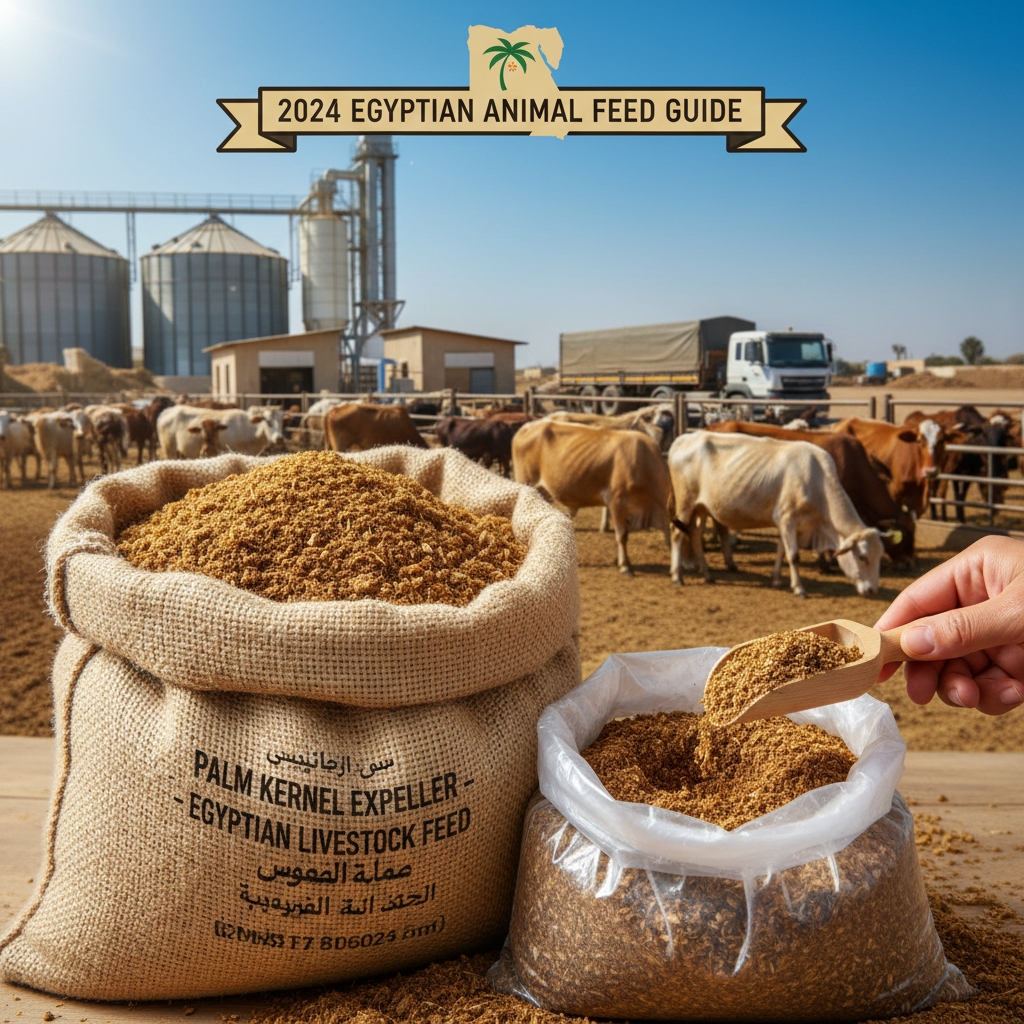
[Image: A close-up shot of high-quality, golden-brown Palm Kernel Expeller pellets.]
Alt Text: High-quality Palm Kernel Expeller in Egypt for animal feed.
Title: Palm Kernel Expeller Pellets
Why PKE is a Game-Changer for Egypt’s Animal Feed Industry
The strategic inclusion of PKE in animal diets presents a significant opportunity for the Egyptian agricultural sector. Its benefits extend beyond simple nutrition, impacting economic viability and operational efficiency.
Economic Advantage of Palm Kernel Expeller in Egypt
Compared to other protein sources like soybean meal or corn, PKE often presents a more economical option without a significant compromise on quality.
Sourcing from major producers like Indonesia and Malaysia allows Egyptian importers to leverage competitive global pricing. This cost stability is crucial for managing overhead and protecting profit margins, a key concern for every farm operator in 2026.
Boosting Livestock Performance: Ruminants vs. Monogastrics
PKE’s true strength lies in its application for ruminant animals (e.g., cattle, camels, sheep, goats). Their digestive systems are uniquely equipped to break down the high fiber content in PKE, converting it into energy efficiently.
- For Dairy Cattle: Improves milk fat content and provides sustained energy.
- For Beef Cattle: A cost-effective feed for weight gain and finishing.
For monogastric animals like poultry, PKE can be included at lower ratios. The fiber content can be a limiting factor, but it is still used to reduce overall feed costs when formulated correctly. Advanced products like Garam Kalsium dari Asam Lemak Minyak Sawit are often more targeted for high-performance monogastric diets.
Sustainability and Availability
As a by-product of the massive global palm oil industry, PKE is available in large, consistent quantities. This reliability is a major advantage over other feed ingredients that may be subject to more volatile seasonal harvests.
By utilizing a by-product, the industry contributes to a more circular economy, reducing waste and maximizing resource utilization—a topic of growing importance referenced by leading bodies like the Organisasi Pangan dan Pertanian (FAO). This principle extends to other parts of the palm, where husks are processed into valuable horticultural media like Cocopeat.
Sourcing Palm Kernel Expeller in Egypt: A 2026 Guide
Securing a reliable supply chain is paramount. This involves careful vetting of suppliers and a deep understanding of the logistics from Southeast Asia to Egyptian ports like Alexandria or Port Said.
Identifying Reputable Indonesian & Malaysian Suppliers
The global PKE market is dominated by Indonesia and Malaysia. When sourcing, look for established exporters with a proven track record. Companies like Makmur Amanah Sejahtera serve as direct points from the source, offering access to high-quality products. Ask for documentation, client testimonials, and third-party quality certifications.
Navigating Logistics for Importing to Egypt
Importation involves several key steps. Your supplier should be able to provide FOB (Free On Board) or CIF (Cost, Insurance, and Freight) pricing. Be prepared for customs clearance procedures in Egypt and ensure all import permits and documentation are in order well in advance to avoid costly port delays.
Choosing the Right Partner
When you seek a partner, you are looking for more than a seller. You need a company that understands the complexities of international trade and the specific quality requirements of the animal feed industry. A good supplier acts as a partner in your success, ensuring you get the right Palm Kernel Expeller in Egypt untuk kebutuhan Anda.
[Image: A healthy herd of dairy cows or cattle feeding at a trough in an Egyptian farm setting.]
Alt Text: Cattle benefiting from feed containing Palm Kernel Expeller in Egypt.
Title: Cattle Feed with PKE in Egypt
Critical PKE Quality Specifications for 2026
Not all PKE is created equal. To protect your animals and your investment, you must demand a Certificate of Analysis (COA) with every shipment and understand what the numbers mean.
| Parameter | Standard Grade PKE | High-Quality PKE (Recommended) | Why It Matters |
|---|---|---|---|
| Protein Kasar (CP) | 14-15% | 16-18% | Directly impacts animal growth and milk/meat production. |
| Serat Kasar (CF) | 18-22% | < 18% | Lower fiber indicates less shell contamination and higher digestibility. |
| Kelembapan | < 12% | < 10% | Prevents mold growth and spoilage during shipping and storage. |
| Aflatoksin | < 50 ppb | < 20 ppb (EU Standard) | Critical for animal health. High levels are toxic and can be fatal. |
Aflatoxin Levels: The Non-Negotiable Safety Standard
Aflatoxin is a toxic compound produced by mold, which can grow on improperly dried and stored PKE. It is extremely dangerous to livestock, causing liver damage, reduced productivity, and even death. As confirmed by numerous studies in publications like the Jurnal Ilmu Hewan dan Bioteknologi, there is no safe substitute for rigorous testing. NEVER compromise on aflatoxin levels; always demand a recent COA from an accredited lab.
Pricing Analysis: Palm Kernel Expeller in Egypt in 2026
Understanding the price of PKE requires looking at both global supply and local demand dynamics.
Global Factors Influencing PKE Prices
The price you pay in Egypt is directly linked to several international factors:
- Harga Minyak Sawit Mentah (CPO): There is a direct correlation. When CPO prices are high, production is high, leading to more PKE supply, which can lower its price. This CPO is the base for various refined products, including popular cooking oils like RBD CP8.
- Global Weather Patterns: El Niño and La Niña can impact palm fruit yields in Indonesia and Malaysia.
- Shipping Costs: Freight rates from Southeast Asia to the Mediterranean are a significant component of the final landed cost.
- Demand from Other Markets: Europe and China are massive consumers of PKE. Increased demand from these regions can drive up prices.
Local Egyptian Market Dynamics
Locally, the price is influenced by the availability and cost of alternatives like soy and corn, government import policies, and the overall health of the Egyptian livestock industry. As noted by industry analysts at WATT AgNet, local feed compounders are constantly balancing these factors to optimize rations.
Common Mistakes to Avoid When Buying PKE
Navigating the PKE market can be tricky. Here are three critical mistakes Egyptian buyers must avoid:
- Ignoring Aflatoxin and Contamination Tests: As mentioned, this is the biggest risk. Relying on a supplier’s word is not enough. Demand independent, third-party testing results for your specific shipment batch.
- Focusing Only on Price, Not on Value: The cheapest offer per ton is rarely the best value. A low-protein, high-fiber PKE will result in poor animal performance (Feed Conversion Ratio), costing you much more in the long run. Pay for quality.
- Misunderstanding Storage Requirements: PKE’s residual oil content makes it susceptible to rancidity in hot climates if not stored correctly. Ensure your storage facility is dry, well-ventilated, and cool to protect your investment.
Makmur Amanah Sejahtera Menyediakan produk-produk kelapa sawit berkualitas tinggi seperti bungkil inti kelapa sawit, cangkang inti kelapa sawit, minyak kelapa sawit mentah, minyak inti kelapa sawit, dll. Silakan hubungi kami di WhatsApp +6282140002198 atau kirim email kepada kami di admin@makmuramanah.co.id.
[Image: A graphic of a PKE Certificate of Analysis (COA) with key specs highlighted.]
Alt Text: Certificate of Analysis for Palm Kernel Expeller in Egypt.
Title: PKE Quality Specifications COA
Pertanyaan yang Sering Diajukan (FAQ)
Apakah PKE cocok untuk semua hewan?
PKE is most suitable for ruminants (cattle, sheep, goats) due to its high fiber content. It can be used in limited quantities for monogastrics like poultry and pigs, but feed must be carefully formulated by a nutritionist to balance digestibility.
What is a good protein level for PKE?
Aim for a crude protein level between 16-18%. While cheaper PKE might have 14-15%, the higher protein content provides significantly better value for animal growth and productivity, justifying a slightly higher cost per ton.
How do I test the quality of a PKE shipment?
Upon arrival, you should take multiple samples from different parts of the shipment and send them to a reputable local laboratory. Test for the key parameters: protein, fat, fiber, moisture, and most importantly, aflatoxin levels.
What’s the difference between PKE and Copra Meal?
Both are by-product meals, but PKE comes from palm kernels, while Tepung Kopra comes from dried coconut flesh. Copra generally has a higher protein content (20-22%) but can have different digestibility and energy characteristics. For more details, see the Wikipedia entry for Bungkil Inti Sawit.
Can I use PKE for poultry feed?
Yes, but with caution. Due to its high fiber, PKE inclusion rates for broilers are typically kept below 10% of the total diet. For layers, it can sometimes be used at slightly higher rates. Enzyme supplementation can help improve its digestibility in poultry.
Conclusion: Your 2026 PKE Strategy
In conclusion, Palm Kernel Expeller is not just another feed ingredient; it is a strategic asset for Egypt’s livestock and poultry sectors. By focusing on high-quality specifications, partnering with reputable suppliers, and understanding market dynamics, you can unlock significant economic and performance benefits.
Avoid the common pitfalls of chasing low prices and ignoring quality control. Implement the strategies outlined in this guide to build a resilient and profitable feed program for 2026 and beyond. Ultimately, investing in high-quality Palm Kernel Expeller in Egypt is an investment in your farm’s future success.
[Image: A container ship being loaded with sacks of PKE, with an inset map showing the shipping route from Southeast Asia to Egypt.]
Alt Text: Logistics of importing Palm Kernel Expeller to Egypt.
Title: PKE Shipping and Logistics
—
Infographic Suggestion:
Title: “The PKE Journey: From Palm to Profitable Livestock”
Concept: A visual flowchart infographic. It starts with an icon of a palm tree, moves to a palm fruit, then an oil press icon (showing CPO and Kernel separation). The kernel goes to another press, yielding PKE pellets. The PKE is loaded onto a ship crossing the sea to Egypt. The final step shows a happy cow and a chart with an upward arrow labeled “Profitability & Performance”.
Embedded Video Suggestion:
Title: “How to Visually Inspect a PKE Shipment: 5-Minute Expert Guide”
Concept: An expert on-site next to a newly opened container of PKE. The expert shows the viewer what to look for: color (golden brown, not dark or black), texture (crumbly but not dusty), smell (nutty, not musty or sour), and signs of clumping (which indicates high moisture). They demonstrate taking a sample for lab analysis.
 Indonesian
  English
  Chinese
  Arabic