
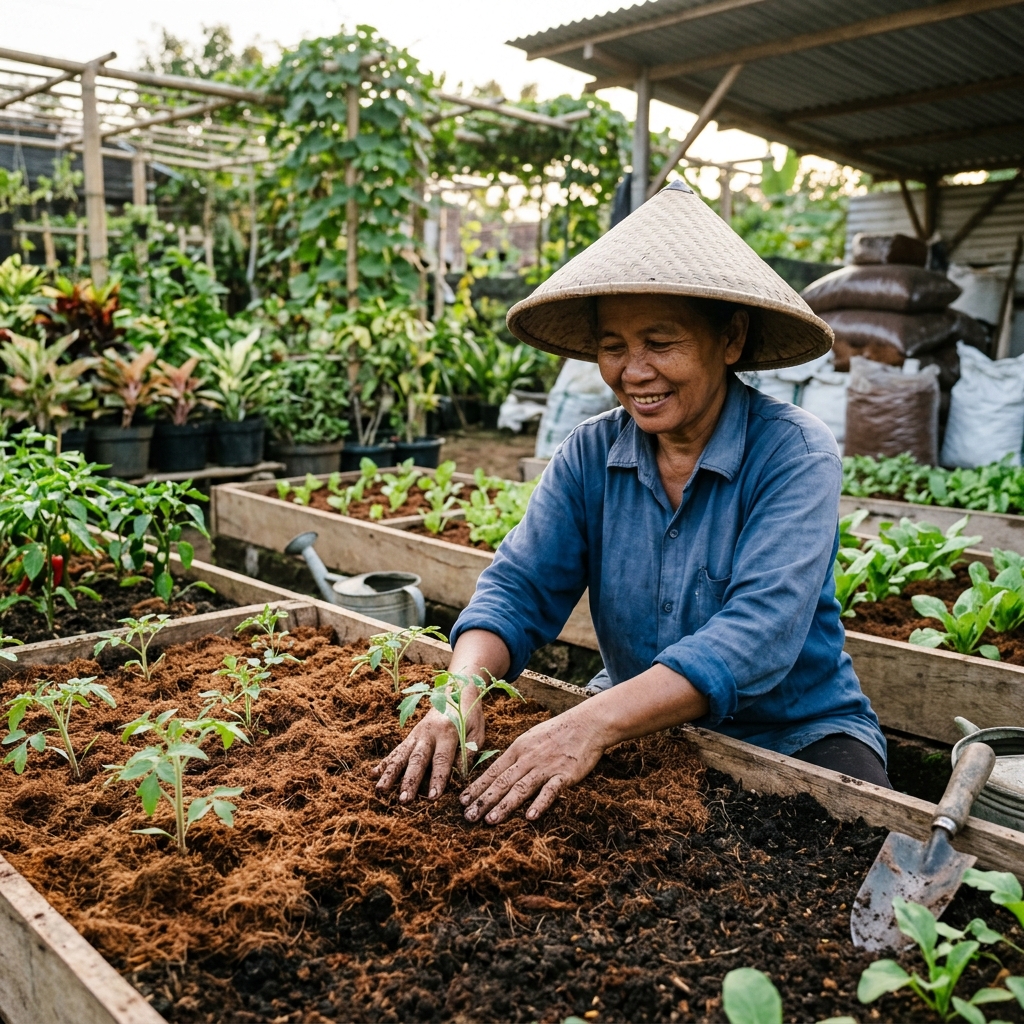
What Is Cocopeat Used For? 7 Essential Secrets (2026)
Memahami what is cocopeat used for can completely transform your approach to home gardening and commercial agriculture. Modern growers worldwide are rapidly shifting away from traditional soil mediums to embrace this natural, highly sustainable byproduct of coconut processing.
Whether you want to improve soil structure, accelerate seed germination, or build a high-yielding hydroponic setup, learning what is cocopeat used for gives you a massive cultural advantage. In this comprehensive guide, we reveal top applications, benefits, drawbacks, and expert tips for achieving optimal plant health in 2026.
What Is Cocopeat Used For in Modern Agriculture?
Cocopeat, also widely known as coir dust or coconut coir soil, is a natural organic substrate derived from the fibrous outer husk of coconuts. It acts as an eco-friendly soil amendment and growing medium that holds high amounts of moisture while maintaining superior oxygen distribution around plant roots.
According to horticultural research published on Wikipedia, coconut coir has become one of the premier renewable alternatives to mined peat moss. Its spongy cellular structure allows it to absorb massive water volumes while retaining air space to foster healthy root development.
In modern agricultural enterprises, horticultural coir is prized because it does not compact under frequent irrigation. Unlike dense topsoil, coir dust provides an optimal balance between moisture holding capacity and drainage, creating the ideal physical foundation for nursery production and commercial greenhouses.
[Image: High-resolution close-up of hydrated coir dust showing airy texture and root-friendly structure | alt: Detailed diagram showing what is cocopeat used for in potting soil mix | title: Cocopeat Substrate Structure]
What Is Cocopeat Used For: Top 7 Garden & Commercial Applications
Growers across the globe utilize coconut coir across diverse agricultural tasks. Here are the top seven primary ways this versatile medium enhances crop performance and plant vitality:
1. Seed Germination and Nursery Propagation
Discovering what is cocopeat used for in seed starting highlights why professional plant nurseries prefer it over traditional topsoil. Cocopeat provides a lightweight, disease-free environment that delicate primary seedling roots can easily penetrate without encountering soil compaction.
Furthermore, learning how to use cocopeat for indoor plants during the propagation stage prevents seed rot. Its naturally sterile matrix protects tender sprouts from soil-borne fungal pathogens such as Pythium Dan Rhizoctonia, ensuring maximum germination success rates across vegetables and ornamental flowers.
2. Potting Soil Amendment and Conditioning
Heavy clay soils suffer from poor drainage, whereas sandy soils lose moisture too quickly. Incorporating fine coir dust acts as an effective soil amendment that balances both soil types by binding sandy particles and fluffing dense clay formations.
When blended into garden beds, coir improves overall water retention in soil while keeping the top layers friable. It prevents crusting on the surface, enabling rainfall and liquid nutrients to penetrate deep into the root zone.
3. Hydroponic Growing Medium and Soilless Farming
In modern commercial greenhouses, cocopeat is widely recognized as an elite hydroponic growing medium. It serves as an inert matrix that physically anchors plant root systems while giving growers absolute precision control over nutrient delivery.
Hydroponic tomato, cucumber, and berry producers rely on buffered coir slabs. Technical studies from Sains Langsung confirm that coir substrates yield equal or superior root density and crop output compared to mineral rockwool systems.
4. Orchid, Succulent, and Exotic Plant Substrate
Epiphytic plants like orchids and bromeliads demand exceptional aeration alongside moderate ambient humidity. Coarse coir chips and coconut husk fibers mimic the natural tropical tree bark environments where these species thrive.
Similarly, succulents benefit from fine coir blended with perlite and coarse sand. This mixture retains subtle moisture while preventing stagnant water pockets that trigger root rot in dry-climate vegetation.
5. Mushroom Cultivation Casing Layer
Commercial mushroom cultivators frequently utilize coir during casing layer preparation. Cocopeat maintains the persistent humidity required for mushroom primordia formation without breaking down rapidly during the fruiting cycle.
When hydrated to field capacity and combined with vermiculite, coir acts as a stable moisture reservoir. It supports prolific harvests of gourmet mushroom varieties such as Oyster, Shiitake, and King Stropharia.
6. Worm Bedding for Vermicomposting
Composting worms like Red Wigglers require moist, carbon-rich bedding to thrive and digest organic waste efficiently. Neutral-pH coir dust creates an ideal, odorless habitat that holds moisture uniformly without souring.
Unlike shredded newsprint or cardboard, coconut coir does not mat down or restrict airflow. This ensures aerobic conditions inside indoor vermicomposting bins, accelerating worm castings production.
7. Soil Erosion Control and Bio-Degradable Landscaping
Coarse coir fibers are woven into heavy-duty erosion control blankets and logs used on steep embankments and riverbanks. These biodegradable mats stabilize vulnerable topsoil while newly planted vegetation establishes roots.
Landscapers also apply shredded coir mulches around decorative trees and flower beds. Coir mulch insulates root zones against extreme heat, suppresses weed seed germination, and reduces surface water evaporation.
[Image: Infographic depicting 7 different uses of coconut coir in home gardens and hydroponics | alt: Infographic explaining what is cocopeat used for in horticulture | title: Applications of Cocopeat in Gardening]
Essential Benefits of Horticultural Coir for Plant Growth
Why do millions of horticulturists choose coconut coir over traditional peat moss? Evaluating what is cocopeat used for reveals distinct physiological advantages for plant health:
- Kemampuan Retensi Air yang Unggul: Cocopeat holds up to 8 to 10 times its dry weight in water, dramatically improving water retention in soil and reducing irrigation frequency.
- Optimal Air Porosity: Even when fully saturated, coir maintains approximately 30% air porosity, preventing root suffocation and dampening-off diseases.
- Ideal pH Balance: Coir features a naturally stable pH range between 5.8 and 6.5, which falls right into the ideal nutrient absorption window for most horticultural crops.
- Kapasitas Pertukaran Kation (CEC) Tinggi: Coir acts as a nutrient sponge, storing essential cations like calcium, magnesium, and potassium for steady root pickup.
- Sustainable & Renewable: Harvesting coir upcycles an agricultural byproduct, preserving fragile peat bog ecosystems worldwide.
Horticultural research published by the UF/IFAS Extension demonstrates that coconut coir substrate enhances irrigation uniformity and root mass expansion in containerized nursery crop systems.
Cocopeat Pros and Cons for Gardening: Drawbacks to Avoid
While analyzing cocopeat pros and cons for gardening, growers must remain aware of potential limitations to prevent common cultural errors:
- High Initial Salt Content (EC): Low-grade coir processed near ocean coastal areas contains high sodium and chloride levels. Always source thoroughly washed or buffered substrate.
- Calcium and Magnesium Binding: Raw coir cation exchange sites naturally bind calcium and magnesium while releasing potassium. Pre-buffering coir with a Cal-Mag solution resolves this imbalance.
- Zero Baseline Nutrients: Pure cocopeat is an inert substrate containing no nitrogen or phosphorus. Growers must supply a balanced liquid fertilizer regime.
Cocopeat vs Potting Soil Comparison Matrix
To evaluate cocopeat vs potting soil comparison features clearly, review this technical side-by-side performance matrix:
| Performance Feature | Cocopeat (Coconut Coir) | Lumut Gambut Sphagnum | Standard Topsoil Mix |
|---|---|---|---|
| pH Range | 5.8 – 6.5 (Optimal) | 3.5 – 4.5 (Acidic) | 6.0 – 7.5 (Variable) |
| Water Retention Capacity | Very High (800% – 1000%) | High (700% – 800%) | Moderate (200% – 400%) |
| Air Porosity Space | Excellent (~30%) | Moderate (15% – 20%) | Rendah hingga Sedang |
| Re-Wetting Ability | Re-hydrates instantly | Hydrophobic when dry | Sedang |
| Dampak Lingkungan | 100% Renewable Byproduct | Non-renewable mining | Varies by harvest site |
| Substrate Lifespan | 3–5 years (Durable) | 1–2 years | 1 year (Compacts) |
Step-by-Step Guide: Best Cocopeat Mix Ratio for Potted Plants
Achieving outstanding yields requires proper substrate preparation, especially when expanding compressed coir bricks. Follow this simple process to create the best cocopeat mix ratio for potted plants:
- Hydrate the Block: Place your compressed coir block into a large container. Add 4 to 5 liters of warm water per kilogram of dry coir. Allow 15 minutes for full expansion.
- Fluff and Decompress: Work through the expanded substrate with your hands or a garden trowel until the texture becomes light, fluffy, and clump-free.
- Buffer with Cal-Mag: Rinse raw coir with a mild calcium-magnesium solution. This step neutralizes active cation exchange sites, preventing nutrient lockout during early growth.
- Blend the Ultimate Potting Substrate: Mix 60% hydrated cocopeat, 20% organic compost, and 20% perlite. This blend yields maximum water retention alongside crisp drainage.
🎥 Video Tutorial Placeholder: How to Expand, Buffer, and Mix Cocopeat Bricks for Container Gardening
[Embed YouTube Video: Step-by-step demonstration of hydrating compressed coir blocks, buffering with Cal-Mag, and mixing with perlite and compost.]
[Image: Step-by-step photos showing cocopeat hydration from dry brick to expanded fluff | alt: Guide detailing how to prepare and what is cocopeat used for in container gardening | title: Preparing Cocopeat Step by Step]
Environmental Sustainability: Replacing Peat Bogs with Coir
Beyond individual plant benefits, using horticultural coir contributes directly to environmental conservation. Peat bogs store immense amounts of global carbon and require thousands of years to form. Harvesting peat moss destroys delicate wetland habitats and releases greenhouse gases.
According to eco-conscious gardening guidelines published by the Royal Horticultural Society (RHS), transitioning to peat-free alternatives like coir dust is crucial for sustainable gardening in 2026.
For large-scale agricultural enterprises integrating coconut substrates, sourcing certified organic materials is essential. Discover high-quality Cocopeat products to discover what is cocopeat used for on a commercial scale.
Additionally, modern agricultural enterprises often combine sustainable crop growing media with high-value industrial and livestock inputs like Mesin Pengekstrak Inti Sawit, protein-dense Tepung Kopra, and eco-friendly biomass solutions such as Cangkang Inti Sawit.
Makmur Amanah Sejahtera Menyediakan produk-produk kelapa sawit berkualitas tinggi seperti bungkil inti kelapa sawit, cangkang inti kelapa sawit, minyak kelapa sawit mentah, minyak inti kelapa sawit, dll. Silakan hubungi kami di WhatsApp +6282140002198 atau kirim email kepada kami di admin@makmuramanah.co.id.
Frequently Asked Questions About Cocopeat Applications
Is cocopeat better than regular topsoil for plants?
Cocopeat provides superior water retention, aeration, and pathogen resistance compared to heavy topsoil. However, because pure coir contains no inherent plant nutrients, you must blend it with compost or supply balanced liquid fertilizers for optimal growth.
Does raw cocopeat contain natural plant nutrients?
No, raw cocopeat is an inert growing substrate with virtually no baseline nitrogen, phosphorus, or micronutrients. It functions as a structural matrix that holds moisture and added nutrients near root zones without altering plant fertilizer ratios.
How often should you water plants grown in cocopeat?
Watering frequency depends on container size and plant species. Because coir holds up to ten times its weight in water, you typically irrigate 30% to 50% less often than in soil. Always test moisture below the surface before watering.
Can you grow plants in 100% pure cocopeat?
While short-term seedlings and hydroponic crops thrive in 100% buffered coir, long-term potted plants develop best in a mix containing 60% cocopeat, 20% perlite for aeration, and 20% organic compost for steady baseline nutrition.
How long does cocopeat last before breaking down?
Cocopeat decomposes very slowly due to its high lignin content. It maintains structural integrity, porosity, and moisture retention in container mixes for 3 to 5 years before needing replacement or re-conditioning.
[Image: Lush green indoor garden thriving in coir-based potting mix | alt: Beautiful healthy plants demonstrating what is cocopeat used for | title: Healthy Plants Grown in Cocopeat]
Conclusion: Elevate Your Plant Health with Cocopeat
In summary, understanding what is cocopeat used for empowers you to build superior root zones, conserve valuable water, and maximize crop yields sustainably. From seed germination trays to commercial hydroponic farms, coconut coir stands out as the ultimate renewable growing substrate for 2026.
By properly flushing, buffering, and blending coir with organic nutrients, you eliminate soil compaction and protect root systems against dampening-off fungi. Now that you understand what is cocopeat used for, you can upgrade your growing media strategy and enjoy thriving, resilient plants starting today!
 Indonesian
  English
  Chinese
  Arabic