
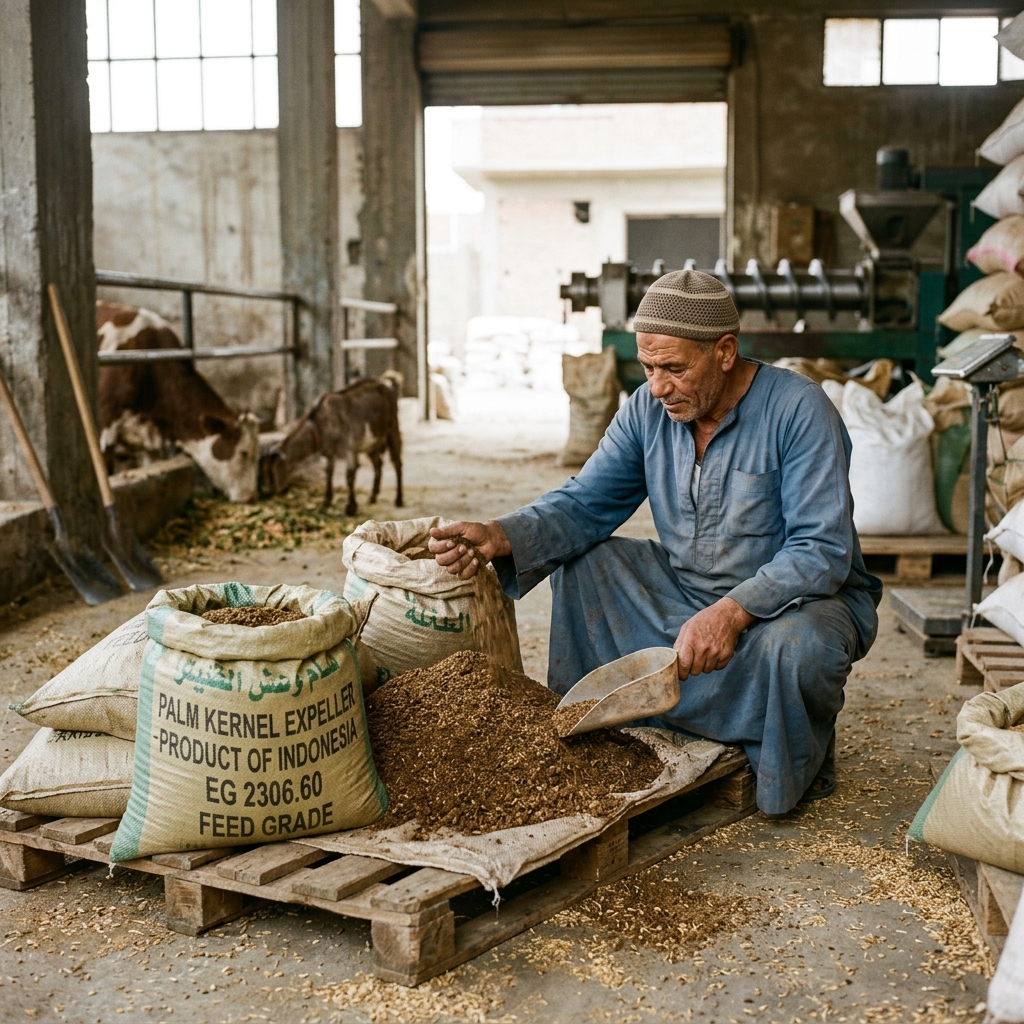
What is Palm Kernel Expeller (PKE)? Uses, HS Code & Premium Supply to Egypt
Mesin Pengekstrak Inti Sawit serves as a paramount plant-based protein and energy source in modern livestock diets worldwide. As global agricultural supply chains evolve in 2026, animal nutritionists and feed millers increasingly turn to cost-effective, nutrient-dense byproducts to optimize feed conversion ratios. Livestock producers across the Middle East and North Africa are constantly seeking sustainable ingredients to satisfy growing dairy and meat production goals.
Mesin Pengekstrak Inti Sawit (PKE) is a high-energy, protein-rich byproduct generated during the mechanical extraction of oil from the crushed nuts of the oil palm plant (Elaeis guineensis). Widely recognized for its high neutral detergent fiber (NDF) and dietary energy, it functions as an economical feed ingredient primarily for ruminants such as dairy cattle, beef cattle, and sheep.
Rising operational costs in commercial livestock farming require innovative feeding solutions. According to data from the Organisasi Pangan dan Pertanian (FAO), international feed grain prices remain volatile, driving buyers to secure stable agro-industrial co-products. Import markets like Egypt rely heavily on high-protein, fibrous supplements to balance traditional forage and concentrate rations effectively.
[Image 1: Industrial mechanical screw press expelling solid palm kernel cakes in a modern Indonesian processing facility. | alt: High quality Palm Kernel Expeller processing plant | title: Industrial Palm Kernel Expeller Mechanical Press Extraction]
What is Palm Kernel Expeller and How is It Produced?
The manufacturing process of premium Mesin Pengekstrak Inti Sawit relies on heavy mechanical pressing of palm kernels after the outer mesocarp flesh has been removed for palm oil extraction. Once workers separate the nut from the shell, the inner kernel undergoes steam conditioning and drying to adjust moisture levels for maximum oil recovery.
Engineers pass the dried kernels through continuous high-pressure screw presses (expellers). This mechanical exertion squeezes out crude palm kernel oil, leaving behind a dense, solid press cake. Manufacturers cool this residual cake and process it into coarse meal or uniform pellets for commercial bulk storage and global shipment.
Mechanical Pressing vs. Solvent Extraction for Palm Kernel Expeller
Understanding the distinction between mechanical expelling and chemical solvent extraction is critical for feed formulators. Mechanical expelling uses zero chemical solvents, retaining a higher residual oil content (6% to 10%) compared to solvent-extracted palm kernel meal (1% to 2%).
This residual lipids level provides valuable dietary energy that significantly increases total digestible nutrients (TDN) for cattle rations. Consequently, premium Mesin Pengekstrak Inti Sawit derived from mechanical expellers offers superior metabolizable energy compared to standard solvent-extracted meals.
Quality Assurance Standards in PKE Manufacturing
Leading processing facilities implement rigorous screening before expelling to clear residual nut shells and foreign silica. Controlling temperature during screw pressing preserves crude protein content and prevents Maillard reactions, ensuring optimal amino acid availability for ruminant digestion.
💡 Visual Infographic Suggestion: PKE Mechanical Production & Rumen Digestibility Workflow
An infographic mapping the transformation from raw palm nut → nut shelling → mechanical expelling → pelletizing → rumen fermentation pathways showing Volatile Fatty Acid (VFA) synthesis.
Nutritional Specifications of Palm Kernel Expeller
Nutritionists value this ruminant feed ingredient because it supplies a balanced mix of crude protein, medium-chain fatty acids, digestible fiber, and essential trace minerals. Furthermore, its moderate ruminal protein degradability makes it an excellent bypass protein source.
Published studies indexed in ScienceDirect animal nutrition journals highlight that PKE contains elevated concentrations of hemicellulose and mannan oligosaccharides. Rumen microbes ferment these carbohydrates efficiently into volatile fatty acids (VFAs), supporting sustained milk yield without inducing rumen acidosis.
According to nutritional benchmarks from the Departemen Pertanian Amerika Serikat (USDA), incorporating fibrous oilseed byproducts improves gut motility and rumination efficiency in high-producing dairy cows.
Feed Ingredient Specification Comparison Table
Below is a detailed chemical breakdown demonstrating how Mesin Pengekstrak Inti Sawit compares against alternative feed components such as Tepung Kopra and traditional soybean meal:
| Nutritional Parameter | Mesin Pengekstrak Inti Sawit (PKE) | Tepung Kopra | Soybean Meal (44%) |
|---|---|---|---|
| Protein Kasar (CP) | 14.0% – 18.0% | 20.0% – 22.0% | 44.0% – 48.0% |
| Crude Fat / Residual Oil | 6.5% – 10.0% | 8.0% – 11.0% | 1.0% – 2.0% |
| Serat Kasar (CF) | 13.0% – 18.0% | 11.0% – 14.0% | 6.0% – 7.0% |
| Serat Deterjen Netral (NDF) | 55.0% – 67.0% | 45.0% – 52.0% | 10.0% – 14.0% |
| Acid Detergent Fiber (ADF) | 33.0% – 40.0% | 26.0% – 30.0% | 7.0% – 10.0% |
| Kandungan Air | < 10.0% | < 10.0% | < 12.0% |
| Energi yang Dapat Dimetabolisme (Hewan Ruminansia) | 10,5 – 11,5 MJ/kg | 11.0 – 12.0 MJ/kg | 12.5 – 13.5 MJ/kg |
To further boost dietary energy density during peak lactation, herd managers frequently combine PKE with lipid supplements like Garam Kalsium dari Asam Lemak Minyak Sawit or balance energy ratios using processed energy oils like RBD CP8.
Harmonized System Code (HS Code 2306.60) for Global Trade
International traders, customs brokers, and commercial importers must classify agricultural commodities accurately to comply with trade tariffs and port entry regulations. Official tariff schedules established by the World Customs Organization (WCO) govern international shipments of oil palm byproduct items.
The universal tariff heading HS Code 2306.60 specifically designates oilcake and solid residues derived from palm nuts or kernels, whether ground, unground, or formatted into high-density pellets.
- Chapter 23: Residues and waste from the food industries; prepared animal fodder.
- Heading 2306: Oilcake and other solid residues resulting from the extraction of vegetable fats or oils.
- Subheading 2306.60: Of palm nuts or kernels.
Proper documentation under HS Code 2306.60 ensures efficient customs clearance, correct duty application, and rapid phytosanitary verification at destination ports.
Key Applications of Palm Kernel Expeller in Animal Feed Rations
[Image 2: High-yielding dairy cows feeding on a total mixed ration containing Palm Kernel Expeller in a modern barn. | alt: Dairy cattle feeding on Palm Kernel Expeller feed mixture | title: Ruminant Nutrition and Dairy Cattle Feed Applications]
Formulators utilize Mesin Pengekstrak Inti Sawit across multiple livestock sectors due to its digestible fiber structure and non-acidogenic energy release. Key commercial applications include:
Dairy Cattle Feed Rations and Milk Fat Optimization
PKE acts as a premier concentrate replacement in dairy cattle feed programs. Its high digestible fiber (NDF) buffers the rumen environment, maintaining optimal pH levels while stimulating acetate production necessary for milk fat synthesis.
Beef Cattle Fattening and Feedlot Performance
In intensive beef cattle feedlot operations, incorporating PKE supports steady average daily gain (ADG) without risking digestive bloat or acute acidosis common with heavy corn rations.
Small Ruminants and Swine Inclusion Limits
Sheep and goats digest PKE fiber with high efficiency, making it valuable in arid regions where fresh pasture forage is limited. While swine rations require lower inclusion rates (under 10%) due to crude fiber constraints, growing pigs benefit from its dietary fat and energy.
🎬 Video Embed Suggestion: Automated Processing & Bulk Vessel Loading of PKE
[Embed YouTube/Vimeo video illustrating quality control, pelleting, and loading of Palm Kernel Expeller for export]
Strategic Palm Kernel Expeller Supply to Egypt and Trade Logistics
[Image 3: Container vessel carrying agro-commodities arriving at an Egyptian seaport terminal. | alt: Bulk cargo ship carrying Palm Kernel Expeller supply to Egypt | title: Maritime Export of Palm Kernel Expeller to Egyptian Ports]
Egypt has established itself as a premier North African hub for livestock production and feed milling operations. Expanding commercial dairy operations and feedlot facilities require stable imports of palm kernel expeller supply to egypt to sustain domestic beef and milk production targets in 2026.
Trade metrics compiled by IndexMundi commodity analytics highlight steady year-over-year increases in Egyptian demand for Southeast Asian plant proteins. Indonesian suppliers serve this demand through major ports including Alexandria, Damietta, and Port Said.
Import Standards and Quality Assurance for Egyptian Buyers
Egyptian regulatory authorities impose strict standards on incoming livestock feed ingredients. Shipments must strictly fulfill rigorous physical and chemical palm kernel expeller specifications for livestock:
- Pengendalian Kelembapan: Strictly capped under 10% to eliminate mold formation during maritime transport across warm shipping routes.
- Mycotoxin & Aflatoxin Compliance: Laboratory-verified free from dangerous aflatoxin thresholds to safeguard animal health.
- Physical Consistency: Processed into dense pellets to minimize dust formation and enable bulk discharge at automated port silos.
Key Advantages of Sourcing Indonesian Palm Kernel Expeller
[Image 4: Close-up of rich golden-brown Palm Kernel Expeller pellets ready for livestock feed formulation. | alt: High grade Indonesian Palm Kernel Expeller pellets | title: Premium Grade Indonesian Palm Kernel Expeller]
Indonesia stands as the world’s leading producer of palm oil products, offering buyers unmatched volume capacity, competitive pricing, and continuous year-round supply. Businesses importing palm kernel expeller from indonesia benefit from efficient sea freight routes connecting Asian ports directly to Red Sea and Mediterranean harbors.
Furthermore, major Indonesian exporters allow multi-product cargo consolidation. Importers can combine animal feed shipments with biomass fuels such as Cangkang Inti Sawit or horticultural growing media like Cocopeat in single vessel charters to optimize maritime logistics costs.
Partner with Premier Palm Product Suppliers
Makmur Amanah Sejahtera Menyediakan produk-produk kelapa sawit berkualitas tinggi seperti bungkil inti kelapa sawit, cangkang inti kelapa sawit, minyak kelapa sawit mentah, minyak inti kelapa sawit, dll. Silakan hubungi kami melalui WhatsApp. +6282140002198 atau kirim email kepada kami di admin@makmuramanah.co.id.
Pertanyaan yang Sering Diajukan
What is the main difference between Palm Kernel Expeller and Palm Kernel Meal?
Palm Kernel Expeller (PKE) is produced via mechanical screw pressing and retains 6% to 10% residual oil. In contrast, Palm Kernel Meal (PKM) typically undergoes chemical solvent extraction, resulting in lower fat content (1% to 2%). Mechanical PKE yields higher energy values for ruminants.
What is the HS code for Palm Kernel Expeller custom clearance?
The universal Harmonized System Code (HS Code) for Palm Kernel Expeller is 2306.60. This standard classification applies globally for import documentation, tariffs, and customs declaration across international ports.
Why is Palm Kernel Expeller popular in Egypt dairy cattle feed?
PKE provides an outstanding balance of digestible fiber (NDF) and bypass protein without causing rumen acidosis. Egyptian dairy operations use it to lower concentrate feed costs while preserving butterfat content and daily milk yields.
How should Palm Kernel Expeller be stored to avoid spoilage?
Store PKE in well-ventilated, dry warehouses or sealed silos with moisture levels below 10%. Protecting bulk stockpiles from direct water exposure and humidity prevents mold growth and extends shelf life during long-term storage.
What is the recommended inclusion rate of PKE in beef cattle fattening?
In beef cattle fattening rations, PKE can be incorporated safely at 20% to 40% of total dietary dry matter. It provides sustained energy and fiber without risking rumen acidosis associated with high-grain starch rations.
Conclusion: Securing Reliable Supply Chains in 2026
Singkatnya, Mesin Pengekstrak Inti Sawit represents an essential, highly economical feed ingredient that optimizes animal nutrition while managing input costs. With an advantageous crude protein profile, high digestible fiber, and standardized global trade classification under HS Code 2306.60, PKE continues to serve as an indispensable asset for feed manufacturers across Egypt and the Middle East.
By securing direct supply partnerships with established Indonesian producers, importers guarantee continuous delivery of top-grade feed materials. Elevate your livestock feed efficiency today by choosing verified, high-quality Mesin Pengekstrak Inti Sawit tailored to your commercial agricultural needs.

 Indonesian
  English
  Chinese
  Arabic