
GACC Approved Palm Kernel Expeller: The #1 Complete Guide (2026)
Pengimporan Mesin Pengekstrak Inti Sawit yang Disetujui GACC into China means navigating a strict and complex regulatory landscape. For any importer, a single compliance mistake can lead to devastating financial losses, seized shipments, and long-term damage to your business reputation. This guide provides the definitive roadmap to mastering the import process for 2026.
As China solidifies its position as a primary global destination for animal feed ingredients—with market demand growing by an estimated 5-7% annually according to industry reports—its import regulations have become increasingly stringent. Since the implementation of GACC Decree 248, the rules of the game have fundamentally changed. Understanding these regulations is no longer optional. It is the absolute foundation of a successful import strategy, ensuring every shipment of Palm Kernel Expeller (PKE) meets the required standard and clears customs without costly delays.
Apa Sebenarnya yang Dimaksud dengan Mesin Pengekstrak Inti Sawit yang Disetujui GACC?
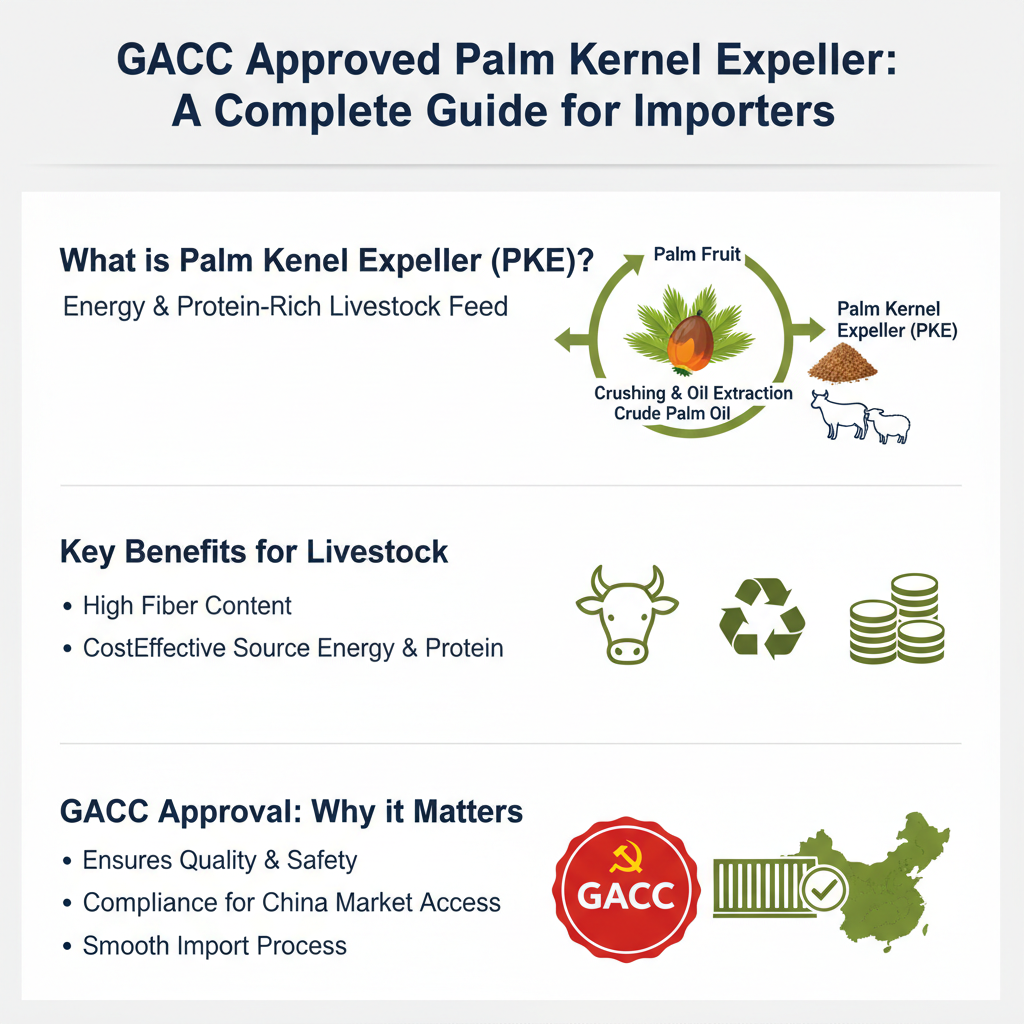
A Mesin Pengekstrak Inti Sawit yang Disetujui GACC refers to PKE from a production facility that has been officially registered and approved by the General Administration of Customs of the People’s Republic of China (GACC). This is a critical distinction: the approval applies to the overseas manufacturer, not an individual product batch. Without this facility registration, PKE is prohibited from entering the Chinese market for use as animal feed.
Palm Kernel Expeller itself is a high-protein, high-fiber co-product of the palm oil industry. It is derived from crushing palm kernels to extract valuable minyak inti sawit. It’s a globally recognized, cost-effective ingredient in feed rations for livestock, particularly ruminants. However, to access the vast Chinese market, producers must adhere to the rigorous standards set forth by GACC.
The Critical Role of GACC Decrees 248 & 249
Effective January 1, 2022, GACC Decrees 248 and 249 revolutionized import requirements. Decree 248 (Regulations on the Registration and Administration of Overseas Producers of Imported Food) mandates that all foreign facilities producing, processing, or storing food (including animal feed) for export to China must be registered with GACC. This is a topic covered extensively by global trade publications, highlighting its impact on international supply chains. This move consolidated previous systems under the former AQSIQ and created a single, unified platform known as CIFER (China Import Food Enterprise Registration) for managing applications and approvals.
Meanwhile, Decree 249 (Administrative Measures on Import and Export Food Safety) outlines the specific food safety, labeling, and inspection protocols that importers and exporters must follow, working hand-in-hand with Decree 248 to create a comprehensive safety net.
[Image: A clean, close-up shot of high-quality, golden-brown palm kernel expeller in a large, clean pile. The texture should be visible. | alt=”Close-up of GACC Approved Palm Kernel Expeller.” | title=”High-Quality Palm Kernel Expeller for Import”]
Why GACC Approval is Non-Negotiable for Chinese Imports in 2026
For importers targeting the Chinese market, treating GACC approval as a mere formality is a grave mistake. In 2026, it stands as the single most important factor determining whether your PKE shipment will be a source of profit or a significant loss. Non-compliance results in automatic rejection at the port of entry.
The consequences are severe. Customs officials can return, destroy, or re-purpose the goods at the importer’s expense. Furthermore, both the importer and the non-compliant overseas producer risk being placed on a GACC blacklist, which severely hinders future trade opportunities. Therefore, ensuring your supply chain begins with a GACC-registered facility is paramount.
Benefits of Sourcing GACC Approved Palm Kernel Expeller
Sourcing from GACC-approved facilities offers more than just market access. It provides a layer of security and trust for your business.
- Stabilitas Rantai Pasokan: Reduces the risk of sudden disruptions due to regulatory enforcement.
- Peningkatan Jaminan Mutu: GACC registration requires facilities to maintain high standards of hygiene and process control, often aligning with HACCP principles.
- Brand Reputation: Demonstrates a commitment to quality and regulatory adherence, building trust with both regulators and end-users in China.
- Risiko Berkurang: Minimizes the chance of customs holds, demurrage fees, and costly product testing delays. When dealing with high-volume commodities like Mesin Pengekstrak Inti Sawit, these savings are substantial.
The GACC Registration Process for PKE Facilities: A Step-by-Step Breakdown
While the PKE producer is responsible for registration, importers must understand the process to effectively vet their partners. The procedure is managed through the GACC’s CIFER system and generally follows these key stages:
- Account Creation: The producer creates an account on the GACC CIFER online platform.
- Application Submission: The producer submits a detailed application, selecting the correct product category for PKE (listed under feed ingredients).
- Documentation Upload: A comprehensive set of documents is required, including business licenses, facility layouts, production flowcharts, and proof of food safety management systems (like HACCP or ISO 22000).
- Competent Authority Review: The application is typically reviewed first by the competent authority in the producer’s home country (e.g., the Ministry of Agriculture in Indonesia).
- GACC Final Review: Once endorsed, the application is forwarded to GACC for a final, thorough review. This may include requests for additional information or even a remote video inspection of the facility.
- Persetujuan dan Pencatatan: Upon successful review, GACC grants an 18-digit registration number and lists the facility in its public database of approved exporters. This registration is valid for 5 years.
[Infographic Suggestion: A 6-step infographic visually depicting the GACC registration process described above. Each step should have a clear icon and a brief title. Use a clean, professional design with a green and blue color palette.]
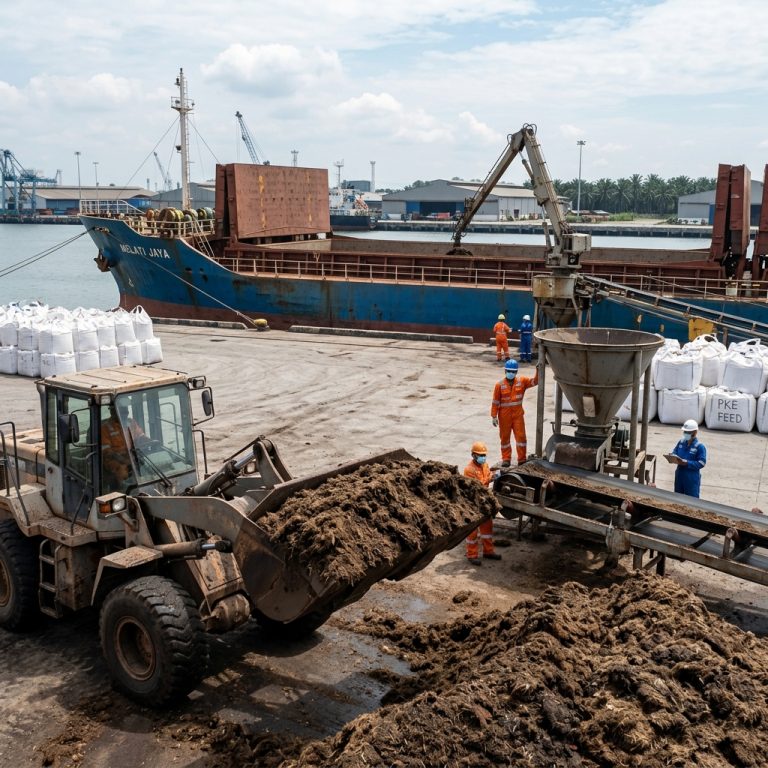
[Image: A large cargo ship being loaded with agricultural bulk commodities at a port. The sun is setting in the background. | alt=”Cargo ship importing GACC Approved Palm Kernel Expeller to China.” | title=”Global Shipping and Logistics for GACC Approved Palm Kernel Expeller”]
How to Verify a Supplier of GACC Approved Palm Kernel Expeller (A 4-Step Guide)
Never take a supplier’s word for it. Due diligence is your best defense against fraud and non-compliance. Verifying a supplier’s status as a source of Mesin Pengekstrak Inti Sawit yang Disetujui GACC is straightforward if you follow these steps.
- Mintalah Nomor Registrasi GACC: Ask your potential supplier for their unique 18-digit registration number issued by China. A legitimate, approved supplier will provide this without hesitation.
- Access the Official GACC Database: Navigate to the GACC’s official query page for registered overseas feed manufacturers. You can access the portal directly at the CIFER Query website.
- Perform the Search: On the database portal, use the registration number to search. It is the most accurate way to find a specific facility.
- Verify the Details and Scope: Once you find the listing, cross-reference the company name and address. Crucially, check the “Approved Products” list to ensure it explicitly includes Palm Kernel Expeller.
This simple verification process can save you from entering a disastrous business agreement. It’s an essential part of the procurement process for any serious importer.
Specifications of High-Quality GACC Approved Palm Kernel Expeller
Beyond GACC approval, the quality of the PKE itself is vital for its value as animal feed. Importers should be familiar with the key specifications to ensure they are sourcing a premium product. While some feed ingredients like Tepung Kopra offer higher fat, PKE provides an excellent balance of protein and fiber.
Key Quality Parameters for PKE
Scientific research in animal nutrition emphasizes that consistent quality is key to performance. Here is a comparison of typical specifications for high-quality PKE:
| Parameter | Typical Specification (High-Quality PKE) | Significance for Importers |
|---|---|---|
| Protein Kasar | 14-16% min | Key indicator of nutritional value for animal growth. |
| Lemak Kasar | 8-12% | Provides essential energy for livestock. |
| Serat Kasar | 16-18% max | Important for digestion, but too high can reduce feed intake. |
| Kelembapan | 10-12% max | Crucial for preventing mold, spoilage, and extending shelf life. |
| Abu | 4-6% max | Indicates the level of mineral content and potential contaminants. |
| Sand/Silica | 2-3% max | Measures soil contamination; high levels reduce quality and can harm livestock. |
Understanding the Importance of Low Moisture
Low moisture content is arguably one of the most critical quality parameters. As confirmed by numerous studies on feed preservation, PKE with moisture levels above 12% is highly susceptible to mold and mycotoxin formation during shipping and storage. This not only degrades the nutritional value but can be toxic to livestock. Insisting on a maximum of 12% moisture is a key step in mitigating this risk.
[Video Suggestion: An embedded YouTube video titled “Inside a GACC-Approved PKE Facility: From Palm Kernel to Export”. The video should be a 2-3 minute tour showcasing the clean, modern processing line, quality control lab, and proper storage, reinforcing the concepts of quality and compliance.]
[Image: A graphic of an official-looking certificate with a gold seal, symbolizing GACC approval documentation. | alt=”A sample GACC certificate for an approved Palm Kernel Expeller facility.” | title=”GACC Registration Certificate for PKE”]
Makmur Amanah Sejahtera Menyediakan produk-produk kelapa sawit berkualitas tinggi seperti bungkil inti kelapa sawit, cangkang inti kelapa sawit, minyak kelapa sawit mentah, minyak inti kelapa sawit, dll. Silakan hubungi kami di WhatsApp +6282140002198 atau kirim email kepada kami di admin@makmuramanah.co.id.
Pertanyaan yang Sering Diajukan (FAQ)
What is the difference between GACC and the former AQSIQ?
AQSIQ was the former body for import/export inspection. In 2018, its duties were merged into the newly formed GACC (General Administration of Customs). GACC is now the sole, unified authority for customs clearance and import regulations in China.
How long is a GACC registration for a PKE facility valid?
A GACC registration for a feed production facility is valid for five years. Producers must apply for renewal well before expiration to avoid any lapse in their eligibility to export to China, ensuring a continuous supply of related palm products.
Can I import non-GACC PKE into China for other purposes?
No. If the intended use of the Palm Kernel Expeller is for animal feed, it absolutely must come from a GACC-registered facility. Attempting to import it under a different HS code or for a different purpose is a violation of Chinese law and will lead to severe penalties.
What happens if my supplier’s GACC registration expires during shipment?
This is a major risk. If the registration is not valid when the shipment arrives at the Chinese port, customs will reject it. Importers must continuously monitor their suppliers’ registration status to ensure it remains valid throughout the entire procurement and shipping cycle.
Conclusion: Your Blueprint for Success in 2026
The Chinese market for animal feed ingredients offers immense opportunities, but it operates on a foundation of strict regulatory compliance. The era of ambiguity is over; GACC approval is the mandatory entry ticket. To succeed, importers must focus on three core pillars:
- Regulatory Mastery: Thoroughly understand GACC Decrees 248 and 249.
- Verifikasi Pemasok: Implement a rigorous due diligence process to verify GACC registration for every partner.
- Kontrol Kualitas: Insist on detailed product specifications that protect your investment and your customers.
In conclusion, successfully importing Mesin Pengekstrak Inti Sawit yang Disetujui GACC into China in 2026 hinges on this proactive and informed approach. It transforms a potentially risky venture into a secure, strategic, and successful component of your global trade operations. Embrace these principles to ensure every shipment meets the mark and strengthens your position in this vital market.
[Image: Two business professionals, one in a suit and one in a factory uniform with a hard hat, shaking hands in front of a clean, modern processing facility. | alt=”Importer shaking hands with a GACC Approved Palm Kernel Expeller supplier in Indonesia.” | title=”Partnering with a Trusted GACC Approved PKE Supplier”]
 Indonesian
  English
  Chinese
  Arabic