
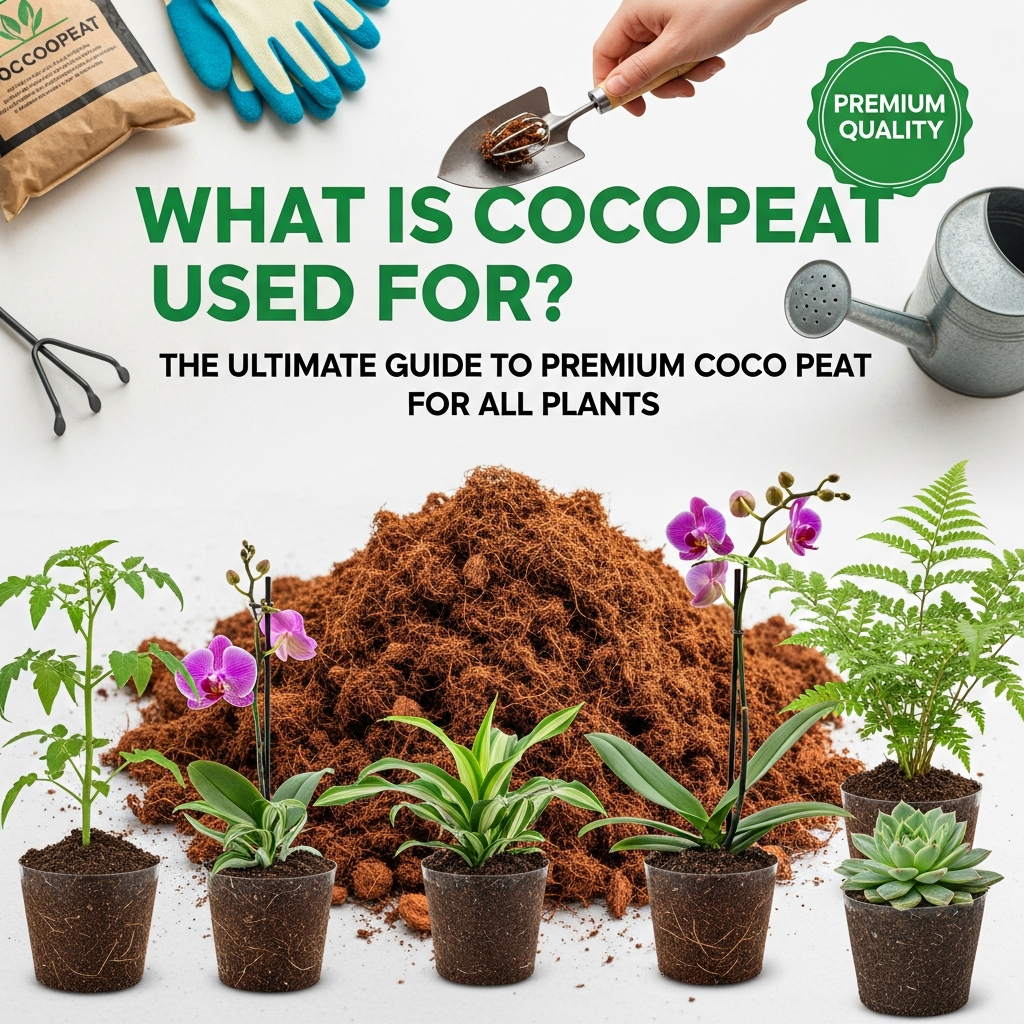
What Is Cocopeat Used For? The Ultimate Guide to Premium Coco Peat for All Plants
Cocopeat is revolutionizing modern agriculture, offering an eco-friendly and highly effective solution to common soil degradation issues. If your indoor plants or commercial crops are struggling with poor drainage, compacted soil, or weak root systems, you are likely missing out on this remarkable organic substrate. In this comprehensive guide, we will reveal exactly what makes this coconut byproduct the ultimate growing medium for 2026.
Before diving into its myriad of applications, it is crucial to understand its fundamental definition. What is cocopeat? It is a 100% natural, biodegradable growing medium extracted from the spongy, fibrous husk of coconuts. It boasts exceptional water retention, a high cation exchange capacity (CEC), and optimal aeration, making it an ideal soil amendment for hydroponics, seed starting, and greenhouse farming worldwide.
Furthermore, as environmental concerns mount regarding traditional peat moss extraction, the agricultural industry is rapidly pivoting. Studies show that switching to sustainable alternatives can drastically reduce carbon footprints. Let’s explore why this transformative material is dominating the horticultural landscape and why every grower needs it.
[Image: Close-up view of premium, rehydrated cocopeat texture in a grower’s hands. Alt Text: high-quality cocopeat for indoor plants. Title: Premium Cocopeat Texture]
The Astonishing Science Behind Cocopeat
To truly grasp its benefits, we must examine the unique physical and chemical properties of this substrate. Unlike traditional potting soils, this organic matter undergoes a rigorous aging and buffering process. This process stabilizes its pH, typically bringing it to an optimal range of 5.5 to 6.8, which most plants prefer for nutrient uptake.
Chemical Composition and pH Levels
Additionally, the natural lignin content in the coir pith encourages the presence of beneficial microorganisms. These microscopic allies form symbiotic relationships with plant roots, protecting them from pathogenic fungi. You can read more about soil microbiology and organic substrates via the USDA National Agricultural Library.
Moreover, its high Cation Exchange Capacity means it can hold onto essential nutrients—like calcium and magnesium—and release them slowly to the plant. This prevents nutrient leaching, ensuring your expensive fertilizers are utilized efficiently rather than washed away during heavy watering cycles.
Incredible Water Retention Capabilities
In contrast to standard potting soil, this coconut byproduct can absorb up to 10 times its weight in water. Yet, miraculously, it still maintains an air porosity of around 30%. This unique balance ensures that roots remain hydrated without ever becoming waterlogged, virtually eliminating the risk of root rot.
This remarkable characteristic is why professional growers continually rely on cocopeat during severe droughts. It acts as a resilient reservoir, providing a steady moisture supply even in the most challenging and arid climates.
What Is Cocopeat Used For? 10 Ultimate Applications
Whether you are a commercial farmer or a passionate home gardener, the versatility of this medium is completely unmatched. Below is a definitive list of its top 10 most powerful applications in modern horticulture and agriculture.
- Advanced Hydroponic Farming: Used as a primary standalone substrate for tomatoes, cucumbers, and peppers in commercial greenhouses.
- Superior Seed Germination: Provides a sterile, light, and airy environment that drastically improves germination rates.
- Essential Soil Amendment: Breaks up heavy clay soils and improves the water-holding capacity of sandy soils.
- Reptile and Amphibian Bedding: Acts as a safe, moisture-retaining habitat substrate for terrariums.
- Budidaya Jamur: Serves as an excellent, contamination-free casing layer for specialty mushroom growth.
- Worm Composting (Vermiculture): Provides an ideal carbon-rich bedding material for composting worms.
- Rooting Plant Cuttings: Encourages rapid, healthy root development in sensitive ornamental cuttings.
- Orchid Potting Mixes: Delivers the supreme aeration required by epiphytic roots, preventing rot while retaining essential humidity.
- Erosion Control: Woven into coir logs and mats, it stabilizes steep slopes and prevents topsoil degradation in landscaping.
- Eco-Friendly Pet Waste Absorbent: Acts as a highly absorbent, biodegradable alternative to traditional clay-based cat litters.
[Image: Side-by-side comparison of a plant grown in standard soil versus one thriving in a cocopeat mixture. Alt Text: what is cocopeat used for in gardening. Title: Cocopeat Plant Growth Comparison]
1. Advanced Hydroponic Systems
In the realm of soil-less agriculture, finding a stable, inert medium is the key to success. Hydroponic growers universally praise cocopeat because it provides structural support while allowing complete control over the nutrient solution. It is widely recognized by industry leaders at Greenhouse Management as a top-tier media choice.
Because it is naturally pathogen-free, it significantly reduces the need for harmful chemical pesticides. Consequently, crops grown in this system are often healthier, more robust, and yield a higher volume of premium, unblemished produce.
2. Enhancing Seed Germination
Starting seeds can be notoriously difficult, especially for delicate varieties. The fine, uniform texture of the pith ensures excellent seed-to-soil contact. This prevents the seeds from drying out while simultaneously allowing fragile new roots to penetrate the medium with zero physical resistance.
Additionally, its natural resistance to dampening-off disease—a common fungal issue that rapidly kills seedlings—makes it an indispensable tool for commercial nurseries prioritizing high success rates.
Cocopeat vs. Peat Moss: The Definitive Comparison
For decades, sphagnum peat moss was the gold standard in horticulture. However, increasing awareness of the environmental damage caused by peat bog depletion has shifted the paradigm. The Organisasi Pangan dan Pertanian (FAO) emphasizes the critical need for sustainable, renewable resources in global farming.
Let’s examine exactly why the coconut alternative is the superior choice for your 2026 growing season:
| Fitur | Cocopeat | Gambut |
|---|---|---|
| Keberlanjutan | 100% Renewable agricultural byproduct | Non-renewable (takes centuries to form) |
| Tingkat pH | Neutral to slightly acidic (5.5 – 6.8) | Highly Acidic (3.5 – 4.5) |
| Water Rewetting | Absorbs instantly even when bone dry | Severely repels water when completely dry |
| Jangka hidup | Lasts up to 5 years before breaking down | Breaks down rapidly within 1-2 years |
| Dampak Lingkungan | Eco-friendly, utilizes agricultural waste | Destroys vital carbon sinks (peat bogs) |
[Infographic Concept: A 5-step visual guide showing how to properly wash, buffer, and mix cocopeat blocks for hydroponic systems. Alt Text: cocopeat block preparation steps. Title: How To Prepare Cocopeat]
How to Prepare and Buffer Cocopeat Blocks
While the benefits are immense, proper preparation is strictly non-negotiable. Most commercial coir is shipped in compressed bricks or blocks to save on international freight costs. If you attempt to use these compressed blocks without proper rehydration and buffering, your plants will suffer from severe nutrient lockout.
The Crucial Rehydration Process
First, place the compressed block into a large, clean container. Add warm water gradually, as the heat speeds up the expansion process significantly. A standard 5kg block can yield up to 75 liters of usable growing medium. Allow it to soak for at least 30 minutes, fluffing it periodically by hand.
Never forcefully break the dry brick apart, as this destroys the delicate sponge-like fibers that provide vital aeration. Patience during this hydration step ensures the structural integrity of the growing medium remains perfectly intact.
Why Buffering Cocopeat is Crucial
Unwashed coir naturally contains high levels of sodium and potassium, which aggressively bind to the cation exchange sites. If not addressed, these elements will completely block your plant’s ability to absorb essential calcium and magnesium. This scientific phenomenon is thoroughly documented in modern botanical research journals.
To safely buffer your substrate, soak the expanded coir in a dedicated calcium-magnesium (Cal-Mag) solution for 24 hours. The calcium ions will aggressively knock the excess sodium off the exchange sites. Afterward, thoroughly rinse the medium with clean water until the runoff runs perfectly clear.
Detailed Guide: Cocopeat for Indoor Houseplants vs. Commercial Farming
The adaptability of this substrate is truly extraordinary, seamlessly transitioning from a decorative living room pot to a multi-acre automated greenhouse. However, the exact application methods vary significantly depending on the scale and environment of your horticultural project.
Optimizing Indoor Houseplant Soil Mixes
For the avid indoor plant collector, avoiding root rot is the ultimate priority. The confined environment of a plastic or ceramic pot severely limits airflow to the root zone. When using standard potting soil, this lack of oxygen quickly leads to anaerobic conditions, suffocating your prized Monsteras and Philodendrons.
By building a custom “chunky mix” centered around coir pith, you entirely eliminate this risk. A professional-grade recipe typically involves combining 40% cocopeat, 30% orchid bark, 20% coarse perlite, and 10% premium worm castings. This precise ratio guarantees rapid drainage.
Scaling Up for Commercial Greenhouse Operations
On the commercial front, consistency and predictability are the cornerstones of massive profitability. Large-scale tomato, bell pepper, and strawberry operations utilize specialized grow bags pre-filled with compressed coir. These grow bags are meticulously integrated with automated drip irrigation systems.
Commercial greenhouses also rely heavily on efficient energy, frequently utilizing Cangkang Inti Sawit as a sustainable, high-calorific boiler fuel to maintain optimal winter temperatures. Because the planting medium is entirely uniform, agronomists can calculate the exact dry-back periods. This level of granular control forces the crop to develop massive, aggressive root structures, ultimately leading to heavier fruiting and much faster harvest cycles.
Maximizing Agricultural Yields with Palm Byproducts
To achieve truly extraordinary harvests, smart farmers are combining this elite growing medium with premium organic fertilizers and feeds. Integrating high-quality agricultural byproducts into your farm’s ecosystem creates a powerful synergistic effect that drives unparalleled growth and sustainability.
For instance, livestock operations that utilize our Mesin Pengekstrak Inti Sawit, Tepung Kopra, Dan Garam Kalsium dari Asam Lemak Minyak Sawit produce exceptionally rich, nutrient-dense manure. When this premium organic fertilizer is safely composted and mixed into a robust coir base, it creates an unbeatable super-soil for any crop.
Furthermore, completing your sustainable farming loop with our premium Cocopeat ensures your soil structure remains visually and structurally flawless year after year. While agricultural products dominate the fields, high-grade palm derivatives like RBD CP8 showcase the incredible versatility of sustainable palm cultivation across broader industries. This holistic approach is the definitive blueprint for agricultural dominance in 2026.
Kesalahan Umum yang Harus Dihindari
Even with the best materials, simple user error can lead to disastrous results. Avoid these frequent and costly pitfalls to guarantee a thriving, abundant garden environment when using cocopeat.
Skipping the Washing Phase
Purchasing cheap, unwashed coir and planting directly into it is the number one cause of seedling death worldwide. The residual sea salt from the coastal coconut husks will instantly dehydrate and permanently burn tender roots. Always verify the EC (Electrical Conductivity) levels of your medium before planting.
Ignoring Calcium and Magnesium Supplements
Because coir naturally binds to calcium and magnesium, you must actively supplement your regular feeding schedule with additional Cal-Mag formulas. Failing to do so will result in telltale deficiency signs: rapidly yellowing leaves, severely stunted growth, and blossom end rot in fruiting vegetables.
Makmur Amanah Sejahtera Menyediakan produk-produk kelapa sawit berkualitas tinggi seperti bungkil inti kelapa sawit, cangkang inti kelapa sawit, minyak kelapa sawit mentah, minyak inti kelapa sawit, dll. Silakan hubungi kami melalui WhatsApp. +6282140002198 atau kirim email kepada kami di admin@makmuramanah.co.id.
Pertanyaan yang Sering Diajukan
Apakah cocopeat baik untuk semua tanaman?
Yes, it is highly beneficial for the vast majority of plants, including vegetables, tropical aroids, succulents, and orchids. However, because it retains moisture so effectively, drought-loving plants like cacti require it to be heavily amended with perlite or pumice to ensure rapid drainage.
Do I need to add fertilizer to it?
Absolutely. Cocopeat is an inert growing medium, meaning it contains virtually no essential plant nutrients on its own. You must use a comprehensive hydroponic nutrient solution or mix it with rich organic amendments like compost and worm castings to properly feed your plants.
Can I reuse my old cocopeat?
One of its greatest advantages is incredible reusability. After a harvest, simply remove the old root mass, flush the medium thoroughly with clean water to remove excess fertilizer salts, and sterilize it with hydrogen peroxide. It can safely be reused for multiple growing cycles.
How much perlite should I mix in?
For standard indoor potting mixes, a ratio of 70% cocopeat to 30% perlite provides an excellent balance of moisture retention and aeration. For plants requiring extremely fast drainage, such as Monstera or Philodendrons, a 50/50 mix is highly recommended to prevent any root suffocation.
How long does this substrate last before breaking down?
Due to its naturally high lignin content, this robust coconut fiber degrades very slowly. Unlike standard peat moss which compacts within a year, premium coir pith can last up to five years in a container before it requires complete replacement, making it highly cost-effective.
Does it attract common garden pests?
No, it is naturally resistant to most common soil-borne pests and pathogenic fungi. Because it lacks decaying organic matter like standard compost, it does not provide an attractive breeding ground for fungus gnats, making it an exceptional choice for clean, indoor gardening setups.
[Embedded Video Concept: A 5-minute YouTube-style tutorial titled “Cocopeat Explained: How to Double Your Yields in 2026” featuring an agricultural expert mixing coir pith. Alt Text: video guide on cocopeat uses. Title: Ultimate Cocopeat Video Guide]
Conclusion: Elevating Your 2026 Harvest
In conclusion, the transition away from environmentally damaging soils toward sustainable, high-performance substrates is no longer just a trend—it is the modern standard. By understanding exactly what this remarkable material is capable of, you are now fully equipped to push your agricultural yields to unprecedented heights.
Whether you are cultivating delicate hydroponic strawberries, amending heavy clay soils for a robust vegetable garden, or managing a large-scale commercial greenhouse, mastering this medium is your absolute blueprint for success. From its unmatched water retention to its perfect aeration profile, the science clearly supports its complete dominance in the field.
Do not let another growing season pass by using inferior, rapidly depleted soils. Upgrade your horticultural systems today, harness the phenomenal power of premium cocopeat, and experience the explosive, vibrant plant growth you rightfully deserve!
 Indonesian
  English
  Chinese
  Arabic