 by admin
Coconut Shell Charcoal: The Ultimate 2025 Guide to 7 Amazing Benefits
Additionally, the primary oils, Ruwe palmolie (CPO) en Palm Kernel Oil (PKO), are foundational to countless food and industrial products worldwide. Exploring these materials highlights the immense potential of a circular economy in agriculture.
How to Choose the Best Product
When shopping for coconut shell charcoal, look for brands that clearly state their product is 100% natural. Check for binders—natural tapioca or corn starch is ideal. Avoid products with vague “all-natural” claims or those that don’t list their ingredients. For an expert opinion on grilling gear, authority sites like AmazingRibs.com often review fuel sources.
Veelgestelde vragen
Does coconut shell charcoal make food taste like coconut?
No, it does not. The carbonization process removes all the compounds that produce the coconut flavor and aroma. It is a very neutral fuel that allows the true taste of your food to shine through.
Is it harder to light than other charcoal?
Because it’s very dense and contains no chemical accelerants, it can take slightly longer to light. Using a charcoal chimney starter is the most effective method, typically getting the briquettes white-hot and ready to use in about 15-20 minutes.
Is coconut shell charcoal safe?
Yes, it is very safe for cooking when you choose a reputable brand free of chemical additives. Its low-smoke, clean-burning properties make it a healthier choice compared to many other commercial briquettes.
From grilling a perfect meal to purifying your water, coconut shell charcoal proves that one industry’s waste can be another’s treasure. By choosing this amazing product, you’re opting for superior performance, cost-effectiveness, and a healthier planet. Make the switch and experience the remarkable difference for yourself.
Makmur Amanah Sejahtera levert hoogwaardige palmolieproducten zoals palmpitexpeller, palmpitschil, ruwe palmolie, palmpitolie, enz. Neem contact met ons op via WhatsApp +6282140002198 of stuur ons een e-mail op admin@makmuramanah.co.id.
- Palm Kernel Shell (PKS): Much like coconut shells, these are dense and used as a clean-burning biofuel in industrial boilers.Palm Kernel Expeller (PKE): After the oil is extracted from the Palmpit, the remaining solid residue is a protein-rich ingredient for animal feed.Oliepalmfruitbos: The empty bunches can be converted into bio-pellets or used to generate electricity.
Additionally, the primary oils, Ruwe palmolie (CPO) en Palm Kernel Oil (PKO), are foundational to countless food and industrial products worldwide. Exploring these materials highlights the immense potential of a circular economy in agriculture.
How to Choose the Best Product
When shopping for coconut shell charcoal, look for brands that clearly state their product is 100% natural. Check for binders—natural tapioca or corn starch is ideal. Avoid products with vague “all-natural” claims or those that don’t list their ingredients. For an expert opinion on grilling gear, authority sites like AmazingRibs.com often review fuel sources.
Veelgestelde vragen
Does coconut shell charcoal make food taste like coconut?
No, it does not. The carbonization process removes all the compounds that produce the coconut flavor and aroma. It is a very neutral fuel that allows the true taste of your food to shine through.
Is it harder to light than other charcoal?
Because it’s very dense and contains no chemical accelerants, it can take slightly longer to light. Using a charcoal chimney starter is the most effective method, typically getting the briquettes white-hot and ready to use in about 15-20 minutes.
Is coconut shell charcoal safe?
Yes, it is very safe for cooking when you choose a reputable brand free of chemical additives. Its low-smoke, clean-burning properties make it a healthier choice compared to many other commercial briquettes.
From grilling a perfect meal to purifying your water, coconut shell charcoal proves that one industry’s waste can be another’s treasure. By choosing this amazing product, you’re opting for superior performance, cost-effectiveness, and a healthier planet. Make the switch and experience the remarkable difference for yourself.
Makmur Amanah Sejahtera levert hoogwaardige palmolieproducten zoals palmpitexpeller, palmpitschil, ruwe palmolie, palmpitolie, enz. Neem contact met ons op via WhatsApp +6282140002198 of stuur ons een e-mail op admin@makmuramanah.co.id.
Inhoudsopgave
- What Exactly Is Coconut Shell Charcoal?How Is Coconut Shell Charcoal Made?The 7 Ultimate Benefits of Coconut Shell Charcoal in 2025Beyond the Grill: Common Uses for Coconut Shell CharcoalCoconut Shell Charcoal vs. Other CharcoalsBeyond Coconut: Exploring Other Sustainable Biomass FuelsHow to Choose the Best ProductVeelgestelde vragen
Have you ever considered what happens to a coconut after its milk and meat are used? The humble shell, often discarded, holds the key to a powerful, sustainable resource: coconut shell charcoal. This eco-friendly alternative to traditional wood charcoal is rapidly gaining popularity for its incredible efficiency, versatility, and minimal environmental impact. Whether you’re a barbecue enthusiast, a gardener, or someone passionate about green living, this guide will illuminate the amazing world of coconut shell charcoal.
What Exactly Is Coconut Shell Charcoal?
Coconut shell charcoal is a type of charcoal produced by burning coconut shells in a low-oxygen environment, a process known as carbonization. Unlike traditional charcoal that contributes to deforestation, this product utilizes agricultural waste, transforming it into a high-value energy source. The resulting charcoal is a dense, microporous material with a high carbon content.
Its unique structure is what gives coconut shell charcoal its superior properties. It burns hotter and longer than most wood-based charcoals and produces significantly less smoke and ash. Furthermore, when “activated,” it becomes an exceptional filtration medium used in everything from water purifiers to skincare products.
How Is Coconut Shell Charcoal Made?
The creation of coconut shell charcoal is a fascinating blend of tradition and modern technology. The primary method is pyrolysis, which involves heating the shells to high temperatures (typically 400-800°C) in a kiln or drum with minimal oxygen supply. This process burns off volatile compounds like water, methane, and hydrogen, leaving behind pure carbon.
Modern methods use specialized kilns that capture and reuse the emissions for energy, making the process even more efficient and environmentally friendly. Once carbonized, the charcoal is often crushed and mixed with a natural binding agent to be compressed into uniform briquettes, which are perfect for grilling.

The 7 Ultimate Benefits of Coconut Shell Charcoal in 2025
Why is there so much buzz around this sustainable fuel? Here are the key advantages that make it a superior choice.
1. A Truly Sustainable and Eco-Friendly Choice
The most significant benefit is its sustainability. Coconut shell charcoal is made from a renewable resource that is a byproduct of the coconut industry. This reduces waste and, crucially, prevents the need to cut down trees. As documented by environmental agencies like the EPA on biomass energy, using agricultural residues for fuel is a key part of a circular economy.
2. High, Consistent Heat for Superior Cooking
For grill masters, heat consistency is everything. Coconut shell charcoal burns hotter (over 700°F) and more evenly than traditional lump charcoal or briquettes. This means a better sear on your steak, more consistent cooking temperatures, and less time spent managing the fire.
3. Longer Burn Time
Thanks to its high density, this charcoal can burn up to twice as long as other types of charcoal. This makes it more economical in the long run, as you’ll use less product for each cooking session. It’s perfect for low-and-slow smoking or large gatherings where the grill needs to stay hot for hours.
4. An Incredible Natural Purifier (Activated Carbon)
When treated with steam or hot air, coconut shell charcoal becomes “activated,” creating an incredibly porous surface that adsorbs impurities. According to a study in the journal Catalysts, activated carbon from coconut shells is highly effective for water and air purification due to its vast surface area. It’s the secret ingredient in many high-end water filters and air purifiers.

5. Minimal Smoke, Ash, and Odor
Tired of being smoked out while you grill? Coconut shell charcoal is your solution. It contains very few of the volatile compounds found in wood, resulting in a clean, smokeless burn. It also produces minimal ash (often less than 5% of its original weight), making cleanup a breeze.
6. Health and Wellness Applications
Food-grade activated coconut charcoal is a popular ingredient in the wellness industry. It’s used in whitening toothpaste, facial masks to draw out impurities, and even as a digestive aid. Its powerful adsorptive properties are leveraged to bind to toxins, a principle also used in medical settings, as noted by sources like Healthline.
7. No Harmful Additives
High-quality coconut shell charcoal briquettes are typically bound with natural starches, like tapioca. They are free from the chemical binders, fillers, and accelerants (like coal dust or nitrates) found in many conventional charcoal briquettes, ensuring your food tastes pure and clean.
Beyond the Grill: Common Uses for Coconut Shell Charcoal
While it excels in barbecue, its applications are incredibly diverse:
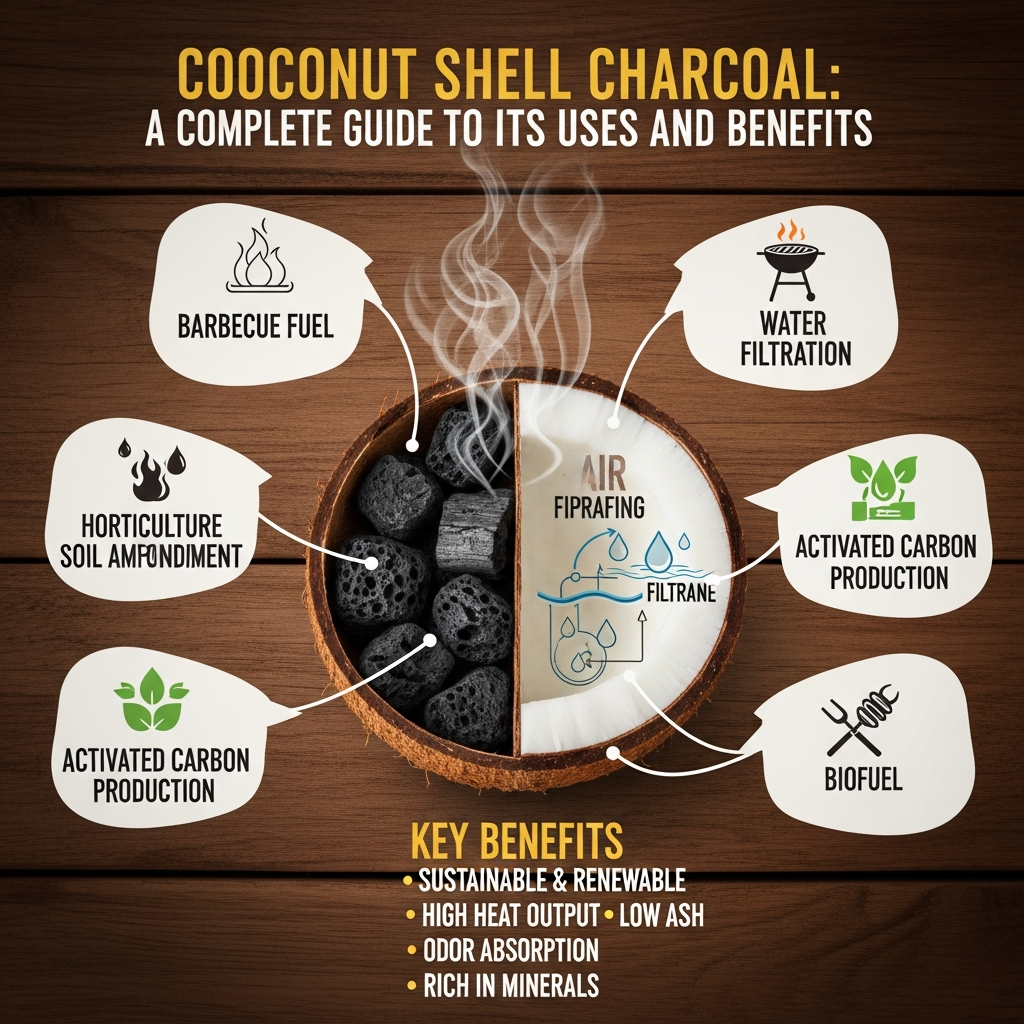
- Water and Air Filtration: Its activated form is a cornerstone of domestic and industrial filtration systems.Horticulture (Biochar): When added to soil, it’s known as biochar. It improves soil drainage, aeration, and nutrient retention.Industrial Applications: Used in gold and precious metal recovery processes due to its ability to adsorb metals from solutions.Shisha/Hookah: It’s the preferred choice for hookah enthusiasts as its clean, odorless burn doesn’t interfere with the shisha flavor.
Coconut Shell Charcoal vs. Other Charcoals
| Functie | Coconut Shell Charcoal | Lump Wood Charcoal | Standard Briquettes |
|---|---|---|---|
| Source | Renewable (Coconut Waste) | Trees (Hardwood) | Wood Scraps, Sawdust, Additives |
| Burn Time | Very Long | Short to Medium | Medium |
| Heat Level | Very High & Consistent | High & Variable | Medium & Consistent |
| Ash Production | Very Low (<5%) | Low | High |
| Smoke & Odor | Minimal | Varies (can be smoky) | Noticeable (chemical smell) |
| Duurzaamheid | Excellent | Poor (deforestation) | Fair to Poor |
Beyond Coconut: Exploring Other Sustainable Biomass Fuels
While coconut shell charcoal is a fantastic sustainable option, the world of biomass energy is vast and full of innovative solutions derived from agricultural byproducts. The palm oil industry, for example, produces several high-value resources that serve as excellent fuel and animal feed. Understanding these alternatives can provide a broader perspective on green energy.
Key products from the oil palm include:
- Palm Kernel Shell (PKS): Much like coconut shells, these are dense and used as a clean-burning biofuel in industrial boilers.Palm Kernel Expeller (PKE): After the oil is extracted from the Palmpit, the remaining solid residue is a protein-rich ingredient for animal feed.Oliepalmfruitbos: The empty bunches can be converted into bio-pellets or used to generate electricity.
Additionally, the primary oils, Ruwe palmolie (CPO) en Palm Kernel Oil (PKO), are foundational to countless food and industrial products worldwide. Exploring these materials highlights the immense potential of a circular economy in agriculture.
How to Choose the Best Product
When shopping for coconut shell charcoal, look for brands that clearly state their product is 100% natural. Check for binders—natural tapioca or corn starch is ideal. Avoid products with vague “all-natural” claims or those that don’t list their ingredients. For an expert opinion on grilling gear, authority sites like AmazingRibs.com often review fuel sources.
Veelgestelde vragen
Does coconut shell charcoal make food taste like coconut?
No, it does not. The carbonization process removes all the compounds that produce the coconut flavor and aroma. It is a very neutral fuel that allows the true taste of your food to shine through.
Is it harder to light than other charcoal?
Because it’s very dense and contains no chemical accelerants, it can take slightly longer to light. Using a charcoal chimney starter is the most effective method, typically getting the briquettes white-hot and ready to use in about 15-20 minutes.
Is coconut shell charcoal safe?
Yes, it is very safe for cooking when you choose a reputable brand free of chemical additives. Its low-smoke, clean-burning properties make it a healthier choice compared to many other commercial briquettes.
From grilling a perfect meal to purifying your water, coconut shell charcoal proves that one industry’s waste can be another’s treasure. By choosing this amazing product, you’re opting for superior performance, cost-effectiveness, and a healthier planet. Make the switch and experience the remarkable difference for yourself.
Makmur Amanah Sejahtera levert hoogwaardige palmolieproducten zoals palmpitexpeller, palmpitschil, ruwe palmolie, palmpitolie, enz. Neem contact met ons op via WhatsApp +6282140002198 of stuur ons een e-mail op admin@makmuramanah.co.id.
 Dutch
Dutch  Indonesian
  English
  Chinese
  Arabic
  Thai
Thai  Vietnamese
  Turkish