 by admin
GACC Approved Palm Kernel Expeller: The Ultimate 2025 China Import Guide
Inhoudsopgave
- What Exactly is GACC Approved Palm Kernel Expeller?
- Why is GACC Approval Crucial for China Imports?
- The 2025 Step-by-Step Guide to Importing PKE to China
- Key Documents Required for Customs Clearance
- Common Challenges and Proven Solutions
- Werk samen met een vertrouwde leverancier
- The Future Outlook for PKE in China
Navigating the complexities of international trade, especially with a market as significant as China, requires precision and up-to-date knowledge. For businesses in the agricultural feed sector, understanding the process for importing GACC Approved Palm Kernel Expeller (PKE) is essential for success. China’s demand for high-quality animal feed ingredients is robust, and PKE stands out as a valuable, protein-rich commodity.
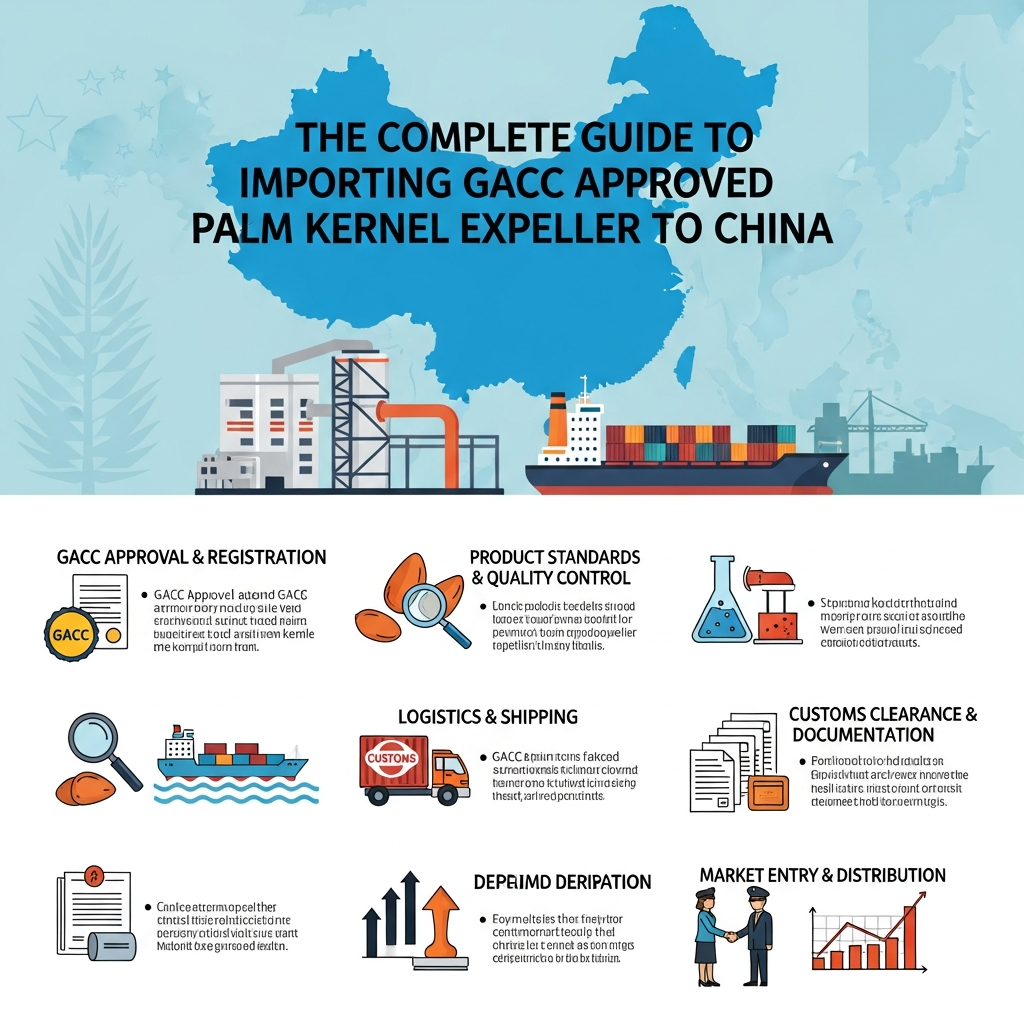
This comprehensive guide will walk you through every critical step, from understanding regulatory bodies to final customs clearance. We’ll ensure you have the information needed to import PKE into China smoothly and efficiently in 2025, fully compliant with the latest regulations set by the General Administration of Customs of the People’s Republic of China (GACC).
What Exactly is GACC Approved Palm Kernel Expeller?
Palm Kernel Expeller is a by-product of the palm oil extraction process. It is derived from the Palmpit na de extractie van Palm Kernel Oil. The remaining fibrous material is processed to create PKE, a key ingredient in compound feeds for livestock, particularly ruminants. Its high protein content makes it valuable, similar to other products derived from the Oliepalmfruitbos, zoals Ruwe palmolie.
The term “GACC Approved Palm Kernel Expeller” specifically refers to PKE that originates from production facilities and countries that have been inspected, audited, and officially approved by GACC. This approval signifies that the product meets China’s stringent biosecurity, quality, and safety standards, making it eligible for import.

Why is GACC Approval Crucial for China Imports?
The General Administration of Customs of the People’s Republic of China (GACC) is the primary authority overseeing the inspection and quarantine of all goods entering or leaving China. Its mandate is to protect the country’s agricultural sector, environmental safety, and public health from foreign pests, diseases, and contaminants.
Without GACC registration for the overseas production facility, any shipment of PKE will be rejected at the Chinese port. This makes GACC approval a non-negotiable prerequisite for market access. For more detailed information on their regulations, you can visit the official GACC website.
The 2025 Step-by-Step Guide to Importing PKE to China
Successfully importing PKE into China involves a multi-stage process that demands meticulous attention to detail. Following these steps will help prevent costly delays and rejections.
Step 1: Verify the Exporter’s GACC Registration
Before initiating any purchase, your first and most crucial step is to confirm that the overseas PKE manufacturer is on the official GACC list of approved establishments. China maintains a public database of registered foreign feed ingredient producers. Failure to use a registered supplier will result in an automatic rejection of your shipment.
Step 2: Secure a Chinese Import Permit
The Chinese importer must apply for an Import Permit for Feeds and Feed Additives from the Ministry of Agriculture and Rural Affairs (MARA). This permit is essential and must be obtained before the goods are shipped from the country of origin. This step ensures the government is aware of and has pre-approved the incoming commodity.
Step 3: Prepare All Necessary Documentation
Accurate and complete documentation is the backbone of a smooth customs clearance process. Even minor discrepancies can lead to significant delays. We will cover the specific documents in the next section.
Step 4: Ensure Compliant Labeling and Packaging
All bags or containers of PKE must be labeled according to Chinese standards. Labels should be in simplified Chinese and include critical information such as the product name, ingredients, net weight, production date, shelf life, and the GACC registration number of the manufacturer.
Step 5: Arrange Logistics and Shipping
Work with a freight forwarder experienced in handling agricultural commodities for the Chinese market. They can help navigate the complexities of shipping and port logistics.
Step 6: Undergo Customs Inspection and Quarantine
Upon arrival at a Chinese port, the PKE shipment will be subject to inspection and quarantine by GACC officials. They will check the documentation, inspect the cargo for contaminants or pests, and may take samples for laboratory analysis to verify the product’s composition and safety.
Key Documents Required for Customs Clearance
Having your paperwork in perfect order is essential. Working with a trusted supplier of Palm Kernel Expeller can help ensure all documentation is correctly prepared. Here is a checklist of the primary documents you will need:
- Commerciële factuur: Details the transaction between the buyer and seller.
- Paklijst: Itemizes the contents of the shipment.
- Cognossement (B/L): Het contract tussen de eigenaar van de goederen en de vervoerder.
- Certificaat van Oorsprong: Certifies the country where the PKE was produced.
- Fytosanitair certificaat: Issued by the plant protection authority of the exporting country, certifying that the PKE is free from pests and diseases.
- GACC Manufacturer Registration Number: This must be clearly stated on the documentation.
- MARA Import Permit: The pre-approved permit obtained by the Chinese importer.
Common Challenges and Proven Solutions
Challenge: Navigating Complex and Evolving Regulations
Solution: Chinese import regulations can change. Partner with an experienced customs broker or consultant who specializes in agricultural imports. They stay updated on the latest GACC circulars and policy shifts, ensuring your business remains compliant. Resources like the USDA’s Foreign Agricultural Service provide excellent reports on regulatory changes.
Challenge: Documentation Errors and Discrepancies
Solution: Implement a rigorous double-checking process for all documents before submission. A single mismatch between the Bill of Lading and the Commercial Invoice can halt the entire process. Creating a standardized checklist for your team can minimize human error.
Challenge: Port Delays and Quarantine Holds
Solution: While some delays are unavoidable, you can mitigate risks by ensuring your PKE shipment is of the highest quality and free from contaminants. Build potential delays into your timeline and budget to manage expectations with your end-users.

Werk samen met een vertrouwde leverancier
Ensuring a smooth import process starts with a reliable partner. A supplier experienced in meeting GACC standards can provide high-quality products and the necessary documentation, minimizing risks and delays.
Makmur Amanah Sejahtera levert hoogwaardige palmolieproducten zoals palmpitexpeller, palmpitschil, ruwe palmolie, palmpitolie, enz. Neem contact met ons op via WhatsApp +6282140002198 of stuur ons een e-mail op admin@makmuramanah.co.id.
The Future Outlook for PKE in China
China’s demand for animal protein continues to grow, driving a parallel need for high-quality feed ingredients. As a cost-effective source of protein and fiber, PKE remains an attractive option for the country’s massive livestock industry. However, importers should stay informed about market dynamics and policy adjustments.
The focus on sustainability and traceability is also increasing. Suppliers who can demonstrate a transparent and environmentally responsible supply chain, offering products like PKE or even biomass alternatives like Palm Kernel Shell, may gain a competitive advantage. For insights into global trade policies affecting agricultural goods, the Wereldhandelsorganisatie (WTO) provides invaluable information.
In conclusion, importing GACC Approved Palm Kernel Expeller into China is a rewarding but meticulous endeavor. By prioritizing regulatory compliance, partnering with knowledgeable experts, and maintaining diligent documentation, you can successfully tap into this lucrative market and build a sustainable trade relationship.
 Dutch
Dutch  Indonesian
  English
  Chinese
  Arabic
  Thai
Thai  Vietnamese
  Turkish