📑 Table of Contents
- What Is Cocopeat?
- How Is Cocopeat Made? Production Process Explained
- Cocopeat Specifications & Quality Parameters
- 12 Amazing Benefits of Cocopeat for Plants & Agriculture
- Cocopeat vs. Peat Moss vs. Perlite: Which Is Best?
- Applications: From Horticulture to Industrial Uses
- Global Cocopeat Market Overview 2026
- How to Choose a Reliable Cocopeat Supplier
- Storage, Preparation & Usage Tips
- Frequently Asked Questions
Cocopeat — also known as coco pith, coir pith, or coco coir dust — has rapidly emerged as the world’s most popular sustainable growing medium, transforming horticulture, agriculture, and gardening practices across more than 100 countries. This remarkable natural material, derived from the husk of coconuts, is revolutionizing how we grow plants in 2026.
The global shift toward sustainable agriculture and eco-friendly gardening has propelled cocopeat demand to unprecedented levels. According to Grand View Research, the global coco coir market — of which cocopeat is the largest segment — is projected to exceed $1.2 billion by 2027, growing at a remarkable CAGR of 9.4%.
Whether you’re a commercial greenhouse operator, a hydroponic grower, a landscaping professional, or a home gardening enthusiast, understanding the full potential of cocopeat will help you unlock healthier plants, higher yields, and more sustainable growing practices. This definitive guide covers everything from production and specifications to applications, market trends, and sourcing strategies.
[Image: Close-up of high-quality cocopeat blocks and loose cocopeat with healthy green plants growing in the background — Alt text: “Premium cocopeat growing medium for sustainable horticulture” — Title: “Cocopeat Coco Peat Growing Medium”]
What Is Cocopeat? A Complete Definition
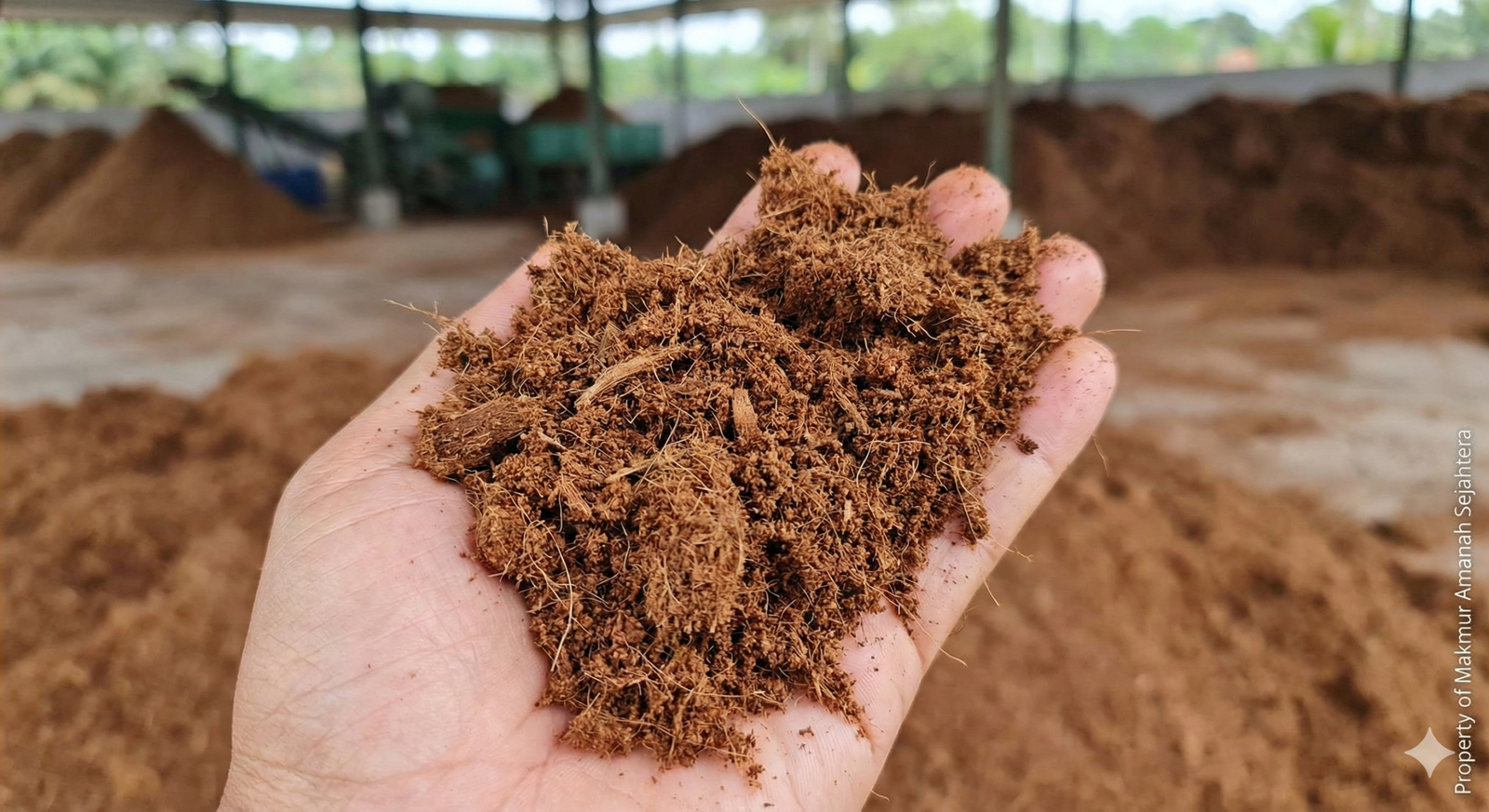
Cocopeat is a natural, biodegradable growing medium made from the pith (spongy tissue) found between the fibers of coconut husks. When coconut coir fiber is extracted from the husk for use in ropes, mats, and brushes, the remaining fine, spongy material is processed into cocopeat — a lightweight, highly absorbent substrate with exceptional water retention and aeration properties.
Unlike synthetic growing media or non-renewable peat moss harvested from ecologically sensitive bogs, cocopeat is a 100% renewable, sustainably sourced byproduct of the coconut industry. Every coconut harvested generates husk material that can be processed into cocopeat, making it one of the most environmentally responsible growing media available.
Key Characteristics of Cocopeat
- Physical form: Fine, spongy, light brown to dark brown granular material
- pH range: 5.5–6.8 (naturally close to neutral — ideal for most plants)
- Water retention: Can hold 8–10 times its dry weight in water
- Air porosity: Excellent aeration (15–25% air-filled porosity)
- Electrical conductivity (EC): Low to medium (depends on processing/washing)
- Biodegradable: Yes — breaks down naturally over 3–5 years
- Renewable: 100% — byproduct of coconut farming
- Weight: Extremely lightweight when dry (5kg compressed block expands to 70+ liters)
The unique cellular structure of cocopeat creates millions of micro-pores that simultaneously retain water and allow air circulation around plant roots. This dual capability — moisture retention plus aeration — is what makes cocopeat superior to many traditional growing media, according to research published by the International Society for Horticultural Science (ISHS).
How Is Cocopeat Made? Production Process Explained
The production of high-quality cocopeat involves several carefully controlled steps that directly impact the final product’s suitability for horticultural use.
Step-by-Step Cocopeat Production
- Coconut Husk Collection: Husks are collected from coconut processing facilities after the meat and water have been extracted. In Indonesia, millions of coconut husks are available daily from copra production, kernel processing, and fresh coconut industries.
- Retting (Soaking): Husks are soaked in water for several weeks to soften the fibers and pith. Modern facilities use mechanical retting to accelerate this process.
- Fiber Extraction: The soaked husks are processed through defibering machines that separate the long coir fibers from the fine pith material (cocopeat).
- Washing & Buffering: Raw cocopeat contains natural salts (sodium and potassium) that can be harmful to plants. High-quality cocopeat undergoes multiple freshwater washes and calcium nitrate buffering to reduce EC (electrical conductivity) and balance the cation exchange capacity.
- Sieving & Grading: Washed cocopeat is sieved to remove large fiber chunks, shell pieces, and debris. It’s graded by particle size to meet specific horticultural requirements.
- Drying: The material is dried — either sun-dried or machine-dried — to reduce moisture content to 15–20% for storage and shipping.
- Compression & Packaging: Dried cocopeat is compressed into blocks (5kg, 25kg, 650g bricks), briquettes, or shipped loose in bags or bulk containers. Compression ratios of 5:1 to 8:1 dramatically reduce shipping volume and cost.
Quality Grades of Cocopeat
Not all cocopeat is created equal. The industry recognizes several quality grades:
- Premium/Washed (Low EC): EC < 0.5 mS/cm, triple-washed and buffered — ideal for seedlings, hydroponics, and sensitive plants
- Standard/Washed (Medium EC): EC 0.5–1.0 mS/cm, double-washed — suitable for general horticulture and container gardening
- Raw/Unwashed (High EC): EC > 1.0 mS/cm, minimal processing — used for soil amendment, landscaping, and erosion control
[Image: Infographic showing the complete cocopeat production process from coconut husk to compressed blocks — Alt text: “Cocopeat production process from coconut husk to compressed block” — Title: “How Cocopeat Is Manufactured”]
Cocopeat Specifications & Quality Parameters
Understanding cocopeat specifications is essential for selecting the right grade for your specific application. Here’s a comprehensive breakdown of key quality parameters.
Standard Cocopeat Technical Specifications
| Parameter | Premium Grade | Standard Grade | Raw Grade |
|---|---|---|---|
| EC (Electrical Conductivity) | < 0.5 mS/cm | 0.5–1.0 mS/cm | > 1.0 mS/cm |
| pH | 5.5–6.5 | 5.5–6.8 | 5.0–7.0 |
| Moisture Content | 15–20% | 15–25% | 20–30% |
| Water Retention | 8–10x dry weight | 7–9x dry weight | 6–8x dry weight |
| Air Porosity | 15–25% | 12–20% | 10–18% |
| Fiber Content | < 5% | 5–15% | 10–25% |
| Compression Ratio | 5:1 to 8:1 | 5:1 to 7:1 | 3:1 to 5:1 |
| Trichoderma/Pathogens | Treated & tested | Tested | May vary |
Why EC and pH Matter
Electrical conductivity (EC) measures salt content. High EC cocopeat can burn sensitive roots, stunt growth, and reduce germination rates. For hydroponic systems and seedling propagation, low EC (< 0.5 mS/cm) is critical. The pH range of 5.5–6.5 is ideal because it maximizes nutrient availability for most horticultural crops.
Research from Scientia Horticulturae journal demonstrates that properly washed and buffered cocopeat consistently outperforms peat moss in both water retention and root development metrics across a wide range of crop species.
12 Amazing Benefits of Cocopeat for Plants & Agriculture
The meteoric rise of cocopeat in global horticulture is driven by an impressive array of advantages. Here are 12 proven benefits that make it the world’s preferred growing medium in 2026.
1. Superior Water Retention
Cocopeat holds 8–10 times its dry weight in water, dramatically reducing irrigation frequency. For commercial greenhouses, this means lower water costs and reduced labor. For home gardeners, it means less frequent watering and healthier plants during hot weather.
2. Excellent Aeration & Root Development
Despite its remarkable water-holding capacity, cocopeat maintains 15–25% air-filled porosity. This means roots receive both consistent moisture and abundant oxygen — the perfect combination for vigorous root development and prevention of root rot.
3. 100% Sustainable & Renewable
Unlike peat moss (harvested from ancient bogs that take thousands of years to form), cocopeat is a renewable byproduct of the coconut industry produced annually. Choosing cocopeat actively supports sustainable agriculture and reduces the environmental destruction caused by peat bog extraction.
4. Naturally Neutral pH
With a natural pH range of 5.5–6.8, cocopeat is suitable for the vast majority of plants without requiring pH adjustment. Peat moss, by comparison, is highly acidic (pH 3.5–4.5) and requires lime addition to raise pH — an extra cost and step that cocopeat eliminates.
5. Natural Disease Resistance
Cocopeat contains natural compounds — including lignin and cellulose — that suppress certain soil-borne diseases. It provides an unfavorable environment for many plant pathogens, reducing the need for fungicide applications and supporting healthier crop production.
6. Lightweight & Easy to Handle
Compressed cocopeat blocks weigh just 5kg but expand to 70+ liters when hydrated. This extreme compression ratio reduces shipping costs by up to 80% compared to loose growing media and makes handling effortless for growers of all scales.
7. Excellent Cation Exchange Capacity (CEC)
Cocopeat has a high CEC, meaning it can effectively hold and slowly release nutrients to plant roots. This “nutrient buffering” effect improves fertilizer efficiency, reduces nutrient leaching, and provides more consistent plant nutrition over time.
8. Reusable for Multiple Growing Cycles
Unlike many growing media that degrade after a single use, quality cocopeat can be reused for 2–3 growing cycles. After the first crop, it can be refreshed with composting, sterilization, and nutrient replenishment — reducing per-crop growing media costs significantly.
9. Anti-Fungal Properties
Several studies have demonstrated that cocopeat’s natural compounds inhibit the growth of common plant pathogens including Fusarium, Pythium, and Phytophthora. This biological advantage provides a natural first line of defense for your crops.
10. Versatile Form Factors
Cocopeat is available in compressed blocks (5kg, 25kg), bricks (650g), grow bags, loose fill, and custom blends mixed with coir fiber and chips. This versatility means there’s a cocopeat format for every application — from tabletop seed starting to commercial greenhouse production.
11. Biodegradable & Compostable
At the end of its useful life, cocopeat can be composted directly into garden soil, improving soil structure and organic matter content. It leaves no synthetic waste — a complete cradle-to-grave sustainable lifecycle.
12. Reduces Water Consumption by Up to 50%
Multiple agricultural studies confirm that growing in cocopeat-based substrates reduces water consumption by 30–50% compared to traditional soil growing. In water-scarce regions and drought-prone areas, this benefit is transformative for agricultural sustainability and food security.
Cocopeat vs. Peat Moss vs. Perlite: Which Growing Medium Is Best?
Choosing the right growing medium is one of the most impactful decisions in horticulture. Here’s an objective comparison of cocopeat against its two main competitors.
| Feature | Cocopeat | Peat Moss | Perlite |
|---|---|---|---|
| Water Retention | ⭐⭐⭐⭐⭐ Excellent (8–10x) | ⭐⭐⭐⭐ Good (6–8x) | ⭐⭐ Low |
| Aeration | ⭐⭐⭐⭐ Very Good | ⭐⭐⭐ Moderate | ⭐⭐⭐⭐⭐ Excellent |
| pH | 5.5–6.8 (Neutral) ✅ | 3.5–4.5 (Very Acidic) ⚠️ | 6.5–7.5 (Neutral) ✅ |
| Sustainability | ✅ 100% Renewable | ❌ Non-renewable (bogs) | ⚠️ Mined (volcanic) |
| Cost (per liter) | 💰 Low | 💰💰💰 High | 💰💰 Medium |
| Nutrient Holding (CEC) | ⭐⭐⭐⭐ High | ⭐⭐⭐ Moderate | ⭐ Very Low |
| Reusability | ✅ 2–3 cycles | ❌ Single use | ✅ Multiple cycles |
| Disease Resistance | ✅ Natural anti-fungal | ⚠️ Moderate | ✅ Sterile (inert) |
The comparison clearly demonstrates why cocopeat has overtaken peat moss as the world’s preferred growing medium. It excels in water retention, sustainability, cost-effectiveness, and nutrient management — while maintaining excellent aeration properties. For most horticultural applications, cocopeat delivers the best overall value proposition.
[Image: Side-by-side comparison photo showing cocopeat, peat moss, and perlite in separate containers with plants growing in each — Alt text: “Cocopeat vs peat moss vs perlite growing medium comparison” — Title: “Growing Media Comparison”]
Applications of Cocopeat: From Horticulture to Industrial Uses
Cocopeat is remarkably versatile, serving applications far beyond basic gardening. Here are the major use cases driving global demand.
Commercial Greenhouse Production
Large-scale greenhouses growing tomatoes, cucumbers, peppers, strawberries, and cut flowers are the largest consumers of cocopeat worldwide. Grow bags and slabs filled with premium cocopeat replace soil in controlled environment agriculture, delivering consistent yields with precise nutrient and water management.
Hydroponic & Soilless Growing Systems
Cocopeat is the substrate of choice for modern hydroponic systems including drip irrigation, ebb-and-flow, and Dutch bucket systems. Its ideal water-to-air ratio supports rapid plant growth while being compatible with all standard hydroponic nutrient solutions.
Seed Germination & Nursery Propagation
Premium low-EC cocopeat provides the perfect environment for seed germination and seedling propagation. Its fine texture, consistent moisture, and pathogen resistance ensure high germination rates and strong, healthy seedlings ready for transplanting.
Landscaping & Soil Amendment
Landscaping professionals blend cocopeat into native soils to improve water retention, aeration, and organic matter content. It’s particularly effective in sandy soils (adds water retention) and clay soils (improves drainage and aeration).
Mushroom Cultivation Substrate
Cocopeat serves as an excellent substrate component for mushroom cultivation — particularly oyster mushrooms and shiitake. Its water retention and natural resistance to competing molds make it ideal for this growing application.
Erosion Control & Land Rehabilitation
Cocopeat is used in erosion control blankets and land rehabilitation projects. When spread on exposed soil, it retains moisture, encourages seed germination of native grasses, and protects against wind and water erosion.
Animal Bedding
The absorbent properties of cocopeat make it an effective animal bedding material for poultry, reptiles, and small animals. It absorbs moisture and odors effectively while being biodegradable and compostable after use. Farms using palm kernel expeller and palm kernel shell for animal feed and energy often source cocopeat from the same tropical supply chains for operational efficiency.
Global Cocopeat Market Overview 2026
The cocopeat market is experiencing explosive growth in 2026, driven by multiple converging trends in global agriculture and horticulture.
Market Size & Growth Drivers
The global coco coir market (cocopeat, coir fiber, and coir chips) is valued at approximately $900 million in 2026, with cocopeat accounting for the largest share at roughly 55–60%. Key growth drivers include:
- Sustainability regulations: EU and UK bans on peat moss for horticulture driving massive cocopeat adoption
- Vertical farming boom: Urban agriculture and indoor farming facilities requiring soilless substrates
- Cannabis legalization: Legal cannabis cultivation in North America creating significant new demand
- Water scarcity: Drought-prone regions adopting cocopeat for its water conservation benefits
- Organic farming growth: Cocopeat’s compatibility with organic certification standards
Key Exporting Countries
- India: Largest global exporter (primarily from Tamil Nadu and Kerala)
- Sri Lanka: Premium quality, known for low-EC washed grades
- Indonesia: Rapidly growing production capacity, competitive pricing
- Philippines: Significant production from coconut farming regions
- Vietnam: Emerging exporter with expanding capacity
Major Import Markets
- Netherlands: Europe’s largest greenhouse industry and cocopeat consumer
- United States & Canada: Fast-growing demand for horticulture and cannabis cultivation
- Middle East (UAE, Saudi Arabia): Desert agriculture requiring water-efficient substrates
- South Korea & Japan: Advanced horticulture sectors adopting sustainable media
- Australia: Growing demand for hydroponics and nursery applications
Pricing Trends
Cocopeat prices in 2026 vary significantly by grade and origin. Compressed 5kg blocks range from $0.80–$2.50 per block FOB, depending on EC level, washing quality, and compression ratio. Bulk pricing for containerized shipments ranges from $120–$280 per metric ton FOB, with premium low-EC grades commanding the highest prices.
How to Choose a Reliable Cocopeat Supplier
The quality difference between good and poor cocopeat can mean the difference between thriving crops and devastating losses. Here’s what to look for in a supplier.
Critical Quality Parameters to Verify
- EC testing: Demand third-party lab reports for every production batch. EC is the #1 quality indicator.
- pH testing: Ensure pH falls within 5.5–6.8 range
- Compression ratio: Higher compression = lower shipping cost per volume of usable substrate
- Fiber content: For pure cocopeat, fiber content should be below 5%. Higher fiber is acceptable for blended products.
- Pathogen testing: Confirm the product is free from Trichoderma, nematodes, and weed seeds
Certifications to Look For
Reputable cocopeat suppliers hold certifications such as RHP (Dutch substrate quality certification), ISO 9001, and OMRI (Organic Materials Review Institute) listing. These certifications provide independent verification of quality standards.
Sample Testing
Always request samples before committing to large orders. Test the sample by hydrating it, measuring EC and pH yourself, and if possible, running a small growing trial. Reputable suppliers welcome sample requests and provide transparent test results.
Production Capacity & Consistency
Evaluate whether the supplier has sufficient production capacity to meet your ongoing needs. Consistency across batches is as important as initial quality — ask for COA records from multiple recent shipments to assess batch-to-batch variability.
🌱 Source Premium Cocopeat & Palm Products from Indonesia
Makmur Amanah Sejahtera provides high-quality palm products such as Palm Kernel Expeller, Palm Kernel Shell, Crude Palm Oil, Palm Kernel Oil, etc. Kindly contact us at WhatsApp +6282140002198 or email us at admin@makmuramanah.co.id.
Storage, Preparation & Usage Tips for Cocopeat
Getting the most out of your cocopeat requires proper storage, preparation, and application techniques.
Storage Best Practices
- Keep dry: Store compressed blocks in a dry, covered area away from rain and ground moisture
- Ventilation: Ensure airflow to prevent mold growth on packaging
- UV protection: Avoid prolonged direct sunlight exposure which can degrade packaging
- Shelf life: Properly stored compressed cocopeat blocks last 2+ years without quality degradation
- Temperature: No special temperature requirements — store at ambient conditions
Preparation Steps (Hydrating Compressed Blocks)
- Place the compressed cocopeat block in a large container (at least 5x the block volume)
- Add warm water gradually — approximately 20–25 liters for a 5kg block
- Wait 15–30 minutes for the block to absorb water and expand
- Break apart with hands or a garden fork until uniformly fluffed
- If EC is a concern, flush the hydrated cocopeat with additional clean water and allow to drain
- Optionally, mix with perlite (70:30 cocopeat-to-perlite ratio) for improved drainage in container growing
Pro Tips for Best Results
- Always pre-charge with nutrients: Cocopeat is naturally low in nutrients. Soak with a calcium-magnesium (CalMag) solution before first use, especially for hydroponics.
- Monitor EC of runoff: Regularly check the EC of drainage water to prevent salt buildup over time.
- Blend with other media: For heavy-feeding plants, blend cocopeat with perlite, vermiculite, or coir chips to customize drainage and aeration properties.
- Reuse wisely: Between growing cycles, sterilize used cocopeat with hydrogen peroxide or steam treatment before replanting.
[Image: Step-by-step photo series showing a compressed cocopeat block being hydrated, expanded, and used for planting seedlings — Alt text: “How to prepare and use cocopeat blocks for planting” — Title: “Cocopeat Preparation Guide”]
[Video Suggestion: “Ultimate Cocopeat Guide — How to Choose, Prepare & Grow with Coco Peat in 2026” — A 7–10 minute hands-on video showing cocopeat block hydration, EC testing, mixing techniques, and before/after plant growth results comparing cocopeat vs. soil vs. peat moss. Embed from YouTube.]
Frequently Asked Questions About Cocopeat
What is cocopeat made from?
Cocopeat is made from the pith — the fine, spongy material found between the fibers of coconut husks. It’s a natural, renewable byproduct of the coconut coir fiber extraction industry, processed through washing, buffering, drying, and compression for horticultural use.
Is cocopeat better than peat moss?
For most applications, yes. Cocopeat offers superior water retention, neutral pH (no lime needed), natural disease resistance, renewability, and lower cost. Peat moss is non-renewable and highly acidic. The EU is actively phasing out peat moss use in horticulture in favor of sustainable alternatives like cocopeat.
Can cocopeat be used for all types of plants?
Cocopeat is suitable for virtually all plant types including vegetables, fruits, flowers, herbs, succulents, seedlings, and trees. For acid-loving plants like blueberries, slight pH adjustment may be needed. Premium washed cocopeat with low EC is safe for even the most sensitive species.
How long does cocopeat last?
In active use as a growing medium, cocopeat typically lasts 2–3 growing cycles (1–3 years) before significant structural breakdown. Compressed blocks in storage last 2+ years without quality degradation. Its biodegradable nature means it eventually enriches soil rather than creating waste.
Does cocopeat contain nutrients?
Cocopeat contains minimal nutrients — small amounts of potassium, calcium, and magnesium. It is not a fertilizer and should always be supplemented with appropriate plant nutrients. However, its high cation exchange capacity (CEC) means it holds and releases applied nutrients very effectively.
What is the ideal EC for cocopeat in hydroponics?
For hydroponic systems, cocopeat with EC below 0.5 mS/cm is recommended. This ensures minimal salt interference with your nutrient solution. Some high-value crops like strawberries and lettuce may require even lower EC (below 0.3 mS/cm) for optimal performance.

 English
  Indonesian
  Chinese
  Arabic