 บน บน by admin
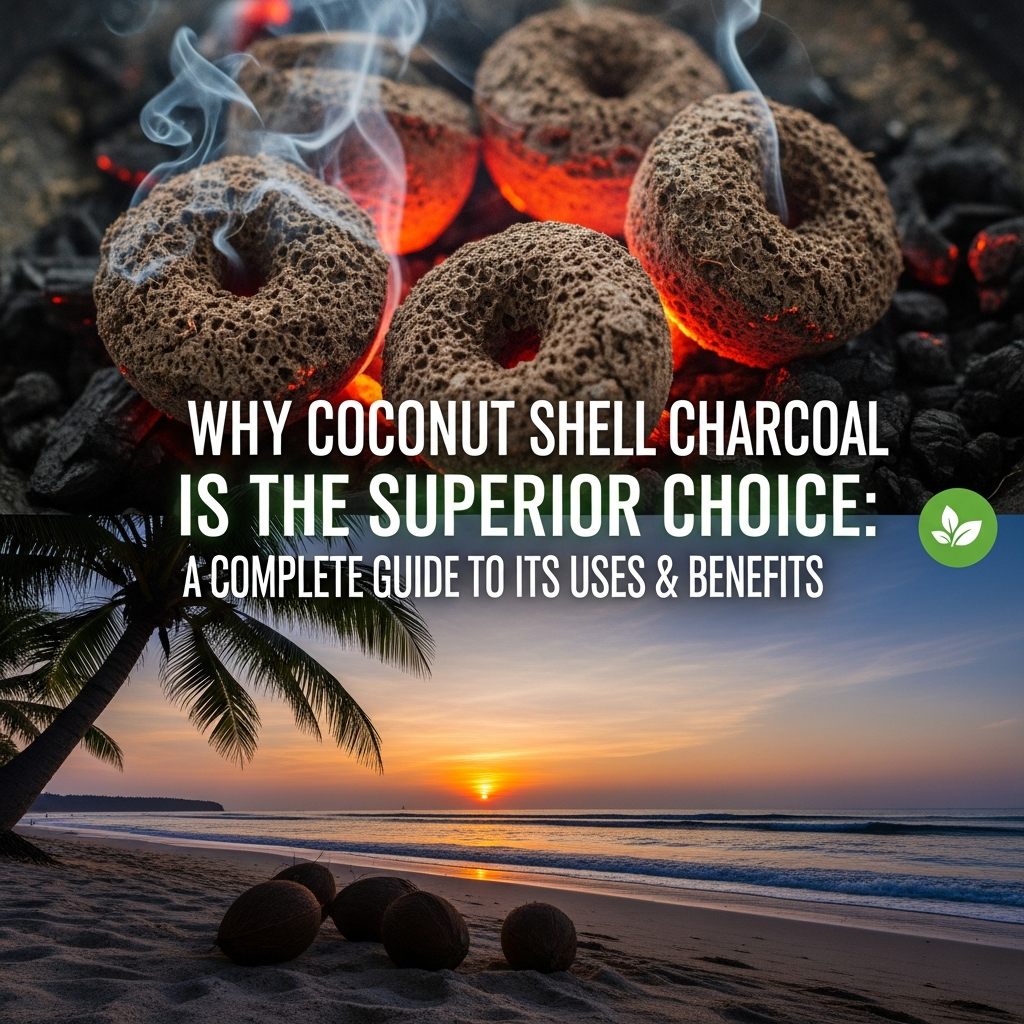
Coconut Shell Charcoal: 7 Ultimate Reasons It’s the Best Choice for 2025
สารบัญ
- What Exactly is Coconut Shell Charcoal?
- The Sustainable Process: How Coconut Shell Charcoal is Made
- The 7 Ultimate Benefits of Coconut Shell Charcoal in 2025
- The Environmental Edge: Why Coconut Shell Charcoal is the Greener Choice
- Beyond the Grill: Diverse Uses of Coconut Shell Charcoal
- Coconut Shell Charcoal vs. Traditional Charcoal: A Side-by-Side Comparison
- How to Choose High-Quality Coconut Shell Charcoal
- Explore Other Sustainable Resources
- คำถามที่พบบ่อย
In a world increasingly focused on sustainability and efficiency, the choices we make—even for something as simple as a backyard barbecue—have a significant impact. For years, traditional wood charcoal has dominated the market, but a superior alternative is rapidly gaining ground. This guide explores the incredible benefits and uses of Coconut Shell Charcoal, the eco-friendly powerhouse that’s changing the game for grilling, purification, and beyond.
What Exactly is Coconut Shell Charcoal?
Coconut Shell Charcoal is a type of activated carbon produced from the hard, woody shells of coconuts. These shells, often discarded as agricultural waste, are transformed into a product with remarkable properties. Its key feature is a highly porous structure, which gives it an immense surface area ideal for adsorption and clean burning.
Unlike lump charcoal made from trees, this option utilizes a resource that is renewed annually. The result is a dense, high-performance charcoal that stands out for its efficiency and positive environmental footprint. It’s a perfect example of upcycling a byproduct into a valuable commodity.

The Sustainable Process: How Coconut Shell Charcoal is Made
การผลิตของ Coconut Shell Charcoal is a fascinating blend of traditional methods and modern science. The process begins with carbonization, where coconut shells are heated in a controlled, low-oxygen environment. This burns off volatile compounds without turning the shells completely to ash.
For applications like filtration, the charcoal undergoes an “activation” step. This involves treating the carbonized material with steam at high temperatures. According to a study in the Journal of Materials Letters, this process dramatically increases the microporosity and surface area, making it incredibly effective at trapping impurities.
The 7 Ultimate Benefits of Coconut Shell Charcoal in 2025
1. Truly Eco-Friendly and Sustainable
This is perhaps its most significant advantage. Coconut Shell Charcoal is made from a waste product of the coconut industry. Its use helps reduce landfill waste and prevents the need for cutting down forests, directly combating deforestation—a major environmental concern highlighted by organizations like the World Wildlife Fund.
2. Burns Hotter and Longer
Due to its high density and carbon content, coconut charcoal burns at a higher temperature and for a longer duration than most traditional wood charcoals. This means you use less fuel for your cooking sessions, making it more economical in the long run.
3. Minimal Smoke, Odor, and Sparks
The clean-burning nature of Coconut Shell Charcoal is a huge plus. It produces very little smoke, odor, or sparks, creating a more pleasant cooking environment. This also means your food tastes like food, not like smoke or chemical binders often found in cheap briquettes.

4. Very Low Ash Content
One of the most tedious parts of grilling is the cleanup. Coconut charcoal produces significantly less ash—often less than 5% of its original weight. This means easier cleanup and better airflow in your grill, as vents are less likely to get clogged.
5. 100% Natural and Chemical-Free
คุณภาพสูง Coconut Shell Charcoal contains no fillers, binders, or chemical accelerants. It is a pure, carbon-based fuel that ensures a safe and natural cooking process, giving you peace of mind about what you’re serving to family and friends.
6. Superior Purification and Filtration
Its activated form is a superstar in filtration. The U.S. Environmental Protection Agency (EPA) recognizes activated carbon as a highly effective method for removing a wide range of contaminants from water. Coconut-based carbon is often preferred for its high efficiency in removing chemicals like chlorine and volatile organic compounds (VOCs).
7. Incredible Versatility
While perfect for BBQ, its uses are incredibly diverse. It is used in air purifiers, as a soil amendment in gardening (biochar), in cosmetic products, and even in industrial processes like gold recovery. This versatility speaks to the unique and valuable properties of this material.
The Environmental Edge: Why Coconut Shell Charcoal is the Greener Choice
Choosing Coconut Shell Charcoal is a direct vote for a healthier planet. By giving value to a waste product, it supports a circular economy. Every bag used is a step away from the deforestation caused by the demand for wood-based lump charcoal and a move towards responsible resource management.
Beyond the Grill: Diverse Uses of Coconut Shell Charcoal
- Water Filters: Used in everything from household water pitchers to large-scale municipal water treatment plants.
- Air Purifiers: Effectively removes odors, allergens, and harmful pollutants from the air in homes and cars.
- Horticulture (Biochar): When added to soil, it improves water retention, microbial activity, and nutrient uptake. Research from institutions like The Biochar Journal highlights its potential for sustainable agriculture.
- Health and Beauty: Found in toothpaste, face masks, and soaps for its detoxifying properties.
Coconut Shell Charcoal vs. Traditional Charcoal: A Side-by-Side Comparison
To make the choice clearer, here’s how Coconut Shell Charcoal stacks up against traditional options.
| คุณสมบัติ | Coconut Shell Charcoal | Traditional Wood Charcoal |
|---|---|---|
| Source | Renewable Waste Product (Coconut Shells) | Hardwood Trees (Contributes to Deforestation) |
| Burn Time | Longer | Shorter |
| Heat Output | Higher and More Consistent | Varies, often inconsistent |
| Smoke & Odor | Minimal | Can be smoky, strong odor |
| Ash Content | Very Low (2-5%) | High (Up to 15% or more) |
| Environmental Impact | Positive (Upcycles Waste) | Negative (Deforestation, Habitat Loss) |
How to Choose High-Quality Coconut Shell Charcoal
When shopping for Coconut Shell Charcoal, look for products that are 100% natural and free of additives. Uniformly shaped briquettes often indicate better quality control.
Making the switch to Coconut Shell Charcoal is an easy decision. It delivers superior performance, is better for your health, and is undeniably kinder to the environment. It is the responsible, high-performance fuel for the modern consumer.
Explore Other Sustainable Resources
The focus on sustainable materials like coconut shells is part of a larger movement towards responsible resource management. The tropical agriculture industry offers a wealth of eco-friendly products derived from biomass. For instance, the oil palm industry provides numerous valuable resources beyond just the oil. Byproducts like the versatile ปาล์มของเคอร์เนล Expeller (PKE) serve as high-protein animal feed, while dense ปาล์มเชลล์เคอร์เนล is an excellent biofuel. The เมล็ดในปาล์ม itself is processed to create valuable ปาล์มของเคอร์เนลน้ำมัน (PKO). These are distinct from the primary product, น้ำมันปาล์มดิบ (CPO), which is extracted from the fruit’s flesh. Even the leftover ช่อผลปาล์มน้ำมัน is repurposed as fertilizer or biofuel, ensuring a minimal-waste production cycle.
Makmur Amanah Sejahtera จำหน่ายผลิตภัณฑ์ปาล์มคุณภาพสูง เช่น เครื่องบีบเมล็ดในปาล์ม เปลือกเมล็ดในปาล์ม น้ำมันปาล์มดิบ น้ำมันเมล็ดในปาล์ม ฯลฯ กรุณาติดต่อเราได้ที่ WhatsApp +6282140002198 หรือส่งอีเมลถึงเราที่ admin@makmuramanah.co.id
คำถามที่พบบ่อย
1. Does Coconut Shell Charcoal make food taste like coconut?
No, it does not. The carbonization process removes all the compounds that produce the coconut flavor and aroma. It is a very neutral fuel that allows the true taste of your food to shine through.
2. Is it more expensive than regular charcoal?
While the initial price per bag might be slightly higher, its longer burn time means you use less charcoal per cooking session, making it more cost-effective over time.
3. Is Coconut Shell Charcoal difficult to light?
It can be slightly more difficult to light than chemically-treated briquettes because it’s so dense and natural. However, using a charcoal chimney starter makes lighting it quick and easy without the need for lighter fluid.
 Thai
Thai  Indonesian
  English
  Chinese
  Dutch
Dutch  Arabic
  Vietnamese
  Turkish