
Ever wondered about the black, lightweight briquettes that power your summer barbecue or purify your drinking water? There’s a high chance they are made from a surprisingly sustainable source. This guide explores a simple question: what is coconut shell charcoal used for? Far more than just a fuel, this eco-friendly material is a powerhouse of versatility, with applications ranging from industry to your daily skincare routine. As we move towards more sustainable solutions, understanding its benefits is more important than ever.
Contents
What Exactly Is Coconut Shell Charcoal?
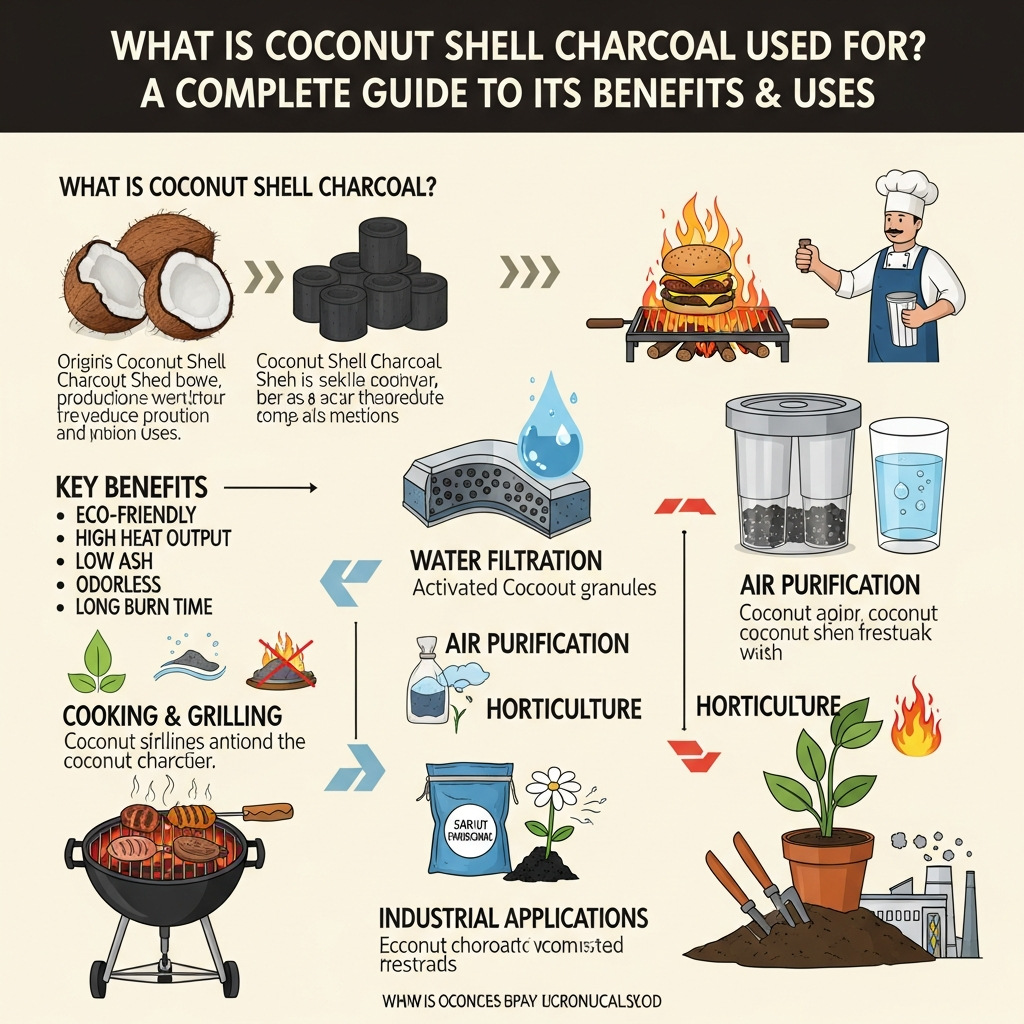
Coconut shell charcoal is created from the hard shells of coconuts. The process, known as pyrolysis, involves heating the shells to very high temperatures in a low-oxygen environment. This burns off volatile compounds, leaving behind pure carbon with a remarkably porous structure.
This network of microscopic pores is what gives this material its incredible properties. It creates a massive internal surface area, allowing it to adsorb—or bind with—a wide range of substances. This makes it a key ingredient in activated carbon, one of the most powerful absorbent materials known.

Top 7 Uses: What Is Coconut Shell Charcoal Used For?
While many people know charcoal is for grilling, the applications for coconut-based charcoal extend far beyond the backyard. Its unique properties make it an invaluable resource in numerous fields.
1. A Superior Fuel for Grilling and Barbecues
One of its most popular uses is as briquettes for grilling. It burns hotter and longer than traditional wood charcoal, providing a consistent temperature that’s perfect for cooking. This means you use less fuel over a long grilling session.
Furthermore, it produces very little smoke and ash, making for a cleaner cooking experience and easier cleanup. Because it is carbonized in a controlled manner, it doesn’t contain the tars and chemicals that can impart a bitter flavor to food. For more on grilling fuels, check out this charcoal 101 guide from Weber.
2. High-Grade Water Purification and Filtration
When “activated,” the porous structure of this charcoal becomes a master of filtration. Activated carbon from coconut shells is used in everything from household water pitchers to large-scale municipal water treatment systems. Its vast surface area effectively adsorbs impurities, including chlorine, pesticides, and other volatile organic compounds (VOCs), significantly improving water taste and odor.
The micropores of coconut-based carbon are particularly effective at trapping these smaller contaminant molecules. Scientific studies have repeatedly demonstrated the efficiency of activated carbon in removing pollutants from water, making it a cornerstone of public health.
3. Natural Air Purification and Deodorizing
Just as it purifies water, this material is also used for cleaning the air. You’ve likely seen minimalist linen bags filled with charcoal advertised as natural air fresheners. They work by trapping airborne pollutants, allergens, and odor-causing bacteria within their pores.
These are a fantastic, fragrance-free alternative to chemical air fresheners, making them ideal for closets, refrigerators, cars, and homes with pets. They passively remove odors instead of just masking them.

4. Health and Beauty Applications
The detoxifying properties of activated charcoal have made it a trending ingredient in the wellness and beauty industry. Food-grade activated carbon is known for its ability to bind with toxins.
You can find it in:
- Teeth Whitening Toothpaste: It gently lifts surface stains from teeth caused by coffee, tea, and wine.
- Face Masks and Soaps: It helps draw out dirt, oil, and impurities from the skin’s pores, making it popular for acne-prone skin.
- Digestive Aids: Historically used to help with bloating and gas, though it’s crucial to consult a healthcare professional before ingesting it. For more details, Healthline provides an overview of its uses and safety.
5. Horticulture and Soil Improvement (Biochar)
When added to soil, coconut shell charcoal is referred to as biochar. It offers tremendous benefits for gardeners and farmers. Its porous nature helps soil retain both water and essential nutrients, reducing the need for frequent watering and fertilizing.
Biochar also improves soil aeration and provides a stable habitat for beneficial microorganisms, leading to healthier plant growth and increased crop yields. This sustainable practice can sequester carbon in the soil for centuries. Many university agricultural programs, like the Penn State Extension, offer in-depth guides on using biochar.
6. Industrial Gold Recovery Processes
On a much larger scale, activated carbon from coconut shells is critical in the gold mining industry. Its high hardness and density make it ideal for the Carbon-In-Pulp (CIP) and Carbon-In-Leach (CIL) processes. In these methods, activated carbon is mixed with a gold-cyanide solution, and the gold is adsorbed onto the charcoal, allowing for efficient extraction.
7. Sustainable Arts and Crafts
Artists also appreciate the qualities of this unique medium. While willow and vine charcoal are more common, ground coconut-based charcoal can be used to create deep, rich black pigments for drawing and painting. Its consistency and sustainable origins make it an appealing choice for eco-conscious creators.
The Environmental Edge: Why This Charcoal Is a Better Choice
Perhaps the most compelling reason for its growing use is sustainability. Coconut shell charcoal is made from a waste product of the massive coconut industry (food, milk, and oil). Using the shells prevents them from ending up in landfills.
This process offers several key environmental advantages:
- Reduces Waste: It gives a second life to a byproduct material.
- Prevents Deforestation: It provides an alternative to charcoal made from wood, helping to protect forests.
- Burns Cleaner: It releases fewer harmful emissions compared to other charcoal types.
This commitment to using agricultural byproducts extends across the tropical oil industry. For instance, the production of Crude Palm Oil and Palm Kernel Oil also yields valuable materials. The fibrous remains of the Oil Palm Fruit Bunch can be used for energy, while the hard Palm Kernel Shell is another excellent biofuel. After oil is extracted from the Palm Kernel, the leftover residue becomes Palm Kernel Expeller, a protein-rich animal feed. This holistic approach minimizes waste and maximizes value from sustainable agriculture.
Frequently Asked Questions
Is coconut shell charcoal better than regular charcoal?
For many applications, yes. It burns hotter, lasts longer, and produces less ash and smoke than most traditional lump wood charcoals. Environmentally, it’s superior as it is made from a renewable, waste byproduct rather than from cutting down trees.
Is it safe to use for cooking?
Absolutely. High-quality coconut charcoal briquettes are 100% natural and contain no chemical additives, making them one of the cleanest and safest fuels for grilling.
How is activated coconut charcoal made?
It’s a two-step process. First, the shells are carbonized through pyrolysis. Then, the resulting charcoal is “activated” by exposing it to high-temperature steam. This second step erodes the internal surfaces of the charcoal, dramatically increasing its surface area and creating the microscopic pores that make it so effective at adsorption.
Conclusion: The Future is Coconut
So, what is coconut shell charcoal used for? As we’ve seen, its applications are incredibly diverse and impactful. From powering our barbecues and purifying our resources to improving our soil and even mining for precious metals, this humble material is a true unsung hero of sustainability.
By understanding its origins and benefits, we can make more informed choices as consumers. The next time you see a product containing charcoal, check if it’s derived from coconut shells—you’ll be supporting a greener, more innovative future.
Makmur Amanah Sejahtera provides high-quality palm products such as Palm Kernel Expeller, Palm Kernel Shell, Crude Palm Oil, Palm Kernel Oil, etc. Kindly contact us at WhatsApp +6282140002198 or email us at admin@makmuramanah.co.id.Looking for High-Quality Palm Products?
 English
  Indonesian
  Chinese
  Arabic