 by admin
RBD Palm Olein CP8: The Ultimate 2025 Guide to Specs & Uses
İçindekiler
- What Is RBD Palm Olein CP8?The Ultimate 2025 Breakdown of Key SpecificationsVersatile Applications of RBD Palm Olein CP8RBD Palm Olein CP8 vs. CP10: The 3 Crucial DifferencesProven Benefits of Using RBD Palm Olein CP8 in Your ProductsYüksek Kaliteli Palmiye Ürünlerinin KaynağıSonuç: Doğru Seçimi Yapmak
In the vast world of edible oils, RBD Palm Olein CP8 stands out for its unique properties and wide-ranging applications. As a highly stable and versatile cooking oil, it is a cornerstone of the global food industry. Understanding its specifications and how it differs from other palm oil fractions is crucial for manufacturers, importers, and consumers alike. The journey of this refined oil begins with the Yağ Palmiyesi Meyve Demeti, the primary source of all palm-based products.
This comprehensive guide for 2025 explores everything you need to know about RBD Palm Olein CP8, from its technical specs to its primary uses and key distinctions from its close relative, CP10. Let’s dive into what makes this particular palm oil fraction a preferred choice for so many.
What Is RBD Palm Olein CP8?
Let’s break down the name. “RBD” stands for Refined, Bleached, and Deodorized—a standard purification process for edible oils that removes impurities, pigments, and odors, resulting in a bland, stable product.
“Palm Olein” refers to the liquid fraction obtained from Ham Palm Yağı after a process called fractionation. In this process, palm oil is cooled to crystallize the solid fat (stearin), which is then separated from the liquid portion (olein).
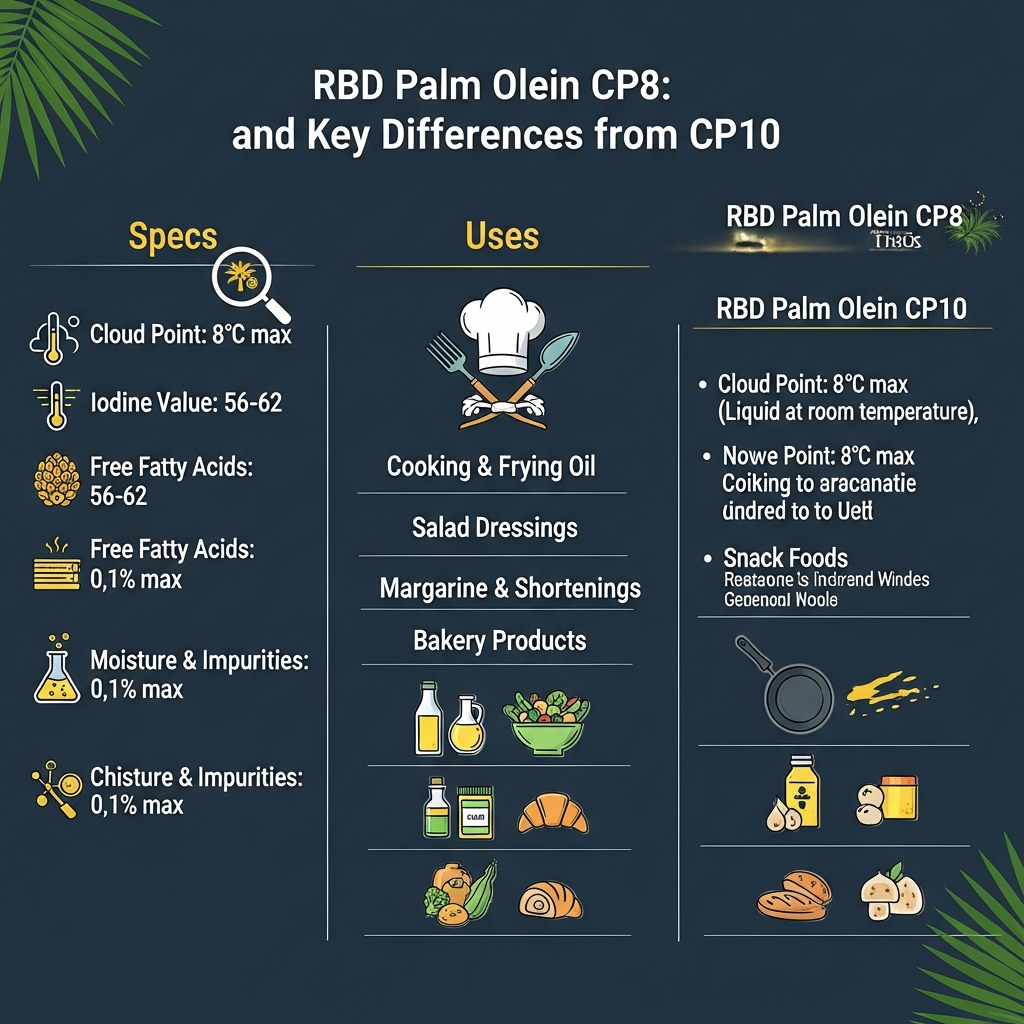
The “CP8” is the most critical part. It stands for a Cloud Point of 8° Celsius (max). The cloud point is the temperature at which the oil starts to become cloudy or solidify. A lower cloud point, like that of RBD Palm Olein CP8, means it remains liquid at cooler temperatures, making it highly suitable for temperate climates.

The Ultimate 2025 Breakdown of Key Specifications
To truly understand RBD Palm Olein CP8, it’s essential to look at its technical specifications, which determine its quality and suitability for various applications. These standards are often governed by international bodies to ensure consistency.
- Free Fatty Acids (FFA) (as % Palmitic): 0.1% max. A low FFA indicates high quality and good refining.Moisture & Impurities (M&I): 0.1% max. This measures the purity of the oil.Iodine Value (Wijs): 57.5 min. The iodine value indicates the degree of unsaturation. A higher value is typical for more liquid oils.Cloud Point: 8°C max. This is the defining characteristic of CP8, ensuring liquidity at lower ambient temperatures.Color (5.25” Lovibond Cell): 3 Red max. This ensures the oil is light in color and visually appealing.
For a deeper dive into the global standards for named vegetable oils, the Codex Alimentarius, maintained by the FAO and WHO, provides a comprehensive resource on food standards.
Versatile Applications of RBD Palm Olein CP8
The unique properties of RBD Palm Olein CP8 make it a premium choice for a variety of food applications, particularly in cooking and industrial food production.
Industrial Frying
Due to its high smoke point and excellent oxidative stability, RBD Palm Olein CP8 is a workhorse for industrial frying. It’s used extensively for products like instant noodles, potato chips, doughnuts, and other fried snacks, providing a long fry-life and a clean taste.
General Cooking and Bottling
Its resistance to clouding in cooler weather makes it an ideal bottled cooking oil for temperate regions. Consumers get a product that remains clear and easy to pour, unlike oils with higher cloud points. This characteristic is a significant advantage in markets across Europe, North America, and parts of Asia.
The stability of palm olein during frying is a key reason for its widespread use. Research published in the Journal of Food Composition and Analysis often highlights its performance under high-heat conditions.
RBD Palm Olein CP8 vs. CP10: The 3 Crucial Differences
While both are liquid fractions of palm oil, the difference between RBD Palm Olein CP8 and CP10 is significant and impacts their use and cost. The choice between them often comes down to climate and application.
1. Cloud Point
This is the primary distinction. CP8 has a maximum cloud point of 8°C, whereas CP10 has a maximum of 10°C. This two-degree difference means CP8 will remain liquid at temperatures where CP10 might start to solidify, making it superior for cooler climates.
2. Fractionation Process
To achieve the lower cloud point, RBD Palm Olein CP8 typically undergoes a more intensive or “double” fractionation process. This extra step separates the liquid olein more precisely, which adds to the production cost and often makes CP8 slightly more expensive than CP10.
3. Iodine Value (IV)
CP8 generally has a slightly higher Iodine Value (typically 57.5 min) compared to CP10 (typically 56 min). A higher IV indicates a slightly higher degree of unsaturation, contributing to its lower melting and cloud points.
For more information on sustainable palm oil sourcing for both CP8 and CP10, visit the Sürdürülebilir Palmiye Yağı Yuvarlak Masa Toplantısı (RSPO) web sitesi.

Proven Benefits of Using RBD Palm Olein CP8 in Your Products
Choosing RBD Palm Olein CP8 offers several compelling advantages for food manufacturers and consumers.
- Superior Stability: It resists oxidation, which prevents rancidity and extends the shelf life of food products.Neutral Flavor Profile: The RBD process ensures the oil has no taste or smell, allowing the natural flavors of the food to shine through.Cost-Effective Performance: It provides the performance of more expensive oils, especially for high-heat applications, at a more economical price point.Climatic Versatility: Its low cloud point makes it a reliable, year-round choice for markets with fluctuating temperatures.
Dietary fats are a complex topic, and for balanced information on fats in a healthy diet, resources from the Dünya Sağlık Örgütü (WHO) can provide valuable context.
Yüksek Kaliteli Palmiye Ürünlerinin Kaynağı
The quality of any palm oil product is tied to its source. The same palm fruit that yields cooking oil also provides the Palmiye Çekirdeği, which is processed into valuable Hurma Çekirdeği Yağı. Beyond oils, the industry produces other essential co-products. After oil extraction, the remaining solids become Hurma Çekirdeği Çıkarıcısı, a high-protein animal feed, while the hard covering is used as Palmiye Çekirdeği Kabuğu, an efficient biomass fuel. Ensuring a reliable supply chain for all these products is key.
Makmur Amanah Sejahtera, Palmiye Çekirdeği Çıkarıcısı, Palmiye Çekirdeği Kabuğu, Ham Palmiye Yağı, Palmiye Çekirdeği Yağı vb. gibi yüksek kaliteli palmiye ürünleri sağlar. Lütfen +6282140002198 numaralı WhatsApp'tan bize ulaşın veya admin@makmuramanah.co.id adresinden bize e-posta gönderin.
Sonuç: Doğru Seçimi Yapmak
RBD Palm Olein CP8 is more than just a cooking oil; it’s a specialized ingredient engineered for performance and stability. Its key feature—a cloud point of 8°C—makes it an invaluable asset for food producers in temperate climates, ensuring products remain visually appealing and liquid on the shelf.
By understanding the crucial differences between CP8 and CP10, businesses can make informed purchasing decisions that align with their product needs and geographic markets. With its blend of performance, stability, and cost-effectiveness, RBD Palm Olein CP8 will undoubtedly remain a vital component in the global food supply chain in 2025 and beyond.
 Turkish
  Indonesian
  English
  Chinese
  Dutch
Dutch  Arabic
  Thai
Thai  Vietnamese