Palm Kernel Expeller (PKE): The Ultimate 2025 Guide
Mục lục
As the demand for cost-effective and sustainable animal feed ingredients continues to grow, industry professionals are constantly seeking viable alternatives. One such ingredient that has gained immense popularity is Palm Ép Hạt Nhân (PKE). But what exactly is it, and how can it be effectively integrated into livestock diets? This comprehensive guide explores everything you need to know about this valuable feed resource.
From its production process to its detailed nutritional profile, we will delve into the uses, benefits, and sourcing considerations for PKE. Whether you’re a nutritionist, a farm manager, or a feed formulator, understanding this ingredient is crucial for optimizing animal nutrition and operational costs.
Máy ép hạt cọ (PKE) là gì?
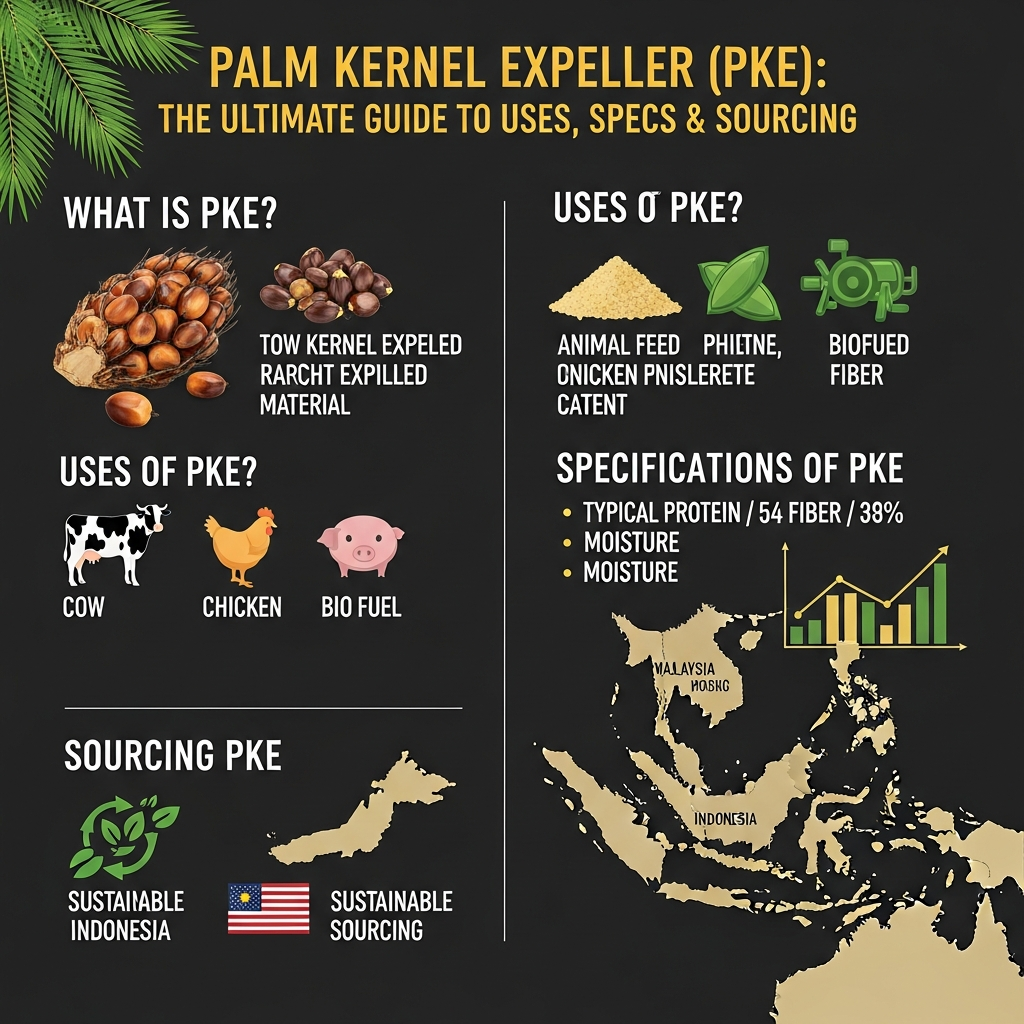
Máy ép hạt cọ (PKE) is a significant by-product derived from the palm oil industry, specifically from the crushing and mechanical extraction of oil from the kernel of the oil palm fruit (Elaeis guineensis). After the palm kernel is pressed to extract palm kernel oil, the leftover fibrous material is PKE.
It is widely recognized as a medium-grade protein and energy source, making it an excellent component in feed rations for various livestock. Primarily produced in major palm oil-producing regions like Indonesia and Malaysia, this by-product is a globally traded commodity essential to the compound feed industry.
PKE được sản xuất như thế nào?
Understanding the production process of PKE is key to appreciating its properties. The journey from palm fruit to feed ingredient involves several distinct stages:
- Thu hoạch và khử trùng: Tươi Chùm quả cọ dầu are harvested and sterilized with steam to halt enzymatic processes that cause fatty acid content to rise.
- Threshing and Digestion: The fruit is separated from the bunch. The flesh (mesocarp) is then digested to extract Dầu cọ thô, leaving behind the palm nut.
- Bẻ hạt: The hard nut is cracked to release the Hạt cọ. Các Palm Vỏ Hạt Nhân fragments are separated from the kernel, though some small pieces may remain, affecting the final fiber content.
- Kernel Crushing and Expelling: The kernels are crushed and subjected to a high-pressure mechanical screw press (an expeller) to extract the valuable Dầu Hạt Cọ.
- The By-Product: The solid residue left after this mechanical extraction is the final product: Palm Ép Hạt Nhân.

Nutritional Specifications of PKE
Giá trị dinh dưỡng của PKE can vary based on the efficiency of the oil extraction process, the amount of shell remaining, and its geographical origin. However, a typical analysis provides a solid foundation for feed formulation. For a detailed scientific breakdown, you can refer to studies on its composition like those found on platforms such as Khoa họcTrực tiếp.
| Chất dinh dưỡng | Typical Range (%) |
|---|---|
| Protein thô (CP) | 14 – 18% |
| Crude Fibre (CF) | 16 – 22% |
| Chiết xuất Ether (Chất béo) | 5 – 10% |
| Tro | 3 – 6% |
| Độ ẩm | < 12% |
| Metabolizable Energy (Ruminants) | 10 – 12 MJ/kg |
One of PKE’s defining features is its high fiber content, primarily composed of Non-Starch Polysaccharides (NSPs) like mannan. While this limits its digestibility in monogastric animals, it is highly beneficial for ruminants.
Công dụng chính của PKE trong thức ăn chăn nuôi
Thanks to its unique nutritional profile, PKE is a versatile ingredient used across different livestock sectors.
Thức ăn cho động vật nhai lại (gia súc, cừu, dê)
PKE shines brightest in ruminant diets. Its high fiber content supports healthy rumen function, and its moderate protein and energy levels make it an excellent bulk ingredient for dairy and beef cattle. In dairy cows, the specific fiber and fat composition of PKE has been shown to improve milk fat percentage. It is a cost-effective way to supplement pasture-based systems.
Monogastric Feed (Poultry & Swine)
For poultry and swine, the use of PKE is more nuanced. The high fiber can hinder nutrient absorption and dilute the energy density of the feed. However, its inclusion at lower levels (typically 5-10%) is common. The effectiveness of this by-product in these diets can be significantly improved by using feed enzyme supplements that break down the complex fibers.
Other Uses
Beyond the major livestock categories, PKE is also used in feed for horses (as a safe, low-starch energy source) and in aquaculture, particularly for herbivorous fish species like tilapia. Its binding properties also make it useful in pelletized feeds.
Key Benefits and Limitations of Using PKE
Like any feed ingredient, PKE has a distinct set of pros and cons that formulators must balance.
The Advantages of PKE
- Hiệu quả về chi phí: As a by-product, PKE is often more affordable than primary protein sources like soybean meal or corn.
- Tính khả dụng cao: The massive scale of the palm oil industry ensures a consistent and abundant supply of PKE year-round.
- Good Source of Fiber: It promotes gut health and proper rumen function in cattle and other ruminants.
- Độ ngon miệng: Most ruminants find PKE highly palatable, encouraging feed intake.
Những hạn chế tiềm ẩn
- Sự thay đổi chất dinh dưỡng: Quality can fluctuate between suppliers.
- Khả năng tiêu hóa thấp đối với động vật dạ dày đơn: High fiber content can be a major drawback for poultry and pigs without enzyme supplementation.
- Nguy cơ nhiễm độc tố nấm mốc: Its tropical origin means PKE is susceptible to mold and mycotoxin contamination if not dried and stored correctly. The Tổ chức Lương thực và Nông nghiệp (FAO) provides extensive resources on managing this risk.
- Độ cứng: High shell content can reduce palatability and increase fiber levels, so sourcing low-shell PKE is crucial.
[VIDEO SUGGESTION]
A short clip of dairy cattle enjoying a feed mix containing Palm Kernel Expeller (PKE), demonstrating its excellent palatability.
Làm thế nào để tìm nguồn PKE chất lượng cao
Sourcing reliable, high-quality PKE is paramount for achieving consistent results. When evaluating a supplier, consider the following:
- Ask for Specifications: Reputable suppliers will provide a Certificate of Analysis (COA) detailing the protein, fat, fiber, moisture, and ash content.
- Physical Assessment: High-quality PKE should have a light brown color and a pleasant, nutty smell. A dark color could indicate overheating during processing, and a rancid smell points to poor storage.
- Check Shell Content: Request information on the typical shell-to-kernel ratio. A lower shell content is always preferable as it means higher digestibility and energy value.
- Sustainability Certifications: With growing environmental concerns, sourcing from suppliers certified by organizations like the Bàn tròn về Dầu cọ bền vững (RSPO) is becoming increasingly important for market access and corporate responsibility.
The Future of PKE in the Global Feed Market
Vai trò của PKE in the global feed market is set to expand. As traditional feed commodities face price volatility, the demand for consistent and affordable by-products like PKE will rise. Ongoing research is focused on improving its nutritional value for monogastrics through methods like fermentation and enzyme technology. As documented by industry publications like Trình duyệt nguồn cấp dữ liệu, innovation in by-product processing is a key trend.
Những câu hỏi thường gặp (FAQ)
1. What is the difference between Palm Kernel Expeller (PKE) and Palm Kernel Cake (PKC)?
The terms are often used interchangeably. However, technically, PKE is produced via mechanical screw pressing, while Palm Kernel Cake (PKC) can refer to the by-product from solvent extraction. PKE typically has a higher residual oil content than solvent-extracted PKC.
2. Is PKE safe for all animals?
PKE is very safe for ruminants. For monogastrics like pigs and poultry, it should be used at controlled inclusion rates and preferably with enzymes to aid digestion. High levels can cause digestive issues due to its fiber content.
3. How should Palm Kernel Expeller (PKE) be stored?
PKE should be stored in a cool, dry place away from direct sunlight to prevent mold growth and rancidity. Proper moisture control (below 12%) is essential for extending its shelf life.
Tóm lại, Máy ép hạt cọ (PKE) stands out as a fundamentally important ingredient in the global feed industry. Its cost-effectiveness and high availability make it an indispensable resource, particularly for ruminant nutrition. By understanding its properties and sourcing it from reliable suppliers, you can leverage PKE to formulate balanced, efficient, and profitable feed rations.
Becker Amanah Sejahtera provides high-quality palm products such as Palm Kernel Expeller, Palm Kernel Shell, Crude Palm Oil, Palm Kernel Oil, etc. Kindly contact us at Thông 6282140002198 hoặc gửi email cho chúng tôi xuống admin@makmuramanah.co.id.
 Vietnamese
  Indonesian
  English
  Chinese
  Dutch
Dutch  Arabic
  Thai
Thai  Turkish