

The Role of Palm Kernel Meal in Animal Feed Production
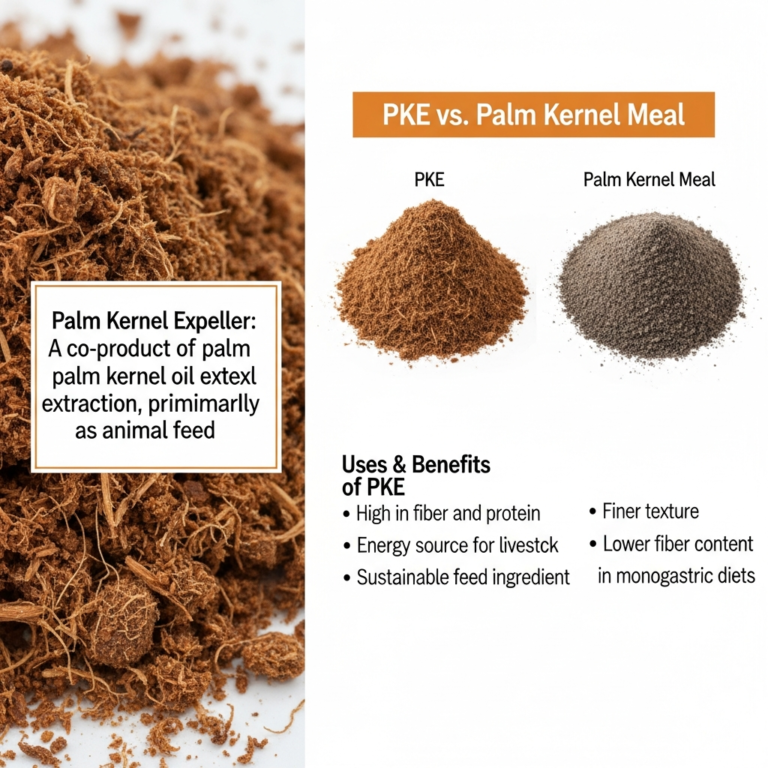
Palm kernel meal is a crucial feed additive due to its high protein content, supporting the nutritional needs of livestock and poultry for growth and development. Its fiber content aids in digestion, enhancing nutrient absorption and promoting overall gut health. The carbohydrate content serves as a valuable energy source, optimizing animal performance. Utilizing palm kernel meal in feed formulations not only enhances nutritional value but also proves cost-effective, reducing overall production expenses.
Innovation in the Development of Animal Feed Additives
In recent years, there have been interesting innovations in developing additives for animal feed. Researchers and scientists continue to look for new ways to improve animal feed’s nutritional value and quality, ultimately improving animal health and performance. One innovation that has received attention is using palm kernel meal, a by-product of the palm oil industry, as an additive to animal feed.
Palm kernel meal contains a rich source of nutrients, including protein, fat, and fiber. This makes it a promising animal feed ingredient because it can help meet the food needs of various types of livestock. Researchers optimize palm kernel meal extraction and processing techniques to maximize its potential, ensuring its nutritional value is maintained, and animals easily digest it. Additionally, efforts are being made to eliminate anti-nutritional factors present in palm kernel meal to ensure its safety and efficacy as a feed additive. These innovations provide great hope for the future of animal feed production and can positively contribute to the sustainability of the agricultural industry.
Challenges and Solutions for Using Palm Kernel Meal in Animal Feed
One of the big challenges in using palm kernel meals in animal feed is the availability and accessibility of the ingredients. Because palm kernel meal comes from a by-product of palm oil production, its availability can vary depending on the production level in the palm oil industry. In some regions where palm oil is not produced on a large scale, obtaining a sustainable and consistent supply of palm kernel meal can be challenging. In addition, the logistics and transportation costs associated with transporting palm kernel meal from palm oil mills to animal feed producers can further complicate the utilization process.
Optimizing palm kernel meal processing for use in animal feed presents challenges due to its high crude protein and essential amino acids content, which is valuable for animal nutrition. However, the presence of anti-nutritional factors poses risks to animal health if not properly addressed. Effective detoxification methods, including heat treatment and enzymatic hydrolysis, are being researched to enhance the nutritional value of palm kernel meal and ensure its safe utilization as a feed additive.
Environmental Considerations in the Production and Use of Palm Kernel Meal as a Feed Additive
Rather than just focusing on the benefits of using palm kernel meal as a feed additive, it is important also to consider the environmental impacts of its production and use. One of the main concerns is deforestation and habitat loss, as oil palm plantations often replace native forests, destroying important ecosystems. In addition, the extensive use of chemical fertilizers and pesticides in palm oil production can contribute to water and soil pollution, thereby impacting biodiversity and the health of local communities.
Addressing these environmental challenges requires a holistic approach. Implementing sustainable palm oil practices, such as implementing responsible land management techniques and minimizing the use of chemicals, is critical to mitigating the negative impacts of palm kernel meal production. Similar efforts should also be made to encourage responsible palm kernel meal procurement and promote transparency in the supply chain. Collaboration between palm oil producers, feed producers, and environmental organizations can provide a platform for developing and monitoring sustainable practices throughout the palm kernel meal production and supply chain.
Regulatory Framework and Guidelines for the Use of Palm Kernel Meal as an Additive to Animal Feed
Regulatory frameworks and guidelines are important in ensuring palm kernel meal’s safe and effective use as an animal feed additive. These regulations are enforced by government agencies and international bodies to protect animal health, food safety, and the environment. Compliance with these standards is critical for feed producers, livestock farmers, and other stakeholders involved in producing and using palm kernel meal additives.
One of the main aspects discussed in this regulatory framework is the maximum amount of palm kernel meal permitted in animal feed. These limits are based on scientific research and aim to prevent potential negative impacts on animal health and productivity. In addition, these guidelines outline appropriate storage, handling, and labeling requirements for palm kernel meal additives to ensure that they are used correctly and safely. Regular monitoring and testing are also required to ensure compliance with these regulations and promptly address quality or safety issues. These regulatory measures increase consumer confidence in using palm kernel meal as an animal feed additive, encouraging transparency and accountability throughout the supply chain.
Future Perspectives and Opportunities for Application of Palm Kernel Meal Additives in Animal Feed
Using palm kernel meal additives in animal feed in the future provides promising perspectives and abundant opportunities. As research and development efforts continue, there is increasing interest in exploring the potential benefits of these additives in improving animal health and productivity. Research shows that using palm kernel meal in animal feed can increase nutrient absorption, improving feed efficiency and overall performance. With these expected results, palm kernel meal as a feed additive is expected to increase in the coming years.
In addition, increasing awareness of sustainable and environmentally friendly practices in the livestock industry opens the door to applying palm kernel meal additives. As a by-product of palm oil production, palm kernel meal offers a sustainable alternative to conventional feed ingredients. Its use reduces dependence on traditional feed sources and contributes to a circular economy by utilizing biomass residues. In addition, concerns regarding the environmental impacts of animal husbandry, such as greenhouse gas emissions, can be reduced using palm kernel meal additives. Therefore, the prospects for including palm kernel meal in animal feed are economically promising and in line with sustainable development goals.
订购信息
对于那些需要值得信赖的人 动物饲料生产商, 您可以通过我们的电话号码联系我们,或者 WhatsApp, 或者您也可以通过电子邮件联系我们:admin@makmuramanah.com。我们将为您提供最优惠的价格!
 Chinese
  English
  Indonesian
  Arabic