
目录
- Introduction: More Than Just a By-Product
- What is Palm Kernel Cake (PKC)?
- 什么是棕榈仁压榨机(PKE)?
- The Ultimate Breakdown: 5 Key Differences Between Palm Kernel Cake and Palm Kernel Expeller
- Quick Comparison: Palm Kernel Cake vs. Palm Kernel Expeller
- 常见问题解答 (FAQ)
- 结论:做出正确的选择
Introduction: More Than Just a By-Product
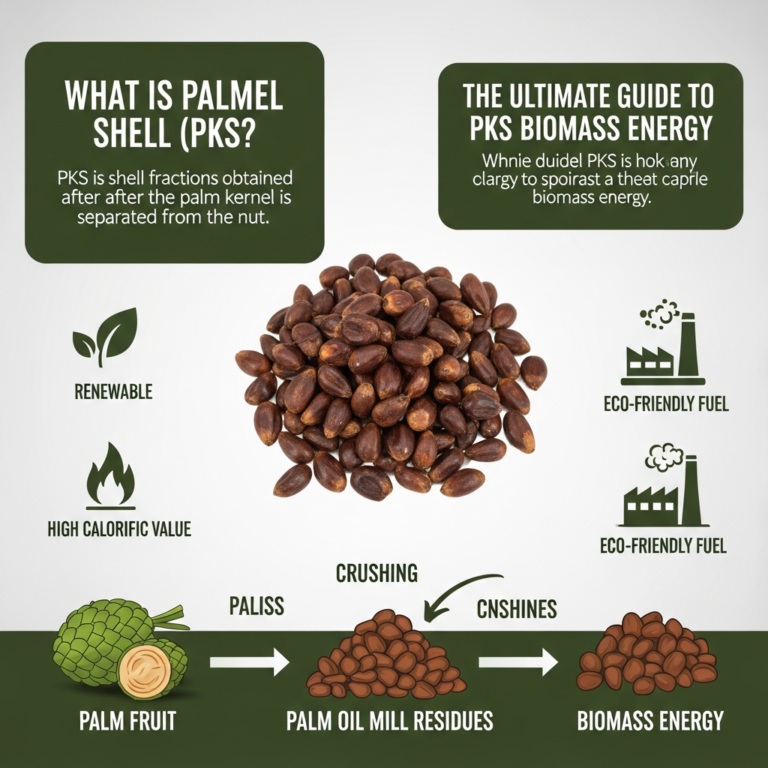
In the global palm industry, the processing of oil palm yields several valuable products. After the extraction of primary oils like 粗棕榈油 (取自果肉) 棕榈仁油 (from the seed), a range of useful co-products remain. The entire fruit is utilized, creating by-products from the 油棕果串 to the hard 棕榈仁壳, which is often used as biofuel. Among the most important co-products for the animal feed industry are Palm Kernel Cake (PKC) and Palm Kernel Expeller (PKE). While the terms are often used interchangeably, understanding the fundamental 棕榈仁饼和棕榈仁压榨机的区别 is crucial for nutritionists, farmers, and traders to optimize feed formulations and costs. This guide will illuminate these key distinctions.
Both PKC and PKE are the solid residues left after oil has been extracted from the 棕榈仁. They are celebrated as affordable sources of protein and energy for livestock, particularly ruminants. However, the subtle yet significant variations in their processing lead to different nutritional values and applications.
What is Palm Kernel Cake (PKC)?
Palm Kernel Cake (PKC) is a broad term for the meal produced after extracting oil from palm kernels. To truly grasp the 棕榈仁饼和棕榈仁压榨机的区别, it’s vital to know that in a stricter, technical sense, the term ‘cake’ often implies a solvent extraction process. This method uses a solvent, typically hexane, to wash the oil from the crushed kernels, resulting in a very low residual oil content in the final product.
什么是棕榈仁压榨机(PKE)?
Palm Kernel Expeller (PKE) is a specific type of palm kernel cake. The key is in the name: ‘expeller’. This product is created using only a mechanical press (an expeller or screw press) to physically squeeze the oil out of the palm kernels. No solvents are used in this process. This mechanical action is less efficient at oil removal than solvent extraction, which directly impacts the final nutritional profile of the expeller.
The Ultimate Breakdown: 5 Key Differences Between Palm Kernel Cake and Palm Kernel Expeller
Now, let’s dive into the specifics. The primary 棕榈仁饼和棕榈仁压榨机的区别 lies in how they are made, which has a ripple effect on their composition, use, and even appearance.
1. The Core Difference: Oil Extraction Method
This is the most critical distinction. 棕榈仁压榨机(PKE) is produced via mechanical extraction. Crushed kernels are heated and fed into a screw press that exerts immense pressure, ‘expelling’ the oil. This is a simple, robust process that avoids the use of chemicals.
棕榈仁饼(PKC), particularly when referred to as ‘solvent-extracted palm kernel meal’, undergoes solvent extraction. After an initial pressing, the remaining material is washed with a solvent like hexane, which dissolves the oil. The solvent is then evaporated and recovered, leaving behind a meal with very little fat. For more detail on this industrial process, you can review literature on solvent extraction in food processing.
2. Nutritional Profile: Fat, Fiber, and Protein
The extraction method directly impacts the nutritional makeup. Because mechanical pressing is less thorough, 棕榈仁压榨机(PKE) retains a higher level of residual oil, typically ranging from 6-10%. This makes it more energy-dense, which can be beneficial for fattening livestock.
Conversely, the highly efficient solvent extraction process means 棕榈仁饼(PKC) has a much lower fat content, often below 2%. While lower in energy, the removal of fat concentrates other nutrients. Consequently, solvent-extracted PKC usually has a slightly higher crude protein percentage compared to PKE. According to the FAO’s Feedipedia, both are high in fiber, which limits their use in monogastric animals like poultry and pigs.
3. Physical Characteristics: Texture and Appearance
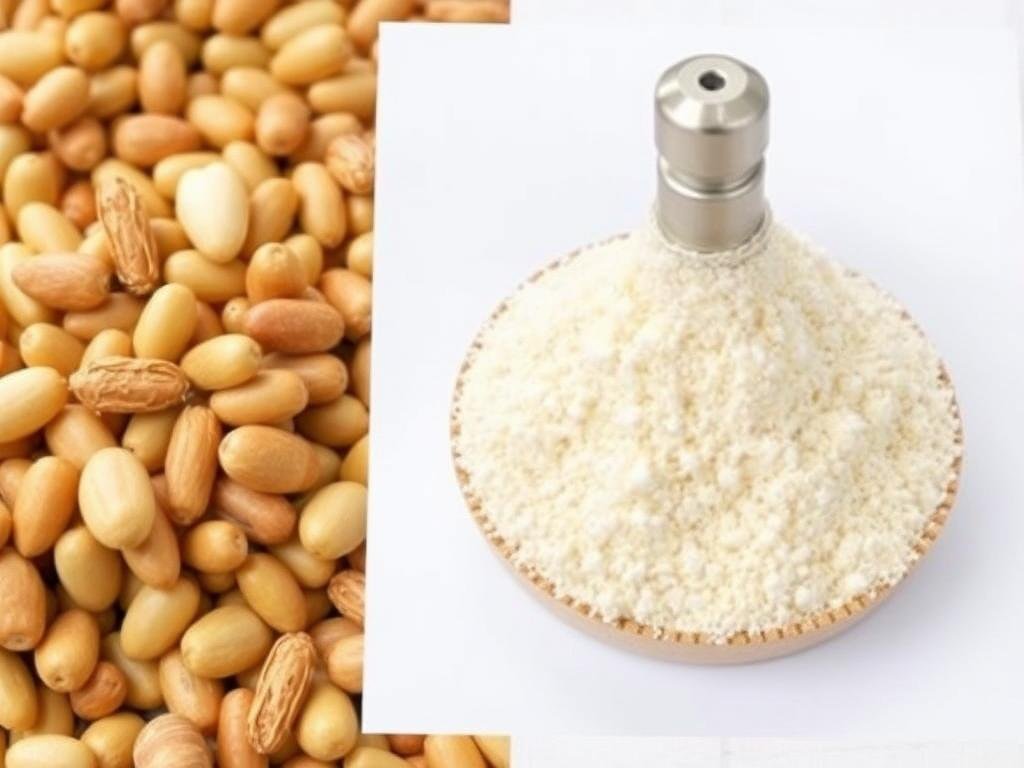
You can often tell the difference just by looking. PKE tends to be coarser, more fibrous, and may appear as dense chunks or pellets due to the immense pressure from the expeller. Its higher oil content can also give it a slightly greasy feel and a darker color.
Solvent-extracted PKC is typically a finer, drier, and more uniform meal. It has a lighter color and a powdery consistency, making it easy to mix into feed rations but also potentially dustier to handle.
4. Application in Animal Feed
The nutritional variances guide their use. PKE’s higher energy content makes it a popular choice for dairy and beef cattle, where energy is crucial for milk production and weight gain. The coarse texture is also suitable for ruminant digestion. However, as noted by research from institutions like 宾夕法尼亚州立大学推广部, all by-products should be introduced carefully.
PKC’s lower fat and higher protein concentration might be preferred in feed formulations where protein is the target nutrient and fat levels are strictly controlled. Both PKE and PKC are limited in poultry and swine diets due to their high fiber content and gritty texture, which can affect palatability and digestion.
5. Market Terminology and Availability
Here’s where most confusion arises. In the international market, especially from major producers like Malaysia and Indonesia, the vast majority of the product available is 棕榈仁压榨机 (PKE). The term “PKC” is often used colloquially in trade to refer to PKE. It is crucial for buyers to check the specifications, especially the crude fat percentage, to confirm what they are actually purchasing. Solvent-extracted PKC is less common and usually serves more niche markets. The 马来西亚棕榈油理事会(MPOC) provides excellent resources on the standard products available for export.
Quick Comparison: Palm Kernel Cake vs. Palm Kernel Expeller
| 特征 | 棕榈仁压榨机(PKE) | Palm Kernel Cake (PKC – Solvent Extracted) |
|---|---|---|
| 提取方法 | Mechanical Press (Expeller) | 溶剂萃取(己烷) |
| 残油含量 | Higher (6-10%) | Lower (<2%) |
| Energy Content | 更高 | 降低 |
| 粗蛋白 | Slightly Lower | Slightly Higher |
| 质地 | Coarse, Dense, Fibrous | Fine, Powdery, Drier |
| 常用 | Ruminant Feed (Energy Source) | Feed formulations where low fat is desired |
| Market Prevalence | Very Common | Less Common |
常见问题解答 (FAQ)
1. Is PKE good for cattle?
Yes, PKE is an excellent and cost-effective feed ingredient for cattle (ruminants). Its high fiber and moderate energy and protein levels make it a valuable supplement in their diet, supporting both milk production in dairy cows and weight gain in beef cattle.
2. Can you use PKC or PKE in chicken feed?
It can be used, but only in very limited quantities. The high fiber content and the presence of certain compounds can hinder digestion and nutrient absorption in monogastric animals like chickens. Typically, its inclusion rate in poultry feed is kept below 5%.
3. Which is more expensive?
The price can fluctuate based on market demand, location, and shipping costs. Generally, there isn’t a massive price difference, but PKE might sometimes command a slight premium. Ultimately, understanding the 棕榈仁饼和棕榈仁压榨机的区别 is less about a fixed price and more about matching the nutritional profile to your specific needs to find the best value.
结论:做出正确的选择
总之,基本要素 棕榈仁饼和棕榈仁压榨机的区别 boils down to the oil extraction method. PKE is the product of mechanical pressing, leaving it with higher energy content, while PKC (in its technical sense) comes from solvent extraction, resulting in lower fat and higher protein concentration.
While the industry often uses the terms interchangeably, with “PKE” being the most common product on the market, knowing the difference is your key to unlocking better value and formulating more effective animal feed. Always check the supplier’s product specifications sheet to ensure you’re buying the right ingredient for your needs.
正在寻找高品质的棕榈产品?
Makmur Amanah Sejahtera 提供高品质的棕榈产品,例如棕榈仁压榨料、棕榈仁壳、原棕榈油、棕榈仁油等。请通过 WhatsApp +6282140002198 或发送电子邮件至 admin@makmuramanah.co.id 与我们联系。.
 Chinese
  English
  Indonesian
  Arabic