
内容
- 1. What is an Empty Palm Fruit Bunch (EFB)?
- 2. From Waste to Valuable Resource: Processing EFB
- 3. Top 5+ Uses of Empty Palm Fruit Bunch (EFB)
- 4. Environmental and Economic Benefits of Utilizing EFB
- 5. Challenges and Future Outlook for Empty Palm Fruit Bunch (EFB)
- 6. Your Trusted Supplier for Palm Products
- 7. 结论
这 空棕榈果串(EFB) is one of the most abundant biomass residues from the palm oil industry. Once considered a cumbersome waste product, it has transformed into a valuable resource with a wide range of applications. Alongside primary products like 粗棕榈油, the industry generates significant biomass, and this guide explores the incredible journey of EFB from waste to wealth.
As the world shifts towards a circular economy, understanding materials like the Empty Palm Fruit Bunch (EFB) is crucial. It represents a major step forward in sustainable resource management, offering solutions in energy, agriculture, and manufacturing.
1. What is an Empty Palm Fruit Bunch (EFB)?
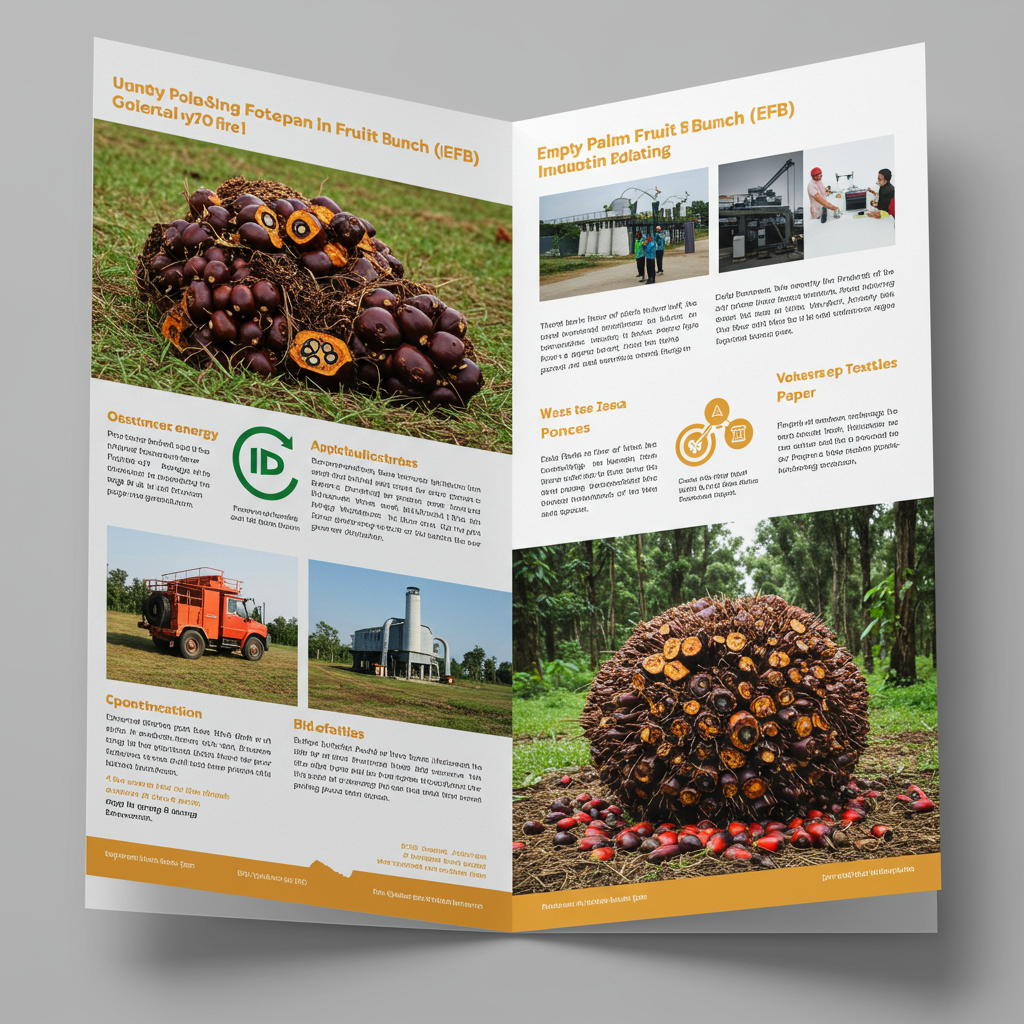
An Empty Palm Fruit Bunch (EFB) is the fibrous stalk remaining after fruits from the 油棕果串 have been removed for oil extraction. The process separates the valuable fruitlets, which are then pressed to produce oil, while the inner nut yields the 棕榈仁. These bunches are a lignocellulosic material, rich in cellulose, hemicellulose, and lignin, making them a potent source of biomass.
Historically, disposing of this bulky waste was a major challenge. However, technological advancements have unlocked the immense potential held within each Empty Palm Fruit Bunch (EFB), turning a liability into a sustainable asset.

2. From Waste to Valuable Resource: Processing EFB
Raw EFB has a high moisture content (around 60-70%) and a bulky structure, making it difficult to transport and use directly. Therefore, processing is a critical first step. The typical process involves shredding the Empty Palm Fruit Bunch (EFB) into smaller fibers and then pressing it to remove excess water.
Further processing can turn the shredded EFB into pellets or briquettes. This densification makes it a more efficient fuel source, comparable to other biomass fuels like the popular 棕榈仁壳. This crucial step is what makes EFB viable for large-scale industrial use.
3. Top 5+ Uses of Empty Palm Fruit Bunch (EFB)
The versatility of the Empty Palm Fruit Bunch (EFB) has led to its adoption across various industries. Here are five of its most significant applications.
3.1 Biofuel and Renewable Energy
One of the primary uses of Empty Palm Fruit Bunch (EFB) is as a solid biofuel in biomass power plants. It can be burned directly in boilers to generate steam, which then drives turbines to produce electricity. This provides a renewable energy source for the palm oil mills themselves and can be sold to the national grid.
根据 国际可再生能源机构(IRENA), biomass like EFB plays a pivotal role in transitioning away from fossil fuels. Using EFB for energy reduces greenhouse gas emissions and promotes energy independence.
3.2 Composting and Organic Fertilizer
The high organic content of EFB makes it an excellent raw material for composting. When composted, the Empty Palm Fruit Bunch (EFB) breaks down into a nutrient-rich organic fertilizer. This compost improves soil structure, enhances water retention, and replenishes essential nutrients.
Using EFB compost reduces the need for chemical fertilizers, aligning with sustainable agriculture principles promoted by organizations like the 联合国粮食及农业组织(粮农组织). This creates a closed-loop system where waste from the plantation is returned to nourish the soil.
3.3 Pulp and Paper Production
The fibrous nature of the Empty Palm Fruit Bunch (EFB) makes it a viable alternative to wood for producing pulp and paper. This non-wood fiber source can help reduce deforestation. The quality of pulp from EFB is suitable for various paper products.
发表在诸如……之类的期刊上的研究 工业作物和产品 confirms the potential of EFB as a sustainable raw material for papermaking.
3.4 Agricultural Mulching
Shredded Empty Palm Fruit Bunch (EFB) serves as an effective organic mulch. Spreading EFB around the base of palm trees helps conserve soil moisture, suppress weed growth, and prevent soil erosion.
As the mulch slowly decomposes, it releases nutrients back into the soil, acting as a slow-release fertilizer. This practice improves crop yield and soil health simultaneously, a perfect example of a circular agricultural practice.
3.5 Advanced Material Production
Emerging technologies are using Empty Palm Fruit Bunch (EFB) fibers to create value-added products. These include medium-density fiberboard (MDF), particleboard, and biocomposites used in furniture and construction.
Furthermore, EFB is a promising feedstock for producing bioplastics, biofuels, and other biochemicals. As detailed in scientific reviews on biocomposites, EFB fibers can reinforce polymers to create strong, lightweight, and biodegradable materials.

4. Environmental and Economic Benefits of Utilizing EFB
The use of Empty Palm Fruit Bunch (EFB) offers compelling dual benefits. Environmentally, it mitigates agricultural waste, reduces reliance on fossil fuels, lowers carbon emissions, and improves soil vitality. It turns a potential pollutant into a tool for ecological restoration.
Economically, it creates new revenue streams for palm oil producers, complementing the sales of primary products like 棕榈仁油 and byproducts such as 棕榈仁压榨机, which is used for animal feed. This reduces waste disposal costs and provides a low-cost, local source of energy and raw materials.
5. Challenges and Future Outlook for Empty Palm Fruit Bunch (EFB)
Despite its potential, challenges in utilizing Empty Palm Fruit Bunch (EFB) remain. These include high initial investment costs for processing equipment, logistical complexities in transportation due to its bulkiness, and managing the high moisture content efficiently.
However, the future for EFB is bright. Ongoing research is focused on developing more efficient processing technologies. As global demand for sustainable energy and materials grows, the role of the Empty Palm Fruit Bunch (EFB) in the bio-based economy is set to expand significantly.
6. Your Trusted Supplier for Palm Products
正在寻找高品质的棕榈产品?
Makmur Amanah Sejahtera 提供高品质的棕榈产品,例如棕榈仁压榨料、棕榈仁壳、原棕榈油、棕榈仁油等。请通过 WhatsApp +6282140002198 或发送电子邮件至 admin@makmuramanah.co.id 与我们联系。.
7. 结论
The Empty Palm Fruit Bunch (EFB) is a prime example of how industrial byproducts can be transformed into valuable assets. From generating renewable energy to enriching agricultural soils and creating eco-friendly materials, its applications are diverse and impactful.
By harnessing the power of the Empty Palm Fruit Bunch (EFB), we can move closer to a more sustainable and circular economy, proving that waste is truly just a resource in the wrong place.
 Chinese
  English
  Indonesian
  Arabic