
Ever wondered if there’s a better, more sustainable way to fire up your grill? If you’re looking for a game-changer in your BBQ sessions or a powerful, natural purification agent, it’s time to learn about 椰壳炭. This eco-friendly alternative to traditional charcoal is rapidly gaining popularity for its incredible efficiency, long burn time, and minimal environmental impact. It’s a simple switch that offers massive benefits.
This guide explores everything you need to know about coconut shell charcoal, from its unique production process to its wide range of uses. We’ll dive into the key benefits that make it a superior choice for grilling enthusiasts, gardeners, and eco-conscious consumers alike. Get ready to discover your new favorite fuel.
目录
- 椰壳炭究竟是什么?
- 椰壳活性炭的7大惊人功效
- 1. 它是环保和可持续发展的典范
- 2. It Burns Hotter and Lasts Significantly Longer
- 3. It Produces Minimal Smoke and Ash
- 4. It’s 100% Natural and Chemical-Free
- 5. It Has Incredibly Versatile Uses
- 6. A Look at Other Valuable Biomass Fuels
- 7. It’s More Cost-Effective in the Long Run
- 8. It’s Odorless and Provides a Neutral Flavor
- How to Use Coconut Shell Charcoal for the Perfect BBQ
- Coconut Shell vs. Traditional Charcoal: A Quick Comparison
- 常见问题解答 (FAQ)
- Why You Should Make the Switch Today
椰壳炭究竟是什么?
Coconut shell charcoal is a type of charcoal produced from the hard, discarded shells of coconuts. Instead of letting this agricultural waste end up in landfills, it is repurposed through a process called pyrolysis. The shells are carbonized in a kiln with limited oxygen, which burns away volatile compounds and leaves behind pure carbon.
The result is a highly dense and efficient fuel source. This process transforms waste into a valuable product, making coconut shell charcoal a prime example of a circular economy. Its renewable nature stands in stark contrast to traditional wood charcoal, which often contributes to deforestation.

Image Suggestion: A visual comparison of raw coconut shells and the resulting charcoal briquettes.
Top Benefits of Coconut Shell Charcoal
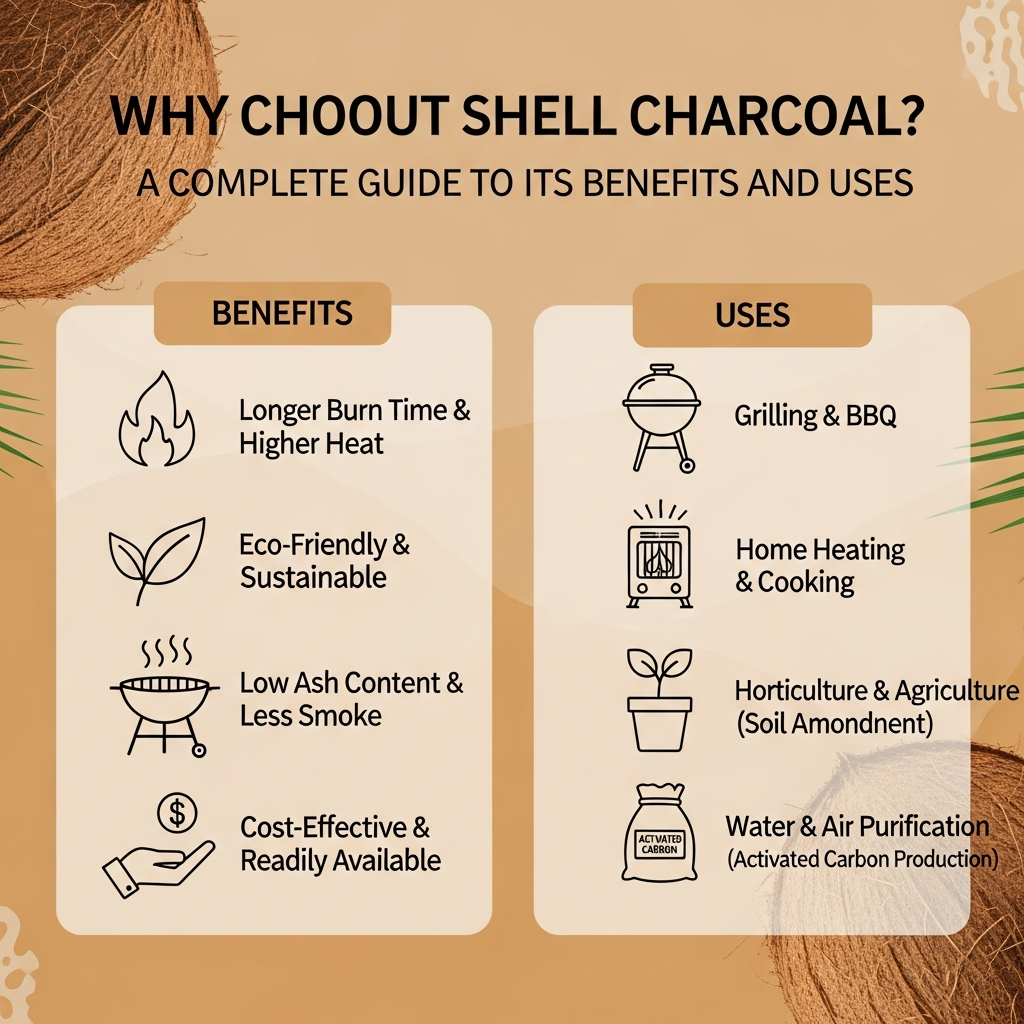
So, why should you choose coconut shell charcoal for your next cookout or project? The advantages are clear, ranging from environmental responsibility to superior performance. Here are the top reasons to make the switch.
1. 它是环保和可持续发展的典范
The most significant benefit is its sustainability. Coconut shell charcoal is made from a byproduct of the coconut industry that would otherwise be discarded. No trees are cut down to produce it, which helps combat deforestation. This aligns with global efforts toward more sustainable resource management, as highlighted by organizations like the United Nations Department of Economic and Social Affairs.
2. It Burns Hotter and Lasts Significantly Longer
Thanks to its high carbon content and density, coconut shell charcoal burns at a higher temperature and for a longer duration than most traditional lump charcoals or briquettes. A single batch can last for hours, providing consistent heat that is perfect for searing steaks or slow-roasting meats. This means less refueling and better temperature control during your cooking.
3. It Produces Minimal Smoke and Ash
If you’re tired of choking on smoke or dealing with massive piles of ash, this is the fuel for you. High-quality coconut shell charcoal produces very little smoke and leaves behind only about 2-4% of its original weight in ash. This makes for a more pleasant grilling experience and a much easier cleanup process afterward.
4. It’s 100% Natural and Chemical-Free
Reputable brands of coconut shell charcoal are free from the binders, fillers, and chemical accelerants often found in conventional briquettes. This means no unwanted chemical smells or flavors are transferred to your food. You get a clean, pure heat source that lets the natural taste of your ingredients shine through.
5. It Has Incredibly Versatile Uses
While fantastic for grilling, the uses for this material go much further. Its properties make it useful in various applications:
- Grilling and BBQ: Its primary use, prized for high, consistent heat.
- 水和空气净化: When “activated,” its porous structure is excellent for trapping impurities. According to a study in the 环境化学工程杂志, activated carbon from coconut shells is highly effective for water treatment.
- 园艺(生物炭): Crushed coconut shell charcoal can be used as biochar to improve soil structure, aeration, and water retention in gardens. This helps create a healthier environment for plant roots.
- Hookahs: It is also the preferred charcoal for hookahs because it is odorless and long-lasting.
6. A Look at Other Valuable Biomass Fuels
While coconut shell charcoal is a standout star, it’s part of a larger family of eco-friendly biomass fuels derived from agricultural industries. The palm oil industry, for instance, produces several high-value resources. Byproducts like the versatile 棕榈仁压榨机, used in animal feed, and the energy-dense 棕榈仁壳, another popular biofuel, showcase how waste can be transformed into value. The process begins with the 油棕果串, from which the 棕榈仁 is extracted to create valuable oils like 粗棕榈油 和 棕榈仁油. Understanding this ecosystem highlights the growing importance of sustainable byproducts in our global energy mix.
7. It’s More Cost-Effective in the Long Run
While the initial price might be slightly higher than some budget charcoals, its long burn time means you use significantly less product per cooking session. A single bag of coconut shell charcoal will last you much longer than a comparable bag of regular briquettes, making it the more economical choice over time.
8. It’s Odorless and Provides a Neutral Flavor
Unlike mesquite or hickory charcoals that impart a strong, smoky flavor, coconut shell charcoal is completely neutral. It is odorless and won’t interfere with the carefully selected seasonings and marinades on your food. This gives you full control over the final taste profile, which is a major advantage for many chefs and home cooks.
Video Suggestion
A short, embedded YouTube video demonstrating how to light coconut shell charcoal using a chimney starter, highlighting how quickly it gets ready and how little smoke is produced.
How to Use Coconut Shell Charcoal for the Perfect BBQ
Using coconut shell charcoal is simple and similar to using other types of charcoal. For best results, use a chimney starter.
- Fill the Chimney: Fill your chimney starter with the desired amount of coconut shell charcoal briquettes.
- Light It Up: Place a couple of natural fire starters or crumpled newspaper balls under the chimney and light them.
- Wait for the Glow: In about 10-15 minutes, the briquettes at the top should be covered in a thin layer of light gray ash. This means they’re ready.
- Pour and Grill: Carefully pour the hot coals into your grill, arrange them for your desired cooking zone (direct or indirect heat), and place the cooking grate on top. You’re ready to cook! For more tips, grilling experts at AmazingRibs.com offer fantastic resources on heat management.
Coconut Shell vs. Traditional Charcoal: A Quick Comparison
Here’s a simple breakdown of how coconut shell charcoal stacks up against traditional wood-based options.
| 特征 | 椰壳木炭 | Traditional Charcoal (Briquettes/Lump) |
|---|---|---|
| 来源 | 可再生副产品(椰子壳) | Wood (can contribute to deforestation) |
| 燃烧时间 | Very long (2-3+ hours) | Shorter |
| 热输出 | 高且稳定 | Variable (lump) or moderate (briquettes) |
| 灰分含量 | Very low (~2-4%) | High (~8-20%) |
| Additives | None (in high-quality brands) | Often contains binders and fillers |
常见问题解答 (FAQ)
Is coconut shell charcoal better than hardwood lump charcoal?
It often comes down to preference, but coconut shell charcoal typically offers a more consistent shape, longer burn time, and lower ash content than lump charcoal, which can have irregular sizes and burn rates.
我可以在任何类型的烤架上使用吗?
Yes! It works perfectly in all charcoal grills, including kettle grills, kamado-style cookers (like the Big Green Egg), and smokers. Its low ash production is particularly beneficial for ceramic cookers where airflow is critical.
Where can I buy high-quality coconut shell charcoal?
You can find it at specialty BBQ stores, some larger hardware stores, and online retailers. Look for brands that specify they are 100% natural and free of additives.
Makmur Amanah Sejahtera 提供高品质的棕榈产品,例如棕榈仁压榨料、棕榈仁壳、原棕榈油、棕榈仁油等。请通过 WhatsApp +6282140002198 或发送电子邮件至 admin@makmuramanah.co.id 与我们联系。. 从其可持续的起源到其卓越的性能,, 椰壳炭 presents a compelling case for anyone who loves to grill. It delivers a hotter, longer, and cleaner burn, allowing you to focus on what matters most: creating delicious food for friends and family. By choosing coconut shell charcoal, you are not only upgrading your grilling experience but also making a responsible choice for the planet. It’s a small change in your routine that contributes to a larger, positive impact. So next time you shop for fuel, give coconut shell charcoal a try and experience the difference for yourself.正在寻找高品质的棕榈产品?
Why You Should Make the Switch Today
 Chinese
  English
  Indonesian
  Arabic