
内容
If you’re looking for a sustainable, high-performance alternative to traditional charcoal, it’s time to get acquainted with 椰壳炭. This amazing, eco-friendly product is rapidly gaining popularity for everything from backyard barbecues to industrial purification. It’s more than just a fuel; it’s a smart choice for the planet and delivers outstanding results.
This guide will walk you through everything you need to know. We’ll explore what makes this type of charcoal special, how it’s made, its key benefits, and its wide range of uses that go far beyond the grill.
椰壳炭究竟是什么?
椰壳炭 is a type of charcoal produced from the hard, woody shells of coconuts. Unlike traditional wood charcoal, which contributes to deforestation, this product is made from a waste material generated by the thriving coconut industry (for products like coconut oil, water, and milk).
The shells undergo a special process that transforms them into a highly dense, carbon-rich material. Its unique properties include a higher calorific value (it burns hotter), lower ash content, and a unique cellular structure, making it one of the most efficient and clean-burning charcoals available today.

How is Coconut Shell Charcoal Made? The 3-Step Process
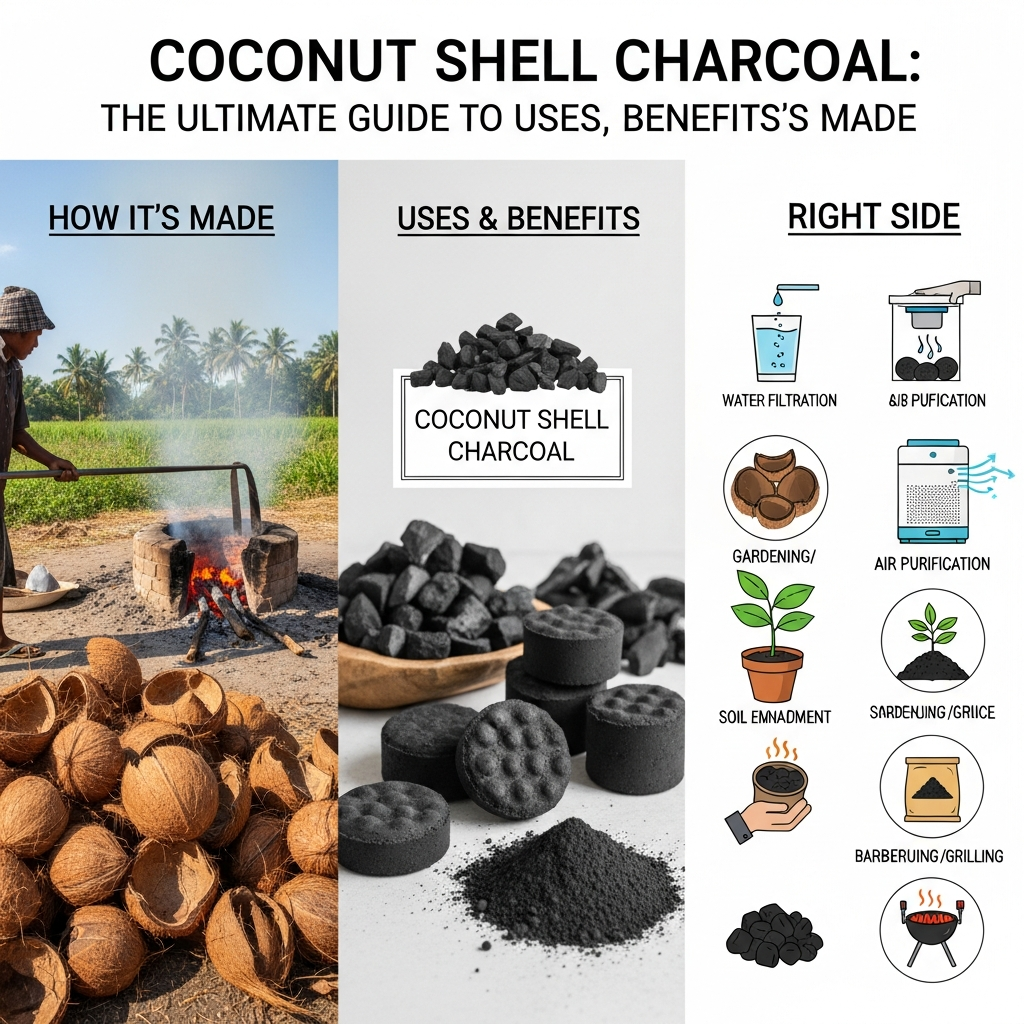
创造高质量 椰壳炭 is a fascinating process of transformation. It involves heating the shells in an environment with limited oxygen, a process known as pyrolysis. This method burns off volatile compounds like water, methane, and hydrogen, leaving behind pure carbon.
Step 1: Sourcing and Preparing the Shells
The journey begins with collecting coconut shells from processing plants. These shells are then thoroughly cleaned to remove any remaining coconut fibers or dirt. Once clean, they are left to dry completely under the sun, which is crucial for ensuring an efficient carbonization process.
Step 2: Carbonization in a Kiln
The dried shells are placed into a specially designed kiln. The kiln is sealed to restrict the oxygen supply and then heated to temperatures ranging from 500 to 900°C. This controlled heating process, detailed in studies on pyrolysis, breaks down the organic material without allowing it to combust fully, resulting in charcoal.
Step 3: Cooling and Processing
After carbonization is complete, the glowing charcoal is carefully removed and cooled down in an airtight container to prevent it from turning into ash. Once cooled, the raw charcoal is often crushed and mixed with a natural starch binder before being compressed into briquettes, the familiar pillow shape you see in bags.
使用椰壳活性炭的五大好处
Why is there so much buzz around 椰壳炭? The benefits are clear, making it a superior choice for both consumers and the environment.
1. 环保且可持续
This is perhaps its greatest advantage. Since it’s made from a waste product, it doesn’t require cutting down trees. This helps preserve forests and reduce the overall carbon footprint associated with charcoal production, a goal supported by organizations like the 雨林联盟.
2. 燃烧温度更高,持续时间更长
Coconut shell charcoal has a higher fixed carbon content than most wood charcoals. This means it can produce a significantly hotter fire and maintain that heat for a longer period. You’ll use less charcoal per grilling session, saving you money in the long run.
3. 产生的烟雾和灰烬较少
Because it’s made from dense shells and contains very few impurities, this charcoal produces minimal smoke and sparks. Furthermore, it leaves behind only about 2-4% of its original weight as ash, making cleanup incredibly easy compared to traditional briquettes.
4. 天然无化学成分
高质量 椰壳炭 is free from the chemical binders, fillers, and accelerants found in many conventional charcoal briquettes. This ensures that your food’s flavor remains pure and untainted, giving you a clean, natural smoky taste.
5. Highly Porous for Superior Filtration
When “activated,” coconut shell charcoal becomes incredibly porous. This vast surface area is perfect for adsorption, the process of trapping impurities. This makes it a world-class material for water and air purification, as recognized by agencies like the 美国环境保护署(EPA).

The Many Uses of Coconut Shell Charcoal
While grilling is its most famous application, the uses for this versatile material are incredibly diverse.
As a High-Quality Fuel for Grilling (BBQ)
For barbecue enthusiasts, 椰壳炭 is a game-changer. It provides a steady, high heat that’s perfect for searing steaks, yet it can also maintain a low, consistent temperature for smoking. Its clean-burning nature ensures your food tastes like food, not fuel.
Activated Coconut Shell Charcoal for Purification
This is where the material truly shines. As activated carbon, its microporous structure traps organic chemicals and contaminants. It is a key component in:
- Water Filters: Used in everything from household water pitchers to large-scale municipal water treatment plants to remove chlorine, sediment, and volatile organic compounds (VOCs).
- 空气净化器: Effectively removes odors, gases, and pollutants from the air, making it ideal for homes and industrial settings.
In Horticulture and Agriculture
当用作生物炭时,, 椰壳炭 can significantly improve soil health. It enhances water retention, improves aeration, and provides a stable habitat for beneficial microbes. This leads to healthier plants and increased crop yields, a practice well-documented by agricultural extensions like the 宾夕法尼亚州立大学推广部.
Coconut Shell Charcoal vs. Other Charcoals: A Quick Comparison
How does it stack up against the competition? Here’s a quick breakdown.
| 特征 | 椰壳木炭 | Hardwood Lump Charcoal | 传统煤球 |
|---|---|---|---|
| 来源 | Renewable byproduct | Hardwood trees | 木屑、锯末、添加剂 |
| 热输出 | 非常高 | High (but can be inconsistent) | 中等的 |
| 燃烧时间 | 长的 | 短至中 | 中等的 |
| 灰分产量 | Very Low (~2-4%) | 低的 | High (~8-15%) |
| 可持续性 | 出色的 | Depends on sourcing | 低的 |
Exploring Other Sustainable Palm Products
The innovation in utilizing agricultural byproducts isn’t limited to coconuts. The oil palm industry also produces a wealth of valuable and sustainable resources. These products play a crucial role in various sectors, from animal feed to renewable energy.
At Makmur Amanah Sejahtera, we specialize in harnessing the full potential of the oil palm. Our range of high-quality products includes:
- 棕榈仁压榨机(PKE): A nutrient-rich ingredient widely used in animal feed.
- Palm Kernel Shell (PKS): An excellent eco-friendly biofuel alternative to coal.
- 棕榈仁: The seed from which valuable oils are extracted.
- 粗棕榈油(CPO): A versatile edible oil used in a vast array of products.
- 棕榈仁油(PKO): Another valuable oil with unique properties for cooking and oleochemicals.
- 油棕果串: The fibrous residue used for bio-composting and renewable energy.
Makmur Amanah Sejahtera 提供高品质的棕榈产品,例如棕榈仁压榨料、棕榈仁壳、原棕榈油、棕榈仁油等。请通过 WhatsApp +6282140002198 或发送电子邮件至 admin@makmuramanah.co.id 与我们联系。.正在寻找高品质的棕榈产品?
常见问题解答 (FAQ)
Q: What is the difference between coconut shell charcoal and activated charcoal?
A: All activated charcoal is charcoal, but not all charcoal is activated. “Activation” is a secondary process where regular charcoal (like 椰壳炭) is treated with steam or high heat to create a massive network of microscopic pores, dramatically increasing its surface area for adsorption.
Q: Is coconut shell charcoal better for grilling?
A: For many, yes. It burns hotter, longer, and more cleanly than most other charcoal types. This provides excellent searing capability and consistent heat for long cooks, all while producing very little ash for easy cleanup.
Q: Is it safe to use?
A: Absolutely. Pure 椰壳炭 is completely natural and contains no harmful chemicals. It’s a safe and healthy option for grilling and is a preferred material for purifying drinking water and air.
结论
从后院烧烤架到先进的过滤系统,, 椰壳炭 stands out as a superior product. It offers a rare combination of high performance, environmental responsibility, and versatility that few other materials can match.
By choosing charcoal made from coconut shells, you’re not just getting a better barbecue experience; you’re also making a positive choice for the planet. So next time you fire up the grill or replace a water filter, consider making the switch. It’s a small change that delivers powerful results.
 Chinese
  English
  Indonesian
  Arabic