
目录
空棕榈果串(EFB)究竟是什么?
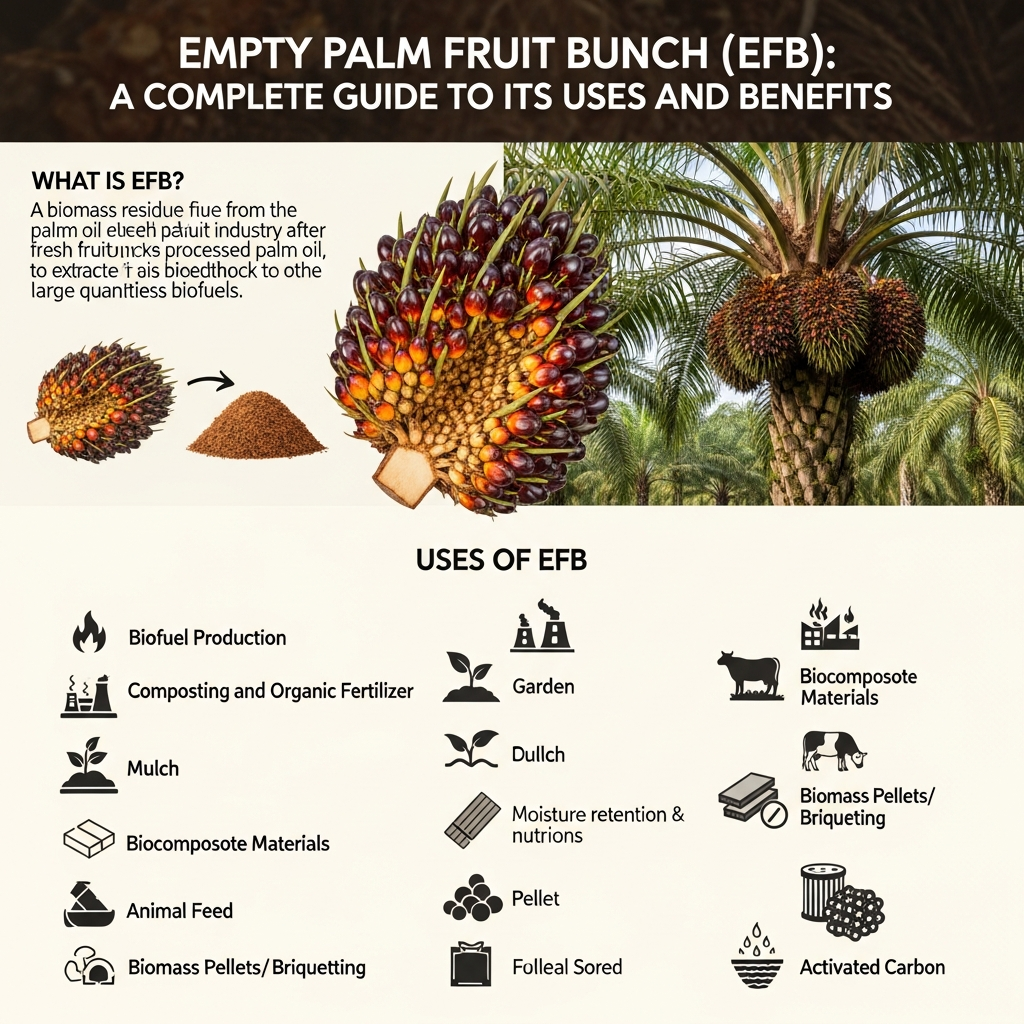
In the vast world of palm oil production, a significant amount of biomass is generated. At the forefront of this is the 空棕榈果串(EFB), a fibrous material that remains after the palm fruits are removed from the 油棕果串 (FFB) during the milling process that extracts 粗棕榈油. For years, it was considered agricultural waste, often left to rot or burned, causing environmental concerns. However, this perception has completely changed.
Today, the Empty Palm Fruit Bunch is recognized as a valuable renewable resource. It is a lignocellulosic material, primarily composed of cellulose, hemicellulose, and lignin. This composition gives it immense potential for a wide range of applications, transforming it from a liability into a cornerstone of the circular economy within the palm oil industry.
Understanding the value of EFB is key to unlocking more sustainable industrial and agricultural practices. This guide will walk you through everything you need to know about this remarkable byproduct.

How is an Empty Palm Fruit Bunch Produced?
The creation of an 空棕榈果串 is an integral part of the palm oil milling process. It begins when the Fresh Fruit Bunches (FFB) arrive at the mill from the plantations. The first step involves sterilization, where the bunches are steamed under high pressure to halt enzymatic activity and loosen the fruits.
Following sterilization, the bunches are fed into a machine called a thresher. This rotating drum detaches the palm fruits from the bunch. The separated fruits continue on for oil extraction, while the leftover fibrous bunch is now officially an 空棕榈果串(EFB). Millions of tons are produced annually, highlighting the incredible scale of this resource.
Initially, EFB has a very high moisture content, often around 60-70%, making it heavy and prone to decomposition. This is why immediate processing, such as shredding or pressing, is crucial for its use in various value-added applications. For more details on the milling process, you can refer to in-depth studies like those found on 科学直接.
The Key Properties of an Empty Palm Fruit Bunch
The physical and chemical properties of an 空棕榈果串 are what make it so useful. While seen as waste, its composition is a rich source of organic material and energy.
- 高纤维含量: Its lignocellulosic nature makes it an excellent raw material for pulp, composites, and fiberboard.
- Rich in Nutrients: EFB is particularly high in potassium (K), which makes it a fantastic natural fertilizer and soil conditioner in agriculture.
- Calorific Value: When dried, an Empty Palm Fruit Bunch has a decent calorific value, making it a viable biofuel for generating steam and electricity in boilers.
- High Moisture: As mentioned, its initial high water content is a key challenge that must be managed for efficient transportation and use as a fuel source.
4 Incredible Uses and Applications of Empty Palm Fruit Bunch
多功能性 空棕榈果串 has led to its adoption across several major industries. It is a prime example of turning waste into wealth.
1. 生物燃料和可再生能源发电
One of the most significant uses for EFB is as a solid biofuel. Palm oil mills often use EFB in their own boilers to generate steam and electricity, a process known as cogeneration. This reduces their reliance on fossil fuels and lowers operational costs. Alongside other biomass like the 棕榈仁壳, EFB is a powerful tool for sustainable energy. The 空棕榈果串 can also be processed into pellets or briquettes, creating a denser, more transportable, and efficient energy source for other industrial uses. This plays a vital role in the renewable energy matrix, as highlighted by agencies like the 国际可再生能源机构(IRENA).
2. Organic Mulch and Compost in Agriculture
In its raw or composted form, EFB is a superb soil amendment. When spread in plantations as mulch, it helps to retain soil moisture, suppress weed growth, and prevent soil erosion. As the 空棕榈果串 decomposes, it releases valuable nutrients, especially potassium, back into the soil, reducing the need for chemical fertilizers. This practice aligns perfectly with sustainable agriculture principles, promoting healthier soil for future crops. University agricultural extensions, like the 宾夕法尼亚州立大学推广部, often detail the broad benefits of using organic mulch.
3. 可持续纸浆和纸张生产
The high cellulose fiber content in an 空棕榈果串 makes it a promising non-wood alternative for producing pulp and paper. This helps reduce the logging of natural forests for paper production. While challenges like the presence of silica need to be addressed through specific pulping processes, the potential to create biodegradable packaging and paper products from EFB is a significant step towards more sustainable materials.
4. Eco-Friendly Fiberboard and Composites
EFB fibers can be combined with binders to manufacture medium-density fiberboard (MDF), particleboard, and other composite materials. These boards are used in furniture, construction, and even in the automotive industry for interior panels. Using an 空棕榈果串 for these products provides a sustainable, low-cost raw material and reduces waste destined for landfills.
The Major Environmental and Economic Benefits of EFB
利用 空棕榈果串 offers a powerful dual advantage: it’s good for the planet and good for business.
From an environmental standpoint, it tackles waste management issues at mills, reduces greenhouse gas emissions by replacing fossil fuels, and enriches soil to curb land degradation. Economically, it creates new revenue streams from a byproduct, cuts energy costs for mills, and drives innovation in green technologies. This approach is a textbook example of a circular economy, a concept championed by organizations like the 联合国环境规划署(UNEP).
Challenges and the Promising Future of EFB
Despite its benefits, using EFB isn’t without challenges. Its high moisture and bulkiness make transportation costly and inefficient. It also requires investment in specific processing equipment, whether for drying, shredding, or pelletizing. These logistical hurdles are the primary constraints on its wider adoption.
However, the future for the 空棕榈果串 is incredibly bright. Ongoing research is focused on developing more efficient conversion technologies and creating higher-value products like biofuels, biochemicals, and advanced materials. As the world pushes for greater sustainability, the role of EFB as a key resource will only continue to grow.
结论:不仅仅是浪费
这 空棕榈果串(EFB) has successfully transitioned from being an overlooked waste product to a celebrated resource in the quest for sustainability. Its applications in energy, agriculture, and manufacturing demonstrate its immense versatility and value.
By harnessing the full potential of the Empty Palm Fruit Bunch, the palm oil industry can significantly improve its environmental footprint. It is a key part of a larger ecosystem of valuable materials derived from the palm fruit, where nothing goes to waste. From the fruitlet’s core, we get the valuable 棕榈仁, which is then processed to produce both high-protein animal feed, 棕榈仁压榨机, and a versatile specialty oil, 棕榈仁油.
This whole-fruit approach showcases a commitment to a global circular economy. The Empty Palm Fruit Bunch stands as a powerful testament to the idea that in nature, there is no such thing as waste—only untapped potential.
您值得信赖的高品质棕榈产品供应商
正在寻找高品质的棕榈产品?
Makmur Amanah Sejahtera 提供高品质的棕榈产品,例如棕榈仁压榨料、棕榈仁壳、原棕榈油、棕榈仁油等。请通过 WhatsApp +6282140002198 或发送电子邮件至 admin@makmuramanah.co.id 与我们联系。.
 Chinese
  English
  Indonesian
  Arabic