
目录
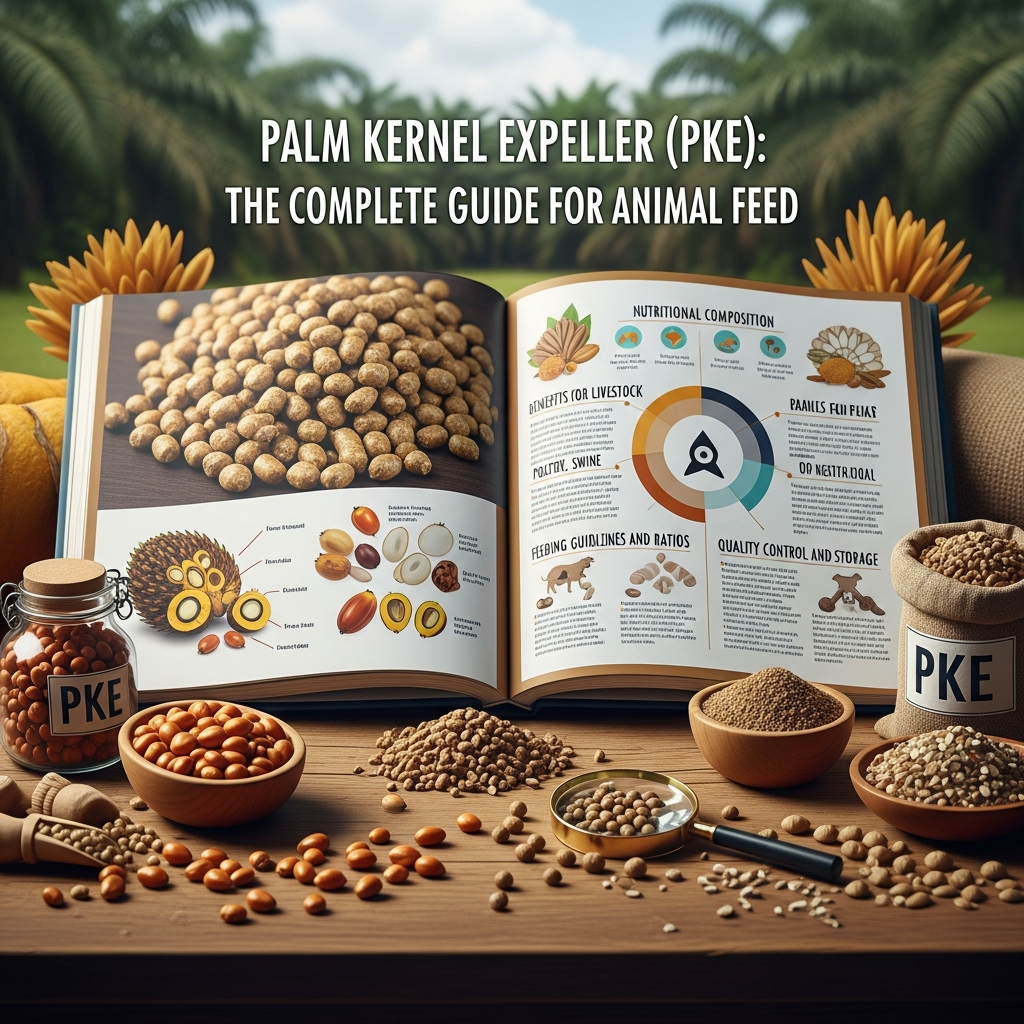
In the quest for sustainable and affordable livestock nutrition, farmers and feed manufacturers are constantly exploring alternative ingredients. This is where 棕榈仁压榨机 (PKE) emerges as a powerful contender, offering a unique blend of cost-efficiency and nutritional value. But what exactly is it, and how can it be effectively integrated into animal diets?
This complete guide for 2025 breaks down everything you need to know about Palm Kernel Expeller (PKE). We’ll explore its origins, nutritional benefits, and practical applications, providing you with the essential knowledge to make informed decisions for your animal feed strategy.

棕榈仁粕(PKE)究竟是什么?
Palm Kernel Expeller (PKE) is a co-product derived from the palm oil industry. After the palm fruit’s flesh is processed to extract 粗棕榈油, the hard nut in the center remains. Inside this nut is the 棕榈仁, which is rich in a different type of oil known as 棕榈仁油.
PKE is the solid, protein-rich material left behind after the oil is mechanically extracted from these kernels using an expeller press. This process makes it a valuable and sustainable resource, transforming a potential waste product into a key ingredient for the global animal feed market. The quality and composition of 棕榈仁压榨机(PKE) can vary based on the efficiency of the oil extraction process.
棕榈仁粕(PKE)的营养成分
Understanding the nutritional makeup of Palm Kernel Expeller (PKE) is crucial for its proper use. While not a complete feed on its own, it serves as an excellent base ingredient, particularly for ruminants. It is known for its high fiber and moderate protein content.
以下是典型的营养成分表:
- 粗蛋白(CP): 14-18%
- 粗纤维(CF): 15-22%
- 残留油脂: 5-12%
- 代谢能(ME): Varies by species, but is significant for ruminants.
- 矿物质: Contains essential minerals like phosphorus, magnesium, and iron. However, it is high in copper, which requires careful formulation for sheep.
Due to its composition, 棕榈仁压榨机(PKE) is valued more for its fiber and energy than as a primary protein source. For a detailed scientific analysis of its components, Feedipedia offers a comprehensive database on its nutritional values.
在动物饲料中使用棕榈仁粕 (PKE) 的 5 个主要好处
Incorporating PKE into feed rations offers several compelling advantages for livestock producers.
1. 卓越的性价比
One of the primary drivers for using 棕榈仁压榨机(PKE) is its affordability. It is often significantly cheaper than conventional feed ingredients like soybean meal or corn, allowing farmers to reduce production costs without compromising energy intake for their herds.
2. Enhanced Sustainability
PKE is a by-product, meaning it makes use of material that would otherwise be discarded. Its utilization helps create a more circular economy within the agricultural sector, reducing waste and promoting resource efficiency. This approach mirrors the full utilization of the palm tree, where other parts like the 油棕果串 are also used, creating a zero-waste cycle. This aligns with modern sustainable farming practices, a topic extensively covered by organizations like the 联合国粮食及农业组织(粮农组织).
3. 极佳的膳食纤维来源
The high fiber content in 棕榈仁压榨机(PKE) is particularly beneficial for ruminants like cattle, sheep, and goats. This fiber promotes good rumen function, stimulates digestion, and contributes to overall gut health, leading to better feed efficiency and animal well-being.

4. Reliable Energy Source
The residual oil left in the PKE after the extraction process provides a dense and readily available source of energy for livestock. This fat content helps improve the body condition of animals and can support milk production in dairy cows.
5. Year-Round Availability
As a product of the massive global palm oil industry, 棕榈仁压榨机(PKE) is consistently available throughout the year. This reliability prevents feed formulation disruptions that can occur with seasonal crops.
Applications: Which Animals Can Consume Palm Kernel Expeller (PKE)?
While PKE is versatile, its suitability varies by animal species due to its high fiber content.
- 反刍动物(牛、山羊、绵羊): This is the ideal application. Ruminants can efficiently digest the high fiber in PKE, making it a staple in many beef and dairy cattle diets worldwide. It can often comprise up to 50% of the concentrate ration for cattle. For more on ruminant nutrition, academic resources like the 动物科学杂志 provide in-depth research.
- 家禽: Use in poultry is limited. The high fiber is difficult for chickens to digest and can hinder nutrient absorption. If used, it should be at very low inclusion rates (typically under 5%) and preferably in layer hen diets rather than for broilers.
- 猪: Similar to poultry, the high fiber content makes 棕榈仁压榨机(PKE) less suitable for pigs. It can be used in small quantities for sow diets but is generally avoided for growing pigs.
- 水产养殖: Research has shown that PKE can be included in the diets of some herbivorous fish species, offering a low-cost plant-based protein alternative.
Limitations and Considerations When Using Palm Kernel Expeller (PKE)
To use PKE effectively, it’s essential to be aware of its limitations.
- 砂砾和贝壳含量: Poorly processed PKE can contain a high percentage of 棕榈仁壳, which reduces its digestibility and palatability. Always source from reputable suppliers who guarantee low shell content.
- 氨基酸失衡: 棕榈仁压榨机(PKE) is deficient in key essential amino acids like lysine and methionine. Rations must be balanced with other protein sources to meet the complete nutritional requirements of the animals.
- 霉菌毒素风险: Like any feedstuff, PKE is susceptible to mold and mycotoxin contamination if not stored properly in a cool, dry place. Poor storage can lead to health issues in livestock. The World Health Organization (WHO) provides information on the dangers of mycotoxins.
- 适口性: Some animals may find PKE less palatable than other feeds. It is often introduced gradually and mixed with more palatable ingredients like molasses to encourage intake.
Sourcing and Quality Control for Palm Kernel Expeller (PKE)
The success of using 棕榈仁压榨机(PKE) hinges on quality. When sourcing, look for a supplier who can provide a product analysis certificate. Key quality indicators to check for are:
- 水分含量: Should be below 12% to prevent mold growth.
- Crude Protein and Fiber Levels: Should be within the expected ranges.
- 壳内容物: Should be as low as possible, ideally under 5%.
- 颜色和气味: Good quality PKE has a light brown color and a fresh, nutty aroma. A dark color or musty smell can indicate poor quality or spoilage.
您值得信赖的PKE供应商
正在寻找高品质的棕榈产品?
Makmur Amanah Sejahtera 提供高品质的棕榈产品,例如棕榈仁压榨料、棕榈仁壳、原棕榈油、棕榈仁油等。请通过 WhatsApp +6282140002198 或发送电子邮件至 admin@makmuramanah.co.id 与我们联系。.
结论:棕榈仁粕在动物营养中的未来
棕榈仁压榨机(PKE) stands out as a valuable, sustainable, and economically viable feed ingredient, especially for the ruminant sector. Its ability to convert an industrial by-product into a source of energy and fiber for livestock is a testament to agricultural innovation.
By understanding its nutritional profile, benefits, and limitations, farmers and feed formulators can safely incorporate PKE to lower costs and enhance the sustainability of their operations. When sourced carefully and balanced correctly, PKE is more than just a filler—it’s a strategic component of modern animal nutrition.
 Chinese
  English
  Indonesian
  Arabic