
Palm Kernel Shell: 7 Proven Facts for Incredible ROI 2026
棕榈仁壳 (PKS) represents a revolutionary breakthrough for heavy industries struggling to reduce carbon emissions while maintaining high energy output. By switching to this sustainable biomass alternative, modern power plants and manufacturing facilities can significantly slash operational costs. We will show you exactly how this incredible resource can transform your long-term energy strategy in 2026.
Globally, the dependency on traditional fossil fuels continues to drive up both financial costs and severe environmental degradation. The World Energy Council reports that industrial carbon emissions must drop by 45% this decade to meet crucial global climate goals. Consequently, facility managers are desperately searching for viable, highly cost-effective alternatives to coal.
Fortunately, utilizing premium-grade biomass offers an immediate, plug-and-play solution for existing industrial boiler systems worldwide. You no longer have to compromise between corporate profitability and essential environmental sustainability. Let us dive deep into the definitive specifications, applications, and proven benefits of this powerful eco-friendly fuel.
What Is Palm Kernel Shell? (The Definitive Answer)

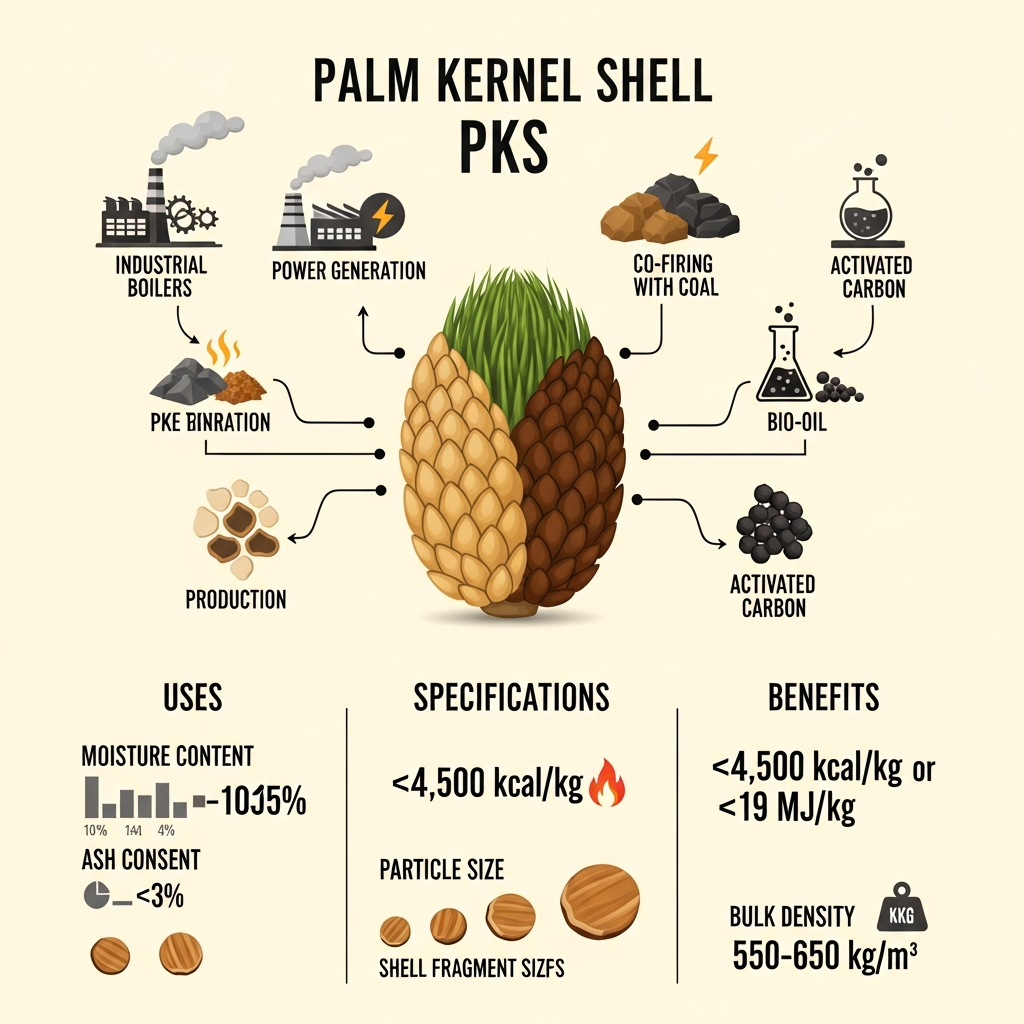
棕榈仁壳 is a high-calorific biomass fuel derived from the crushed remnants of palm nuts after palm oil extraction. This woody, fibrous byproduct features excellent combustion properties, low ash content, and high bulk density, making it an ideal renewable energy source for industrial boilers and commercial power plants globally.
Historically, these shells were considered mere agricultural waste within the massive Southeast Asian palm oil industry. Today, advanced logistical processing has elevated them to a highly sought-after, globally traded energy commodity. Furthermore, their unique physical characteristics prevent rapid decomposition, allowing for safe, long-term stockpiling even in humid tropical climates.
Moreover, the utilization of this specific resource exemplifies the core principles of a successful circular economy. Instead of rotting in massive agricultural landfills and releasing harmful methane gas, the material actively displaces highly polluting fossil fuels. Therefore, adopting 棕榈仁壳 translates into immediate, measurable environmental and economic victories.
The Rigorous Processing Journey: From Plantation to Power Plant
Understanding the intricate supply chain provides crucial insight into why this material maintains such high energy consistency. The journey from tropical plantation to a roaring industrial boiler involves several meticulously controlled stages. Consequently, quality assurance during these phases guarantees optimal thermal output.
Initial Extraction Methods and Separation
Initially, massive fresh fruit bunches are harvested and transported to regional milling facilities for immediate sterilization and pressing. After extracting the crude palm oil, the remaining nuts undergo a rigorous mechanical cracking process. This specific procedure efficiently separates the valuable inner kernel from the rigid, protective outer shell.
Once separated, the raw material is extensively washed to remove residual oils, dirt, and fibrous mesocarp debris. Eliminating these impurities is absolutely vital because excess residue can significantly lower the overall calorific value. Additionally, clean shells drastically reduce the risk of spontaneous combustion during bulk maritime shipping.
Quality Control for Palm Kernel Shell Biomass
Following the intensive washing phase, the material enters large-scale rotary sieves designed to eliminate undersized fragments and excessive dust. High-quality 棕榈仁壳 must maintain a uniform particle size to ensure smooth, uninterrupted feeding into automated boiler systems. Therefore, strict screening protocols separate the premium fuel from low-grade agricultural waste.
Furthermore, magnetic separators are strategically deployed across the conveyor belts to extract dangerous tramp metal. Even tiny metallic fragments can cause catastrophic damage to expensive industrial crushing and grinding machinery. Ultimately, these rigorous quality control measures ensure that end-users receive a safe, highly efficient, and consistent energy product.
Why Palm Kernel Shell Outperforms Traditional Fossil Fuels
For decades, sub-bituminous coal remained the undisputed king of base-load industrial energy generation globally. However, stringent international carbon taxes and aggressive environmental regulations have drastically altered the financial landscape. Organizations must aggressively pivot toward sustainable alternatives to remain financially competitive.
Exceptional Calorific Value and Unmatched Efficiency
One of the primary reasons this specific biomass fuel excels is its truly remarkable energy density. When properly dried and professionally processed, the gross calorific value (GCV) easily rivals low-grade industrial coal. Therefore, large-scale facilities can achieve comparable, consistent thermal output without generating a devastating environmental footprint.
Unlike lighter agricultural residues, the dense, woody structure of 棕榈仁壳 guarantees a slow, highly sustained burn rate. This specific characteristic provides a highly stable temperature profile within the combustion chamber, which is crucial for sensitive manufacturing processes. Furthermore, it completely eliminates the rapid temperature fluctuations commonly associated with inferior biomass materials.
Favorable Ash and Critical Sulfur Profiles
Additionally, the extremely low sulfur content practically eliminates the highly corrosive emissions that typically destroy expensive boiler equipment. This incredible characteristic drastically reduces mandatory maintenance downtime and significantly extends the operational lifespan of critical industrial machinery. Ultimately, these savings substantially offset initial procurement costs.
Here are three critical advantages over traditional industrial coal:
- Zero net carbon emissions: The specific carbon released during combustion exactly equals the carbon absorbed during the plant’s natural growth cycle.
- Minimal ash residue: Producing strictly less than 3% ash, subsequent disposal costs represent just a tiny fraction of what heavy coal combustion requires.
- Reduced equipment corrosion: Negligible sulfur dioxide generation aggressively protects expensive boiler internals and vital exhaust stacks from rapid degradation.
Essential Palm Kernel Shell Specifications for 2026
To maximize your total return on investment, you must procure raw material that strictly meets established international standards. Subpar, unverified biomass often contains excessive ambient moisture or harmful foreign impurities, which significantly degrades thermal efficiency. Therefore, insisting on certified laboratory analysis is an absolute necessity.
For optimal, uninterrupted boiler performance, industry engineers strongly recommend adhering to the following stringent baseline parameters. Below is a detailed, comprehensive comparison table explicitly illustrating how top-tier 棕榈仁壳 stacks up against standard sub-bituminous coal.
| Specification Metric | 棕榈仁壳 | 次烟煤 |
|---|---|---|
| Gross Calorific Value (GCV) | 3800 – 4200 千卡/千克 | 4,500 – 5,200 kcal/kg |
| Total Moisture Content | 15% – 20% | 10% – 15% |
| 残余灰分含量 | 1% – 3% | 5% – 15% |
| Inherent Sulfur Content | < 0.1% | 0.5% – 1.5% |
| Overall Carbon Footprint | 100% 碳中和 | Highly Polluting |
Understanding Moisture Management and Energy Yields
Total moisture content dictates the actual net calorific value (NCV) you will actively realize during the combustion phase. Excess water trapped in the fuel forcefully absorbs latent heat, drastically lowering overall boiler temperatures. Consequently, partnering directly with a dedicated supplier who exclusively utilizes covered storage is absolutely critical.
Furthermore, implementing pre-drying systems at your specific facility can rapidly elevate the baseline combustion efficiency even further. Utilizing waste exhaust heat to pre-dry incoming 棕榈仁壳 represents a brilliant engineering strategy. This specific closed-loop approach maximizes energy extraction while minimizing external power consumption.
Comparative Analysis: Assessing Competing Biomass Alternatives
While the global market offers numerous sustainable options, not all agricultural residues perform equally under intense industrial conditions. Facility operators must carefully evaluate different materials to pinpoint the absolute most cost-effective solution for their specific infrastructure.
Wood Pellets vs. Premium Palm Kernel Shells
Traditional wood pellets offer excellent consistency and extremely low moisture profiles, making them highly popular in residential heating. However, the energy-intensive manufacturing process required to extrude wood pellets drives up their commercial market price significantly. In contrast, 棕榈仁壳 naturally possesses incredible density without requiring expensive secondary extrusion.
Empty Fruit Bunches (EFB) Dynamics
Empty Fruit Bunches (EFB) represent another widely available byproduct of the global palm oil industry. Unfortunately, EFB inherently contains massive amounts of water and highly corrosive potassium salts. Consequently, substituting pristine shells with raw EFB often leads to severe boiler fouling and unacceptable drops in total thermal output.
7 Proven Ways to Utilize Palm Kernel Shell in Heavy Industry
Transitioning immediately to renewable energy requires understanding exactly where this specific fuel performs best. Across the globe, highly innovative sectors are actively leveraging this sustainable powerhouse to completely revolutionize their daily operations.
- Commercial Power Generation: Large-scale utility companies aggressively blend this premium biomass with coal to rapidly meet strict renewable energy mandates without sacrificing total megawatt output.
- Heavy Cement Manufacturing: Extremely high-temperature rotary kilns actively utilize the impressive thermal output to process raw limestone effectively and efficiently.
- Industrial Steam Boilers: Massive food and beverage producers heavily rely on consistent, clean combustion to generate vital processing steam for sterilization.
- Brick and Tile Firing: The incredibly steady, easily regulated burn rate ensures perfectly uniform curing and exceptional structural integrity for heavy masonry products.
- Advanced Water Purification: When professionally carbonized, the dense shells produce premium activated carbon used extensively in municipal filtration systems.
- Agricultural Soil Amendment: The highly mineral-rich ash byproduct serves as an incredibly excellent, cost-free organic fertilizer for local community farming initiatives.
- Residential Biomass Pelleting: Advanced extruded pellets seamlessly mix the crushed shells with other sustainable residues, such as 椰糠, for highly efficient residential heating solutions globally.
Global Supply Chain Optimization and Strategic Sourcing

Securing a highly reliable, consistent supply chain is arguably the most challenging aspect of transitioning to any biomass energy matrix. Fluctuating regional weather patterns and shifting harvest cycles in Southeast Asia can severely impact seasonal product availability. Therefore, securing long-term, iron-clad procurement contracts is highly recommended by industry veterans.
Identifying Top-Tier International Suppliers
When actively evaluating potential long-term partners, heavily prioritize established companies that strictly control their entire logistics network. A trusted, reputable supplier will gladly provide independent, third-party laboratory analysis for absolutely every bulk shipment. Furthermore, elite vendors operate comprehensive agricultural portfolios allowing unified procurement logistics.
For example, a robust international supplier can seamlessly deliver your industrial biomass alongside premium agricultural feeds like 棕榈仁压榨机 and high-quality 椰干粉. Additionally, they can provide specialized nutritional fats such as RBD CP8 (refined palm olein) and 棕榈油脂肪酸钙盐 for advanced livestock fortification, simplifying your entire corporate purchasing strategy.
Managing Port Logistics and Bulk Storage
Proper, disciplined storage protocols are absolutely non-negotiable to successfully preserve the material’s inherent calorific integrity. While the exceptionally hard outer shell effectively resists rapid biological degradation, prolonged exposure to torrential tropical rain will inflate moisture levels disastrously. Implementing covered, well-ventilated bunkers with adequate floor drainage guarantees maximum energy retention.
Additionally, implementing strict “first-in, first-out” inventory management prevents older stock from sitting indefinitely at the bottom of the silo. Although 棕榈仁壳 boasts incredible longevity, systematically rotating your inventory eliminates any remote possibility of localized composting or unexpected heat generation.
Real-World Case Study: Transforming Industrial ROI
To truly understand the incredible financial impact of transitioning to biomass, let us examine a recent real-world application. In 2023, a massive Southeast Asian cement manufacturing plant faced crippling operational costs due to skyrocketing imported coal prices and newly implemented regional carbon taxes.
The facility managers made the strategic decision to retrofit their primary rotary kilns to accept sustainable biomass. The initial engineering assessment indicated that the plant required a steady, high-temperature burn profile that lighter agricultural waste simply could not provide. Thus, they turned to denser alternatives.
By securing a long-term procurement contract for premium, professionally washed 棕榈仁壳, the facility achieved a remarkable 35% reduction in baseline fuel expenditures within the first six months. More importantly, the plant completely eliminated its carbon tax liability, saving millions of dollars annually while actively boosting their corporate sustainability rating.
Evaluating Environmental Impact and Strict Sustainability Standards
The massive global push toward absolute carbon neutrality has drastically accelerated the international demand for certified, highly sustainable resources. Relying strictly on scientifically backed data ensures that your corporate sustainability reports remain transparent, highly accurate, and beyond reproach.
According to extensive peer-reviewed research actively published in the highly respected Renewable and Sustainable Energy Reviews, displacing heavy coal with agricultural residues effectively mitigates thousands of tons of greenhouse gases annually. Furthermore, the distinguished 美国环境保护署(EPA) actively encourages the aggressive adoption of clean, efficient biomass technologies to combat global warming.
Prominent international institutions like the Department of Energy emphatically state that utilizing existing agricultural waste effectively prevents highly destructive open-air landfilling. Instead of quietly rotting and releasing highly toxic methane, these natural organic materials generate absolutely crucial base-load power for developing modern economies. By actively incorporating sustainable 棕榈仁壳 into your fuel matrix, you actively participate in the highly celebrated global circular economy.

Makmur Amanah Sejahtera 我们提供高品质的棕榈产品,例如棕榈仁粕、棕榈仁壳、原棕榈油、棕榈仁油等。请通过 WhatsApp 联系我们。 +6282140002198 或发送电子邮件至 admin@makmuramanah.co.id.
常见问题解答
What is the primary industrial use of this material?
The primary use is serving as a highly renewable, high-efficiency biomass fuel for industrial power plants and large commercial boilers. Its exceptionally excellent calorific value makes it a direct, highly sustainable replacement for heavily polluting fossil fuels like sub-bituminous coal globally.
How much does it typically cost per metric ton?
Global pricing fluctuates based strictly on regional energy demands, specific seasonal harvest availability, and complex maritime shipping logistics. However, it generally remains remarkably highly competitive compared to heavy coal, especially when heavily factoring in the complete elimination of strict international carbon taxes.
Is it genuinely considered an environmentally friendly alternative?
Yes, it is remarkably and undeniably extremely eco-friendly. As a direct byproduct of massive existing agricultural processes, it forcefully prevents devastating landfill waste. Moreover, its controlled combustion is universally considered strictly carbon-neutral, significantly lowering overall corporate greenhouse gas emissions.
Can I safely burn it in standard industrial coal boilers?
Absolutely, without question. Most modern, large-scale industrial coal boilers can incredibly easily accommodate this premium material with minimal or absolutely no costly retrofitting. Brilliant facility operators often blend it actively with coal initially to steadily transition smoothly toward a 100% sustainable energy matrix.
Does the material decompose quickly during bulk storage?
No, the naturally tough, incredibly fibrous exterior actively prevents rapid microbial degradation. When professionally stored in appropriately covered and excellently ventilated bunkers, the fuel effectively retains its massive core energy density and remarkably low moisture profile for many consecutive months without issue.
结论

Transitioning immediately away from heavily polluting fossil fuels is no longer just an idealistic environmental goal; it is an absolute, undeniable financial necessity. Implementing highly superior biomass energy solutions actively protects your vital corporate bottom line from wildly volatile global fossil fuel markets and steeply escalating international carbon penalties. You unquestionably gain a truly massive, powerful competitive advantage by embracing this highly efficient, incredibly sustainable energy source today.
By effectively optimizing your global supply chain and actively partnering with deeply reputable, established providers, your modern facility can consistently achieve truly remarkable combustion efficiency metrics. 棕榈仁壳 represents the absolute definitive, empirically proven pathway to achieving incredibly clean, highly reliable, and unbelievably cost-effective industrial power globally in 2026 and far beyond.
 Chinese
  English
  Indonesian
  Arabic