
Palm Kernel Expeller: The #1 Ultimate 2026 Guide to PKE Uses
这 棕榈仁压榨机 is a game-changing, cost-effective ingredient in modern animal feed, yet many producers are unaware of its full potential. As feed prices continue to surge by a projected 15% in 2026, finding sustainable and affordable nutritional sources is no longer just an advantage—it’s a necessity for survival and profitability in the livestock industry.
This comprehensive guide provides the definitive resource on PKE, demystifying its properties and showcasing how to leverage it for maximum economic and nutritional benefit. According to recent FAO analysis, the global market for animal feed ingredients is projected to grow significantly, with by-products like PKE playing a crucial role in meeting demand sustainably. We will explore everything from its production process to its precise application in feed formulations.
棕榈仁粕(PKE)究竟是什么?
Palm Kernel Expeller is a nutrient-rich feed ingredient derived as a by-product from the mechanical extraction of oil from the kernel of the palm fruit (Elaeis guineensis). It is a high-energy, high-fibre feed concentrate widely recognized for its economic benefits in formulating diets for various livestock, especially ruminants. Its consistent availability and palatable nature make it a cornerstone ingredient in feed mills worldwide.
Often referred to as Palm Kernel Cake (PKC), its quality can vary based on the oil extraction method. The mechanical pressing (expeller) method yields PKE with a residual oil content of 5-12%, making it a valuable energy source. This process ensures a consistent and valuable product for feed manufacturers.
[Image: A close-up shot showing the coarse, granular texture of high-quality Palm Kernel Expeller.]
Title: Texture of Palm Kernel Expeller | Alt Text: Close-up of high-quality Palm Kernel Expeller for animal feed.
From Palm Fruit to PKE: The Production Process Explained
The journey to creating PKE is a multi-step process rooted in efficiency and minimizing waste. Understanding this process helps in appreciating the quality of the final product and is foundational to sourcing high-grade material.
- Harvesting & Sterilization: Fresh palm fruit bunches are harvested and sterilized with steam to halt enzymatic reactions.
- Threshing & Digestion: The fruits are separated from the bunches. The fruit’s outer pulp is removed to get the palm nut.
- 坚果敲碎: The hard palm nut is cracked to release the valuable palm kernel. This is where 棕榈仁壳, another useful by-product, is separated.
- 机械提取: The kernels are crushed and mechanically pressed (expelled) to extract crude palm kernel oil.
- 结果: The solid, fibrous material left behind after oil extraction is the final product: Palm Kernel Expeller.
This efficient “waste-to-value” process is a key reason for PKE’s sustainability credentials and stable market price, offering an advantage over more volatile primary crops.
Palm Kernel Expeller vs. Palm Kernel Cake (PKC): Key Differences
While the terms PKE and Palm Kernel Cake (PKC) are often used interchangeably, a subtle but critical distinction exists. The difference primarily lies in the oil extraction method, which directly impacts the residual oil content and, consequently, the energy value of the feed.
PKE is specifically from mechanical pressing, leaving more energy-rich residual oil (8-12%). In contrast, PKC can sometimes refer to the product from solvent extraction, which has a much lower oil content (1-3%) and a different nutritional profile. For creating high-energy animal rations, sourcing true 棕榈仁压榨机 is the superior choice for maximizing caloric value.
Technical Specifications of High-Quality Palm Kernel Expeller
Not all PKE is created equal. Quality is paramount for effective feed formulation and animal safety. High-quality PKE is characterized by its protein content, low moisture, and optimal fibre levels. These specifications are critical for nutritionists when calculating feed ratios. For instance, a study published in the 动物饲料科学与技术 journal highlights how protein and fibre content in PKE directly impacts milk yield in dairy cows.
Here is a comparison table outlining typical specifications for high-grade PKE versus a lower-grade alternative.
| 范围 | High-Grade PKE | Standard/Low-Grade PKE |
|---|---|---|
| 粗蛋白 | 14-17% | <14% |
| 粗脂肪(残油) | 8-12% | <8% |
| 粗纤维 | 16-18% | >18% |
| 水分 | <10% | >12% |
| 灰分含量 | 4-6% | >6% |
Inspecting Palm Kernel Expeller Quality Firsthand
Beyond the spec sheet, a physical inspection can reveal much about PKE quality. When sourcing, look for a uniform, light-brown color. Dark, burnt-smelling PKE indicates overheating during processing, which can damage proteins. Conversely, an excessively pale color might suggest high shell content. A good quality PKE should have a pleasant, nutty aroma and a granular, coarse texture. The presence of clumps can indicate high moisture, a risk factor for mold and mycotoxins.
The Primary Uses of Palm Kernel Expeller in Animal Feed
The versatility of PKE makes it a valuable component in diets for a wide range of animals. Its unique nutritional profile provides both energy and protein, making it a flexible ingredient for feed formulators. It serves as an excellent, budget-friendly alternative to more expensive feedstuffs like soybean meal or corn, as highlighted by agricultural economists at Purdue University’s Department of Agricultural Economics.
[Image: An infographic concept showing the percentage breakdown of PKE usage by animal: Cattle (60%), Poultry (20%), Swine (10%), Aquaculture & Others (10%).]
Title: Palm Kernel Expeller Uses in Animal Feed | Alt Text: Infographic on the uses of Palm Kernel Expeller in animal feed, showing percentages for cattle, poultry, swine, and aquaculture.
PKE for Dairy and Beef Cattle
For ruminants like cattle, PKE is a superstar. Its high fibre content is beneficial for rumen health, and it serves as a reliable source of bypass protein. In dairy cows, incorporating PKE into the diet has been shown to maintain or even improve milk fat content due to its residual oil. For instance, supplementing with fat, such as the 棕榈油脂肪酸钙盐, is a common practice to boost milk yield, and PKE provides a similar, cost-effective energy boost.
Furthermore, it is highly palatable, encouraging feed intake. Beef cattle benefit from the energy and protein for healthy weight gain, making it a cost-effective tool for finishers. Many large-scale farms rely on PKE to manage feed costs without sacrificing performance.
PKE in Poultry Diets
In poultry, PKE is used more strategically. Due to its high fibre content (NSPs), it is typically included at lower rates (5-10%) in broiler and layer diets. However, even at these levels, it provides significant cost savings.
New research into using enzymes with PKE-based poultry feeds is showing promising results, allowing for higher inclusion rates. These enzyme cocktails, often containing xylanase and mannanase, break down the complex fibres and make more nutrients available to the birds. This innovation is making PKE an even more attractive option for poultry producers aiming to cut costs.
Benefits for Swine, Sheep, and Goat Nutrition
PKE is also effectively used in feed for other livestock. In swine diets, it serves as a partial replacement for other protein sources, typically included at up to 15% in grower-finisher diets. For sheep and goats, its profile is similar to its benefits for cattle, supporting rumen function and providing a balanced source of energy and protein.
Its role as a filler with nutritional benefits makes it excellent for creating balanced rations. It is often mixed with other ingredients like 椰干粉 to achieve a desired nutritional profile, showcasing the flexibility of these by-product ingredients.
Emerging Use in Aquaculture Feed
A growing application for PKE is in aquaculture, particularly for herbivorous fish like tilapia. Research published in journals like Aquaculture Nutrition has demonstrated that PKE can successfully replace a portion of more expensive fishmeal or soybean meal in fish diets. Its affordability makes it a key tool in making fish farming more economically sustainable, especially in developing regions.
Analyzing the Benefits and Limitations of a Palm Kernel Expeller Feed
To make an informed decision, it’s crucial to weigh the pros and cons. The economic argument for PKE is strong, but responsible usage requires understanding its nutritional limits. As noted by industry leaders like FeedNavigator, the key is balanced formulation.
The Economic Advantages: Why PKE is a Smart Choice
- 成本效益: PKE is consistently more affordable than mainstream feed ingredients like maize, soybean meal, or barley.
- Price Stability: As a by-product, its price is often more stable and less susceptible to the volatility seen in primary grain markets.
- 高可用性: Sourced from the massive palm oil industry, PKE is available year-round from major producing countries like Indonesia and Malaysia.
- Reduced Waste & Sustainability: Using PKE supports a more sustainable agricultural system by finding value in every part of the palm fruit. It also reduces the need for land-intensive crops, and can be used with sustainable growing mediums like 椰糠 in integrated farming systems.
[Image: A large, clean warehouse filled with bags of Palm Kernel Expeller, ready for shipping, showcasing supply chain reliability.]
Title: Palm Kernel Expeller Supply Chain | Alt Text: Warehouse stocked with Palm Kernel Expeller, illustrating its high availability.
Potential Drawbacks and How to Mitigate Them
Despite its benefits, there are key considerations. The high fibre content can limit its use in monogastric animals like poultry and swine. Additionally, poor quality PKE can have issues with mycotoxin contamination or high shell content, which reduces its digestibility and can be harmful to animals.
The solution is straightforward: source from a reputable supplier. A trustworthy producer like Makmur Amanah Sejahtera guarantees quality by controlling moisture content, ensuring proper storage, and providing accurate specifications. This mitigates risks and ensures you receive a safe, high-value product, free from adulterants.
Global Market Trends and Palm Kernel Expeller Price in 2026
The global demand for PKE is on an upward trend. As developing nations increase their meat and dairy consumption, the need for affordable animal feed grows. In 2026, the Palm Kernel Expeller price is influenced by several key factors:
- Palm Oil Production Levels: Supply is directly tied to the output of the palm oil industry. A bumper crop can lower prices.
- Global Freight Costs: Shipping is a significant component of the final landed cost. Geopolitical events and fuel prices play a major role.
- Prices of Competing Feedstuffs: When corn and soy prices rise, demand for PKE increases, influencing its price.
- Regulatory Changes: Import/export policies and sustainability certification requirements from bodies like the RSPO can impact availability and cost.
Buyers are advised to monitor these trends and establish long-term relationships with reliable suppliers to secure favourable pricing and consistent supply.
[Video: An embedded video showing the journey of Palm Kernel Expeller from the palm plantation to a feed mill, highlighting the production process and quality control checks.]
Title: The Journey of Palm Kernel Expeller | Alt Text: Video showing the production process of Palm Kernel Expeller for animal feed.
Makmur Amanah Sejahtera 我们提供优质的棕榈产品,例如棕榈仁粕、棕榈仁壳、原棕榈油、棕榈仁油等。请联系我们。 WhatsApp +6282140002198 或发送电子邮件至 admin@makmuramanah.co.id.
[Image: A farmer smiling while feeding cattle with a mix containing PKE.]
Title: Farmer using PKE feed | Alt Text: Happy farmer feeding cattle with a Palm Kernel Expeller based animal feed.
Frequently Asked Questions about Palm Kernel Expeller
Is Palm Kernel Expeller good for cattle?
Yes, it is excellent for cattle. Its high fibre content promotes good rumen health, and it provides a valuable source of energy and bypass protein. It is widely used in both dairy and beef cattle diets to improve performance and significantly reduce feed costs.
What is the difference between palm kernel and coconut expeller?
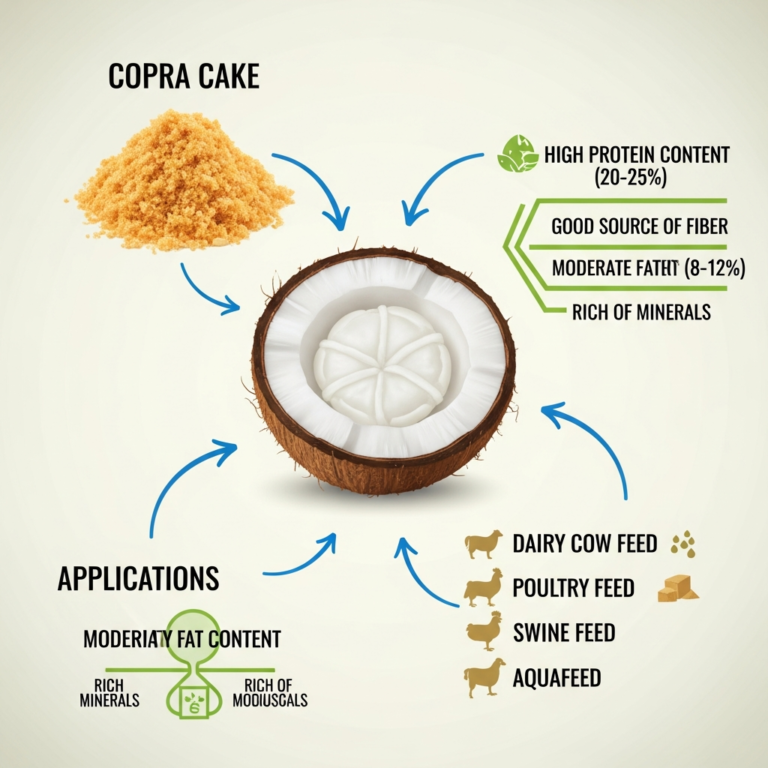
Palm Kernel Expeller comes from the oil palm fruit, while coconut expeller (copra meal) comes from coconuts. While both are valuable feed ingredients, PKE is generally higher in protein and fat, making it more energy-dense for livestock formulation needs.
How much PKE can be included in a poultry diet?
Typically, PKE is included at 5-10% in poultry diets due to its high fibre. However, with the use of feed enzymes to improve digestibility, some modern formulations are successfully using higher inclusion rates (up to 15%), leading to greater cost savings.
Does PKE contain mycotoxins?
Like any agricultural commodity, PKE can be at risk of mycotoxin contamination if not handled or stored properly. Sourcing from a reputable supplier who manages moisture below 10% and ensures proper storage is the best way to guarantee a safe, clean product.
哪里可以买到高质量的棕榈仁榨油机?
You can source high-quality PKE directly from trusted producers and exporters in major producing countries like Indonesia. Companies like Makmur Amanah Sejahtera provide certified, specification-guaranteed products, ensuring you receive reliable and effective feed ingredients for your business.
Conclusion: The Future of Feed is Efficient and Sustainable
In the competitive landscape of 2026, embracing ingredients like Palm Kernel Expeller is no longer optional—it’s a strategic imperative. This guide has demonstrated that its benefits go far beyond simple cost savings. When sourced correctly and used intelligently, it enhances animal nutrition, supports farm profitability, and contributes to a more sustainable global food system.
By understanding its properties, applications, and market dynamics, you are now equipped to make informed decisions. For those looking to secure a competitive edge, incorporating high-quality 棕榈仁压榨机 into your feed strategy is one of the most impactful steps you can take today to ensure a profitable and sustainable future.
 Chinese
  English
  Indonesian
  Arabic