
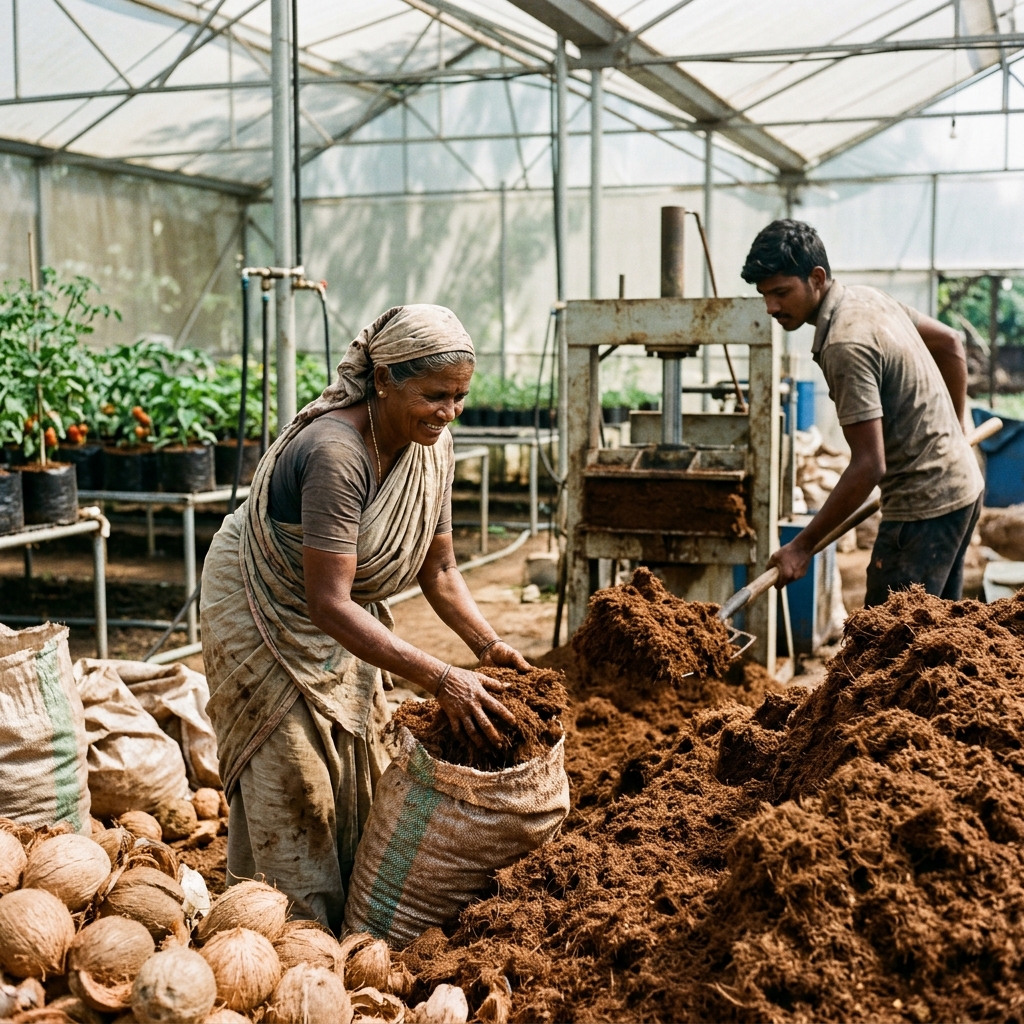
椰糠 is a natural, highly sustainable growing medium that offers superior water retention for modern agricultural practices. According to recent global market data, eco-conscious growers are increasingly abandoning synthetic mixes in favor of organic alternatives.
As international supply chains shift toward renewable resources, this clean agricultural substrate has emerged as a top-tier alternative to soil. Recent data from the 联合国粮食及农业组织(粮农组织) indicates that global coconut production exceeds 60 million tonnes annually, ensuring a highly reliable supply of raw materials for horticultural use.
What is 椰糠? Also known as coco coir pith, it is a 100% organic, sterile growing medium extracted from the fibrous husk of coconuts. It naturally absorbs up to ten times its weight in water, provides exceptional root aeration, and possesses a near-neutral pH (5.5 to 6.5), making it an ideal soil substitute.
What Exactly is Cocopeat?
Derived from the spongy inner mesocarp of the coconut (Cocos nucifera), 椰糠 is a valuable byproduct of the global coir fiber extraction industry. Historically treated as industrial waste, this fibrous substance has emerged as the gold standard for modern eco-friendly cultivation.
Furthermore, raw coir undergoes a rigorous washing, buffering, and drying process to reduce salinity (electrical conductivity, or EC) before it becomes safe for agricultural applications. High-quality buffering replaces naturally occurring sodium and potassium ions with calcium and magnesium, creating a balanced chemical structure that prevents nutrient lockout in crops.
The Origin and Processing of Coconut Husks
The journey of this organic growing medium begins with raw coconut husks harvested from tropical estates. Workers soak these husks in water to soften the fibers, a natural conditioning process known as retting.
Once softened, the long structural fibers are extracted for industrial use, leaving behind a rich, spongy coir pith. This remaining byproduct is aged, washed thoroughly with fresh water, and dried to lower its electrical conductivity.
Understanding Cocopeat Grades and Processing
Growers typically choose between three main physical forms of this horticultural substrate depending on their specific agricultural setup:
- Coir Pith: Fine-grained powder that holds substantial moisture, ideal for seed germination and root initiation.
- Coir Fibers: Stringy, long strands that facilitate rapid drainage and maximum oxygenation in root zones.
- Coir Chips: Coarse, chunky blocks that balance moisture retention with exceptional structural drainage.
Additionally, advanced commercial growers often utilize tailored blends of these three grades to optimize root zone development for specific crop varieties. Selecting the right physical grade directly determines your overall irrigation frequency and success.

Why Cocopeat Outperforms Traditional Soil
If you are wondering why cocopeat is better than soil, the answer lies in its structural resilience and physical properties. In contrast to ordinary garden topsoil, which naturally compacts over time and restricts root respiration, this organic medium maintains a porous, sponge-like structure.
This high porosity guarantees that plant roots receive consistent oxygen, preventing root rot and promoting vigorous nutrient absorption. It functions exceptionally well as a soil-free substrate, providing structural support while allowing growers to have absolute control over their nutrient delivery systems.
Moreover, a scientific study published by the International Society for Horticultural Science demonstrates that plants grown in coir-based substrates experience significantly higher root biomass development compared to those grown in traditional peat moss or soil. This acceleration is due to the optimal balance between air-filled porosity and water-holding capacity.
Water Retention and Moisture Management
Traditional garden soils often struggle with drainage, either compacting into solid mud or drying out into a hard, water-repellent crust. This organic growing medium solves both problems by holding moisture efficiently while shedding excess water.
This property of superior water retention means you spend less time watering and consume fewer municipal water resources. Your plants experience consistent moisture levels, preventing the stress of dry spells.
Root Aeration and Porosity Comparison
Oxygen is vital for root cellular respiration, a critical process that powers plant growth and nutrient uptake. Standard topsoils compress with regular watering, squeezing out pocketed air and drowning delicate root tips.
By using a highly porous soil-free substrate, you ensure that oxygen channels remain open even after heavy watering. This high level of root aeration creates a robust rhizosphere that acts as a natural barrier against common root pathogens.
To clarify the primary differences between these popular growing mediums, consider this comprehensive comparison table:
| 财产 | 椰糠 | 泥炭藓 | Standard Topsoil |
|---|---|---|---|
| 水分保留 | Excellent (up to 10x weight) | High (dries out rapidly) | Moderate to Low |
| Aeration & Drainage | Outstanding (95% porosity) | Moderate (tends to compact) | Poor (high compaction risk) |
| pH Range | Near-neutral (5.5 – 6.5) | Highly Acidic (3.5 – 4.5) | Highly Variable (5.0 – 8.0) |
| 可持续性 | 100% Renewable byproduct | Non-renewable (destroys bogs) | Slowly renewable top layer |
The 7 Amazing Benefits of Using Cocopeat in 2026
Transitioning to this renewable resource provides numerous practical and ecological advantages. Here are seven reasons why you should make the switch this year:
- Exceptional Water Retention: It can retain up to 800% of its dry weight in water, ensuring roots stay hydrated even in arid conditions.
- Enhanced Aeration: The high porosity index allows root systems to breathe freely, preventing anaerobic environments.
- Inherent Pathogen Resistance: It contains natural anti-fungal properties that resist soil-borne diseases, mold, and root rot.
- Eco-Friendly and Sustainable: Unlike sphagnum peat bogs, which take centuries to regenerate, coconuts are harvested continuously without destroying delicate ecosystems.
- Balanced pH Levels: With an ideal pH range of 5.5 to 6.5, it permits optimal nutrient uptake without requiring massive chemical adjustments.
- Reusable Substrate: It is highly durable and does not degrade rapidly. You can wash, sterilize, and reuse it for up to five years.
- Cost-Effective Transport: Dehydrated and compressed into lightweight blocks, it reduces shipping costs and carbon emissions before expansion.

How to Prepare and Use Cocopeat for Plants
Learning how to use compressed cocopeat blocks requires basic rehydration steps. Follow this systematic approach to achieve the best agricultural results:
- Place the compressed block in a large container (it will expand up to 5 to 7 times its original volume).
- Add lukewarm water gradually, allowing the material to absorb the liquid over 15 to 30 minutes.
- Fluff the rehydrated medium with a garden fork to ensure even distribution of moisture.
- Mix with drainage elements like perlite or organic nutrients like 椰干粉 to create a complete, fertile potting mix.
How to Use Compressed Cocopeat Blocks Properly
To ensure perfect expansion, always use fresh, low-salinity water. It is helpful to rinse the expanded coir one final time to flush out any lingering trace salts, particularly if you are growing sensitive seedlings or salt-intolerant crops.
After rinsing, squeeze out the excess water until the material feels like a damp, well-wrung sponge. This state represents the ideal moisture balance for immediate planting and root establishment.
Video Guide: Watch how to hydrate and prepare compressed coconut coir blocks for your garden.
Creating the Perfect Soil-Free Substrate Blend
For most indoor and container plants, a mix of 100% coir is not always recommended due to its lack of heavy structural weight. Instead, combine sixty percent expanded coir with twenty percent perlite and twenty percent composted organic soil amendments for gardening.
This customized mixture provides the perfect combination of structural support, long-term nutrient density, and balanced drainage. It remains highly aerated and won’t compress even after months of overhead watering.
When purchasing premium agricultural supplies, it is critical to select a reputable exporter. For instance, global agricultural operations choose Makmur Amanah Sejahtera for high-grade 椰糠 to guarantee consistent quality, low EC levels, and reliable international logistics.
Integrating Sustainable Coconut and Palm Products
Modern agricultural trends leverage a wide variety of industrial byproducts to improve plant and animal health. For example, incorporating nutrient-dense organic supplements like 棕榈仁压榨机 can provide essential trace elements to soil blends, whereas high-quality coir serves as the physical structural foundation.
By optimizing the integration of these organic elements, commercial farms can minimize waste and maximize productivity. Furthermore, introducing tough components like 棕榈仁壳 in outer drainage layers or combustion systems helps create a self-sustaining agricultural environment.
Furthermore, standard organic certification guidelines supported by the 美国农业部(USDA) advocate for the replacement of synthetic soils with natural, renewable substrates to reduce carbon footprints. This shift has cemented coir pith as a vital resource for organic farmers worldwide.

正在寻找高品质的棕榈产品?
Makmur Amanah Sejahtera 提供优质棕榈产品,例如棕榈仁榨油机、棕榈仁壳、原棕榈油、棕榈仁油等。请通过 WhatsApp 联系我们。 +6282140002198 或发送电子邮件至 admin@makmuramanah.co.id.
关于椰糠的常见问题
椰糠含有营养成分吗?
While it is rich in potassium and sodium, it contains minimal nitrogen, phosphorus, and calcium. Therefore, you must supplement it with organic fertilizers or standard hydroponic nutrient solutions to maintain healthy plant development.
Can I grow plants in 100% cocopeat?
Yes, plants can grow in pure coir, especially in hydroponic setups. However, for traditional potted plants, blending it with perlite and organic compost is recommended to ensure structural support and optimal long-term nutrition.
椰糠在土壤中能保存多久?
It takes approximately 3 to 5 years to decompose completely, offering long-term structural benefits such as improved soil aeration and water retention before returning to the soil ecosystem.
Is cocopeat safe for organic farming?
Absolutely. As a 100% natural, plant-derived material, organic certification bodies worldwide list it as an approved growing medium, free from synthetic chemicals, pathogens, and weed seeds.
Grow Smarter with This Sustainable Wonder
In conclusion, adopting 椰糠 for your horticultural or commercial farming practices is one of the smartest and most sustainable choices you can make in 2026. Its unmatched water retention capabilities, stellar drainage, and neutral pH profiles outperform standard topsoil in every metric.
By transitioning to this eco-friendly resource, you protect fragile natural peat bogs while boosting your overall crop yields. Make the transition today and experience the future of high-performance cultivation first-hand.


 Chinese
  English
  Indonesian
  Arabic