
How to Use Cocopeat for Plants: 7 Proven Tips (2026)
Learning how to use cocopeat for plants is one of the most effective strategies to transform your garden soil health and cultivate thriving botanical specimens today. Whether you nurture indoor tropical houseplants or manage expansive outdoor raised beds, this natural coconut byproduct dramatically enhances substrate aeration and water conservation.
According to horticultural research published by the 美国农业部(USDA), incorporating organic soil amendments like coir can increase soil water retention capacity by up to 300%. This impressive capability significantly reduces irrigation frequency while preventing critical nutrient leaching in container garden setups.
In this comprehensive 2026 guide, you will master step-by-step techniques on how to rehydrate compressed blocks, calculate precise mixing ratios, buffer chemical cation sites, and maximize root vitality for every species in your garden.
What is Cocopeat? (Quick Definition)
Cocopeat, also widely known as coconut coir or coco dust, is a 100% natural, biodegradable growing medium harvested from the outer fibrous husk of coconuts. Featuring a neutral to slightly acidic pH range (5.8–6.5), it serves as a sustainable alternative to peat moss, offering exceptional air porosity and superior moisture retention for potted plants and garden beds.
Understanding the Basics of Coconut Coir Medium
Before diving into practical application techniques, gardeners must understand why this eco-friendly material has revolutionized modern horticulture. Traditional topsoil frequently suffers from heavy compaction, root suffocation, and rapid desiccation under warm climatic conditions.
Unlike native dirt, processed coconut husks create a durable sponge-like cellular matrix. Research available on 科学直接 demonstrates that coir fibers maintain robust physical structure over multi-year growing cycles without collapsing under routine watering schedules.
Furthermore, coconut coir features a high Cation Exchange Capacity (CEC). This biochemical characteristic enables the substrate to hold positively charged nutrient ions—such as calcium, magnesium, and potassium—releasing them gradually as root exudates signal nutrient demand.
[Image: Expanded light brown coconut coir substrate showing porous fiber texture | Alt: Detailed view of processed coconut coir growing medium for potted plants | Title: Porous coconut coir substrate texture]
How to Use Cocopeat for Plants: Essential Preparation Steps
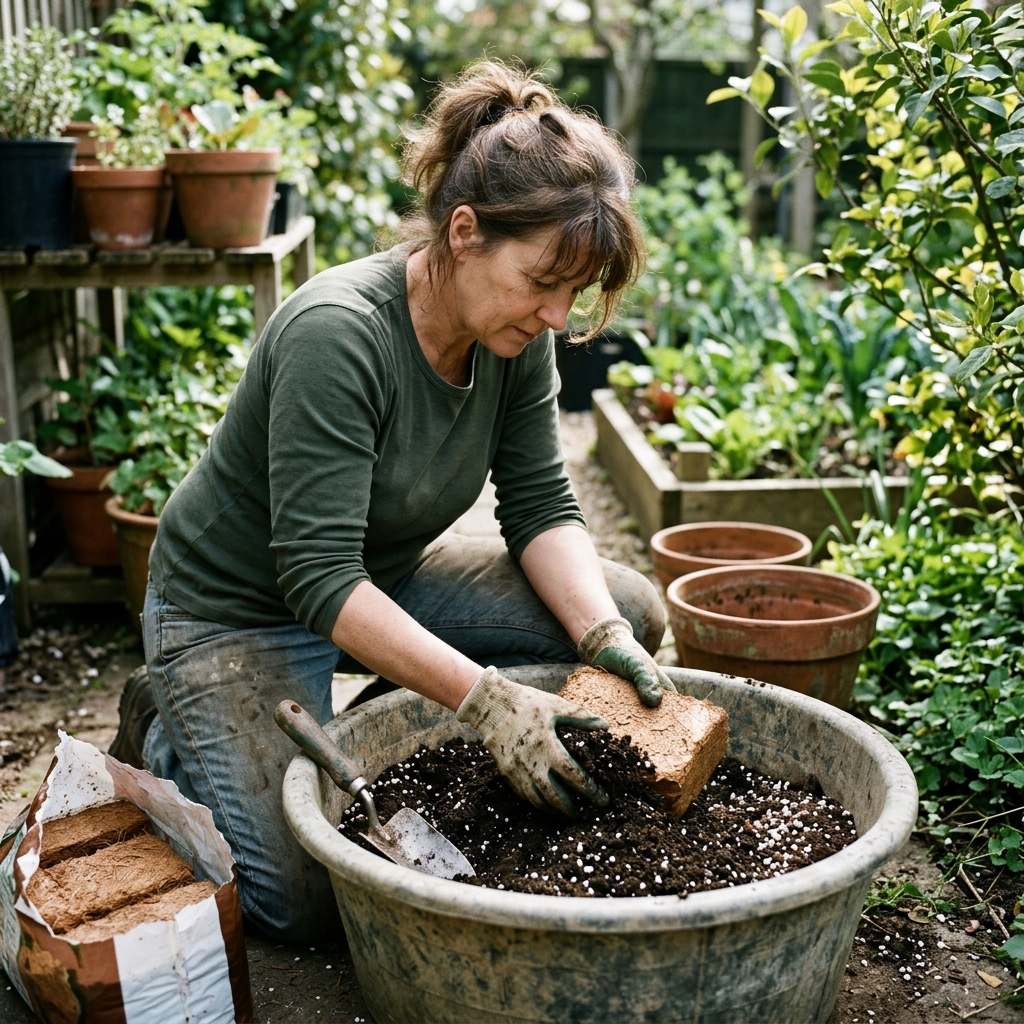
Mastering how to use cocopeat for plants begins with proper raw substrate processing. Commercial coir is compressed tightly into bricks or blocks to optimize international freight efficiency and storage space.
[Image: Step-by-step rehydration of a compressed cocopeat brick in a large bucket | Alt: Step by step guide showing how to use cocopeat for plants in indoor pots | Title: How to use cocopeat for plants tutorial]
- Rehydration: Place your dry brick into a heavy-duty container. Add warm water at a volume ratio of roughly 4 to 5 quarts per 1 kg block. Allow the substrate to expand for 15 to 20 minutes until full expansion is achieved.
- Fluffing and Aeration: Use a garden trowel or hand rake to break apart remaining compressed clusters. Ensure the expanded fiber is light, uniform, and thoroughly aerated.
- Washing and Salinity Rinsing: Raw coconut husks harvested near coastal regions contain natural sodium chloride salts. Thoroughly flush your coir with clean fresh water to reduce electrical conductivity (EC) to safe levels below 0.5 mS/cm.
- Cal-Mag Buffering: Soak the damp coir in a Calcium Nitrate and Magnesium Sulfate solution for 8–12 hours. This critical step replaces excess natural potassium ions with calcium, preventing nutrient lockouts later.
- Drainage Verification: Perform a manual squeeze test. Water should drip out lightly without forming a solid clay mass. Mix in coarse perlite if the substrate feels overly saturated.
Key Benefits of Cocopeat for Plant Growth
Understanding the botanical benefits of coir allows you to optimize customized growing mediums for delicate root systems. Data cataloged on Wikipedia’s Coir Overview highlights that coconut fibers contain high lignin levels, resisting biological decomposition far longer than sphagnum peat moss.
Key agricultural advantages include:
- 卓越的保水能力: Retains 8 to 10 times its dry weight in water, buffering crops against extreme heat stress.
- Optimal Root Zone Aeration: Maintains roughly 30% air-filled porosity even when fully saturated, fostering rapid lateral root initiation.
- Stable Baseline pH: Possesses a natural pH range between 5.8 and 6.5, eliminating the lime adjustments required by acidic peat moss.
- Renewable Environmental Profile: Sourced as a renewable agricultural byproduct, protecting vulnerable peat bog wetlands worldwide.
- Natural Pathogen Suppression: Naturally suppresses root-rot pathogens like Pythium when maintained with healthy drainage practices.
Substrate Performance Comparison
To evaluate substrate options effectively, let us review how processed coir compares against conventional horticultural mediums:
| Substrate Property | Cocopeat (Coconut Coir) | 泥炭藓 | Traditional Topsoil |
|---|---|---|---|
| 水分保留 | Very High (800–1000%) | High (600–800%) | 低至中等 |
| pH Range | 5.8 – 6.5 (Optimal) | 3.5 – 4.5 (Highly Acidic) | Variable (5.0 – 7.5) |
| Re-wetting Speed | Absorbs water instantly | Hydrophobic when dry | Prone to surface crusting |
| 环境影响 | Sustainable byproduct | Depletes non-renewable bogs | Topsoil stripping risk |
| Decomposition Life | 3 to 5 Years | 1 to 2 Years | Varies by biological activity |
How to Use Cocopeat for Plants in Potting Mixes
Growing healthy potted vegetation requires combining coir with structural aggregates and organic compost. Knowing how to use cocopeat for plants in custom container mixes prevents substrate compaction while delivering balanced plant nutrition over extended periods.
[Image: Infographic showing exact container blend ratios of coir, compost, perlite, and organic amendments | Alt: Infographic demonstrating how to use cocopeat for plants in garden soil | Title: Cocopeat soil mixing ratio graphic]
Step-by-Step: How to Use Cocopeat for Plants in Seed Starting
Germinating seeds require a lightweight, sterile, and moisture-stable substrate to push out delicate taproots without resistance. Understanding how to use cocopeat for plants in seed starting grants young seedlings ideal germination conditions free from weed seeds and soil pathogens.
For seed plug trays, combine 80% washed coir fiber with 20% horticultural perlite or vermiculite. Because pure coir provides minimal inherent nutrients, initiate weak liquid fertilizing once true leaves develop, supported by natural organic feedstuffs like 椰干粉 to nurture soil microbes naturally.
Standard Container Soil Blending Ratios
When preparing customized substrate formulations for indoor tropicals or outdoor nursery pots, utilize these proven volume formulas:
- Indoor Tropical Plants: Mix 40% coir, 30% organic leaf compost, 20% coarse perlite, and 10% coarse bark chips.
- Moisture-Loving Varieties (Ferns, Aroids): Mix 50% coir, 30% compost, and 20% perlite.
- Succulents and Cacti: Mix 20% coir, 20% compost, 40% coarse pumice, and 20% gritty coarse sand.
- Raised Outdoor Beds: Combine 30% expanded coir, 40% screened native topsoil, and 30% aged manure compost.
Maximizing Soil Quality with Agricultural Byproducts
Professional growers frequently combine coconut fiber with premium agricultural amendments to create biologically active growing environments. Technical guidance published by the 英国皇家园艺学会(RHS) highlights that integrating stable organic matter into light substrates significantly enhances microbial colonization speed.
In commercial nursery operations, blending expanded coir with nutrient-dense amendments—such as high-protein 棕榈仁压榨机—boosts nitrogen mineralization naturally. For long-term landscape beds, adding durable organic mulches alongside crushed 棕榈仁壳 helps maintain ground temperature stability while preventing topsoil erosion.
Furthermore, specialized horticultural management utilizes lipid-based additives like RBD CP8 and calcium-fortified supplements such as 棕榈油脂肪酸钙盐 in broader agricultural applications to optimize overall plant metabolic strength and yield potential.
[Video Embed Suggestion: “How to Prepare, Buffer, and Mix Cocopeat Soil for Plants” | Title: Video guide detailing how to use cocopeat for plants step by step | Duration: 8:45]
使用椰糠时应避免的常见错误
Even seasoned horticulturists encounter setbacks when implementing new growing substrates. Avoid these primary errors to safeguard your plant collection:
[Image: Healthy indoor monstera plant thriving in a custom buffered cocopeat mix | Alt: Healthy indoor plant potted in custom cocopeat soil mix | Title: Plant growing in cocopeat soil blend]
- Neglecting Calcium Buffering: Unbuffered coir naturally binds free calcium and magnesium while releasing excess sodium, causing yellowing leaf tips.
- Underestimating Nutrient Needs: Coir is an inert soilless medium with zero native N-P-K. Maintain regular liquid fertilization schedules throughout active growth cycles.
- Misjudging Moisture Levels: Coir’s top layer turns light tan when dry, even while root zones remain wet. Always check sub-surface dampness before applying water.
- Omitting Aeration Aggregates: Using fine coir dust without adding perlite or bark leads to compaction over time, reducing root zone oxygen availability.
Partner with Industry Leaders in Quality Agricultural Products
Makmur Amanah Sejahtera 我们提供优质的棕榈产品,例如棕榈仁粕、棕榈仁壳、原棕榈油、棕榈仁油等。请联系我们。 WhatsApp +6282140002198 或发送电子邮件至 admin@makmuramanah.co.id.
常见问题解答
椰糠对所有植物都适用吗?
Yes, cocopeat benefits virtually all indoor and outdoor plants when blended into customized soil mixes. However, succulents and cacti require smaller concentrations (20% or less) combined with gritty pumice or coarse sand to prevent excessive moisture retention around tender root zones.
Do you need to wash cocopeat before using?
Yes, washing coir before planting is strongly recommended unless the package explicitly confirms pre-washing and buffering. Flushing removes residual sodium chloride salts and lowers electrical conductivity (EC), preventing root burn on tender young seedlings.
椰糠在土壤中能保存多久?
Coconut coir breaks down very slowly due to its elevated structural lignin content. It maintains excellent porosity and structural stability in container mixes for 3 to 5 years, outlasting standard sphagnum peat moss significantly.
Can I plant directly in 100% pure cocopeat?
While seeds can germinate in 100% pure coir, long-term growth requires compost amendments and nutrient addition. Because coir contains zero macronutrients, plants grown in pure coir depend entirely on regular complete hydroponic or organic liquid fertilizers.
How do I fertilize plants grown in coconut coir?
Apply balanced liquid fertilizers formulated with supplemental Calcium and Magnesium (Cal-Mag). Feed your plants every 2 to 3 waterings during active spring and summer growth cycles to compensate for coir’s inert biochemical matrix.
结论
In summary, understanding how to use cocopeat for plants enables gardeners to craft ideal root micro-environments while adopting environmentally sustainable growing practices. By systematically rehydrating, rinsing, buffering, and blending coir with structural perlite and organic compost, you establish the foundation for explosive root branching and vigorous foliage growth.
For additional agricultural substrate standards, consult guidelines provided by the 联合国粮食及农业组织(粮农组织) regarding sustainable organic soil amendments.
Now that you have mastered how to use cocopeat for plants step-by-step, update your container potting recipes today and watch your garden flourish with unprecedented health throughout 2026!


 Chinese
  English
  Indonesian
  Arabic