
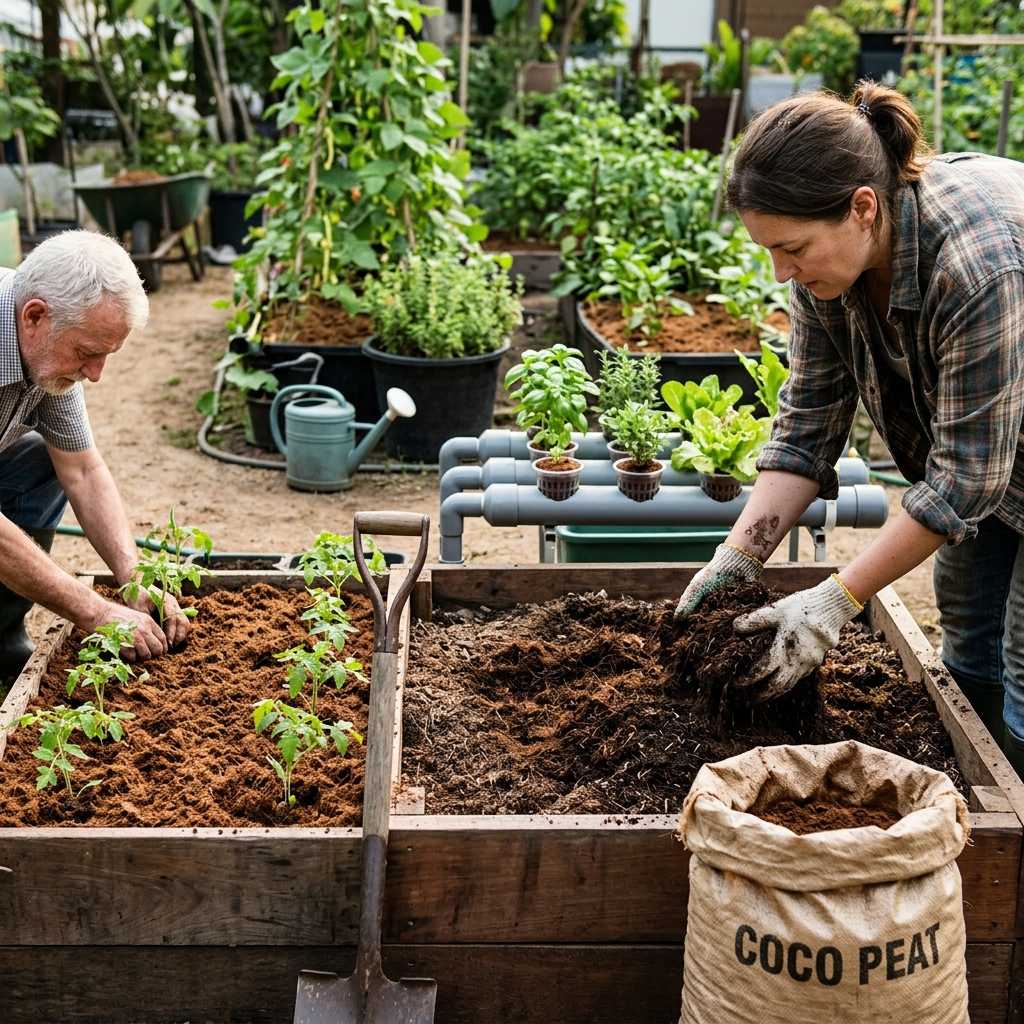
What Is Cocopeat Used For? 7 Incredible Uses (2026 Guide)
理解 what is cocopeat used for can completely transform your home gardening results and commercial agricultural crop yields. If your crops suffer from poor root aeration, rapid soil compaction, or high irrigation costs, coconut coir pith provides a proven, eco-friendly solution that solves all three challenges simultaneously.
Derived from the processed fibrous husk of ripe coconuts, coir pith has emerged as a premier organic growing medium across global agricultural supply chains. According to market research by the Food and Agriculture Organization (FAO), the adoption of sustainable coconut substrates continues to rise as commercial operations move away from non-renewable sphagnum peat bogs.
Whether you cultivate high-tech greenhouse vegetables or maintain a backyard raised bed, learning what is cocopeat used for helps you build healthier root zones, preserve moisture longer, and reduce total water usage by up to 50%.
Definition: What Is Cocopeat and How Is It Made?
椰糠 (frequently called coconut coir dust or coir pith) is a natural, sponge-like cellular substrate created during the extraction of coir fibers from coconut husks. It holds 8 to 10 times its dry weight in water while maintaining high air-filled porosity for root respiration.
During processing, raw coconut husks undergo washing, heat drying, sieving, and grading to remove coarse fibers and excess natural salts. The resulting fine, light-brown material serves as an exceptional peat moss alternative for growers seeking high cation exchange capacity without environmental degradation.
[Image: Close-up of rich brown hydrated cocopeat growing medium held in hands | alt text: what is cocopeat used for root growth and soil conditioning | title: Organic Cocopeat Substrate Overview]
What Is Cocopeat Used For? 7 Primary Applications
Agricultural producers and urban gardeners utilize coconut coir pith for diverse functional tasks. Below are the seven most common and effective ways to apply this versatile substrate in modern plant culture:
- Seed Germination and Nursery Plugs: Provides a lightweight, sterile growing substrate that facilitates rapid root emergence without mechanical resistance.
- Hydroponic Growing Medium: Acts as an inert matrix for precision fertigation in automated greenhouse drip systems.
- Soil Conditioning and Structure Improvement: Loosens heavy clay soils and adds water-holding capacity to coarse sandy soils.
- Potting Mix Component: Serves as the structural base in custom indoor potting soil blends when combined with perlite and organic compost.
- Mushroom Cultivation Casing Layer: Holds consistent humidity levels required for optimal fungal mycelium development.
- Animal Enclosure and Terrarium Bedding: Functions as soft, non-toxic, odor-absorbing substrate for reptiles, amphibians, and livestock.
- Industrial Spill Absorbent: Absorbs hydrocarbons, oils, and aqueous chemicals rapidly on factory floors due to its highly porous cellular structure.
1. Using Cocopeat for Seed Germination and Seedling Plugs
When starting delicate seeds, newly emerged radicles require a growing medium with minimal resistance and high moisture uniformity. Using cocopeat for seed germination ensures that delicate taproots push downward effortlessly without stalling.
Because processed coir dust is naturally sterile, young seedlings stay protected from soil-borne pathogens like 腐霉 和 Rhizoctonia that cause damping-off disease. Additionally, its slightly acidic to neutral pH range (5.8 to 6.5) creates optimal micronutrient accessibility during initial vegetative sprouting.
2. What Is Cocopeat Used For in Hydroponic Systems?
In high-tech commercial greenhouses, coir substrates frequently replace mineral wool and topsoil entirely. Knowing what is cocopeat used for in hydroponics helps growers design closed-loop nutrition programs tailored to high-value crops like tomatoes, cucumbers, and strawberries.
As a high-performance hydroponic growing medium, coir pith features an elevated Cation Exchange Capacity (CEC). This biochemical property allows the matrix to retain vital nutrient ions like calcium, magnesium, and potassium, releasing them to plant roots on demand as liquid nutrients circulate through automated irrigation lines.
3. Soil Conditioner and Soil Structure Improvement
Heavy clay soils suffer from poor drainage and compaction, while sandy soils lose water and dissolved fertilizers too quickly. Incorporating processed coir dust into outdoor garden beds acts as a permanent organic soil conditioner.
Unlike standard leaf compost that breaks down within a single growing season, dense coir fibers contain high proportions of natural lignin. This resistant chemical structure allows coir pith to resist rapid microbial decomposition, maintaining open air channels and moisture retention in outdoor garden beds for up to five years.
4. Potting Mix Component for Indoor Houseplants
Potted houseplants frequently suffer from perched water tables, where saturated growing media collects at the bottom of the container and suffocates lower roots. Utilizing coir pith as a core potting mix component resolves this structural drainage issue.
When combined with expanded perlite and mature compost, coir pith creates uniform capillary action throughout the root container. Water spreads evenly across the entire pot volume rather than pooling, allowing delicate houseplant roots to absorb moisture while retaining vital root zone oxygenation between watering cycles.
[Infographic Concept: Graphic displaying a 3-part custom potting mix formula containing 40% Cocopeat, 40% Compost, and 20% Perlite with water retention statistics | alt text: custom potting mix formula showing what is cocopeat used for indoor plants | title: Balanced Potting Mix Blend Chart]
5. Mushroom Cultivation Substrate and Casing Medium
Commercial mushroom cultivators require substrate materials that hold precise moisture percentages without waterlogging. Coir pith serves as an exceptional casing layer for varieties such as Agaricus bisporus and gourmet oyster mushrooms.
Its high moisture capacity prevents fruit bodies from drying out during primordia formation. Because processed coir dust maintains high porosity even when fully damp, beneficial air exchange continues unhindered throughout the mycelial colonization phase.
6. Bedding Material for Terrariums and Animal Enclosures
Beyond plant cultivation, dry coconut coir dust offers exceptional performance as animal bedding. Reptile breeders, amphibian hobbyists, and livestock managers rely on coir pith due to its non-toxic, dust-free composition and natural odor neutralization.
The soft texture prevents skin abrasion on delicate burrowing reptiles, while its high absorbency prevents ammonia build-up from animal waste. When spent, dirty terrarium coir bedding can be safely transferred directly into backyard compost piles.
7. Industrial Oil and Chemical Absorbent
In industrial settings, dry coir pith acts as a rapid-response absorbent for non-water-soluble chemical leaks, hydraulic fluids, and oil spills on concrete floors. Its cellular matrix draws in viscous liquids quickly through micro-capillary suction.
Because coir pith is completely natural and non-abrasive, cleanup crews can sweep up saturated material without damaging factory floors or emitting hazardous silica dust into industrial workspaces.
Key Benefits of Using Coco Peat Over Traditional Media
Transitioning from native topsoil or harvested sphagnum moss to coconut coir dust provides distinct biological, mechanical, and ecological advantages. Horticultural research archived by the 英国皇家园艺学会(RHS) highlights coir’s structural durability and consistency across diverse growing environments.
- Exceptional Water Retention: Holds up to 10 times its dry weight in irrigation water, extending interval times between watering cycles.
- Superior Oxygen Exchange: Preserves 20% to 30% air-filled porosity even when fully hydrated, safeguarding roots against anaerobic rot.
- Eco-Friendly and Renewable: Utilizes coconut husks harvested annually, preserving fragile wetland peat bogs from destructive mining.
- Stable and Adaptable pH: Naturally maintains a 5.8 to 6.5 pH level, requiring far less lime adjustment than acidic sphagnum media.
- Natural Disease Suppression: Promotes colonization by beneficial 木霉 fungi, which naturally suppress harmful soil pathogens.
Coco Peat vs. Soil: The Ultimate Comparison
Selecting the optimal substrate requires comparing key physical and chemical metrics. Below is a detailed breakdown for growers evaluating a **coco peat vs potting soil comparison** for container media:
| Feature / Attribute | Coco Peat (Coir Pith) | Traditional Topsoil | 泥炭藓 |
|---|---|---|---|
| 水分保留 | Very High (8–10x dry weight) | Moderate to Low | High (10–12x dry weight) |
| Aeration & Drainage | Excellent (20–30% air space) | Poor (compacts easily) | Moderate (compresses over time) |
| pH Range | 5.8 – 6.5 (Slightly Acidic) | 6.0 – 7.5 (Variable) | 3.5 – 4.5 (Highly Acidic) |
| 环境影响 | 100% Sustainable Byproduct | Variable / Topsoil Erosion | Depletes Sensitive Peat Bogs |
| 可重复使用性 | Up to 4–5 Years | Requires Seasonal Tilling | 1–2 Years Maximum |
| 营养成分 | Inert (Requires Fertilizer) | Contains Native Minerals | Inert (Requires Fertilizer) |
[Video Concept: YouTube tutorial embedding demonstrating how to wash, buffer, and hydrate coir blocks step-by-step | alt text: step by step guide demonstrating what is cocopeat used for and how to prepare compressed coir | title: Hydrating and Buffering Cocopeat Tutorial]
How to Prepare Cocopeat Blocks for Gardening: Step-by-Step
Most commercial coir arrives in tightly compressed blocks or bricks to reduce transit volume. Learning **how to prepare cocopeat blocks for gardening** correctly prevents nutrient lockouts and salt stress in young plants.
- Hydrate the Compressed Block: Place your coir block inside a high-volume tub. Add warm water (approximately 4 to 5 liters per 1 kg block) and let it expand for 15 to 20 minutes until fully soft.
- Flush Residual Na and Cl Salts: Because coconut palms flourish in coastal tropical regions, unwashed coir can contain sodium and chloride ions. Flush expanded coir dust with fresh water until the runoff Electrical Conductivity (EC) drops below 0.5 mS/cm.
- Buffer with Calcium and Magnesium: Soak the expanded coir in a solution containing calcium nitrate and magnesium sulfate for 24 hours. Calcium ions replace sodium on the coir’s cation exchange sites, preventing future nutrient lockout.
- Combine with Soil Amendments: Blend 60% buffered coir pith with 20% organic compost and 20% coarse perlite to establish an all-purpose container soil matrix.
What Is Cocopeat Used For in Commercial Agriculture and Circular Farming?
Large-scale commercial growers rely on high-grade coir substrates to maximize crop yield per square meter. In high-tech greenhouse operations growing tomatoes, cucumbers, and berries, coir slabs allow automated fertigation systems to deliver precise liquid nutrients straight to root zones multiple times daily.
Furthermore, forward-thinking agricultural enterprises combine tropical crop byproducts into holistic, zero-waste operations. By integrating livestock feed components such as 棕榈仁压榨机, 椰干粉, and nutritional bypass fats like 棕榈油脂肪酸钙盐 alongside biomass fuels like 棕榈仁壳, modern agricultural facilities build highly resilient circular production systems.
[Image: Rows of healthy green greenhouse tomato plants thriving in coconut coir substrate bags | alt text: commercial agricultural use illustrating what is cocopeat used for in hydroponics | title: Commercial Hydroponic Coir Substrate]
Makmur Amanah Sejahtera 我们提供高品质的棕榈产品,例如棕榈仁粕、棕榈仁壳、原棕榈油、棕榈仁油等。请通过 WhatsApp 联系我们。 +6282140002198 或发送电子邮件至 admin@makmuramanah.co.id.
Frequently Asked Questions About What Is Cocopeat Used For
Can you plant directly into 100% pure cocopeat?
You can start seeds in 100% coir, but coir contains no natural macro-nutrients (N-P-K). For full-term plant growth, you must supply complete hydroponic liquid fertilizers or blend coir with compost and slow-release organic plant foods.
Is cocopeat better for plants than regular topsoil?
Cocopeat offers superior water retention, structural aeration, and root penetration compared to topsoil. It resists soil compaction and remains free from weed seeds and soil pathogens, though it requires added nutrients to support long-term crop growth.
How long does cocopeat last in container garden beds?
High-quality coir pith contains elevated concentrations of natural lignin, resisting microbial decomposition. In container mixes or garden beds, coir substrate maintains structural integrity for 3 to 5 years before requiring replenishment, easily outlasting peat moss media.
Why is it necessary to buffer raw cocopeat with calcium?
Raw coir pith naturally holds sodium and potassium on its cation exchange sites. Buffering coir with calcium nitrate replaces sodium ions, preventing the medium from locking up essential calcium and magnesium nutrients during active plant growth cycles.
Does cocopeat attract harmful insects or outdoor garden pests?
No, processed coir pith is inherently sterile and inert, lacking the decaying organic matter that attracts soil pests like fungus gnats. When kept properly drained between waterings, coir inhibits pest reproduction compared to unsterilized garden topsoil.
Final Thoughts on What Is Cocopeat Used For
理解 what is cocopeat used for empowers commercial growers and home gardeners to create highly resilient, water-efficient growing systems. From nursery seed propagation to industrial hydroponics, coconut coir pith provides unmatched aeration, moisture distribution, and long-term structural integrity. Incorporating high-grade coconut coir substrates into your soil mixes will maximize crop vitality while supporting sustainable agricultural practices.
 Chinese
  English
  Indonesian
  Arabic