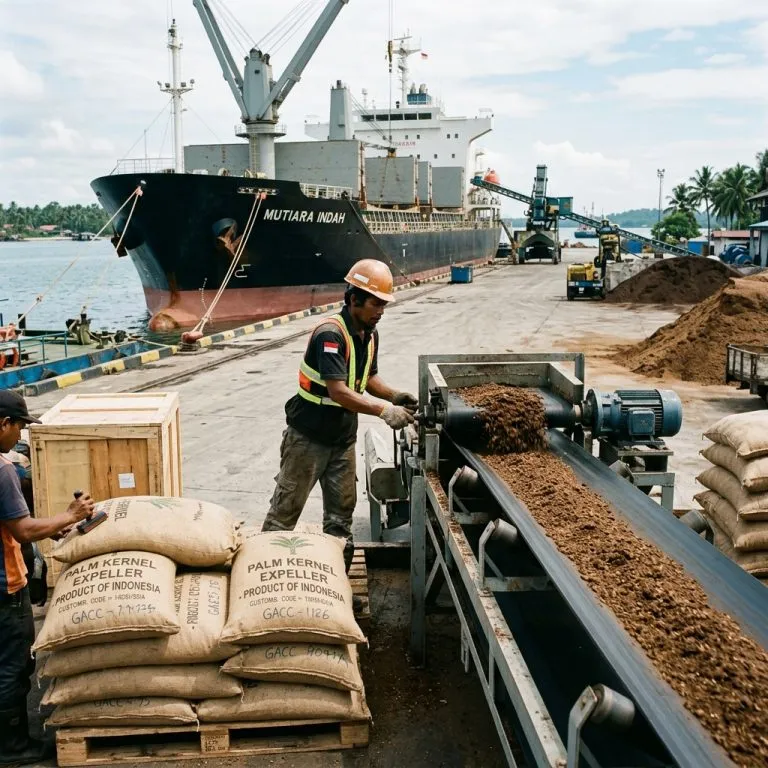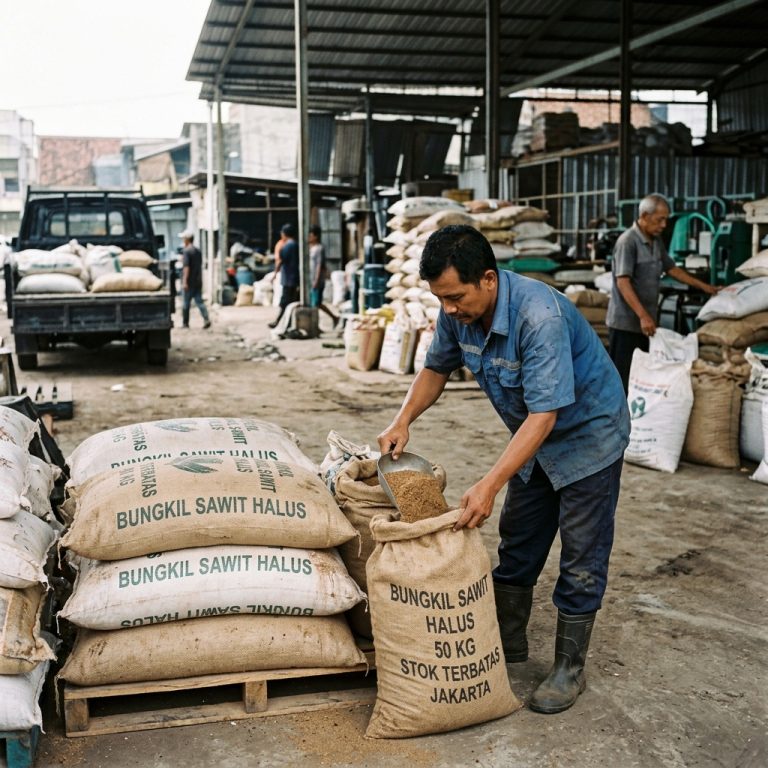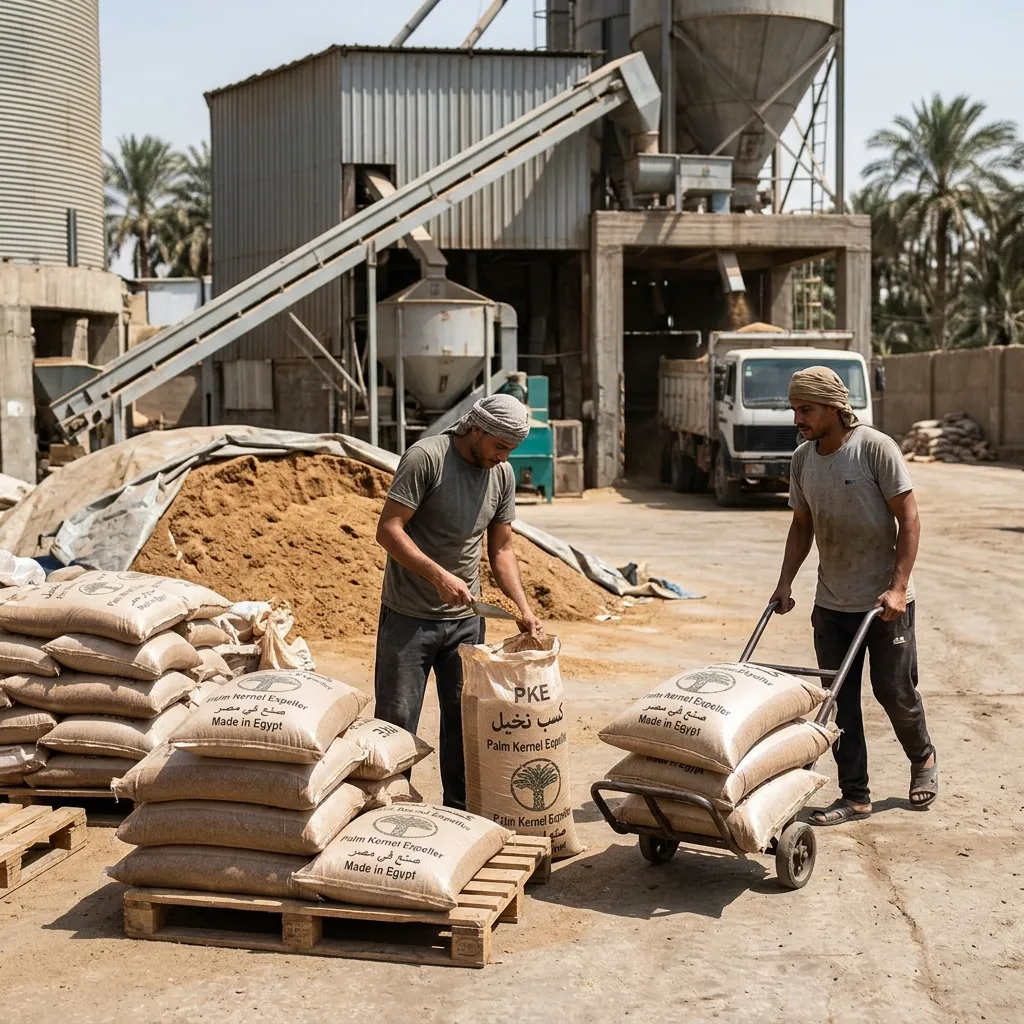
Sourcing premium 埃及棕榈仁粕 has become an urgent strategic priority for livestock feed producers seeking to protect profit margins against unpredictable global commodity markets. Rising costs for imported yellow corn and soybean meal have forced nutritionists to re-evaluate alternative energy-protein feeds. By securing direct import contracts with verified international suppliers, Egyptian agricultural operations can lower ration costs while sustaining peak herd performance.
Palm Kernel Expeller (PKE)—also known as palm kernel cake or meal—is the nutrient-dense byproduct generated during mechanical oil extraction from the oil palm kernel (油棕). Featuring moderate crude protein (14%–18%), high neutral detergent fiber (55%–65%), and residual palm fat (6%–8%), it functions as a highly digestible energy-protein feed supplement for dairy cows, feedlot cattle, and small ruminants.
According to trade data published by the 美国农业部海外农业服务局(USDA Foreign Agricultural Service), Egypt imports over 8 million metric tons of commercial feed ingredients annually to sustain its growing dairy and beef processing sectors. Consequently, domestic agribusinesses are increasingly turning to reliable origins like Indonesia to stabilize their compound feed production against supply disruptions.
Why Feed Manufacturers Rely on Palm Kernel Expeller in Egypt
Egyptian animal farming faces acute geographic and climatic constraints, requiring intensive concentrate feeding to achieve commercial milk and meat outputs. In this demanding landscape, incorporating Palm Kernel Expeller in Egypt provides essential nutritional and financial benefits across commercial feeding programs.
The primary advantage lies in the unique rumen fermentation profile of palm expeller. Unlike starch-heavy grains that risk rumen acidosis, the fiber in PKE consists mainly of digestible hemicelluloses and mannans. These ferment slowly, maintaining stable rumen pH while supplying sustained energy through volatile fatty acids (VFAs).
Furthermore, multiple livestock trials cataloged by the 联合国粮食及农业组织(粮农组织) emphasize that expeller-processed meals retain functional lipids that enhance dietary energy density without suppressing cellulose-digesting bacteria.
- Acidosis Mitigation: Low non-structural carbohydrate (NSC) content reduces subacute ruminal acidosis (SARA) risks in high-producing dairy cows.
- Rumen Degradable & Bypass Protein: Supplies balanced amino acid fractions to bolster both microbial protein synthesis and post-ruminal absorption.
- Economic Efficiency: Delivers a lower cost-per-unit protein and metabolisable energy than standard soybean meal and barley mixtures.
- Digestive Satiety: High water-holding capacity expands in the rumen, increasing gut fill and calming intensive feedlot steers.
Consequently, progressive feed operations consider 埃及棕榈仁粕 an indispensable stabilizing ingredient in modern ruminant rations.
Nutritional Specifications and Quality Standards for Egyptian Buyers
Understanding the exact biochemical breakdown of palm derivatives prevents costly operational failures. Mechanical screw pressing yields expeller (PKE) containing higher residual oil compared to chemical solvent-extracted palm kernel meal (PKM). This retained oil delivers superior energy value for Egyptian feed yards.
Independent research available via ScienceDirect animal feed studies demonstrates that the digestible energy in expeller-grade meal matches or exceeds 11.0–12.0 MJ/kg dry matter for ruminants. This performance stems from medium-chain fatty acids that escape complete rumen hydrogenation.
| Nutrient Parameter | Export Standard (Expeller) | Typical Solvent Meal (PKM) | Relevance to Egyptian Cattle |
|---|---|---|---|
| 粗蛋白 (CP) | 14.5% – 17.5% | 13.0% – 15.0% | Supports lean tissue gain and milk synthesis |
| 粗脂肪(乙醚提取物) | 6.5% – 9.0% | 1.5% – 3.0% | Supplies concentrated calories without starch |
| 水分含量 | Max 10.0% – 11.0% | Max 12.0% | Prevents heating and mycotoxins during sea transit |
| 粗纤维(CF) | 15.0% – 18.0% | 16.0% – 20.0% | Stimulates chewing and cud regurgitation |
| 灰分含量 | Max 5.0% – 6.0% | Max 6.5% | Guarantees low sand, soil, and mineral contamination |
| Aflatoxin Total | Max 20 ppb (B1 max 10 ppb) | Max 20 ppb | Complies with strict Egyptian GOEIC standards |
When procurement managers examine the verified specifications of palm kernel meal for cattle egypt, optimizing the crude protein energy ratio is paramount. Blending PKE with complementary agricultural products like high-protein 椰干粉 balances essential amino acids while maintaining adequate bulk density.
Furthermore, commercial dairy rations frequently combine expeller meal with targeted rumen-bypass fats such as 棕榈油脂肪酸钙盐 to boost peak lactation output without reducing fiber digestion.
Price Trends and Market Dynamics for Palm Kernel Expeller in Egypt (2026 Outlook)
Import costs for agricultural commodities depend on international ocean logistics, local currency valuation, and crude palm oil (CPO) crushing cycles in Southeast Asia. Entering 2026, the calculated palm kernel expeller price per ton egypt 2026 provides substantial savings compared to landed prices of South American soybean meal and Black Sea corn.
Historical trends indicate that Southeast Asian expeller trades at a 35% to 45% discount against soybean meal on a per-protein unit basis. This economic advantage enables feed millers to incorporate Indonesian palm kernel cake as a direct cost-saving substitute in commercial concentrates.
Procuring entities generally utilize three contract structures to manage import commitments:
- Break-Bulk Vessel Charters (3,000–10,000 MT): Commercial conglomerates and import syndicates secure the lowest shipping cost per ton by discharging directly at Alexandria or Damietta port terminals.
- Containerized Shipments (FCL in 20ft/40ft Containers): Mid-sized compound feed producers buy 100 to 500 metric tons packed in 50kg polypropylene bags or 1,000kg jumbo bulk bags to preserve working capital flexibility.
- Forward Quarterly Supply Contracts: Purchasing managers lock in forward prices over 3 to 6 months to shield against seasonal harvest slowdowns in origin countries.
Moreover, agribusinesses handling Alexandria port bulk feed commodities must manage foreign exchange liquidity and import letter of credit (LC) terms to minimize costly container demurrage fees upon vessel arrival.
How Commercial Operations Formulate Palm Kernel Expeller in Egypt
Livestock producers in Egypt run diverse production systems, ranging from intensive dairy enterprises along the Nile Delta to desert reclamation beef feedlots. Maximizing return on investment requires adhering to practical, species-specific dietary inclusion limits.
The high non-starch polysaccharide (NSP) content—dominated by insoluble beta-mannans—makes PKE ideal for multi-gastric herbivores while limiting its unassisted inclusion in monogastric feeds.
Formulating Palm Kernel Expeller in Egypt for Modern Dairy Rations
Commercial Holstein and crossbred dairy herds in Egypt comfortably digest diets containing 15% to 25% palm expeller. Because of its medium-chain fatty acid profile, palm cake supports milk fat synthesis, assisting farms facing seasonal butterfat depression during hot summer periods.
Clinical studies published in the 乳品科学杂志 confirm that dietary inclusion of expeller byproducts maintains milk production volumes while optimizing ruminal acetate-to-propionate ratios in lactating cattle.
Dairy Cattle Feed Formulations
Advanced dairy cattle feed formulations incorporate PKE animal feed Egypt supplements to supply rumen-undegradable protein (RUP) alongside effective neutral detergent fiber (eNDF). Balancing palm expeller with energy sources like refined palm olein RBD CP8 supports negative energy balance recovery in high-yielding post-calving cows.
Feedlot Beef Steers and Native Buffalo (Gamoos)
For growing and finishing beef bulls, nutritionists routinely push inclusion levels to 30% or 35% of total dry matter intake. The expeller replaces portions of both yellow corn and wheat bran, yielding high carcass dressing percentages while preventing the acute digestive disorders common to high-starch feedyard regimes.
Small Ruminants (Sheep and Goats)
Egyptian sheep breeds, including Barki and Rahmani, show remarkable feed conversion efficiency when offered 10% to 20% palm meal in maintenance and fattening formulas. However, livestock managers must verify that mineral premixes account for the naturally high phosphorus-to-calcium ratio inherent in all palm seed byproducts.
Poultry Feed Formulation Boundaries
Broiler and layer operations must restrict palm kernel meal import inclusion to 3% to 5% unless supplemented with exogenous beta-mannanase enzymes. Unprocessed mannans elevate gut digesta viscosity in poultry, diminishing overall nutrient uptake and feed efficiency.
Key Import Regulations and Documentation for Palm Kernel Expeller in Egypt
Importing animal feed into the Arab Republic of Egypt entails compliance with stringent regulatory frameworks supervised by the Ministry of Agriculture and Land Reclamation (MALR) and the General Organization for Export and Import Control (GOEIC).
根据来自 国际贸易管理局, commercial consignments arriving at maritime entry gates must undergo strict documentation and sanitary reviews before release.
To successfully import Palm Kernel Expeller in Egypt, your global trade partners must issue clean documentation:
- Commercial Invoice and Clean Bill of Lading: Documenting verified weights, container numbers, and product description.
- 植物检疫证书(Phytosanitary Certificate): Endorsed by the National Quarantine Authority of the exporting state confirming freedom from quarantine pests.
- 原产地证书: Authenticated by relevant Chambers of Commerce to ensure correct tariff classifications.
- 熏蒸证书(Fumigation Certificate): Documenting methyl bromide or phosphine treatment completed prior to maritime voyage departure.
- Non-Radioactivity and Non-GMO Attestation: Assuring conformance with prevailing Egyptian veterinary health laws.
Industrial companies operating biomass power generators or ceramic production alongside feed operations often combine logistics shipments with other tropical co-products like 棕榈仁壳 to optimize vessel stowage. For integrated greenhouse or desert reclamation projects, companies also import horticultural soil amendments like 椰糠 in the same maritime consignment.
Evaluating Physical Quality of Palm Kernel Expeller in Egypt
Quality variance between processing crushers demands systematic gate inspections upon arrival. Egyptian quality control specialists conduct rigorous on-site checks across several physical parameters:
- Aroma and Color Inspection: High-grade PKE exhibits a warm, roasted nutty aroma and a uniform medium-brown hue. Blackened, charred granules signal thermal scorch during expeller pressing, rendering amino acids indigestible.
- Moisture and Mold Assessment: Expeller meal with moisture exceeding 11% easily grows 黄曲霉 (Aspergillus flavus) inside ocean containers, producing prohibited aflatoxins.
- Foreign Matter & Shell Fractions: Excessive hard shell fragments dilute metabolisable energy and accelerate wear on commercial feed pellet dies.
Key Risks to Avoid When Sourcing Palm Kernel Expeller in Egypt
Procuring low-cost spot parcels from unvetted middlemen exposes buyers to severe operational disruptions. Poor storage in tropical origin ports can elevate Free Fatty Acid (FFA) percentages above 10%, causing rancidity that harms feed palatability. Furthermore, fine powdery meal increases dust explosions and bridging inside feed silos.
When agribusinesses seek a reliable partner to buy palm kernel expeller bulk supplier egypt or coordinate an official contract to import palm kernel cake to alexandria port, working directly with vetted origin crushers is vital. Establishing verified supply chains ensures consistent protein content, compliant aflatoxin certificates, and dependable maritime delivery schedules.
Makmur Amanah Sejahtera 我们提供高品质的棕榈产品,例如棕榈仁粕、棕榈仁壳、原棕榈油、棕榈仁油等。请通过 WhatsApp 联系我们。 +6282140002198 或发送电子邮件至 admin@makmuramanah.co.id.
常见问题解答
What is the typical protein and fat content of Palm Kernel Expeller imported into Egypt?
Premium expeller-grade PKE typically delivers 14.5% to 17.5% crude protein and 6.5% to 9.0% crude fat. This residual palm oil content supplies concentrated, non-starch metabolisable energy, making it an outstanding stabilizer for Egyptian dairy cows and feedlot cattle rations.
How does Palm Kernel Expeller in Egypt compare to yellow corn on energy value?
While corn provides starch energy, palm expeller provides digestible fiber and lipids delivering 11.0 to 12.0 MJ/kg metabolisable energy. It supplies comparable caloric support for cattle without creating rumen acidosis risks or digestive upset during high-grain feeding cycles.
What Egyptian ports are best suited for discharging containerized or break-bulk PKE?
Alexandria and Damietta handle the vast majority of break-bulk agricultural vessels due to their deep berths and bulk discharge infrastructure. Containerized shipments arrive efficiently through Port Said, Ain Sokhna, and Dekheila port terminals for rapid inland trucking dispatch.
Can Egyptian poultry farms include Palm Kernel Expeller in broiler or layer rations?
Poultry can only tolerate low inclusion rates of 3% to 5% because they cannot easily break down complex beta-mannans. Higher inclusions require exogenous beta-mannanase enzyme supplementation to prevent elevated intestinal viscosity and reduced nutrient absorption in commercial flocks.
How does long-distance ocean freight impact the shelf life of palm expeller?
Properly processed PKE with moisture below 10% remains stable for 6 to 9 months in dry, ventilated storage. Professional fumigation, silica desiccant liners, and sealed shipping containers protect the product against fungal growth and oxidation during equatorial transit.
Strategic Recommendations for Egyptian Feed Millers in 2026
Navigating global grain markets requires innovative formulation and disciplined procurement. As conventional grain imports remain volatile, commercial feed businesses can strengthen their supply chain resilience by integrating ruminant nutrition supplements and tropical co-products into core compound rations.
Carefully balance crude fiber fractions with soluble energy inputs to maximize animal performance. Conduct regular lab tests on arriving shipments to verify crude protein, free fatty acids, and moisture guarantees before milling and pelleting.
Sourcing dependable, laboratory-verified 埃及棕榈仁粕 directly from premier origin producers gives feed mills the pricing leverage and product reliability needed to sustain profitability throughout 2026 and beyond.